

Main Facts
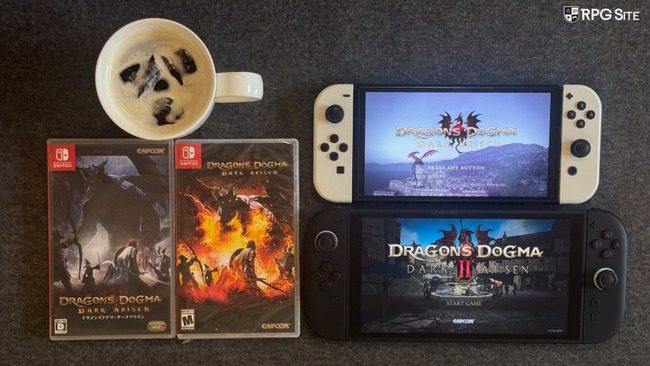
Capcom is set to launch Dragon’s Dogma 2: Dark Arisen for the Nintendo Switch 2 this week, delivering a comprehensive bundle that combines the base open-world role-playing game with its major expansion. This release marks a significant milestone for the publisher, bringing one of modern gaming’s most technically demanding titles to a portable ecosystem.
However, the port’s journey to the handheld-hybrid hardware is a tale of ambitious optimization marred by questionable default graphical settings. Out of the box, the game ships with an uncapped framerate and frame generation enabled—a configuration that introduces severe input lag and visual glitches, such as disappearing character models. Once players disable frame generation and manage performance parameters, the title reveals itself as an unexpectedly cohesive rendition of Capcom’s sprawling epic, complete with HD Rumble 2 support, all historical updates, and a budget-friendly price point.
Chronology: From 2012 Cult Classic to Modern Handheld Frontier
The legacy of Dragon’s Dogma is defined by a slow-burn evolution across hardware generations, culminating in this week’s landmark Nintendo Switch 2 release.
- The Original Vision (2012): Capcom released the original Dragon’s Dogma on last-generation consoles, cultivating a passionate fanbase drawn to its innovative pawn system, physics-driven combat, and atmospheric nighttime exploration, popularized globally by themes like B’z’s "Into Free."
- The "Fixed" PC Era: Years later, the title transitioned to PC, where it was widely celebrated as the definitive, smoothly running version of the game.
- The Handheld Breakthrough (PS4 to Nintendo Switch 1): Although ports arrived on the PlayStation 4 via Dragon’s Dogma: Dark Arisen, the game truly found a receptive audience when it made a surprise debut on the original Nintendo Switch. Despite noticeable visual cutbacks, players embraced the portable format, turning it into a fan-favorite way to experience the adventure.
- The Demanding Sequel (2024): Dragon’s Dogma 2 launched on PC, PlayStation 5, and Xbox Series X|S, immediately pushing hardware limits. At launch, the PC version struggled immensely on platforms like the Steam Deck—dipping into the single digits—while struggling to maintain stability on base current-gen consoles.
- The Optimization Wave and PS5 Pro Enhancements: Throughout subsequent months, Capcom rolled out critical patches, drastically improving frame rates on PC and leveraging hardware boosts via platforms like the PlayStation 5 Pro.
- The Switch 2 Arrival (Present Week): Capcom brings Dragon’s Dogma 2: Dark Arisen to the Nintendo Switch 2, bringing the franchise full circle by placing a historically unyielding modern title onto a portable console.
Supporting Data & Technical Breakdown
Evaluating Dragon’s Dogma 2: Dark Arisen on Nintendo Switch 2 requires dissecting how Capcom scaled down a massive, RE Engine-powered world.
Performance Profiles and the "Frame Generation" Trap
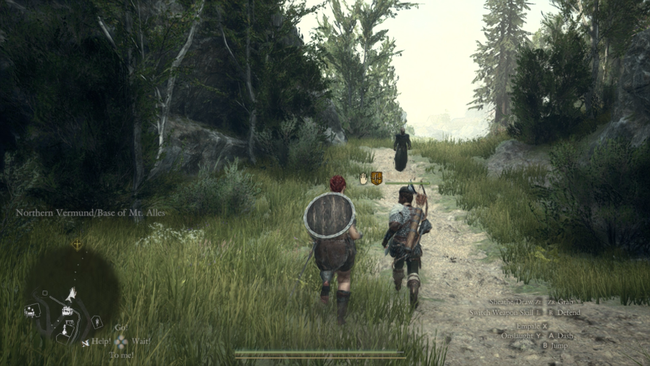
The game includes standard options for a capped 30fps mode, alongside a new frame generation toggle. However, default settings favor an uncapped framerate coupled with frame generation enabled. Early testing reveals that this default configuration produces an abysmal user experience:
- Input Latency: Resembles the degraded responsiveness of a poorly streamed cloud game over weak Wi-Fi rather than a native calculation.
- Visual Artifacts: Player character heads and hair intermittently vanish during dynamic camera movements.
- The Remedy: Disabling frame generation and capping the framerate to 30fps (particularly for docked play) transforms the experience into a stable, highly playable adventure. For handheld sessions, an uncapped framerate offers fluidity, though manually toggling between modes remains a minor inconvenience due to the lack of dedicated profile saving.
Visual Cuts vs. Upscaling Artifacts
When compared to the original 2024 console launches, the Switch 2 version exhibits predictable, necessary cutbacks:
- Geometry and Textures: Lower-resolution textures and simplified object models are evident throughout the open world.
- Draw Distance and Shadows: Level-of-detail (LOD) pop-in is prominent, particularly concerning character shadows and distant environmental geometry.
- Upscaling: The game relies heavily on aggressive upscaling from a sub-native resolution, which occasionally struggles during high-velocity movement or complex particle sequences.
- Load Times: Transitions between gameplay and cinematic cutscenes remain noticeably lengthy, serving as one of the few persistent reminders of the hardware’s thermal and memory boundaries.
Missing Input Features
Despite stellar implementation of the Switch 2’s HD Rumble 2—which profoundly elevates tactile feedback during handheld monster-tackling—critics have noted a surprising omission: the complete lack of gyro/motion control options and mouse-control support, both of which are present in the PC and PlayStation 5 versions.
Official Responses and Developer Stance
While formal marketing statements surrounding the Switch 2 launch emphasize the triumphant portability of Capcom’s modern library, early hands-on analyses highlight a clear divergence between developer ambition and default user-interface choices.

Capcom has positioned its recent slate of Switch 2 ports as premier third-party showcases. Within this lineup—which includes titles like Onimusha: Way of the Sword—Dragon’s Dogma 2: Dark Arisen is viewed internally and externally as the publisher’s most technically daring undertaking. The decision to bundle the base game with its expansion at a budget-friendly price point signals a calculated effort by Capcom to lower the barrier to entry for portable-first gamers, acknowledging past criticisms of optimization by ensuring all historical patches are baked directly into the retail build.
Implications for the Industry and Consumers
The arrival of Dragon’s Dogma 2: Dark Arisen on the Nintendo Switch 2 carries broad implications for the gaming landscape:
- A Benchmark for Third-Party Scalability: In an era where many platform ports rely on low-effort minimization, Capcom continues to demonstrate a willingness to invest engineering resources into scaling complex RE Engine titles down to mobile hardware.
- The Perils of Aggressive Default Settings: The poor initial impression left by the game’s default frame-generation toggle serves as a cautionary tale for developers leveraging AI-driven or advanced temporal interpolation techniques on constrained hardware. First impressions matter, and hiding optimal settings behind manual toggles risks alienating casual consumers.
- The Handheld RPG Renaissance: By proving that dense, systemic open-world action RPGs can function on next-generation hybrid hardware without compromising core gameplay loops, Capcom validates consumer demand for portable high-end gaming experiences.
As comprehensive platform comparisons across PlayStation 5 Pro, Xbox Series X, PC handhelds (ROG Ally, Steam Deck), and the Nintendo Switch 2 loom on the horizon, Dragon’s Dogma 2: Dark Arisen stands as a testament to technical persistence—a flawed yet remarkable achievement that redefines what players can carry in their backpacks.

