

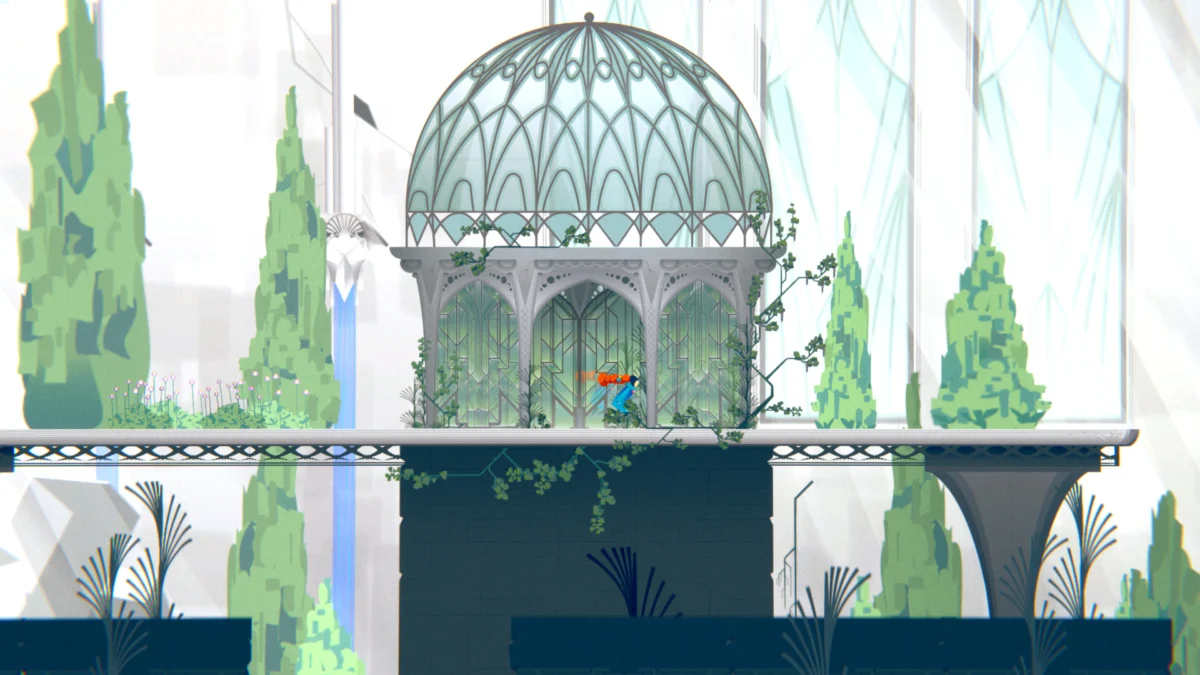
In the saturated landscape of modern indie gaming, the "story-rich" descriptor has become a ubiquitous marketing buzzword, often obscuring a lack of substance behind a veil of aesthetic charm. Aspire: Ina’s Tale, developed by Wondernaut Studio and released in late 2021, stands as a prime example of this phenomenon. While the title offers a visual feast reminiscent of modern 2D platforming classics, it struggles to transcend its derivative narrative foundations, leaving players with a journey that is as frustrating to play as it is forgettable to recall.
Main Facts: A Familiar Journey in a Gilded Tower
Aspire: Ina’s Tale casts players as Ina, a spindly, ethereal protagonist who awakens within the confines of a massive, enigmatic structure known simply as "The Tower." The premise is classic "chosen one" fodder: Ina is revealed to be the "Heart of the Tower," a figure destined to maintain the operations of a structure built by an architect of unknown intent.
The core gameplay loop involves navigating platforming challenges, solving environmental puzzles, and interacting with the Tower’s cryptic denizens. Unlike many action-platformers, Aspire eschews traditional combat, opting for a system where players must utilize light-emitting power sources to repel hostile entities. When players fail—which happens frequently due to precision-heavy mechanics—they are reset at generous checkpoints, dissolving into a cloud of light before immediately returning to the action.
Despite the polished hand-painted art style, the game’s narrative core—a wandering waif with amnesia attempting to restore balance to a broken world—feels indistinguishable from peers like Gris, Hoa, or Minute of Islands.
Chronology: The Arc of a Tired Trope
The narrative progression of Aspire: Ina’s Tale follows a predictable trajectory that fails to capitalize on its intriguing setup.
- The Awakening: Ina begins her journey in the lowest, most desolate reaches of the Tower. Players are introduced to the basic movement mechanics and the initial mystery of the Tower’s architecture.
- The Revelation: As the player ascends, the game reveals Ina’s role as the "Keeper of Kamiura." This serves as the primary hook, promising a deep dive into the lore of the Architect and the function of the Tower.
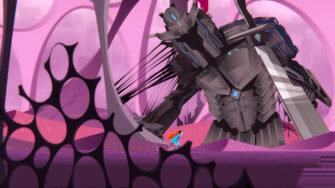
- The Middle Grind: During the middle chapters, the story stagnates. The puzzles begin to cycle through established tropes: block-pushing, size-shifting mechanics, and rope-swinging. The narrative attempts to inject tension through Ina’s confusion regarding the Tower’s "monstrous" sculptures, yet these philosophical questions are never meaningfully explored.
- The Final Ascent: By the third act, the narrative friction has largely evaporated, replaced by a sense of resignation. The culmination of the journey, intended to be a poignant emotional payoff, struggles to land because the player has not been given a compelling reason to care about the Tower or its Architect.
Supporting Data: The Mechanics of Frustration
The disparity between Aspire’s visual ambition and its mechanical execution is stark. On the Nintendo Switch, the game suffers from a disconnect between input and action that turns platforming into a chore.

Precision vs. Physics
The game demands high-level precision, yet Ina’s movement physics are notably "stiff." The rope-swinging mechanics, in particular, serve as a frequent point of contention for players. While the developers clearly intended for the movement to feel weightless and graceful, the lack of fluidity results in a "Goldilocks-style" of experimentation where the player must find the perfect, frame-specific pixel to succeed.
The Checkpoint Paradox
While the generous checkpoint system is a "bless the developers" feature, it also highlights a flaw in the game’s design. If a game requires such frequent saving to mitigate the player’s frustration, it suggests that the gameplay loops are fundamentally punishing rather than satisfyingly challenging. When the story fails to provide a psychological reward for overcoming these hurdles, the player is left wondering why they are persisting at all.
Aesthetic Performance
From a technical standpoint, the game is a success. The art direction—specifically the way light glints off armor or reflects on crystalline surfaces—is top-tier. However, in the world of interactive entertainment, visuals serve as the wrapper, not the gift itself. When the narrative is stripped of its shiny coating, what remains is a skeletal, derivative experience.
Official Responses and Developer Intent
Wondernaut Studio positioned Aspire: Ina’s Tale as a journey of self-discovery and atmospheric wonder. In pre-release marketing, the developers emphasized the "mystical" nature of the Tower and the emotional weight of Ina’s journey. While they successfully created a "pretty" game, they seemingly underestimated the modern player’s demand for narrative evolution.
The game sits in an awkward middle ground. It lacks the complex, non-verbal storytelling prowess of a game like Journey, and it lacks the mechanical tight-roping required for a hardcore platformer like Celeste. By attempting to cater to both camps, it fails to fully satisfy either, leaving it in a state of generic limbo.
Implications: The Future of "Story-Rich" Indie Games
The case of Aspire: Ina’s Tale serves as a cautionary tale for indie developers relying on the "story-rich" descriptor. The industry is currently witnessing a trend where visual fidelity is being used to compensate for narrative stagnation.
The "Amnesiac Protagonist" Fatigue
The gaming community is becoming increasingly weary of the "waifish protagonist with impaired memories" trope. While this narrative device was once effective for creating a sense of wonder and mystery, its overuse has rendered it a crutch. Future developers would do well to look toward more grounded or, conversely, more surreal narrative structures to keep the genre alive.
The Value of Risk
The most critical takeaway from Aspire is that beauty is not a substitute for risk. The developers demonstrated technical capability, but they played the narrative beats too safely. To make a mark in an oversaturated market, creators must be willing to "get weird." They must challenge the player’s expectations rather than simply presenting a series of well-rendered, yet predictable, set pieces.
Conclusion: A Beautiful Misstep
Aspire: Ina’s Tale is not a "bad" game in the traditional sense; it is a competent, functional, and visually stunning piece of software. However, in an era where indie games consistently push the boundaries of what the medium can express, Aspire remains tethered to the past. It is a game that values its own aesthetic over the player’s engagement.
If you are a collector of visual experiences and possess an infinite well of patience for trial-and-error platforming, you may find something to enjoy in the halls of the Tower. But for those looking for a narrative that matches the quality of the art, Aspire: Ina’s Tale is a reminder that even the most beautiful tower can be hollow on the inside. Time will likely relegate this title to the annals of "decent, but ultimately forgettable" experiences—a fate that is perhaps more damning than being outright disliked.

