

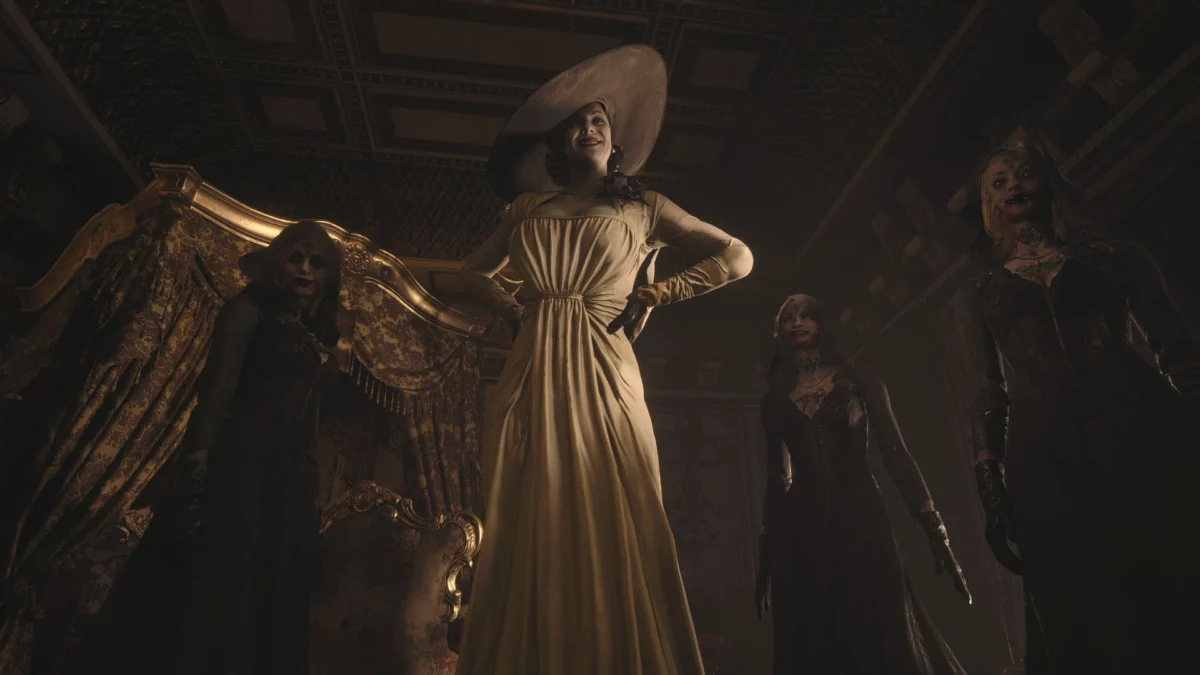
As Capcom’s premier survival-horror franchise approaches its monumental 30th anniversary, the publisher is looking far beyond the immediate horizon. For years, the company has successfully operated on a dual-track strategy, simultaneously developing groundbreaking numbered entries that push the overarching narrative forward while meticulously reconstructing beloved classics from the vault.
However, a fundamental logistical question has lingered over the fanbase and the development teams alike: What happens when the remake division finally catches up to the contemporary timeline? According to Capcom executive producer Jun Takeuchi, the publisher has been preparing for this exact structural convergence for years—laying the groundwork for a massive franchise "crossover" that could redefine the next decade of survival horror.
Main Facts: The Dual-Pronged Strategy and Upcoming Convergence
In a special Japanese magazine feature commemorating the 30th anniversary of Resident Evil (also known as Biohazard in Japan), Takeuchi offered rare, high-level insight into how Capcom manages its flagship IP.
The core revelations from Takeuchi’s statements include:
- The Two-Pronged Approach: Capcom currently splits its development focus between numbered sequels (which advance the ongoing character arcs and contemporary drama) and remakes (which serve as modern retellings of historical events).
- The Inevitable Catch-Up: The timeline of the remake series is steadily marching forward. Eventually, it will reach the era currently inhabited by the modern numbered titles.
- Proactive World-Building: Capcom has been seeding lore connections, corporate entities, and narrative callbacks since Resident Evil Village specifically to bridge these two distinct eras.
- The "Crossover" Event: Takeuchi explicitly points to a forthcoming narrative and structural "crossover" that will unify the modern and classic timelines before the franchise reaches its 40th anniversary in 2036.
Chronology: From PlayStation Origins to the Modern Era
To understand the weight of Takeuchi’s statements, it is necessary to examine how Capcom’s relationship with its own history has evolved over the last three decades.
1. The Classic Era (1996–2005)
Beginning with Shinji Mikami’s original 1996 masterpiece on the PlayStation, Resident Evil established the survival horror genre. For its first decade, the series relied on fixed camera angles, tank controls, and pre-rendered backgrounds. Sequels like Resident Evil 2, 3: Nemesis, and Code: Veronica expanded the lore surrounding the Umbrella Corporation, the T-virus outbreak in Raccoon City, and heroes like Chris and Claire Redfield, Jill Valentine, and Leon S. Kennedy.
2. The Action Shift and the Birth of RE Engine (2005–2017)
Following the revolutionary, action-oriented shift of Resident Evil 4 in 2005, the franchise leaned heavily into blockbuster action with Resident Evil 5 and 6. By the mid-2010s, however, the series had drifted far from its horror roots. The release of Resident Evil 7: Biohazard in 2017 served as a terrifying soft reboot, utilizing the powerful, proprietary RE Engine to pivot the perspective to first-person and return the series to its claustrophobic, survival-horror foundations.
3. The Remake Renaissance (2019–Present)
The critical and commercial triumph of Resident Evil 7 gave Capcom the confidence to resurrect its classic catalog. As Takeuchi notes, Resident Evil 2 (2019) was greenlit directly on the heels of 7’s success.

"The ‘Resident Evil’ series, which began on PlayStation, didn’t have easy access to its early titles at the time, and even if people could play them, they were decades old. So, it also embodies the meaning of ‘reboot’ and ‘response,’" Takeuchi explains, highlighting the double meaning of the "RE" prefix found in both "remake" and "Resident Evil."
Sequential remakes of Resident Evil 3 and Resident Evil 4 followed, with Resident Evil – Code: Veronica heavily rumored or confirmed to be next in line.
Supporting Data: Translating the Director’s Vision
Navigating developer interviews across language barriers often introduces minor translation discrepancies. The recent statements by Takeuchi have circulated through various channels—ranging from dedicated community archives like the Resident Evil Wiki to social media translators utilizing tools like DeepL and Google Translate.
Despite minor lexical differences, the core thesis remains identical across all translations: Capcom views the convergence of its classic remakes and modern sequels not as an administrative hurdle, but as a deliberate creative opportunity.
Takeuchi highlights that seeds for this unification have been intentionally planted since the release of Resident Evil Village (2021). The reintroduction of legacy lore elements—such as deep dives into the origins of the Umbrella Corporation, the legacy of founding CEO Ozwell E. Spencer, and the evocative echoes of Raccoon City via projects like Requiem—are not mere fan service. They are structural building blocks designed to merge the isolated narrative silos of the past and present.
Furthermore, Takeuchi offered a cryptic linguistic riddle regarding the title Requiem:
"Since we’re on the subject, let me give you a hint: ‘Requiem’ isn’t just a title chosen for its meaning of ‘requiem.’ The spelling of Requiem (REQUIEM) contains not only the ‘RE (response)’ mentioned earlier, but also a ‘Q (question).’ In other words, this ‘Requiem’ presents both an ‘answer’ and a ‘question.’ I will explain the meaning of that at some point in the future."
While unpacking layers of "questions" and "answers" invites wild speculation, industry analysts note that Capcom’s methodical transparency points to a master plan mapped out well in advance of the franchise’s fourth decade.

Official Responses and Fan Reactions
As expected, Takeuchi’s comments have sent shockwaves through the global gaming community, sparking intense debate across forums like Reddit, ResetEra, and X (formerly Twitter).
The Community Perspective
The most immediate reaction from the fanbase has been unbridled optimism regarding the future of the remake pipeline. Many players have taken Takeuchi’s remarks as de facto confirmation that once Code: Veronica receives the modern treatment, Capcom will inevitably turn its attention to full-scale modern remakes of Resident Evil 5 and Resident Evil 6.
However, veteran industry observers urge caution. While Takeuchi explicitly confirms that the machinery for catching up to the modern era is in motion, his statements stop short of officially greenlighting specific legacy sequels. Remaking Resident Evil 5 and 6 presents unique narrative and mechanical challenges—particularly regarding how to handle the bombastic, cooperative action set-pieces of those titles within the grounded, atmospheric framework established by the recent RE Engine remakes.
Implications: What Does a "Crossover" Mean for the Future of Survival Horror?
The most profound takeaway from Takeuchi’s anniversary insights is the concept of a "crossover" between the classic remake timeline and the modern numbered series. But what does this actually entail from a game design and storytelling perspective?
1. Narrative Unification
For years, the Resident Evil timeline has felt bifurcated. On one hand, players experience nostalgic, horror-focused retellings of the late 1990s and early 2000s; on the other, they follow Ethan Winters’ modern nightmare or Chris Redfield’s twilight years in the counter-bioterrorism unit BSAA. A narrative crossover implies that the loose threads left dangling by the classic games—perhaps involving surviving legacy characters, long-dormant corporate conspiracies, or the lingering biological fallout of early outbreaks—will directly collide with the contemporary status quo of the universe.
2. Mechanical and Structural Fusion
Could a crossover mean an interactive or structural merging of game engines, character rosters, or gameplay styles? While traditional single-player campaigns remain the lifeblood of the franchise, Capcom has occasionally experimented with multiplayer and crossover spin-offs (Resident Evil: Resistance, Re:Verse). However, Takeuchi’s framing suggests something far more integrated into the core DNA of the single-player experience—potentially bringing legacy protagonists and modern operatives together in a unified timeline event.
3. A Decade-Long Roadmap
With Capcom actively planning ahead toward the franchise’s 40th anniversary in 2036, fans can rest assured that the publisher views Resident Evil as a perpetual, evolving ecosystem rather than a series coasting on nostalgia. Whether the upcoming roadmap yields traditional remakes, bold new numbered entries, or an unprecedented historical convergence, Capcom has made one thing abundantly clear: the nightmare is far from over, and the Umbrella Corporation’s dark legacy will continue to cast a long shadow over the future of video games.

