

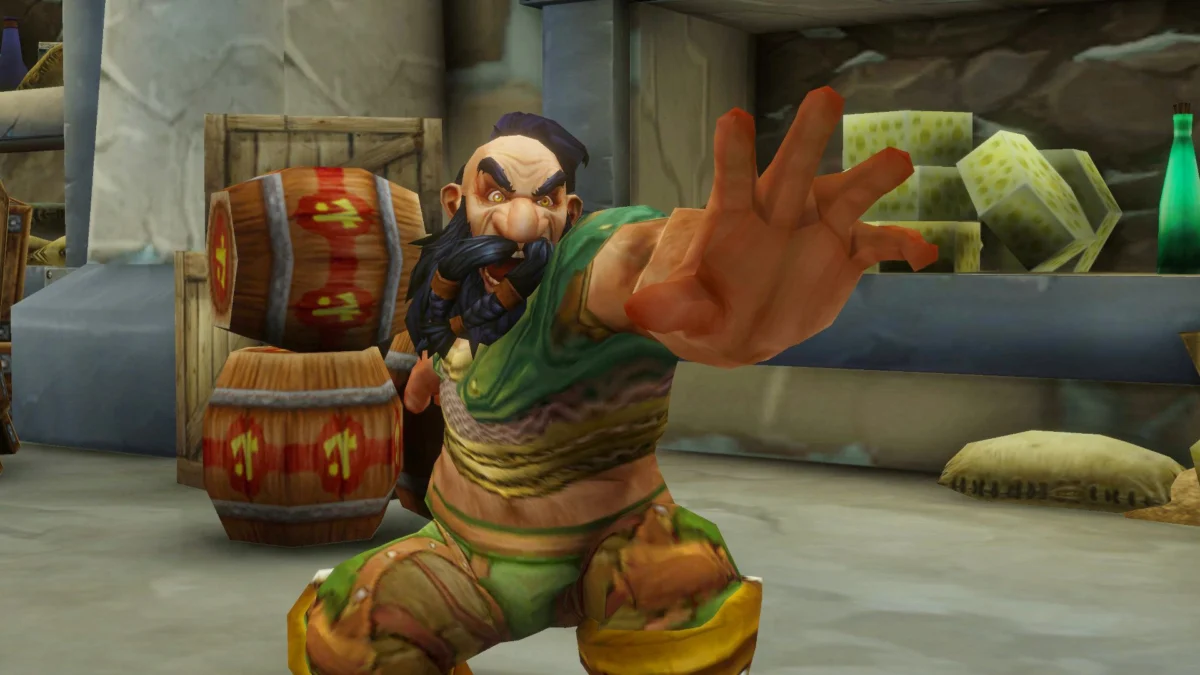
The highly anticipated beta for World of Warcraft: Forever—an ambitious project aiming to capture the nostalgic essence of the early MMORPG experience—has hit a significant, albeit self-inflicted, stumbling block. What was intended to be a technical test of server stability and gameplay mechanics has devolved into a heated public debate regarding digital moderation, player conduct, and the limits of creative freedom in online spaces.
Following a deluge of offensive, racist, and otherwise inappropriate character names appearing in the game world, Blizzard Entertainment’s development team has been forced to intervene with a wave of manual bans and forced name changes. The situation has underscored the complexities of managing social ecosystems in modern gaming, particularly when developers rely on the assumption of community maturity.
The Chronology of a Moderation Crisis
The conflict began almost immediately upon the launch of the WoW: Forever beta. Players entering the game reported an unusually high volume of offensive monikers—names that would typically be flagged and blocked by Blizzard’s long-standing automated profanity filters. For the first week of the beta, the game world became a breeding ground for derogatory language, forcing many players to confront a toxicity level that felt starkly at odds with the "classic" social experience the developers were attempting to curate.
As the community outcry grew, it became clear that the standard, robust filters used in the live retail version of World of Warcraft were absent or non-functional in the beta environment. By the time the beta’s first major patch rolled out earlier this week, the situation had reached a boiling point. Blizzard took decisive action, deploying a mass wave of disciplinary measures. This included permanent account bans for the most egregious offenders and forced character renames for those who had skirted the line of acceptability.
The reaction from the penalized players was swift and predictable. Numerous individuals took to Reddit, X (formerly Twitter), and official forums to claim they were "wrongfully" punished, arguing that their names were merely "cheeky" or "satirical." However, this narrative quickly crumbled under scrutiny from the very developers who issued the bans.
The Developer Perspective: "We Naively Thought"
The situation reached a public crescendo when Tom Ellis, a senior game producer for the project, provided a candid and blunt explanation on X. Ellis revealed that the lack of a functional filter was, in fact, a conscious, albeit ill-fated, decision.
"Our naming filter wasn’t ready to rock for dual names," Ellis explained, "but we naively thought after twenty years folks knew what was and wasn’t OK and we’d be fine for a few weeks of beta till it came online."
This admission highlights a significant gap between developer intent and player behavior. Blizzard had operated under the assumption that two decades of World of Warcraft history—and the associated community guidelines—would be self-policing. Instead, the lack of an automated barrier acted as an invitation for bad actors to test the limits of the system.
Ellis noted that the development team was forced to manually audit every flagged character name, a process that consumed valuable time and resources that should have been dedicated to game stability and launch preparation. The process was painstaking, requiring developers to cross-reference character data against existing conduct policies.
Unmasking the "Wrongfully Accused"
Perhaps the most damning aspect of the controversy is the transparency Blizzard displayed regarding the appeals process. When users complained online about being banned for "mild" or "funny" names, Ellis and his team cross-referenced those accounts against their internal databases.
The results were revealing. Ellis noted that every single user who publicly complained about being unfairly punished had omitted a crucial detail: their account contained at least one other character with a name so egregious it would violate the Terms of Service (ToS) in any iteration of World of Warcraft since its 2004 inception.
"A couple of us spent the evening reading through everything again and checked every Reddit post and Twitter," Ellis stated. "So far, every one of them who’s posted their three cheeky or just inappropriate names has had a 4th character they have accidentally omitted."
The implication is clear: the individuals crying foul were not innocent bystanders caught in a dragnet, but active participants in creating a hostile environment. Ellis’s follow-up statement left no room for negotiation: "If you’re genuinely confused, remember that it’s our database, we can see every character you’ve created, not just the one you’re playing. I read the list. No sympathy. Be a better human next time."
Implications for the Future of "WoW: Forever"
The WoW: Forever beta debacle serves as a critical case study for the future of MMORPG moderation. While many developers aspire to create an open, player-driven social experience, this event demonstrates that "community-led moderation" is a dangerous fallacy in the modern internet era.
The Necessity of Automated Systems
The primary takeaway for the industry is that technical infrastructure—specifically automated content moderation—is non-negotiable. Even in a testing environment, the absence of these tools creates a "broken window" effect, where the presence of offensive behavior encourages more of the same, eventually driving away the constructive, pro-social players who are essential for a healthy community.
Defining "Old-School" Social Interaction
The stated goal of WoW: Forever is to bring back the social friction and cooperative necessity of early-2000s MMOs. This requires players to rely on one another for survival and progression. However, for that social experience to be authentic, the space must be safe. A player who is being harassed by a character with a hateful name is unlikely to engage in the very social interactions the developers are trying to foster. By taking a zero-tolerance approach, Blizzard is signaling that the "old-school" experience they are selling is one of cooperation, not one of unrestricted anarchy.
The Cost of Transparency
Blizzard’s decision to call out specific players for their dishonesty—by revealing the existence of their other offensive characters—is a bold move that marks a departure from traditional "corporate speak." While it risks appearing confrontational, it also builds trust with the silent majority of the player base who are tired of toxic environments. By setting a firm boundary, the developers are establishing the culture they want to see, rather than letting the most vocal and toxic elements of the community define it for them.
Conclusion: A Turning Point for Community Standards
As the WoW: Forever beta continues, the lessons learned from this naming scandal will likely shape the game’s final release. The developers have shown that they are willing to prioritize the health of the community over the comfort of those who wish to disrupt it.
For the players, the message is equally clear: the era of hiding behind "satire" or "cheeky humor" to excuse the use of hateful language is coming to an end. Blizzard has demonstrated that they have the tools to see behind the curtain, and they have no intention of allowing the next iteration of their legendary franchise to be poisoned by a minority of disruptive users.
Ultimately, World of Warcraft: Forever is a testament to the fact that, regardless of how much time passes, the fundamentals of online community management remain the same. Without consistent, firm, and transparent enforcement of standards, the best-laid plans for a "classic" experience can be easily derailed. The developers are now firmly in control of the ship, and their commitment to "being a better human" seems to be the new guiding principle for the game’s social ecosystem. Whether this approach will be enough to foster the collaborative, nostalgic environment they desire remains to be seen, but it is certainly a necessary start.

