

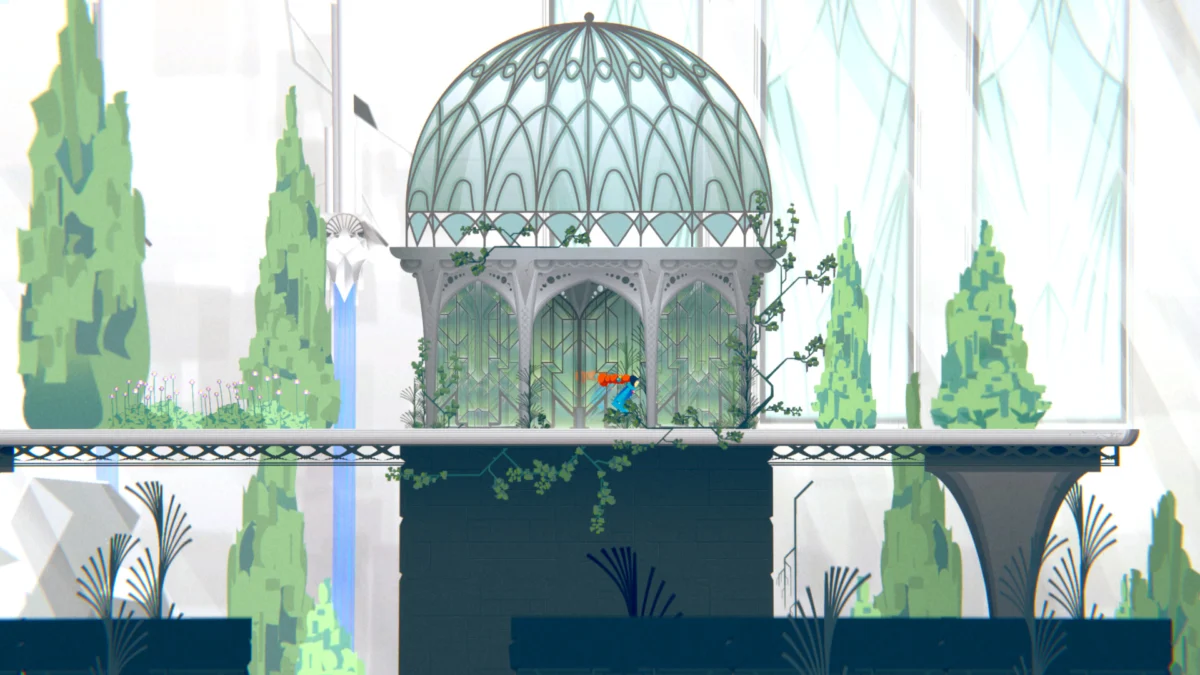
The indie gaming landscape has reached a saturation point where the term "story-rich" has become a ubiquitous marketing shorthand. Much like a label on a gluten-free egg—a redundant descriptor for a product that was inherently so—the tag often promises a depth of narrative substance that fails to manifest in the actual gameplay experience. Aspire: Ina’s Tale, developed by Wondernaut Studio and published in late 2021, stands as a poignant case study in this trend. While visually arresting, the title struggles to transcend its derivative foundations, offering a beautiful facade that masks a hollow, frustrating core.
Main Facts: The Aesthetics of Ambition
At its core, Aspire: Ina’s Tale is a 2D side-scrolling puzzle-platformer that leans heavily into the "waifish protagonist" trope popularized by critically acclaimed titles like Gris, Hoa, and Minute of Islands. The player controls Ina, a young girl who awakens within the confines of the Tower—a mysterious, sentient structure that sustains itself by feeding on the dreams of its inhabitants.
As the "Heart of the Tower" and the "Keeper of Kamiura," Ina is tasked with navigating the complex architecture of her prison to secure her freedom. The game is undeniably striking; the art direction is crisp, featuring hand-painted environments where light glints off ancient armor and crystalline surfaces reflect Ina’s movements with impressive fidelity. However, as critics have noted, the beauty of the visuals serves as a double-edged sword. It sets a high bar for the narrative, one that the game’s script fails to clear.
Chronological Progression: A Familiar Descent
The narrative arc of Aspire follows a predictable trajectory. Players begin in the initial chambers of the Tower, where Ina is introduced to the mechanics of environmental interaction and the lore of the Architect who built her prison.
- The Awakening: Ina emerges from her slumber, confused and isolated, setting the stage for the classic "amnesiac hero" trope.
- Exploration of the Tower: As the player progresses through diverse biomes within the structure, the gameplay shifts from basic platforming to complex puzzle-solving.
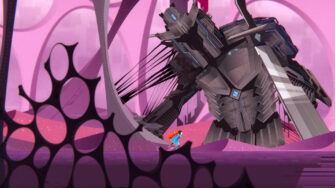
- The Conflict: The Tower is populated by demonic entities and mysterious NPCs. Rather than engaging in direct combat, Ina must use light-emitting power sources to repel these threats.
- The Climax: The final acts of the game demand a level of precision that tests the player’s patience, leading to a conclusion that many found underwhelming compared to the atmospheric buildup.
Throughout this journey, the game attempts to raise philosophical questions regarding fear, worship, and the nature of the Tower. Ina often wonders why the builders chose to immortalize demons in sculpture rather than symbols of light and love. While these questions are framed as deep, they often feel like aesthetic dressing rather than genuine narrative exploration.

Supporting Data: The Mechanics of Frustration
The technical execution of Aspire is perhaps its most contentious element. While the game provides generous checkpoints—a mercy that prevents the title from being outright unplayable—the actual movement mechanics are frequently at odds with the level design.
- Precision vs. Physics: The game requires precise, "Goldilocks-style" positioning for its platforming challenges. When the player fails, it rarely feels like a lack of skill and more often like a clash with the game’s rigid physics engine.
- The Switch Experience: Porting issues are a common hurdle for indie titles, and Aspire is no exception. On the Nintendo Switch, the movement feels particularly stiff. Even with high-quality controllers, the lack of fluidity in Ina’s movement makes sections involving rope-swinging and timing-based jumps feel like a chore.
- Puzzle Variety: The puzzles are structured by area, focusing on distinct mechanics like size manipulation (making blocks grow or shrink) and power source management. While these mechanics offer brief moments of intellectual satisfaction, they quickly devolve into repetitive, "brick-wall" frustration as the game progresses.
Official Responses and Developer Intent
Wondernaut Studio has positioned Aspire: Ina’s Tale as a labor of love, emphasizing the artistic effort put into the world-building and the emotional journey of the protagonist. In promotional materials, the team highlighted the "dream-like" quality of the Tower and the importance of Ina’s connection to the environment.
While they have not issued a formal "response" to the critique regarding the game’s derivative narrative, the design philosophy clearly favors atmosphere over complexity. By avoiding spoken language and relying on environmental storytelling, the developers aimed for a universal appeal. However, this minimalist approach backfired for many players, who found that the lack of distinct character agency made the emotional stakes feel manufactured rather than earned.
Implications: The "Story-Rich" Paradox
The critical reception of Aspire: Ina’s Tale raises a broader question for the indie industry: Can a game rely solely on its aesthetic identity to carry a weak narrative?
The Risk of Derivative Storytelling
There is a danger in adhering too closely to the "template" of successful indie games. By mimicking the visual styles and quiet, melancholy pacing of genre staples, Aspire invites direct comparison to superior games. When the writing fails to provide a unique hook, the game feels less like an homage and more like an echo. Originality does not require a complete reinvention of the wheel, but it does require the willingness to take risks. Aspire plays it safe, and in doing so, it fades into the background of a crowded marketplace.
The Importance of Mechanical Polish
For a puzzle-platformer, the movement is the "language" of the game. If the language is clunky or unresponsive, the player cannot communicate with the world. The frustration encountered in the latter half of Aspire highlights that even the most beautiful art style cannot compensate for imprecise controls. When a player spends more time fighting the physics engine than solving the environmental puzzles, the "story-rich" experience is disrupted.
A Lesson for Future Development
The takeaway for developers is clear: "Story-rich" must be a commitment, not just a genre tag. To create a narrative that truly resonates, creators must move beyond the tropes of the "waifish wanderer" and the "mysterious, decaying structure." Players are looking for subversion, character development that feels earned through action, and a mechanical loop that enhances the narrative rather than impeding it.
Conclusion: A Beautiful, Yet Hollow, Ascent
Aspire: Ina’s Tale is not a bad game, but it is an unfulfilled one. It offers a visual feast that will undoubtedly attract players looking for their next aesthetic-heavy, short-form experience. It is a game of moments—moments where the light hits the crystal just right, or where a puzzle clicks into place with satisfying logic.
However, beneath the polished exterior lies a narrative that struggles to justify its own existence and a mechanical design that demands more from the player than the game is willing to give in return. For those who prioritize atmosphere above all else, Aspire may be worth a visit. For those seeking a compelling story or tight, rewarding platforming, the Tower may prove to be a climb that is ultimately not worth the effort. In the end, Aspire: Ina’s Tale serves as a reminder that in the world of indie development, true "story-rich" gameplay requires as much soul as it does polish.

