

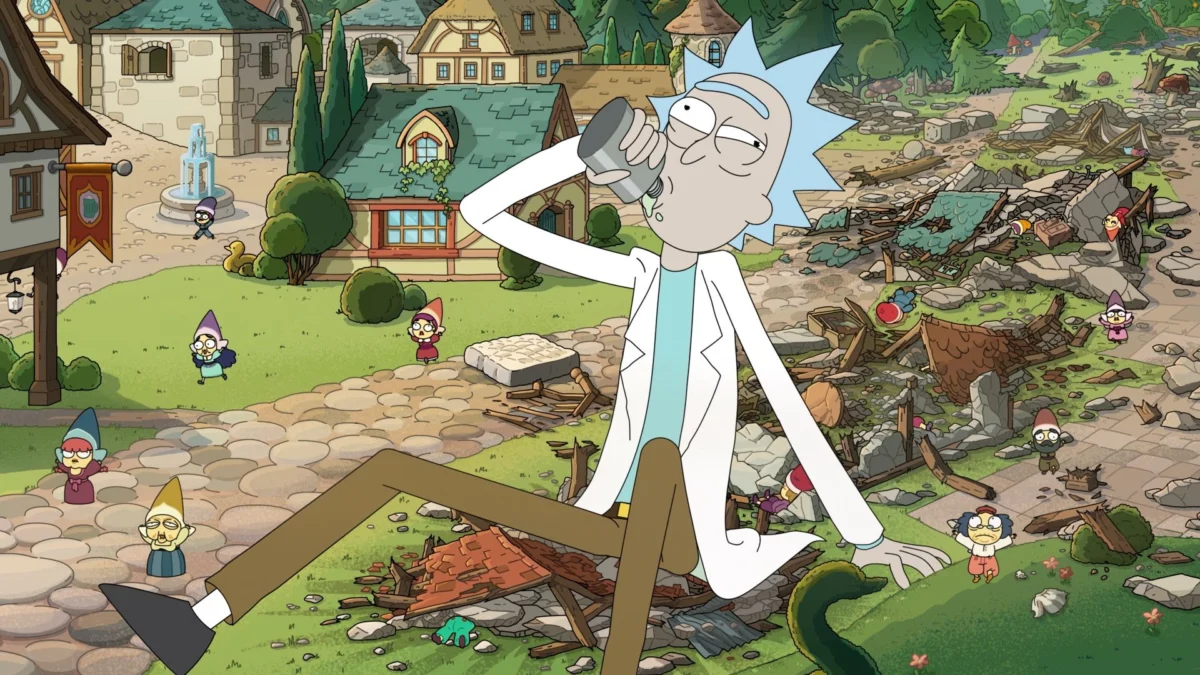
In the sprawling, chaotic multiverse of Rick and Morty, the titular scientist Rick Sanchez has long been established as the smartest man in existence. He is a master of quantum mechanics, an architect of interdimensional travel, and a god-like figure capable of bending reality to his will. Yet, despite his cosmic intellect, he remains fundamentally shackled to a destructive habit: his persistent, unyielding alcoholism.
In the fourth episode of the show’s ninth season, titled "A Ricker Runs Through It," the series pivots away from the slapstick portrayal of inebriation often seen in animation, choosing instead to confront the grim, unglamorous reality of substance abuse. By exploring the vulnerability of a character who is otherwise invincible, showrunners Dan Harmon and Scott Marder are forcing the audience to look past the catchphrases and burps to see the tragedy of a man who is his own worst enemy.
The Myth and the Reality: A Shift in Narrative Strategy
The episode opens with a scene that effectively strips away any lingering romanticism surrounding Rick’s drinking. When the genius scientist reaches such a level of intoxication that he loses control of his basic bodily functions—specifically, wetting his pants—the audience is reminded that Rick’s lifestyle has physical, humiliating consequences.
"You write what you know," showrunner Dan Harmon remarked during a recent virtual interview. "I think that the balance is struck by mythologizing something that is important about substance abuse, which is that it takes all forms. If we were doing the version of drunkenness seen in old cartoons, where it’s just a gag about slurring words or singing songs, we would be alienating people. We’d be out of touch. Rick’s alcoholism doesn’t look like a superpower. The guy wets his pants on a regular basis."
Harmon, who has been candid about his own past struggles with alcohol, suggests that the show is attempting to move toward a more "dramatic" portrayal of addiction, drawing parallels to high-stakes cinema rather than traditional comedic tropes.
Cinematic Comparisons: The Denzel Washington Factor
To understand the tonal shift in season 9, Harmon points toward Robert Zemeckis’s 2012 drama Flight, starring Denzel Washington. In the film, Washington plays Whip Whitaker, a commercial airline pilot who manages to land a crashing plane miraculously despite being severely intoxicated.
"The whole point of the story is that it’s up to Denzel’s character when he fixes this issue," Harmon explains. "That makes it more important, more dramatic. You don’t really feel like you’re watching a person die in an aquarium; you’re watching Macbeth. You’re watching someone struggle, and they better fix themselves, or they’re going to die."
By positioning Rick Sanchez in this light, the showrunners are moving away from the "cool, functioning alcoholic" trope that has dominated adult animation for decades. In this iteration of Rick and Morty, Rick’s drinking is not an accessory to his genius; it is a weight dragging him down, complicating his ability to function in his own high-tech world.
Chronology of a Relapse: Inside "A Ricker Runs Through It"
The narrative arc of "A Ricker Runs Through It" provides a specific case study in how Rick’s addiction interferes with his daily life. The episode reveals that Rick’s iconic flask is not merely a container for alcohol; it is a portal connected to a miniature, pocket-dimension world that supplies him with an infinite, localized supply of vodka.
The plot kicks off when Rick’s level of intoxication reaches a critical threshold, leading to a catastrophic technical failure. In his drunken state, Rick forgets his computer password—a seemingly mundane problem that, for a man with his level of security, becomes a monumental crisis.
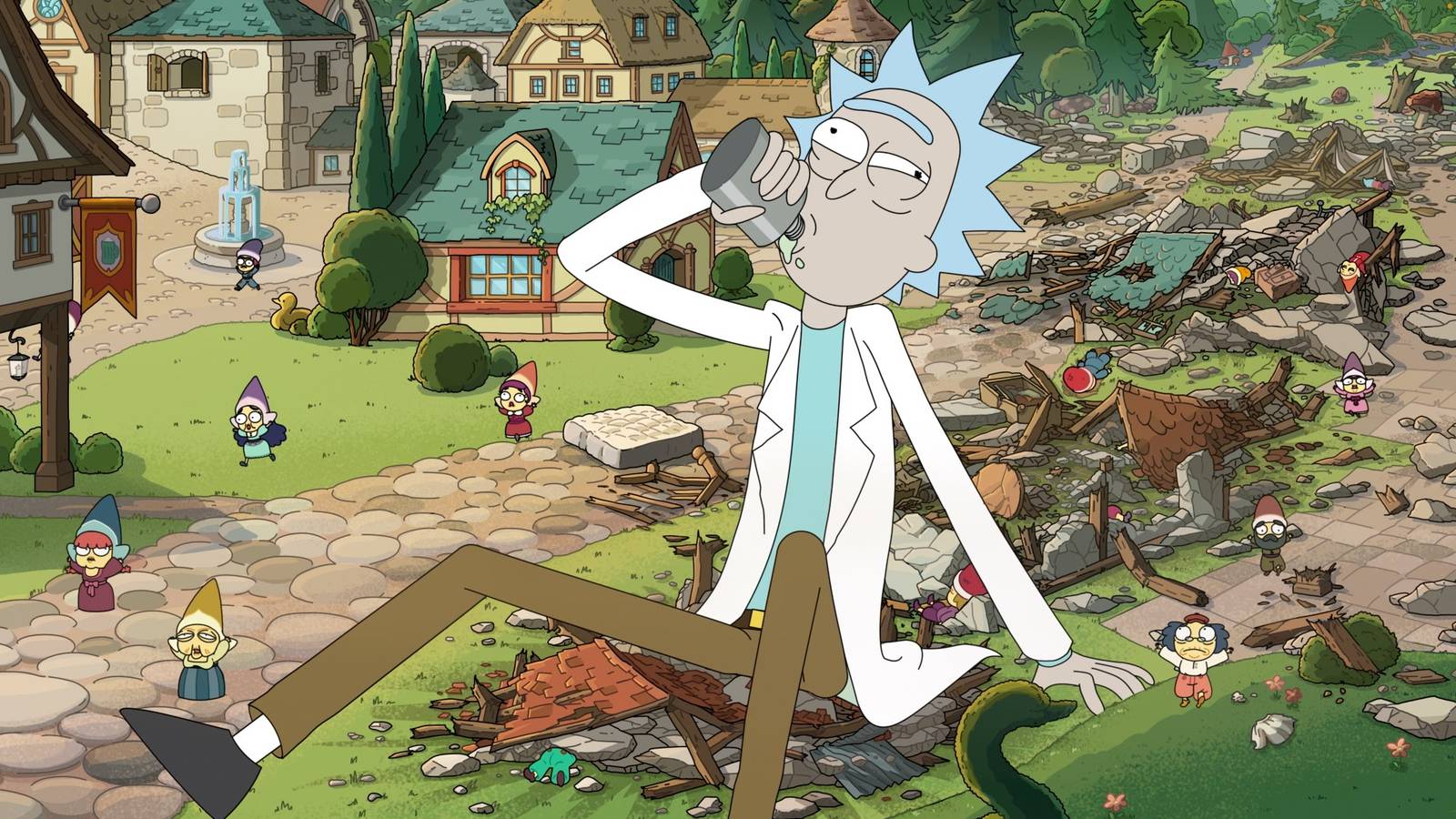
- The Inebriation: Rick begins the episode in a state of advanced intoxication, leading to the aforementioned loss of motor control.
- The Technological Lockdown: Unable to remember his credentials due to impaired cognitive function, Rick triggers a security lockdown of his entire laboratory/garage.
- The Escalation: Rather than simply sobering up, Rick attempts to use increasingly complex, high-tech authentication protocols to bypass his own security.
- The Revelation: The audience sees the lengths to which Rick has gone to ensure his access to alcohol remains uninterrupted, even when it puts his own work and safety at risk.
Scott Marder, the show’s co-showrunner, notes that the absurdity of the solution is the point. "He had these really complicated safeguards to get back into his stuff, which are so much more complicated than just stopping drinking and not needing any of that stuff," Marder says. "It was cool to have Morty ride that roller coaster with him. It shows that his addiction isn’t just a private struggle; it’s a burden that those around him, especially Morty, have to navigate."
The Historical Context: Cartoons and Alcoholism
To understand why this shift is so significant, one must look at the history of animation. For much of the 20th century, alcohol in cartoons was treated as a source of slapstick humor. The 1939 Merrie Melodies short Naughty but Mice, directed by Chuck Jones, famously featured a mouse who consumes cold medicine, becomes inebriated, and wanders around singing "How Dry I Am."
For decades, this archetype defined how substance abuse was presented in animation. It was a joke, a temporary state of silliness that had no lasting consequences. By rejecting this model, Rick and Morty is positioning itself as a modern successor to this genre—one that recognizes the audience’s growing appetite for characters with genuine, messy flaws. The show is acknowledging that the "funny drunk" is an outdated relic.
Implications for Future Seasons
The decision to focus on the darker, more pathetic aspects of Rick’s addiction carries significant implications for the remainder of season 9 and beyond. If Rick’s alcoholism is treated with the weight of a tragedy, it suggests that the series is moving toward an inevitable confrontation with his demons.
The Impact on Morty
Morty has spent years playing the reluctant sidekick to a man who is frequently incapacitated by his own choices. As the series progresses, the emotional toll on Morty becomes clearer. Watching his grandfather struggle with a dependency that renders him vulnerable—and often incompetent—changes the power dynamic of the show.
The Scientific Toll
Rick Sanchez is defined by his intellect. By showing that his addiction is now actively obstructing his scientific work, the writers are signaling that the "smartest man in the universe" is losing his edge. If the genius is compromised by his vices, the stakes for the entire multiverse are fundamentally altered.
The Path to Redemption (or Ruin)
The comparison to Macbeth and Flight is telling. In these narratives, the protagonist is often faced with a binary choice: reform or perish. While Rick and Morty is still a comedy, the door is now open for a more serious exploration of recovery. Whether Rick is capable of that change remains the central question of the season.
Conclusion
"A Ricker Runs Through It" serves as a landmark episode that demands more from its audience. It asks viewers to move past the superficial enjoyment of Rick’s chaotic adventures and consider the man behind the flask. By humanizing the struggle—or, more accurately, by de-mythologizing it—Harmon and Marder have added a layer of depth that could redefine the show’s legacy.
As the season continues, the central question will not be which dimension Rick travels to next, or what alien threat he faces, but whether he can overcome the internal force that threatens to undo everything he has built. For a character who has conquered time, space, and existence, the hardest battle may finally be the one he is fighting against himself.
Episode 4 of Rick and Morty season 9 aired on June 14 on Adult Swim. The season continues to push the boundaries of what a modern adult animated series can achieve, proving that even in a multiverse of infinite possibilities, the most difficult journey is often the path to self-awareness.

