

Published: December 20, 2021
In the crowded landscape of indie adventure games, few titles manage to capture the elusive "magic" that defines a modern classic. Since the release of Journey in 2012, many developers have attempted to replicate its minimalist, evocative storytelling and atmospheric traversal. Among the most successful of these spiritual successors is Scarf, a title that breathes new life into the genre by shifting the focus from solitary isolation to a unique, symbiotic partnership.
Scarf is not merely a platformer; it is an interactive meditation on connection, freedom, and the ecological state of the world. By marrying fluid mechanics with a poignant narrative, it asks players to look beyond the surface of its vibrant, painterly landscapes and consider the weight of their impact on the digital environments they traverse.
Main Facts: A Partnership Forged in Thread
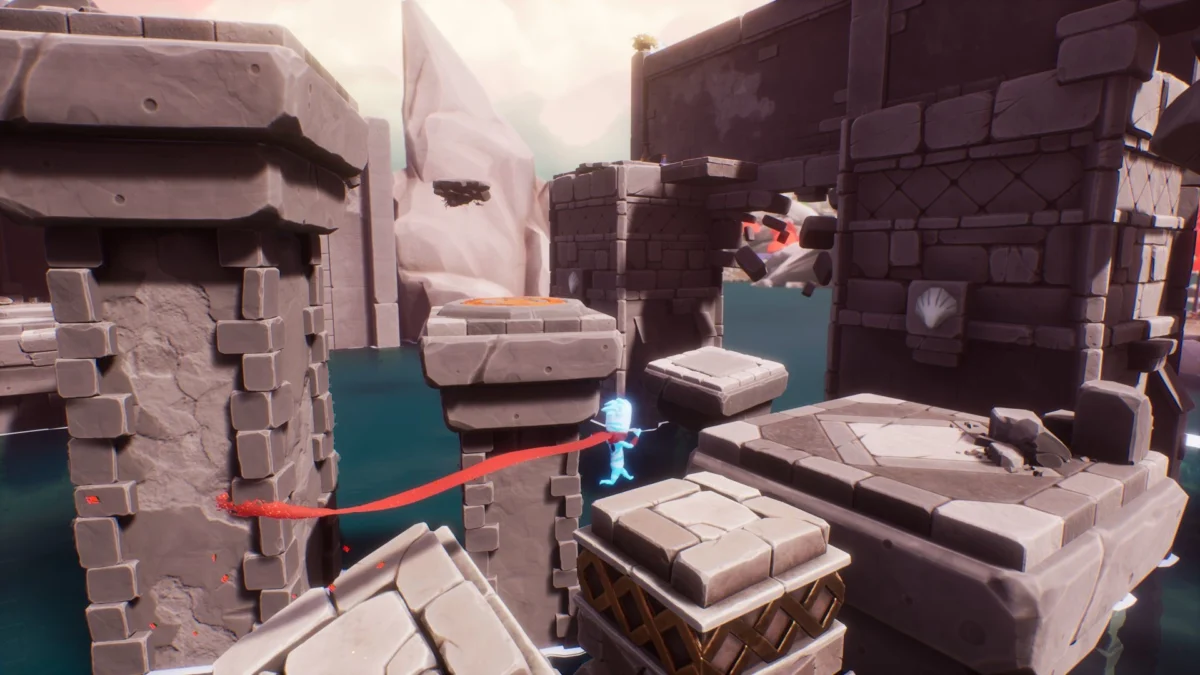
At its core, Scarf is a third-person adventure game that centers on a nameless nomad and their companion: a sentient, polymorphic, dragon-shaped scarf. The central narrative hook is deceptively simple: this creature has been forcibly separated from its mother, and it falls to the player to help them reunite. To achieve this, the pair must navigate a series of sprawling, ancient worlds to retrieve stolen fragments of a portal, which will serve as the gateway to the reunion.
Unlike the silent, solitary experience of many atmospheric games, Scarf relies heavily on the non-verbal communication between the nomad and the creature. The scarf is not merely a piece of apparel; it is a mechanical extension of the player. It shifts its form to become wings for gliding, a hook for traversal, or a tether for puzzles, turning the nomad into a versatile explorer.

The game eschews traditional combat entirely. In a medium often obsessed with conflict and mechanical escalation, the decision to remove enemies and violence is a deliberate creative choice. The developer, Uprising Studios, has crafted a world where challenges are environmental rather than adversarial, ensuring that the player’s focus remains entirely on the bond between the nomad and the scarf, and the exploration of the world’s rich, albeit somber, history.
A Chronology of the Adventure
The progression of Scarf is structured around the discovery of distinct biomes, each presenting its own visual and mechanical identity.
- The Awakening: The player begins in a serene, albeit mysterious, environment, learning the basic mechanics of movement and the initial bond with the scarf. Here, the game establishes the rhythm of exploration—observing, interacting, and gathering.
- The Expansion: As players progress, they unlock new abilities. Each area introduces a new "form" for the scarf, allowing the player to manipulate the environment in novel ways. This phase emphasizes the "collect-a-thon" nature of the game, as players are tasked with gathering sigils and orbs to unlock subsequent regions.
- The Revelation: Through the collection of "lore fragments"—beautifully rendered sequences reminiscent of neolithic cave paintings—the narrative complexity unfolds. These cutscenes, interpreted by a solemn narrator, begin to recontextualize the player’s mission.
- The Climax: The final acts of the game shift from mere exploration to a profound realization about the nature of the nomad’s mission. The narrative "heel turn" challenges the player’s assumptions, transforming the game from a simple quest into a critique of exploitation and freedom.
Supporting Data and Technical Performance
Technically, Scarf stands out for its visual direction and sound design. The game utilizes a "matte vibrancy," a color palette that feels like a living painting. Despite the saturation, the visuals remain easy on the eyes, even during extended sessions.
The auditory experience is driven by an adaptive orchestral score. This music is dynamic, swelling in intensity during moments of wide-vista exploration and receding into near-silence to highlight the ambient sounds of wind, water, and shifting earth.
From a mechanical standpoint, the controls are intentionally "floaty," which might deter players looking for the pixel-perfect precision of a Super Meat Boy or Celeste. However, the game compensates for this with extremely forgiving platforming. Checkpoints are frequent and generous; should a player mistime a jump, they are almost immediately returned to the ledge from which they leaped, minimizing frustration and keeping the "flow state" intact.

Official Perspectives and Creative Intent
In discussions regarding the game’s design, the development team has emphasized that Scarf was intended to be an accessible, reflective experience. By omitting a combat system, the developers avoided the common pitfall of turning a beautiful journey into a repetitive cycle of violence.
The scarf itself acts as a litmus test for the player’s engagement. When the scarf is separated from the nomad—a recurring narrative device—the player loses their abilities, creating a tangible sense of loss. This mechanic forces the player to value their companion not just as a tool, but as an entity that dictates their capability to interact with the world.
Furthermore, the "lore fragments" are a deliberate attempt to reward patient players. By including an option in the menu to re-watch these cutscenes, the developers encourage a deeper level of analysis, acknowledging that the game’s true weight is not found in its platforming, but in its subtext.
Implications: A Commentary on Ecology and Agency
Perhaps the most significant aspect of Scarf is its underlying social commentary. While it begins as a charming tale of a lost child, the narrative eventually pivots to explore themes of environmental stewardship and the moral implications of "collecting" items in a world that might not belong to the protagonist.
The "Collect-a-thon" Dilemma
Critics have noted that the game’s structure relies heavily on the "laundry list" of items to collect: portal fragments, sigils, orbs, and hidden carvings. While this provides a structured path for exploration, it can occasionally feel repetitive. The pacing is deliberately slow, which may alienate players seeking high-octane thrills. However, this slowness is intentional; it is designed to force the player to stop and witness the environmental storytelling embedded in the ruins of the world.

A Deeper Meaning
The ultimate implication of Scarf is a sobering look at the cost of progress. As the player gathers the fragments needed to reunite the mother and child, they are forced to confront the reality that their actions might be causing disruption to the very world they are traversing. It is a nuanced, sometimes dark, take on the "hero’s journey" trope. By the time the credits roll, the player is left with a sense of introspection that far outweighs the simplicity of the game’s initial jumping puzzles.
Conclusion: A Worthwhile Journey
Scarf is a testament to the idea that a game does not need to be mechanically revolutionary to be emotionally resonant. It is not designed to challenge the player’s reflexes or to frustrate them with high-difficulty spikes. Instead, it provides a safe, beautiful, and contemplative space for the player to exist within.
While veterans of the platforming genre may find the puzzles to be standard fare, those who prioritize atmosphere and narrative depth will find Scarf to be a rewarding, albeit brief, experience. It is a reminder that even in the digital realm, the bonds we form—and the way we treat the world around us—matter. Whether you are in it for the charming aesthetic or the surprisingly ambitious allegorical narrative, Scarf offers a journey that is, in every sense of the word, worth taking.

