

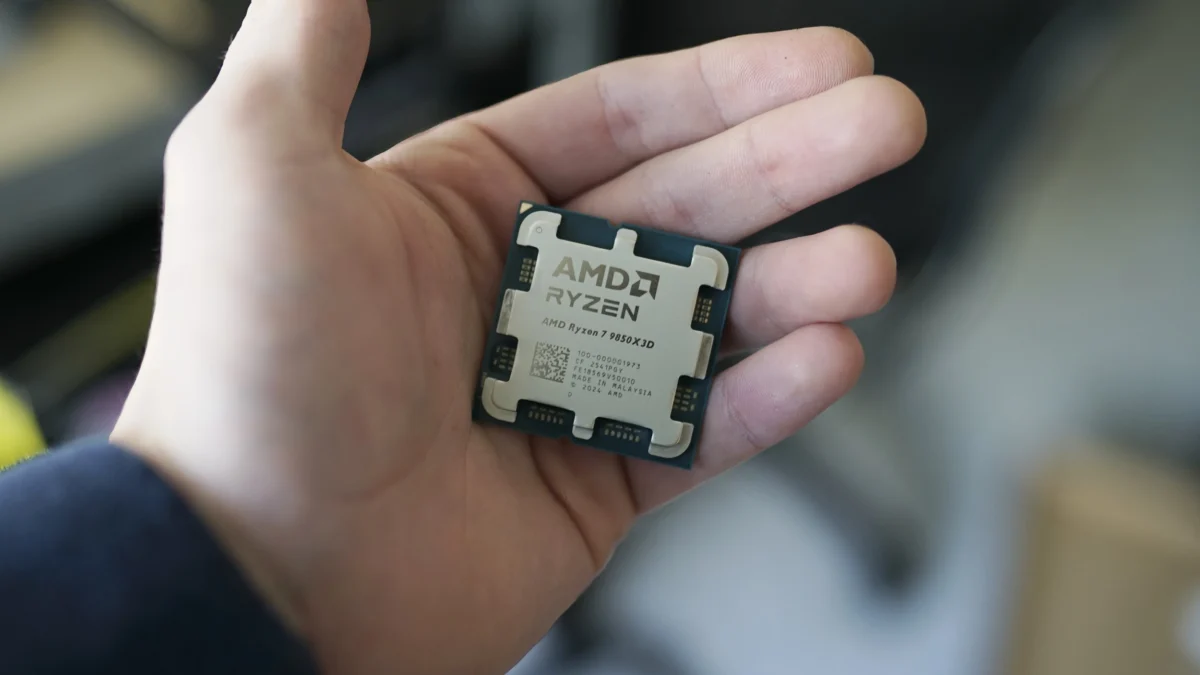
San Francisco, CA – In a significant development for the competitive landscape of artificial intelligence hardware, Meta Platforms is reportedly poised to deploy a custom version of AMD’s Instinct MI450-series AI accelerator. This tailored hardware, designed with substantially less high-bandwidth memory (HBM4) and reduced compute capabilities compared to its fully-fledged counterpart, the Instinct MI455X, will be primarily optimized for Meta’s vast recommendation systems that power platforms like Facebook and Instagram.
The strategic decision, revealed in a report by industry analysis firm SemiAnalysis, underscores a complex balancing act by Meta: seeking cost efficiencies for its ubiquitous, high-volume workloads while potentially solidifying its reliance on other vendors, most notably Nvidia, for the demanding and rapidly evolving field of frontier AI model training and inference.
The Core of the Customization: Reduced Memory and Compute
At the heart of this report is the revelation that Meta’s custom Instinct MI450-based accelerator will feature only 144GB of HBM4 memory, a stark contrast to the 432GB anticipated for the standard, full-fat Instinct MI455X. This reduction, a staggering two-thirds of the memory capacity, is accompanied by what SemiAnalysis describes as "significant decreases in compute" performance. The implication is a highly specialized chip engineered for a very specific purpose: serving recommendation algorithms.
Recommendation systems, while critical to Meta’s business model, often operate differently from the large language model (LLM) training and inference that define frontier AI. They tend to be memory-bandwidth intensive rather than raw compute-intensive, processing vast amounts of user data and content to suggest relevant items. By cutting down on expensive HBM4 and raw compute power, Meta aims to achieve a more competitive "bandwidth-per-dollar ratio" specifically tailored for these workloads.
This specialization, while promising substantial cost savings and improved power efficiency for Meta’s massive infrastructure, introduces a critical trade-off: a notable loss of versatility. For the cutting-edge demands of training and running inference on the largest and most complex AI models, Meta will likely continue to lean on more general-purpose, high-capacity AI accelerators, with Nvidia’s offerings appearing to be the most probable beneficiaries.
Chronology of Meta’s AI Hardware Strategy
Meta’s journey in building its AI infrastructure has been characterized by a drive for scale, efficiency, and increasingly, diversification. For years, Nvidia has been the undisputed leader in AI accelerators, providing the backbone for much of the industry’s advancements, including Meta’s own ambitious AI research and product development.
Early Reliance on Nvidia: Meta, like many hyperscalers, built its initial AI capabilities largely on Nvidia’s GPU architecture. The CUDA ecosystem, extensive developer tools, and superior performance in parallel processing made Nvidia GPUs the de facto standard for both training and inference workloads. This reliance, however, came with significant costs and the potential for vendor lock-in.
The Drive for Diversification and Custom Silicon: Recognizing the strategic importance and immense cost of AI hardware, Meta began exploring alternatives and developing its own custom silicon initiatives. This strategy aimed to reduce dependence on a single vendor, optimize hardware for specific internal workloads, and ultimately lower total cost of ownership (TCO). This move mirrored similar efforts by other tech giants like Google (with its TPUs) and Amazon (with Inferentia and Trainium).
The AMD-Meta Partnership Emerges: A pivotal moment arrived with the announcement that AMD would supply Meta with Instinct AI accelerators. While the precise terms were not fully disclosed, the agreement, reportedly valued in the tens of billions of dollars over five years, involved AMD supplying 6 GW of Instinct AI accelerators. Crucially, this initial announcement hinted at the inclusion of custom accelerators based on the Instinct MI450 design, signaling Meta’s intent to tailor hardware to its unique operational needs. The SemiAnalysis report now sheds light on the specific nature of this customization.
The MI400 Series Context: AMD’s Instinct MI400 series represents its latest generation of AI accelerators, designed to compete directly with Nvidia’s high-end offerings. The MI455X, in particular, is positioned as a powerful, general-purpose accelerator. By opting for a cut-down MI450 variant, Meta is signaling a pragmatic approach, segmenting its AI workloads and investing in purpose-built hardware where it makes economic sense. This report, therefore, serves as a crucial update on the practical implementation of the broader AMD-Meta partnership.
Supporting Data: A Deep Dive into the Customization
The decision to drastically reduce HBM4 capacity and compute performance for Meta’s custom AMD Instinct MI450-series accelerators is rooted in a detailed understanding of both the economics of AI hardware and the specific demands of recommendation systems.
Technical Deep Dive: HBM4, Compute, and Bandwidth
- HBM4 Memory: High-Bandwidth Memory (HBM) is a type of 3D-stacked synchronous dynamic random-access memory (SDRAM) known for its high bandwidth, low power consumption, and compact form factor. HBM4, the latest iteration, pushes these boundaries further, offering unprecedented data transfer rates. However, it is also one of the most expensive components in a high-end AI accelerator. Each "stack" or package of HBM can be incredibly costly. The full Instinct MI455X is expected to feature 432GB of HBM4, likely utilizing multiple 12-Hi (12-high) or even 16-Hi stacks. Meta’s custom 144GB version, using six 8-Hi packages, represents a significant engineering and cost-saving choice.
- Capacity vs. Bandwidth: While the capacity is reduced by two-thirds, the bandwidth might not be proportionally impacted, especially if the number of HBM channels is maintained, or if the system is not consistently saturating the full bandwidth of the larger configuration. Recommendation systems are often bottlenecked by memory bandwidth to fetch vast amounts of user and item embeddings, rather than requiring enormous memory capacity for model parameters (like massive LLMs).
- "Significant Decreases in Compute": This likely refers to a reduction in the number of active compute units (e.g., streaming multiprocessors, execution units) or a lower clock speed for these units, or even a targeted disabling of certain types of compute, such as those optimized for complex floating-point operations critical for training deep learning models. For recommendation inference, integer operations (INT8) or lower-precision floating-point (FP16 or BF16) are often sufficient, and raw compute density for these operations might still be adequate even with a reduced overall compute footprint.
- Bandwidth-per-Dollar Ratio: This metric is crucial for hyperscalers operating at immense scale. Recommendation systems often involve retrieving and processing large numbers of embeddings (vector representations of users and items) from memory. If the cost of memory and the rate at which data can be moved to the compute units are optimized for this specific task, it can lead to substantial performance-per-dollar gains. A chip with less expensive, but still high-bandwidth, memory might be more cost-effective than a general-purpose chip with overkill memory capacity for this specific workload.
- CPU/GPU Balance: For recommendation systems, the data preprocessing and fetching stages can be heavily CPU-bound. A less powerful, more cost-effective GPU for the actual inference component allows for a better overall system balance, preventing the GPU from being underutilized while the CPU struggles to feed it data. This optimization contributes to better resource utilization and efficiency across the entire server rack.
Economic Analysis: BOM, TCO, and Power Efficiency
- Reduced Bill of Materials (BOM): HBM4 is arguably the single most expensive component in modern AI accelerators, often accounting for a substantial portion of the chip’s manufacturing cost. Reducing its capacity by two-thirds directly translates to a dramatically lower BOM per accelerator. Furthermore, a smaller HBM configuration can also lead to a smaller overall package size for the accelerator, potentially simplifying cooling and board design, and further reducing manufacturing costs. For a company like Meta, deploying hundreds of thousands or even millions of these accelerators, savings of tens of millions of dollars, if not more, are easily realized.
- Total Cost of Ownership (TCO): Beyond the initial purchase price (BOM), TCO encompasses operational costs like power consumption, cooling, and maintenance.
- Power Consumption: An accelerator with less HBM and reduced compute will inherently consume less power, especially when running workloads that don’t fully utilize the maximum capacity of a general-purpose chip. For data centers the size of Meta’s, every watt saved across thousands of servers adds up to enormous reductions in electricity bills and cooling infrastructure requirements. This can lead to a substantially better TCO over the useful life of the hardware.
- Rack Density and Cooling: Smaller packages and lower power consumption can also allow for higher rack density, meaning more accelerators can be deployed in the same physical footprint, maximizing data center space utilization.
Market Context: Specialization vs. General Purpose
This move by Meta highlights a growing trend among hyperscale cloud providers and tech giants: the increasing specialization of AI hardware. While general-purpose GPUs like Nvidia’s H100 or AMD’s MI300X/MI455X are designed to handle a wide array of AI tasks, from training massive LLMs to complex scientific simulations, their versatility comes at a premium. For pervasive, highly optimized workloads like recommendation systems, where specific bottlenecks are well-understood, custom silicon or highly tailored variants can offer a significant economic advantage. This strategy allows Meta to "right-size" its hardware investment for different segments of its vast AI infrastructure.
Official Responses and Lack Thereof
As this report originates from SemiAnalysis, an independent industry analysis firm known for its deep dives into semiconductor technology, it’s important to note the absence of official statements from either Meta or AMD on these specific details. Companies typically do not disclose granular specifications of custom hardware agreements, particularly those involving competitive advantages or proprietary optimizations.
However, the prior announcement of AMD supplying Meta with custom Instinct MI450-based accelerators for "select workloads" lends significant credibility to the SemiAnalysis report. The report simply fills in the blanks regarding the nature of that customization, aligning perfectly with the strategic rationale one would expect from a company operating at Meta’s scale.
Implications Across the AI Ecosystem
The reported deployment of custom AMD MI450 accelerators by Meta carries profound implications for Meta itself, for AMD, for Nvidia, and for the broader AI hardware industry.
Strategic Implications for Meta
- Cost Efficiency for Core Workloads: The primary benefit for Meta is substantial cost savings on the hardware powering its recommendation systems, which are foundational to its user engagement and advertising revenue. By optimizing for bandwidth-per-dollar and TCO for this specific, pervasive workload, Meta can deploy these accelerators at scale more economically.
- Reinforcing Multi-Vendor Strategy (with a Twist): This move underscores Meta’s commitment to a multi-vendor strategy, reducing its reliance on any single supplier. However, the specialization creates an interesting dynamic: by making these AMD chips less versatile, Meta might inadvertently strengthen its dependence on other vendors (like Nvidia) for its most demanding and flexible AI workloads.
- Loss of Versatility and Future-Proofing Concerns: The biggest drawback is the inherent loss of versatility. These specialized MI450s would be ill-suited for training the next generation of large language models or for performing complex, general-purpose AI inference. If Meta’s AI priorities or model architectures shift dramatically, or if the recommendation algorithms themselves evolve to require more general-purpose compute or higher memory capacity, Meta could find itself with a massive installed base of hardware that is no longer optimally aligned with its needs. The interchangeability problem is real: a general-purpose MI455X could be reassigned to various tasks, but Meta’s custom version is locked into its niche.
- Impact on Frontier AI Ambitions: This specialization strongly suggests that Meta’s aggressive push into frontier AI, including the development of models like Llama, will continue to rely heavily on general-purpose, high-end AI accelerators with ample HBM capacity and uncompromised compute power. This separation of concerns means two distinct hardware procurement strategies.
Implications for AMD
- Significant Hyperscaler Win: Securing a deal of this magnitude with Meta, one of the largest purchasers of AI hardware globally, is a major victory for AMD. It demonstrates AMD’s capability to not only produce competitive AI accelerators but also to work closely with hyperscalers to deliver custom, optimized solutions.
- Validation for Specific Workloads: This win validates AMD’s Instinct platform for large-scale inference workloads, particularly those that are memory-bandwidth sensitive and less compute-intensive than full-scale LLM training. It positions AMD as a strong alternative or complement to Nvidia in specific segments of the AI hardware market.
- Not a Universal Dominance: While a major win, it also signifies that AMD is not yet capturing the entirety of Meta’s AI hardware spend, particularly for the highest-value, most demanding AI training and inference tasks. The customization implies a more targeted penetration rather than a broad displacement of existing infrastructure.
Implications for Nvidia
- Reinforced Dominance in Frontier AI: Ironically, Meta’s move to customize AMD accelerators for cost savings on recommendation systems could solidify Nvidia’s position as the primary supplier for Meta’s most advanced and versatile AI workloads. If the custom AMD chips cannot handle LLM training and inference effectively, Meta’s frontier AI division will have no choice but to procure high-end, general-purpose accelerators, where Nvidia currently holds a commanding lead with products like the H100 and upcoming Blackwell series.
- Premium for Versatility: This situation highlights the premium that Nvidia commands for its general-purpose GPUs, which offer the flexibility and raw power required for evolving AI research and development. While Meta is saving money on one front, it may end up spending more on another to maintain its leadership in cutting-edge AI.
- Market Segmentation Benefits: Nvidia can continue to focus on delivering top-tier, uncompromised performance and a robust software ecosystem (CUDA), knowing that even attempts at cost-saving specialization by customers might still lead them back for the most demanding tasks.
Broader Industry Implications
- Trend Towards Hardware Specialization: This move reinforces the growing trend of hardware specialization within the AI industry. As AI workloads diversify, companies are increasingly willing to invest in custom or semi-custom silicon to optimize for specific performance, power, and cost profiles. This could lead to a more fragmented market with different vendors excelling in different niches.
- Importance of TCO and Power Efficiency: The decision underscores that for hyperscalers, TCO and power efficiency are paramount. The sheer scale of deployments means that even small per-unit savings in BOM or power consumption translate into massive overall financial and environmental benefits.
- Diverging AI Hardware Requirements: The article highlights the clear divergence in hardware requirements between different AI tasks. Recommendation systems, LLM inference, and LLM training each have distinct demands on memory capacity, bandwidth, and compute power, leading to distinct hardware optimization strategies.
- HBM Market Influence: The cost of HBM remains a critical factor in AI accelerator pricing and design decisions. Reductions in HBM capacity for custom chips directly reflect the economic pressures on large-scale AI infrastructure providers.
In conclusion, Meta’s reported deployment of custom, memory-reduced AMD Instinct MI450 accelerators for its recommendation systems represents a shrewd financial and engineering move to optimize a pervasive internal workload. While it secures a significant win for AMD in a targeted segment, the specialization inherent in this decision may inadvertently reinforce Nvidia’s stronghold on Meta’s most advanced and versatile AI infrastructure needs, creating a fascinating dynamic in the ongoing battle for AI hardware supremacy. The irony is palpable: an effort to reduce costs and diversify could, in its specificity, necessitate further investment in the very general-purpose hardware it sought to complement.

