

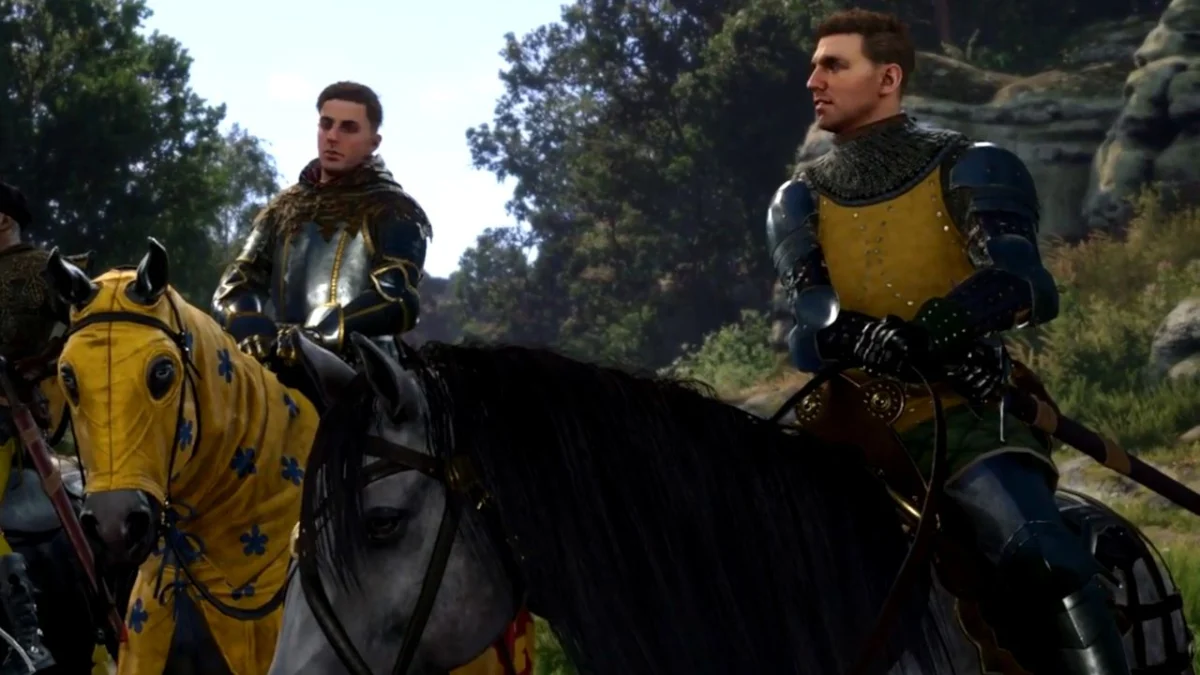
Kingdom Come: Deliverance 2 has been hailed as a landmark achievement in the historical RPG genre. With its sprawling, meticulously crafted medieval world and deep, systemic gameplay, the title—developed by Warhorse Studios—has resonated with millions of players, earning its place in the pantheon of elite gaming experiences. Yet, behind the success of this commercial and critical juggernaut lies a sobering narrative about the instability of the modern acting profession. Luke Dale, the actor whose performance as the charismatic Hans Capon has become synonymous with the franchise’s identity, has revealed that despite the game’s massive success, his professional trajectory has been anything but a fairytale.
The Paradox of Success: A Tale of Two Realities
For many, the association between a performer and a globally recognized character is the ultimate career catalyst. In a traditional film or television setting, a breakout role in a massive hit often results in a flurry of auditions, high-profile agency interest, and a surge in industry visibility. However, for Luke Dale, the reality of being the voice and face of Hans Capon has been a paradox.
In a recent, candid interview on the Firezide Chat podcast, Dale opened up about the disconnect between the game’s reach and his own professional opportunities. "I wish I could say that Kingdom Come 2, the work I’ve done and the fact it’s been played by millions of people led to more work, but it didn’t," Dale admitted.
This admission sheds light on a systemic issue within the entertainment industry: the disconnect between a project’s commercial performance and the career advancement of the human talent behind it. Despite the millions of players who have spent hundreds of hours in his company, Dale’s experience underscores a broader, more cynical reality regarding how the industry views—and often neglects—the performers who breathe life into these virtual worlds.
Chronology: From Warhorse Collaboration to Digital Pivot
The journey of Kingdom Come: Deliverance 2 was a long, arduous process of development, one defined by the dedication of the team at Warhorse Studios. Luke Dale’s involvement was central to this vision. Throughout the years of production, the relationship between the actor and the studio remained remarkably positive. Dale speaks of the developers with immense gratitude, describing the team as "absolute gems" who offered consistent support and belief in his performance.
However, as the game launched and the initial excitement of its massive success settled, the anticipated "post-release boom" for Dale’s acting career failed to materialize. The transition from the high-intensity environment of motion capture and voice recording to the realities of the post-launch market was jarring.
Finding himself in a professional limbo despite his high-profile role, Dale eventually turned to the digital creator economy to sustain his career. By pivoting to streaming and content creation, he has successfully carved out a new path. Today, he commands a dedicated following of over 72,000 on Twitch and 177,000 subscribers on YouTube. While this transition highlights his adaptability and his ability to leverage his brand, it also begs the question: why was this shift necessary for an actor of his proven caliber?
Supporting Data: The Volatile Landscape of Modern Performance
Dale’s struggle is not an isolated incident; it is a reflection of a broader, more turbulent era for performers. Several factors contribute to this hostile environment:
1. The Rise of AI and Automation
The games industry is currently undergoing a seismic shift, with many studios aggressively integrating AI for voice synthesis, NPC dialogue, and motion generation. This technological shift, while aimed at reducing production costs, creates an existential threat for human performers. When studios look to minimize payroll, the value of human nuance is often sacrificed for the efficiency of the machine, leaving actors like Dale to compete in an increasingly crowded and undervalued market.
2. Industry-Wide Layoffs
The last 24 months have seen unprecedented instability in the gaming sector. Thousands of developers, writers, and performers have been impacted by mass layoffs at major publishers and indie studios alike. This contraction has led to a "buyer’s market" for employers, where the sheer volume of available talent allows for lower bargaining power for individuals, regardless of their past contributions to blockbuster titles.
3. The Digital Creator Pivot
Dale’s success on Twitch and YouTube serves as a microcosm of the "new normal" for performers. Faced with an industry that he claims "has never really given a f***," Dale has had to bypass traditional casting structures to find a direct connection with his audience. This shift is becoming increasingly common, as artists realize that building a personal brand is often more sustainable than waiting for the industry to recognize their value.
Official Responses and Studio Dynamics
While Dale has been critical of the "industry at large," it is important to note his distinction regarding the developers. Warhorse Studios has maintained a reputation for prioritizing the integrity of their vision—a sentiment echoed by the game’s lead designers, who have spoken publicly about the importance of "intentional friction" in gameplay. This focus on depth and challenge has been a hallmark of the Kingdom Come series.
The studio’s support of Dale suggests that while the developers recognize the immense value of their human collaborators, they may be subject to the same macro-economic pressures as everyone else. There is no evidence of a breakdown in the relationship between the studio and the actor; rather, there is a clear realization that the development of a game and the industry that casts actors are two very different entities with vastly different priorities.
Implications for the Future of Interactive Entertainment
What does Luke Dale’s experience mean for the future of RPGs and high-budget gaming?
The Loss of Human Nuance: If performers of Dale’s caliber are discouraged from pursuing acting due to a lack of professional return, the industry risks losing the very heart that makes these games special. The "friction" the designers speak of is often successfully navigated because players feel a genuine emotional connection to characters like Hans Capon—a connection forged by human acting, not algorithmic generation.
The Empowerment of the Creator: The fact that Dale has found success on Twitch suggests that the power dynamic is shifting. If the industry continues to marginalize human talent, we may see more actors bypassing the "traditional" path entirely. Performers are increasingly likely to use their characters as launchpads for their own independent platforms, effectively becoming their own employers.
The Need for Better Advocacy: There is a growing movement within SAG-AFTRA and other unions to secure better protections for video game performers. Dale’s story serves as a rallying cry for these efforts. It is no longer enough to be the voice of a hit game; there must be systemic protections that ensure that success translates into sustainable career longevity.
Conclusion
Luke Dale’s story is a sobering reminder that the "glamour" of being the face of a million-selling franchise does not always equate to stability. While he continues to flourish as a digital creator, the broader industry should take note of his frustration.
Kingdom Come: Deliverance 2 stands as a triumph of storytelling and technical ambition. Its legacy will surely be cemented in the history of the medium. However, the industry must ask itself: if we continue to alienate the very performers who build our virtual worlds, what will happen to the soul of our stories?
As players, we celebrate the world of Bohemia. As an industry, we must ensure that the humans who helped create it are given the respect, opportunity, and professional stability they so clearly deserve. Dale’s transition to streaming is a success story of personal resilience, but it remains a cautionary tale about an industry that is currently failing its most visible, and arguably most important, assets.

