

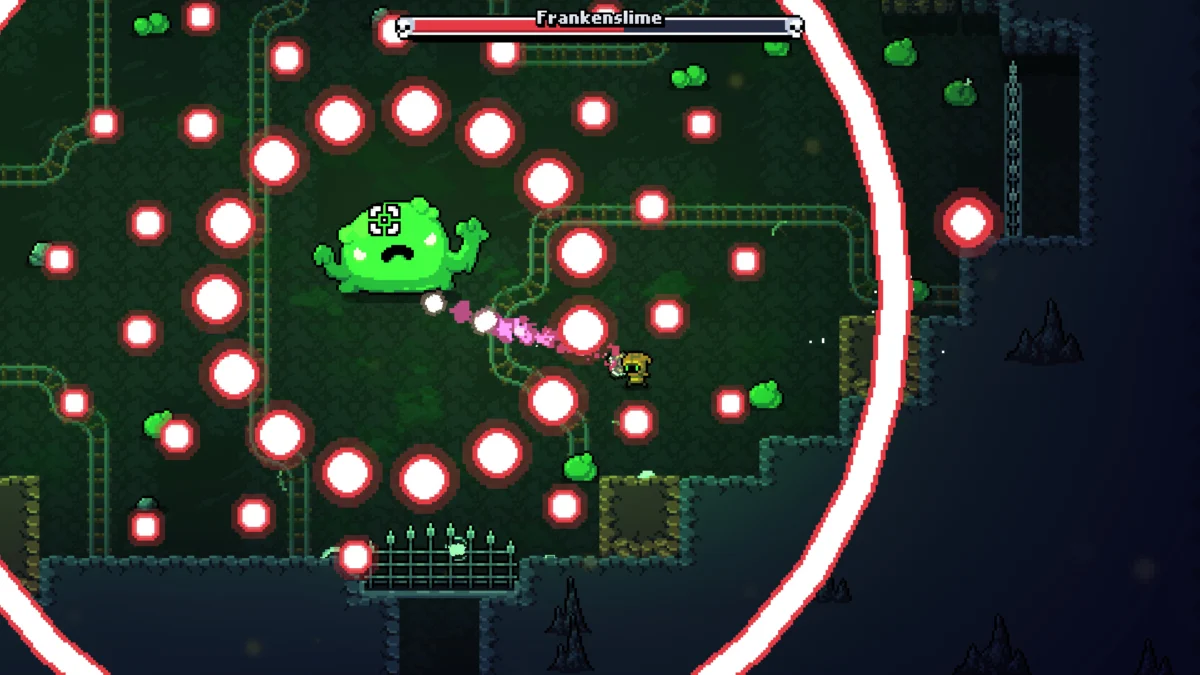
As the dust settles on what is widely considered one of the most prolific years in the history of independent gaming, the industry finds itself in a period of intense reflection. From the atmospheric puzzles of The Forgotten City to the innovative loop mechanics of Deathloop, 2021 was a banner year for developers pushing the boundaries of what a "smaller" studio could achieve. Amidst this crowded field of titans, a sleeper hit emerged in the final weeks of December: Archvale. Developed by IDUN and published by Humble Games, Archvale serves as a poignant reminder that the most compelling experiences often emerge from the collision of seemingly incompatible genres.
The Fusion of RPG and Bullet Hell: A Design Paradox
At its core, Archvale is an ambitious marriage between the deep, character-driven progression of a traditional Role-Playing Game (RPG) and the high-octane, precision-based intensity of a "bullet hell" (danmaku) shooter. On paper, this combination presents a significant design hurdle. RPGs generally prioritize long-term planning, gear management, and stat-based mitigation, whereas bullet hell games are predicated on instantaneous reaction times and mechanical mastery.
Integrating these two requires a delicate balance. If the RPG elements are too heavy, the action feels sluggish; if the bullet hell mechanics are too punishing, the player feels cheated by their own build. Archvale navigates this tension by treating the "bullet hell" aspect as a layer of environmental interaction rather than a separate gameplay mode. The result is a seamless loop where every piece of equipment collected—from bows and wands to complex magical trinkets—directly impacts the player’s capacity to navigate the screen-filling projectile patterns of the game’s various antagonists.
Chronology of a Kingdom: The Narrative Foundation
The world of Archvale is steeped in classic fantasy lore, albeit with a modern, satirical edge. Players are cast as the solitary champion in a land long stifled by the shadow of an oppressive, tyrannical king. The narrative hook is refreshingly straightforward: the king’s influence has fractured the world, and it falls to the player to recover the shattered pieces of the fabled arch—the namesake of the title—to restore order and confront the monarch once and for all.
The chronological progression of the game is non-linear. Following a brief introductory sequence that establishes the basic controls and the stakes of the mission, players are thrust into an open-ended map. The freedom afforded to the player is a defining characteristic of the experience. Much like the design philosophy seen in The Legend of Zelda: Breath of the Wild, players are encouraged to chart their own course. If a specific region proves too formidable, one can pivot to another corner of the map, gather resources, craft better equipment, and return to the challenge with a refined strategy.
Supporting Data: The Mechanics of Progression
The depth of Archvale is best observed through its robust itemization and class-neutral progression system. Unlike traditional RPGs that lock players into specific archetypes at the start of the journey, Archvale offers a fluid build system.
The Badge System
The core of player customization lies in the "Badge" system. As players traverse the world and defeat elite enemies, they unlock various badges that provide passive buffs or specialized modifiers. These badges allow players to tailor their character to their preferred playstyle. For instance, a player favoring a glass-cannon approach can stack badges that increase projectile speed and critical hit chance, sacrificing defensive capabilities. Conversely, those struggling with the game’s bullet-heavy encounters can opt for badges that expand the hitbox of their character or provide health regeneration upon successfully dodging projectiles.
The Crafting Economy
Crafting serves as the primary engine for power growth. Throughout the world, players gather materials from defeated foes and environmental sources, which are then used at local smiths to forge weapons and armor. The sheer variety of equipment is staggering:

- Ranged Arsenal: From standard arrows to magical projectiles that track enemies or explode on contact.
- Melee Utility: While the game is a bullet hell, melee weapons provide specific tactical advantages, often serving as a secondary tool for breaking enemy shields or managing crowds.
- Armor Sets: Each set provides distinct aesthetic and statistical bonuses, encouraging players to collect and display their gear.
Official Perspectives and Industry Reception
While IDUN has remained relatively quiet, letting the game speak for itself, the reception from the indie community and digital storefronts like Steam has been overwhelmingly positive. Critics have frequently highlighted the game’s "accessibility within difficulty." Bullet hell games are notoriously difficult to penetrate for casual players, but by tethering progression to gear and RPG-style leveling, Archvale makes the genre feel attainable.
"It is rare to see a title bridge the gap between niche mechanical intensity and mainstream progression loops so effectively," notes one industry analyst. "By removing the ‘game over’ frustration inherent in the bullet hell genre and replacing it with a ‘gear-up and try again’ loop, the developers have successfully expanded the appeal of the genre."
The game’s aesthetic, a vibrant and clean pixel-art style, has also been lauded for its clarity. In a bullet hell game, visual noise is the enemy. Archvale manages to keep the screen readable even when hundreds of projectiles are flying, ensuring that the player is always aware of their own hitbox and the trajectory of oncoming threats.
Implications for the Indie Sector
The success of Archvale signals a growing trend in the indie sector: the "Genre Hybrid." Developers are no longer content with perfecting a single established trope; instead, they are experimenting with disparate mechanics to create something entirely new.
The Rise of the "Cozy" Bullet Hell
Perhaps the most interesting implication of Archvale is the tonal balance. Despite the high-stakes narrative of overthrowing a king, the game maintains a whimsical, lighthearted atmosphere. The inclusion of non-player characters—including a memorable and beloved frog chef—adds layers of charm that prevent the game from feeling overly grim or punishing. This tonal dissonance is a hallmark of successful indie design; it allows for high mechanical intensity while maintaining a welcoming aesthetic.
Impact on Future Development
The success of such titles suggests that the market is hungry for games that respect the player’s time while still providing a rigorous mechanical challenge. Archvale does not waste the player’s time with unnecessary filler. Every encounter, every exploration segment, and every item found has a purpose. This efficiency in design is something larger AAA studios could learn from, as the industry continues to grapple with the "bloat" often found in massive, open-world RPGs.
Conclusion: A Must-Play for the Discerning Gamer
As we look back at the landscape of 2021, Archvale stands as a testament to the power of focus and execution. It does not try to reinvent the RPG, nor does it try to redefine the bullet hell shooter. Instead, it takes the best components of both, strips away the friction, and presents them in a cohesive, satisfying package.
Whether you are a seasoned veteran of the shoot-’em-up genre looking for a new way to test your reflexes, or an RPG fan who has always been curious about bullet hell but intimidated by the learning curve, Archvale offers a bridge. With its vibrant world, deep customization, and the sheer, unadulterated joy of its combat loop, it is a game that demands to be played—and yes, the frog chef alone is worth the price of admission. It serves as a reminder that the best games don’t always come from the biggest teams; sometimes, they come from the developers who simply understand how to make a game feel good to play.

