

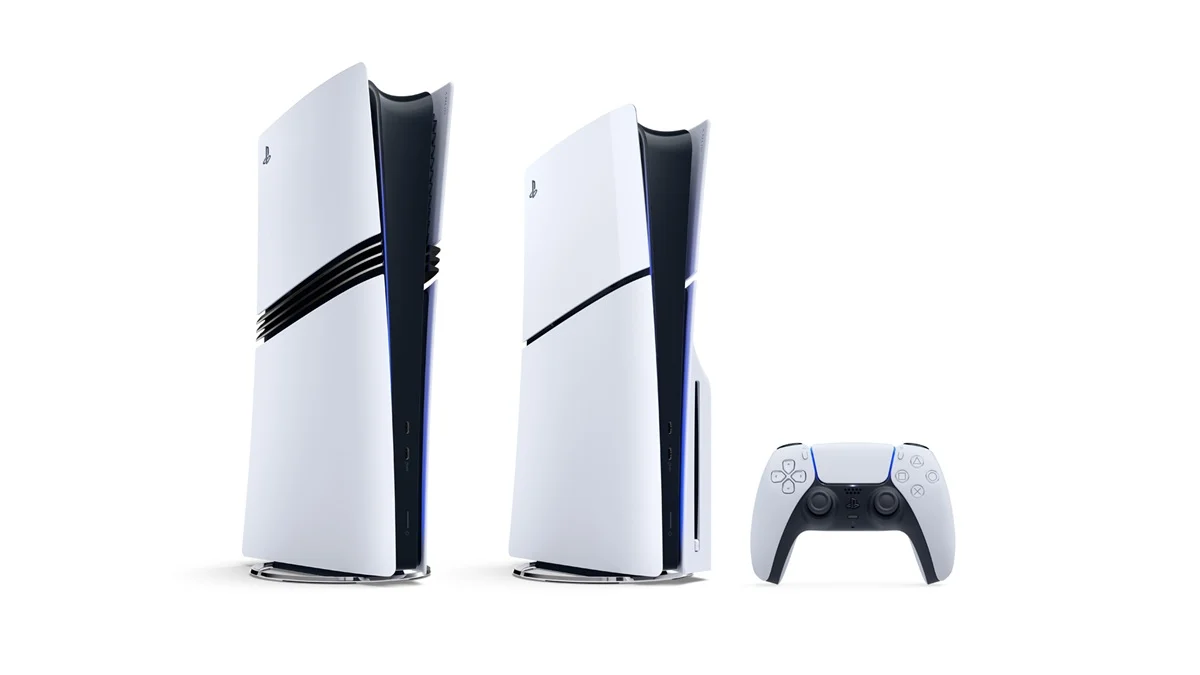
TOKYO — In a dual move that highlights both the ongoing cat-and-mouse game of console security and the relentless march of hardware optimization, Sony Interactive Entertainment (SIE) quietly deployed a brand-new firmware patch for its flagship console. System Software Update 26.06-14.10.00, rolled out globally on October 1, arrives with characteristically sparse official patch notes. However, hardware security analysts and industry insiders have quickly tied the silent release to a targeted effort to neutralize the latest wave of PlayStation 5 jailbreak vectors.
Yet, the security patch is only half the story. Overshadowed in the immediate wake of the firmware release is a massive, stealth rollout of advanced graphics technology: the introduction of Quick Spectral Super Resolution (QSSR), an AI-driven upscaler bringing PS5 Pro-caliber visual enhancement features down to the base PlayStation 5 and PS5 Slim models.
This comprehensive report examines the technical implications of the October 1 update, the context of the recent security exploits, the rollout of QSSR, and what these developments mean for the broader PlayStation ecosystem.
Main Facts
The latest iteration of the PlayStation 5 operating system, labeled version 26.06-14.10.00, became available for download on the morning of October 1. True to Sony’s traditional approach for minor or security-focused revisions, the official dashboard description offers no functional details, repeating the familiar, blanket statement: "This system software update improves system performance."
Behind the corporate boilerplate, however, the technical community has identified the primary driver behind the sudden patch: a direct response to a recently publicized proof-of-concept exploit chain targeting the console’s hypervisor and kernel layers.
Concurrently, the firmware update coincides with the activation of significant under-the-hood graphical architecture on base hardware. Sony has officially confirmed that Quick Spectral Super Resolution (QSSR)—a hardware-accelerated AI upscaler developed in tandem with AMD—is now operational on standard PS5 consoles. While not yet part of the public software development kit (SDK) for all third-party studios, the technology is already live in first-party blockbusters such as Marvel’s Wolverine and Ghost of Yotei.
Key takeaways from the October 1 firmware release and surrounding ecosystem updates include:
- Firmware Version: 26.06-14.10.00
- Release Date: October 1, 2026
- Primary Security Objective: Mitigation of newly discovered browser and kernel-level exploit vectors utilized in recent homebrew/jailbreak attempts.
- Feature Integration: Activation of Quick Spectral Super Resolution (QSSR) for base PlayStation 5 and PS5 Slim models.
- Initial QSSR Software Support: Deployed natively in Marvel’s Wolverine and Ghost of Yotei.
Chronology: The Road to Update 26.06-14.10.00
To understand the necessity and timing of system software update 26.06-14.10.00, one must look back at the sequence of events that unfolded across the hardware hacking and game development spaces over the preceding months.
Late Summer 2026: The Security Vulnerability Discovery
Throughout August and September, independent security researchers demonstrated vulnerabilities within the PS5’s WebKit implementation and low-level system software. While these exploits did not yield a fully stable, user-friendly custom firmware (CFW) capable of running pirated modern software, they did allow privileged code execution on older firmware versions. Hardware modification communities began advising users to disable auto-updates to preserve their exploit-friendly operating systems.
Mid-September 2026: QSSR Precursors and Pro Architecture Leak
As Sony prepared the ground for the broader consumer life cycle of the PS5 Pro, discussions surrounding machine learning-based super-resolution techniques intensified. While the PlayStation 5 Pro utilizes PlayStation Spectral Super Resolution (PSSR) powered by dedicated machine learning hardware accelerators, engineers worked to adapt a scalable, lighter alternative for the base hardware’s architecture.
October 1, 2026: The Double Release
Sony deployed firmware update 26.06-14.10.00 across global servers. Almost simultaneously, players diving into updated builds of Marvel’s Wolverine and Ghost of Yotei noticed unexpected improvements in image stability and temporal reconstruction at high frame rates. Sony subsequently released engineering briefs outlining the deployment of QSSR to non-Pro consoles, clarifying how the hardware partnership with AMD has manifested new capabilities years into the console’s generation.
Supporting Data and Technical Breakdown
The juxtaposition of a security patch with advanced graphics feature deployment makes this update one of the more fascinating mid-cycle software drops in recent console history.
1. The Security Counter-Offensive
Historically, console manufacturers treat kernel exploits with urgent, unannounced patches. When a firmware revision drops mid-week with zero consumer-facing feature additions, it is almost universally a security patch designed to close loopholes exposed by the homebrew community.
Update 26.06-14.10.00 alters memory management structures and patches entry points associated with the WebKit browser component and media playback parsing. For the average consumer, the update installs seamlessly in minutes; for those tracking the security scene, it effectively draws a line in the sand, forcing users to choose between online PlayStation Network (PSN) access and remaining on vulnerable legacy firmware.
2. Quick Spectral Super Resolution (QSSR) on Base Hardware
The most disruptive technical revelation accompanying this period is the arrival of QSSR. While Sony’s dedicated PSSR—exclusive to the mid-generation PS5 Pro refresh—remains the gold standard for high-fidelity, ray-traced 4K gaming, the base PS5 hardware has historically relied on traditional temporal anti-aliasing (TAA) and checkerboard rendering techniques.
Through an intensive collaboration with AMD, Sony has engineered QSSR to bridge this technological gap. Built to operate within the constraints of the base PS5’s RDNA 2 compute units, QSSR provides a lightweight, AI-assisted reconstruction pipeline.
According to technical statements released by Sony’s engineering divisions, QSSR leverages several key hardware-software integrations:
- Optimized Temporal Vector Analysis: Gathers motion data across consecutive frames with minimal performance overhead, drastically reducing shimmering and ghosting artifacts common in fast-paced action sequences.
- Sub-Pixel Reconstruction: Reconstructs fine geometry details (such as foliage, hair strands, and distant structural edges) from lower internal rendering resolutions, mimicking native 4K output without demanding excessive GPU rendering budgets.
- Dynamic Resource Allocation: Dynamically scales workload distribution to ensure that the base console’s CPU and GPU are not starved of resources when executing complex physics or open-world streaming tasks.
Sony noted in an internal technical briefing: "While PSSR remains the gold standard on PS5 Pro, QSSR provides some notable improvements to both image detail and image stability on base PS5 models, ensuring that our foundational hardware continues to benefit from our advancements in machine learning rendering techniques."
Official Responses and Industry Context
Sony Interactive Entertainment has maintained its standard, measured posture regarding the security aspects of update 26.06-14.10.00. Historically, the corporation avoids drawing media attention to jailbreaks or exploits, preferring to patch vulnerabilities quietly to discourage further exploitation and prevent giving publicity to malicious actors.
However, the handling of the QSSR rollout represents a distinct shift in marketing and communication strategy. By allowing first-party studios like Insomniac Games (Marvel’s Wolverine) and Sucker Punch Productions (Ghost of Yotei) to deploy QSSR-enabled builds right as the firmware updates, Sony is signaling that the base PS5 model will not be left behind in the graphical evolution of the current generation.
Industry analysts have praised this move. In an era where mid-generation hardware refreshes risk alienating the tens of millions of early adopters who purchased the standard launch model, providing a software-based upscaler breathes new life into the original hardware.
Third-party developers have expressed cautious optimism. While QSSR is currently restricted to select first-party studios while Sony fine-tunes its developer pipeline, the expectation is that the tools will be integrated into the public PS5 SDK in a future developer kit update—potentially arriving alongside a subsequent system software milestone.
Implications for the PlayStation Ecosystem
The convergence of security hardening and cutting-edge graphical enhancements in a single firmware update carries profound implications for various stakeholders within the PlayStation ecosystem.
For the Consumer and Gamer
- Preserved Value of Base Hardware: Owners of the standard PS5 and PS5 Slim can breathe a sigh of relief. The integration of QSSR proves that Sony intends to maximize the lifespan and visual capability of the original hardware, narrowing the gap between base consoles and the PS5 Pro.
- The Online Mandate: Gamers wishing to access online multiplayer, cloud saves, and the PlayStation Store will find themselves forced to upgrade to firmware 26.06-14.10.00, effectively locking out anyone prioritizing offline homebrew exploration.
For the Homebrew and Security Community
- Heightened Barriers: Update 26.06-14.10.00 underscores the speed at which Sony’s security teams operate once a public exploit gains traction. The cat-and-mouse dynamic continues, with hackers now tasked with finding fresh entry points on unpatched systems or discovering hypervisor flaws within the new code base.
For Game Developers
- Standardized Up-scaling Paradigms: As machine learning-based reconstruction becomes standard practice across all modern gaming platforms (matching techniques like NVIDIA DLSS and AMD FSR), having an optimized, native solution like QSSR across all tiers of PS5 hardware simplifies the optimization pipeline for developers targeting the PlayStation ecosystem.
Looking Ahead
As of today, system software update 26.06-14.10.00 is mandatory for all users connecting to the PlayStation Network. Whether Sony will issue further minor hotfixes as external developers gain access to QSSR remains to be seen. What is clear, however, is that the PlayStation 5 continues to evolve beneath the surface—fortifying its digital walls against unauthorized access while simultaneously pushing the boundaries of what its foundational silicon can achieve.

