

TOKYO / LOS ANGELES — More than two decades after it first revolutionized arcade gaming with its high-speed thrills, punk-rock soundtrack, and chaotic passenger-delivery mechanics, Sega’s iconic Crazy Taxi franchise is preparing for a grand, next-generation comeback.
Industry giant Sega has officially pulled back the curtain on Crazy Taxi: World Tour, a sweeping franchise reboot slated for a 2027 release on the PlayStation 5, alongside the Xbox Series X|S, PC, and Nintendo’s successor platform, the Nintendo Switch 2.
The upcoming high-octane adventure promises to blend the pure, unadulterated arcade joy of the 1999 original with modern game design philosophies, featuring a globe-trotting narrative campaign, dedicated arcade modes, and—for the very first time in the series’ illustrious history—a fully realized multiplayer suite.
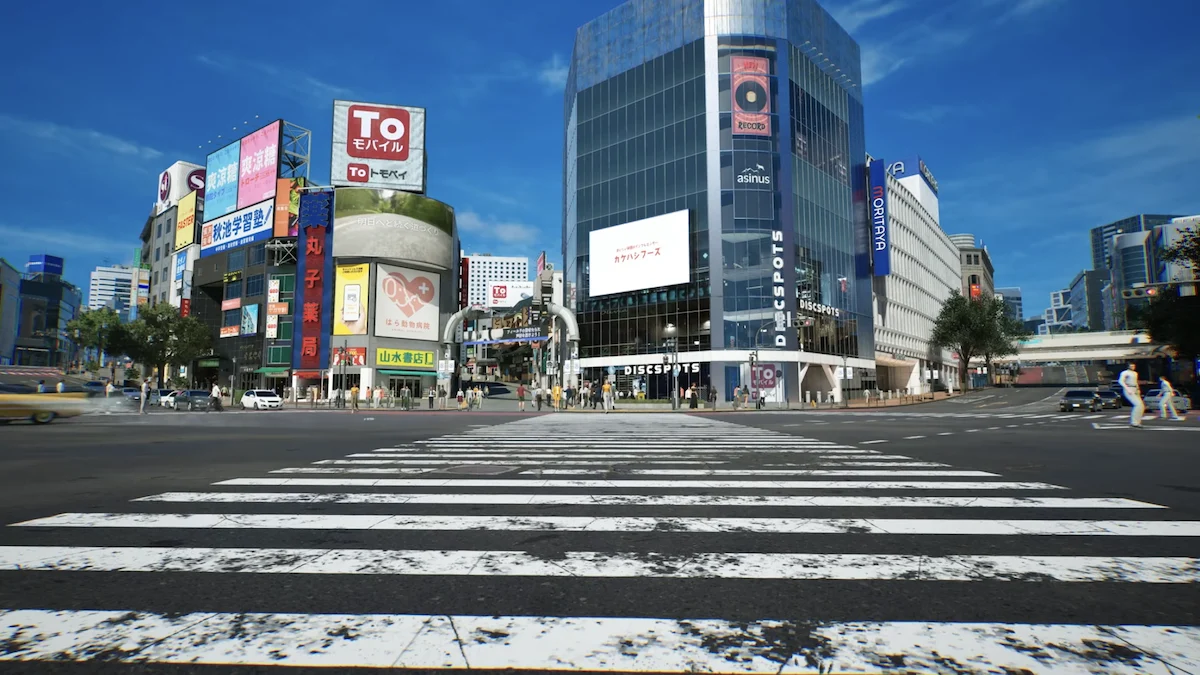
Chief among the recent announcements is the confirmation that the game will take the chaotic action to Japan for the first time. Revealed via a cinematic and gameplay trailer, the newly unveiled Japanese map serves as the second international location and the third of five distinct sandboxes featured in the game’s ambitious single-player story campaign.
As Sega leans heavily into nostalgia while aggressively targeting modern hardware capabilities, Crazy Taxi: World Tour is shaping up to be one of the most anticipated arcade racing revivals of the decade.
Main Facts
At its core, Crazy Taxi: World Tour seeks to honor the DNA of the original titles while massively expanding the scope, scale, and feature set.
- Platforms and Release Window: Developed primarily for next-generation hardware, Crazy Taxi: World Tour launches in 2027 for the PlayStation 5, Xbox Series X|S, PC, and the unannounced Nintendo Switch 2.
- The Japanese Map Reveal: Marking a franchise first, the game introduces a deeply detailed map set in Japan. Described by Sega as “a place beautifully suspended between two worlds,” the map contrasts historic neighborhoods and traditional architecture with the neon-soaked, high-speed energy of a modern metropolis.
- Real-World Collaborations: True to the franchise’s arcade roots of integrating real-world brands, players will be able to tear past and stop by iconic real-world locations and storefronts, including ICHIRAN, Kani Doraku, and SHIBUYA109.
- Modes and Campaign Structure: The game features a globe-trotting story campaign split across five major city maps (including previously revealed locations in Germany), traditional arcade modes, and a brand-new, series-first multiplayer mode.
- Core Gameplay Loop: Players will execute insane drifts, catch massive air off towering ramps, and hit breakneck speeds to deliver eccentric passengers to their destinations on time, all while navigating dynamic terrain and completing diverse side missions.
- The Narrative Premise: The single-player campaign revolves around series veteran Axel, whose iconic yellow cab has been stolen by a mysterious syndicate of international car thieves. Players must embark on a cross-border rescue mission, meeting quirky characters and completing narrative-driven quests.
Chronology: The Journey from Coin-Ops to Next-Gen Consoles
To fully understand the magnitude of Crazy Taxi: World Tour, it is essential to trace the historical timeline of Sega’s legendary franchise, which helped define the turn-of-the-millennium arcade and console culture.
1999–2001: The Golden Age of Arcades and Dreamcast
- February 1999: Sega releases the original Crazy Taxi into arcades, running on the powerful NAOMI hardware board. Directed by Kenji Kanno and developed by Hitmaker (Sega AM3), the game becomes an instant runaway success, propelled by its open-world sandbox, frantic time-limit mechanics, and licensed soundtrack by The Offspring and Bad Religion.
- January 2000: The home port arrives on the Sega Dreamcast, becoming a system-seller and solidifying the console’s cultural relevance.
- November 2001: Crazy Taxi 2 launches exclusively for the Dreamcast, introducing the crucial “hop” mechanic, which allows players to leap over traffic and shortcuts, alongside four new playable characters and a New York-inspired map.
2002–2010s: Sequels, Spin-offs, and Dormancy
- September 2002: Crazy Taxi 3: High Roller releases on the Microsoft Xbox and in arcades, combining maps from the first two games with a brand-new Las Vegas-inspired locale (“Glitter Oasis”).
- 2007–2010: The franchise enters a quiet period, though mobile adaptations like Crazy Taxi City Rush (2014) attempt to keep the brand alive with free-to-play mechanics, though they fail to capture the hardcore enthusiast market.
- December 2017: Sega pulls classic Crazy Taxi titles from digital storefronts, leaving fans clamoring for a proper, high-budget revival.
2023–Present: The Reboot Era
- The Game Awards 2023: Sega surprises the industry by announcing that it is actively rebooting several of its classic intellectual properties, including Crazy Taxi, Jet Set Radio, Golden Axe, Shinobi, and Streets of Rage.
- June 2026: Further marketing reveals begin to roll out, detailing the narrative framework, global map count, and the historic inclusion of the Japan map.
- 2027 (Upcoming): Crazy Taxi: World Tour is scheduled for worldwide release on PlayStation 5 and companion platforms.
Supporting Data & Environmental Design
The technical leap from the 1999 NAOMI arcade board to the PlayStation 5 is nothing short of astronomical, and Sega is leveraging modern hardware to create living, breathing urban sandboxes.
The Scale of the World Tour
- Crazy Taxi: World Tour features five distinct city maps spread across the globe.
- While earlier titles relied on fictionalized versions of San Francisco, New York, and Las Vegas, the reboot leans into international expansion, incorporating European settings (such as Germany) and Asian mega-cities (Japan).
Architectural and Cultural Fusion in Japan
According to developer briefs accompanying the "Welcome to Japan" reveal trailer, the Japanese map is engineered to showcase architectural duality:
- Modern Expressways: Players can burn rubber on elevated highways that weave through dense clusters of towering skyscrapers, providing verticality and high-speed momentum shifts.
- Traditional Enclaves: Transitioning off the main thoroughfares, drivers can drift through narrow, historic alleyways designed to test precision steering rather than raw speed.
- Brand Integration: Sega has partnered with notable Japanese cultural and retail institutions. Drivers can cruise past the glowing neon signs of SHIBUYA109 in Tokyo, grab virtual bowls of tonkotsu ramen at ICHIRAN, or navigate the famous crab-adorned storefronts of Kani Doraku in Osaka’s Dotonbori district.
Official Responses and Creative Vision
The development team at Sega has been vocal about the weight of reviving a beloved property while avoiding the pitfalls of cheap nostalgia bait. Speaking on the design philosophy behind Crazy Taxi: World Tour, lead producers have emphasized that freedom and momentum remain the non-negotiable pillars of the experience.
"A place beautifully suspended between two worlds," Sega noted in the official press release accompanying the Japan map trailer. "Here, historic neighborhoods and tradition sit alongside the bustling energy of the modern city. Get ready to fall in love with the land of the rising sun."
Creative director Kenji Kanno, speaking in broader retrospective interviews regarding the revival of Sega’s classic IPs, highlighted that modern technology finally allows the team to realize the scale they envisioned decades ago.
"In 1999, we were constrained by polygon counts, memory limits, and the physical limitations of arcade cabinets," a senior development representative shared during a recent roundtable discussion. "With the PlayStation 5, we aren’t just remaking a game; we are removing the walls of the sandbox. The world feels alive, reactive, and dangerously fast."
Furthermore, Sega has addressed fan concerns regarding the preservation of the franchise’s signature punk-rock attitude. While details on the soundtrack remain under wraps, producers have promised that the audio experience will heavily feature high-energy tracks designed to match the pulse-pounding speed of reckless driving.
Implications for Sega, the Arcade Genre, and the PlayStation 5 Ecosystem
The release of Crazy Taxi: World Tour carries significant strategic weight, not only for Sega’s corporate revival strategy but also for the broader gaming landscape.
1. The Renaissance of Sega’s Classic IPs
Sega’s multi-game initiative—reviving Crazy Taxi, Jet Set Radio, and Shinobi—represents a calculated pivot toward leveraging its rich historical catalog. If Crazy Taxi: World Tour succeeds critically and commercially, it could pave the way for deeper investments into other dormant arcade franchises, solidifying Sega’s identity as a premier publisher of high-energy, action-arcade gameplay.
2. Filling a Void in the Arcade Racing Genre
For years, the racing genre has been heavily dominated by ultra-realistic simulators like Gran Turismo and Forza Motorsport, or open-world racing sandboxes like Forza Horizon and The Crew. Pure arcade racers with physics-defying stunts, steep skill ceilings, and zero pretense of realism have been notably scarce. Crazy Taxi: World Tour steps directly into this vacuum on the PlayStation 5, offering a distinct alternative to simulation fatigue.
3. The Introduction of Multiplayer
Perhaps the most intriguing addition to the formula is the inclusion of a series-first multiplayer mode. Historically, the original Crazy Taxi was a purely single-player, high-score-chasing endeavor where players could only watch each other’s arcade cabinets. Introducing synchronous multiplayer—whether cooperative passenger-delivery raids, competitive fare-stealing, or chaotic stunt arenas—has the potential to modernize the franchise for the streaming and esports era, driving long-term player engagement well beyond the single-player campaign.
4. Hardware Showcase for the PlayStation 5
As the PS5 enters the latter half of its generational lifecycle, games that emphasize blistering frame rates, massive draw distances, and chaotic physics simulations serve as excellent showcases for custom SSD technology and CPU power. Rendering sprawling, dense cities like Tokyo with thousands of dynamic pedestrians, destructible environments, and high-speed vehicular physics will test the limits of current-gen hardware, ensuring that Crazy Taxi: World Tour looks and feels every bit like a next-generation title.
Conclusion
As the clock ticks down toward its 2027 release date across the PlayStation 5, Xbox Series X|S, PC, and Nintendo Switch 2, Crazy Taxi: World Tour stands as one of the most exciting cultural collisions of old-school arcade magic and modern gaming prowess.
By taking Axel and his yellow cab across the globe—from the autobahns of Germany to the neon-lit expressways and historic alleys of Japan—Sega is proving that some legacies never die; they just shift into a higher gear.
For veterans who pumped quarters into cabinets in 1999, and for a brand-new generation of gamers looking for unadulterated, high-speed adrenaline, the call of the open road is about to get a whole lot louder. “Hey, hey, hey! It’s time to make some crazy money!”

