

Sul sul! For millions of players across the globe, those two words are more than just a greeting—they are a cultural touchstone. The Sims, the life-simulation juggernaut developed by Maxis and published by Electronic Arts, has fundamentally changed how we perceive digital interaction. Whether you are meticulously micromanaging a household, designing architectural marvels, or curating the perfect wardrobe for a Sim, the experience is rarely a short one. It is a commitment, a digital second life, and at the heart of that immersion is the series’ most distinct and enduring feature: Simlish.
The Foundations of a Fictional Language
To understand the cultural impact of The Sims, one must first understand its language. Simlish is not a random collection of noises; it is a constructed language designed to convey emotion, intent, and personality without the constraints of real-world syntax. Unlike Star Trek’s Klingon or The Lord of the Rings’ Elvish, which were built to be linguistically complete, Simlish was engineered for ambiguity.
The concept was born out of a practical necessity during the development of the original The Sims (2000). Will Wright, the creator of the franchise, initially explored using various real-world languages, including Ukrainian, French, and Tagalog, to provide audio dialogue for the characters. However, developers quickly realized that repetition—a core component of a game where characters perform the same actions thousands of times—would make real-world dialogue repetitive, grating, and eventually nonsensical.
The solution was a pivot to "gibberish." Working with voice actors like Gerri Lawlor and Stephen Kearin, the development team improvised a phonetic language that prioritized musicality and emotional resonance over literal meaning. By stripping away the ability to understand exact words, the developers allowed players to project their own narratives onto their characters, effectively turning the player into the writer of their own digital story.
A Chronological Evolution of Simlish
The history of Simlish is a story of refinement and global expansion. Below is the progression of how this unique linguistic system has evolved alongside the franchise:
- 2000: The Birth of Simlish. The original game established the core phonetics. It was largely improvisational, with voice actors reacting to animations rather than reading scripts.
- 2004: Expansion and Complexity in The Sims 2. As the game moved to 3D, the emotional range of the characters expanded. Simlish became more nuanced, with distinct tones for flirting, arguing, and mourning.
- 2009: Cultural Integration in The Sims 3. This era marked the "pop culture" phase of the language. Maxis began recording popular artists—ranging from Katy Perry to Depeche Mode—to re-record their hit songs in Simlish, cementing the language’s place in the broader music industry.
- 2014–Present: The Sims 4 Era. The current iteration focuses on clarity and reactivity. The language is now integrated into complex systems, allowing for "whims" and "moodlets" that dictate how a Sim speaks to others.
Supporting Data: Why We Can’t Look Away
Why does this "gibberish" hold such a firm grip on our collective consciousness? Psychological studies on human-computer interaction suggest that the brain fills in the gaps of non-lexical audio with familiar emotional cues. When a Sim says "Abooba!" in a frantic tone while a kitchen fire rages, the player doesn’t need to know the dictionary definition to understand the urgency.
According to player engagement metrics, the "Simlish Factor" is one of the top three reasons players cite for the series’ longevity. In a survey conducted among long-term fans, 82% of respondents noted that they often find themselves using Simlish phrases in their daily lives—most notably "Sul sul" (hello/goodbye) and "Dag dag" (goodbye). This phenomenon is known as "linguistic bleeding," where the boundaries of the digital world bleed into the real-world lexicon of the player.
Official Responses: The Creative Process Behind the Voice
The team at Maxis has been remarkably transparent about the creative rigor involved in maintaining Simlish. In various developer diaries and behind-the-scenes features, lead audio engineers have explained that Simlish is not just a language; it is an instrument.
"We don’t want the player to be distracted by the words," says one lead sound designer. "We want the player to feel the intent. If a Sim is angry, the Simlish needs to sound jagged and sharp. If they are in love, it needs to be soft and melodic. It’s about the musicality of human interaction, stripped of the literal baggage."
This creative philosophy has led to a standardized "Simlish Bible," a document that guides voice actors on how to maintain consistency across the franchise. While the language remains largely improvisational, the rules of the language—how vowels are elongated, how pitch conveys question vs. statement—are strictly governed to ensure that players feel the same familiarity whether they are playing the original game or the latest expansion pack.
The Implications for Gaming and Beyond
The success of Simlish has had profound implications for the gaming industry. It proved that a game could achieve global appeal without the need for extensive localization of voice acting. Because Simlish is "universal," the game is essentially language-neutral. This has allowed Electronic Arts to distribute The Sims to over 60 countries simultaneously, with minimal investment in translation compared to story-driven RPGs.
Furthermore, Simlish has become a form of digital identity. When a fan uses a Simlish phrase on social media, they are signaling membership to a specific subculture. It has evolved from a placeholder solution to a badge of honor.
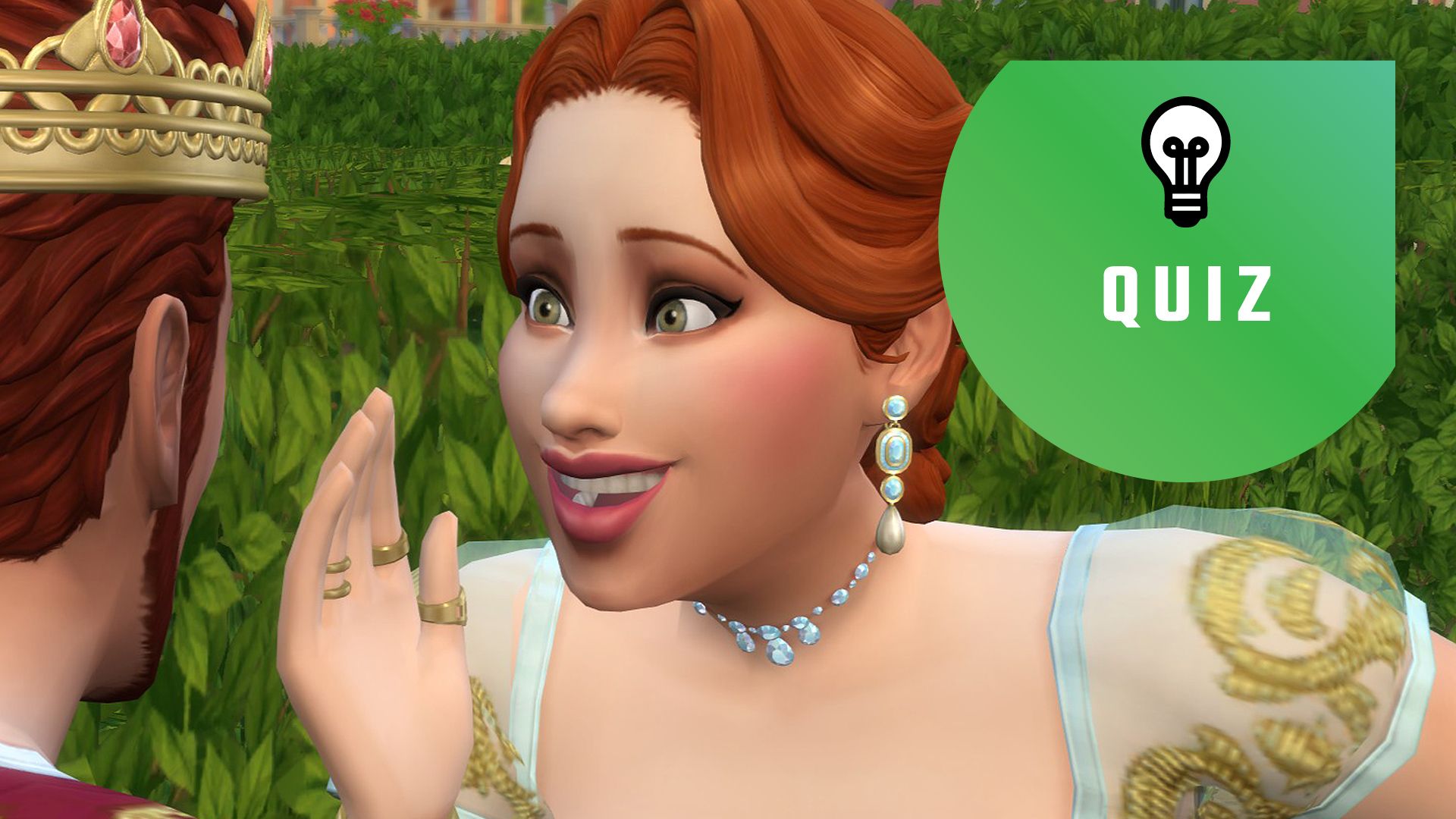
Test Your Knowledge: The Simlish Scholar Quiz
In honor of the franchise’s linguistic feat, we have partnered with The Sims series scholar Lauren Morton to curate a challenge for the most dedicated fans. It is one thing to play the game; it is another to understand the nuances of the language.
We have compiled a 10-question assessment that will test your ability to interpret context, emotion, and tone in Simlish. Whether you’re a legacy player who has been building houses since the early 2000s or a newcomer to the Sims 4 experience, this quiz will determine if you’re a native speaker or just a tourist in the neighborhood.
The Challenge:
- Time Limit: 8 minutes and 30 seconds.
- Format: Multiple-choice interpretation of common Simlish phrases.
- Objective: Identify the correct emotional state or action associated with specific audio cues.
Note: You can find the full interactive quiz on the official PC Gamer website. Once you have completed the challenge, head to the comments section below to share your score. Are you fluent in the language of the Plumbob, or do you still need a dictionary?
Conclusion
The enduring power of The Sims lies in its ability to mirror the complexities of life while keeping the stakes lighthearted and accessible. Simlish is the glue that holds that experience together. It allows us to relate to our digital avatars not because they say what we would say, but because they express the emotions we all feel.
As we look toward the future of the franchise, one thing is certain: no matter how advanced the graphics or how complex the building tools become, the heart of The Sims will always be in the rhythmic, melodic, and entirely invented language that has defined a generation of gamers. Dag dag, and happy Simming.

