


The augmented reality (AR) landscape is undergoing a significant fragmentation, and Xreal—a company previously known for its portable, tethered display glasses—is attempting to bridge the gap between simple virtual monitors and full-fledged spatial computing. With the opening of preorders for the upcoming Xreal Aura, the company is positioning itself as a key player in the nascent Google Android XR ecosystem.
However, the launch is shrouded in mystery. Despite inviting customers to commit financially, Xreal has remained tight-lipped regarding the final price point, offering only a vague "not to exceed $1,500" ceiling. This article explores the technical prowess, the unusual marketing strategy, and the broader implications of what might be the most ambitious hardware release in the company’s history.
Main Facts: What is Xreal Aura?
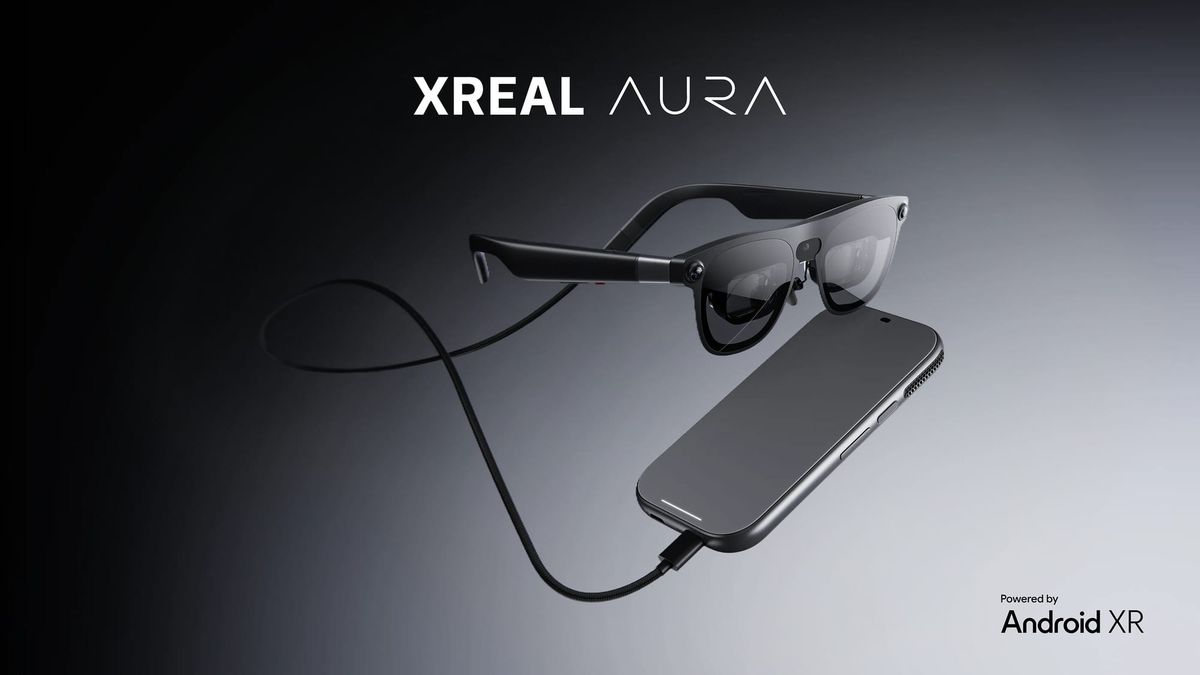
At its core, the Xreal Aura is a tethered XR system that utilizes a dual-component architecture: a pair of lightweight, glasses-style head-mounted displays (HMDs) and a powerful, pocket-sized "compute puck."
The Engine Room: Snapdragon Reality Elite
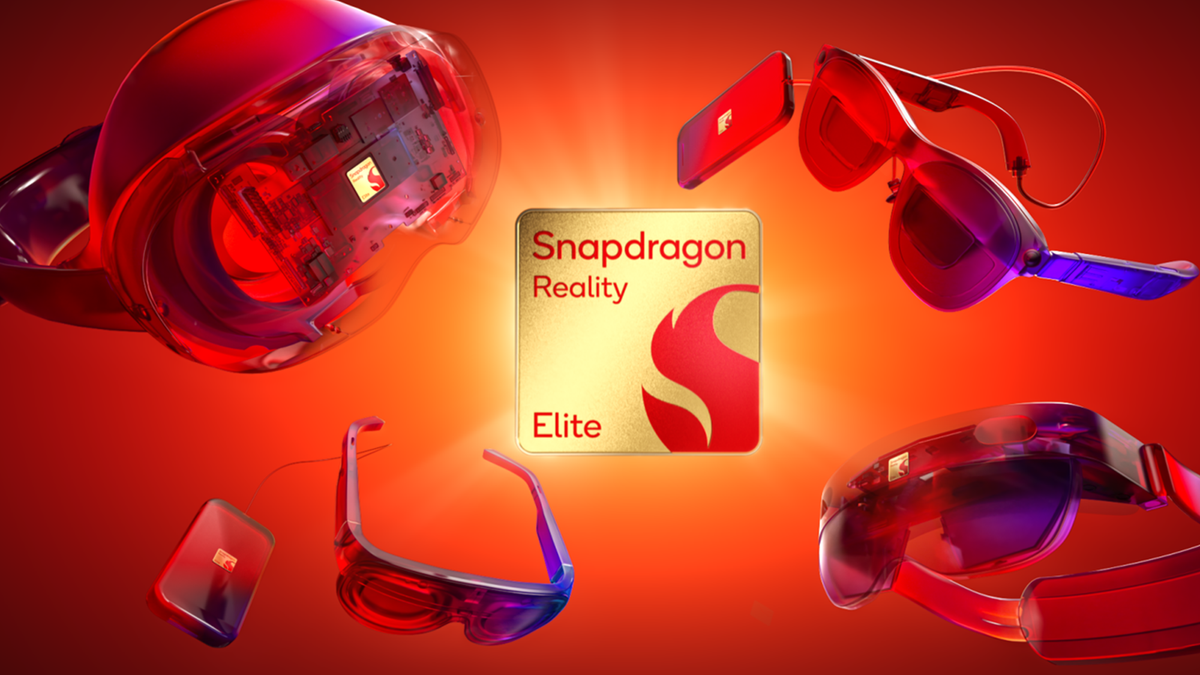
The Aura is set to be the launch vehicle for Qualcomm’s new Snapdragon Reality Elite chipset. This is a significant pivot from earlier industry rumors, which suggested the device might utilize the XR2+ Gen 2. By leveraging the Reality Elite, Xreal is positioning the Aura to handle more complex spatial workloads than its predecessors. To mitigate the latency issues often associated with tethered devices, the headset itself integrates Xreal’s proprietary X1S chip. This auxiliary processor manages core computer vision tasks locally within the glasses, effectively offloading the bandwidth-intensive camera data from the cable connection to the puck.
Display and Ergonomics
The Aura features a 70-degree diagonal field of view (FOV), the widest in Xreal’s portfolio to date. It supports comprehensive head and hand tracking, enabling users to interact with the Android XR interface without the need for physical controllers. The glasses weigh in at a competitive 95 grams, making them significantly lighter than traditional bulky VR headsets, though they retain the "sunglasses" form factor that distinguishes them from the sleek, waveguide-based smart glasses entering the market from competitors like Snap.
Chronology: From "Project Aura" to Preorder
The journey of the Aura has been a deliberate, albeit slow, march toward market readiness.

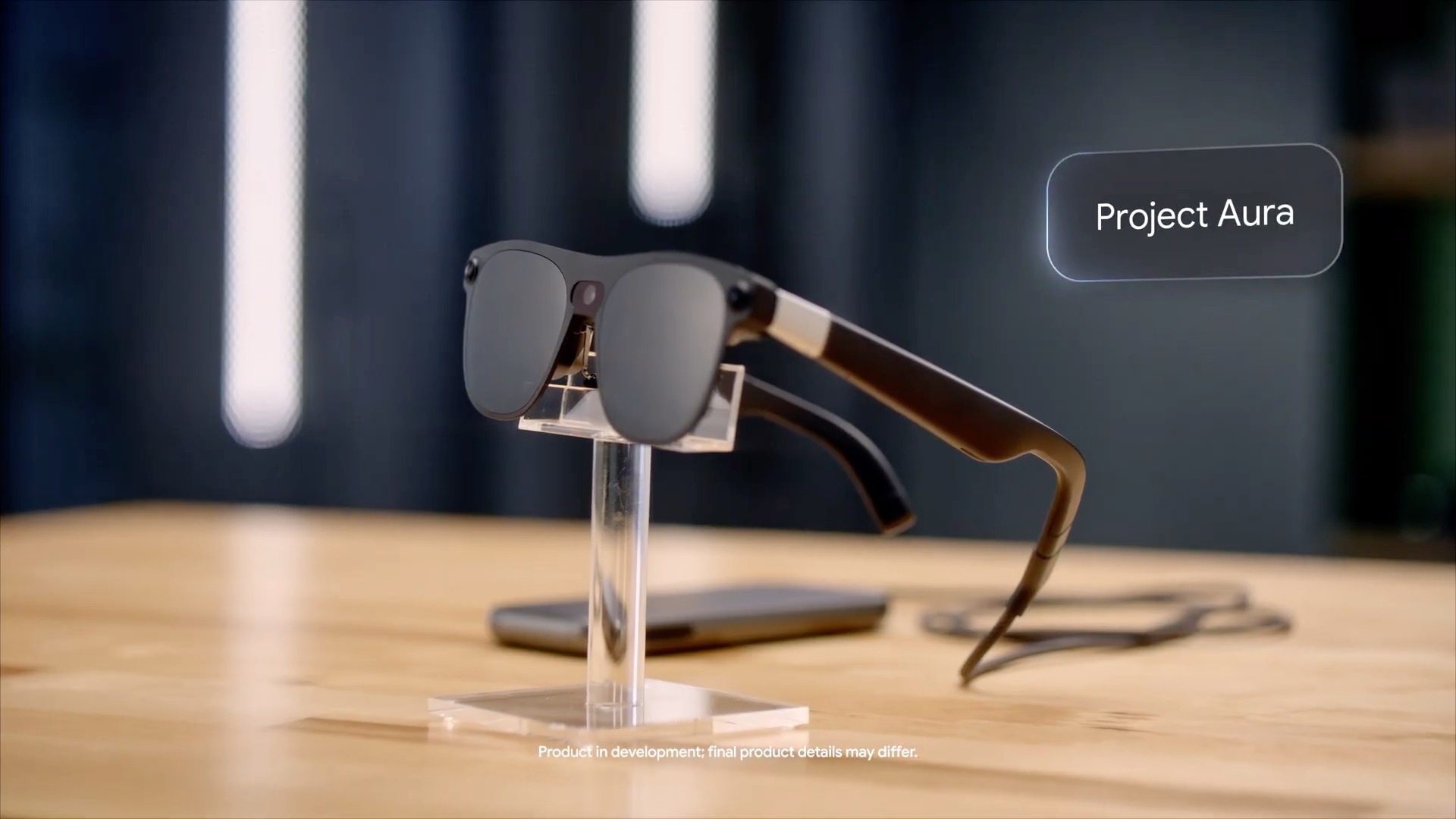
- Mid-2024 (Project Aura): The initial concept was teased under the moniker "Project Aura." At the time, it was positioned as a tethered compute solution designed to bring spatial computing to the masses without the heavy head weight of a standalone headset.
- December 2025: High-fidelity footage surfaced during "The Android Show," demonstrating the device’s capability to run sophisticated spatial apps. This demo highlighted the seamless integration between the compute puck and the HMD, confirming the device’s role in the broader Google Android XR ecosystem.
- Mid-2026: Xreal officially opened the preorder portal. In a move that surprised industry analysts, the company opted for a tiered deposit system rather than a standard retail reservation, signaling a desire to cultivate a "founder-class" user base before the official fall launch.
Supporting Data: The Optical Trade-off
To understand where Xreal Aura fits in the market, one must distinguish between its "prism-lens" technology and the "waveguide" optics found in true AR glasses.
Optical Architecture
Xreal’s products, including the Aura, sit further from the face than typical corrective eyewear. This is due to the prism-lens optical approach, which is significantly more cost-effective to manufacture than the slim, transparent waveguides utilized by industry leaders like Snap or Lumus.
- The Benefit: The cost-to-FOV ratio is excellent. Xreal can provide a wider, more immersive visual experience at a fraction of the cost of high-end waveguides.
- The Drawback: The form factor is inherently bulkier. Because the optics require more depth, the glasses protrude further from the eyes. Furthermore, the lenses are designed to block out significant amounts of ambient light. This means the Aura is not a "see-through" device in the sense that you could wear it indoors like regular prescription glasses; it is a dedicated spatial computing terminal that happens to look like sunglasses.
Compatibility
The Aura runs on Google’s Android XR operating system. This is a strategic win for Xreal, as it aligns the device with the software ecosystem powering the Samsung Galaxy XR. Most apps designed for that platform are expected to be compatible with the Aura, though the lack of integrated face-tracking hardware means that features like "Likeness" realistic avatars—which rely on facial expressions—will be unavailable on the Aura.
Official Responses and the "Bizarre" Preorder Strategy
Xreal’s decision to open preorders without a final price tag has been met with skepticism. The company has implemented two distinct deposit tiers, which they describe as a way to prioritize early adopters:
- Founder Priority Pass ($299): This tier guarantees the earliest possible shipping window. As a reward for early commitment, these units will feature a unique, limited-edition serial number permanently etched into the hardware. This deposit is fully applied toward the final retail price.
- Launch Credit ($99): This is positioned as a consumer-friendly discount mechanism. By putting down $99, the user not only secures an earlier shipping position than the general public but also receives a $100 discount on the final invoice. Effectively, the user nets a $1 profit on the total purchase, provided they follow through with the order.
In statements to the press, Xreal representatives emphasized that these reservations are fully refundable. They argue that this system allows them to gauge manufacturing demand while ensuring that their most loyal fans receive priority access to the first batch of units rolling off the assembly line this fall.
Implications: Where Does Aura Land?
The launch of the Xreal Aura poses a fundamental question: Who is this for?
A Bridge, Not a Destination
The Aura is not designed to compete with "outdoor" AR glasses, which aim for all-day wearability and social acceptability. Instead, it is a "lightweight alternative" to full-scale XR headsets like the Samsung Galaxy XR or the Apple Vision Pro. It trades the opaque, heavy nature of a VR headset for a more comfortable, socially acceptable form factor, while sacrificing the cutting-edge waveguide transparency that would make it a true "all-day" device.
Market Positioning
By leveraging the Android XR ecosystem, Xreal is banking on the idea that users want a unified experience. If you own an Android device and are invested in the Google ecosystem, the Aura offers a compelling, lower-friction entry point into spatial computing. It is an ideal device for:
- Commuters and Travelers: Providing a private, massive virtual monitor for movies or productivity.
- Prosumers: Users who require a portable workstation that can handle Android XR applications without the neck strain associated with heavier headsets.
The Risks
The lack of a fixed price is a significant hurdle. In a market where competitors are rapidly iterating, asking users to bet on hardware without knowing if the final cost will be $800 or $1,499 is a tall order. Furthermore, the reliance on a tethered puck—while necessary for compute power—remains a polarizing design choice. For some, the cable is a relic of the past; for others, it is the only way to keep the HMD weight below the 100-gram threshold.

Conclusion
Xreal Aura represents a bold middle-ground strategy. It is not trying to revolutionize the world of lightweight smart glasses, nor is it trying to replace the high-end PC-tethered VR experience. Instead, it is betting that there is a massive, underserved demographic of users who want "good enough" spatial computing in a package that doesn’t feel like wearing a computer on their face.
As we approach the fall launch, all eyes will be on the final price announcement. If Xreal can hit the lower end of their $1,500 ceiling, the Aura could well become the defining "prosumer" XR device of the year. If the price drifts toward the high end, however, they may find themselves in an awkward position, competing with more capable, standalone hardware that doesn’t require a cable to the pocket.

