

In the pantheon of indie gaming, few titles manage to capture the elusive, ethereal quality of "adventure." Since the release of Journey in 2012, developers have frequently attempted to replicate its unique blend of minimalist storytelling, sweeping orchestral soundscapes, and emotive exploration. Among the latest entries to inherit this design philosophy is Scarf, a title that—while clearly inspired by its predecessors—carves out a distinct identity through its focus on companionship, environmental puzzle-solving, and a surprisingly profound narrative subtext.
Released to a quiet yet appreciative audience in late 2021, Scarf invites players into a vibrant, painterly world. It is a game that prioritizes the experience of movement and discovery over mechanical mastery, offering an introspective journey that feels as much like a digital fable as it does a traditional platformer.
The Core Premise: A Bond Beyond Words
At its heart, Scarf tells a simple, poignant story of separation and reunion. Players assume the role of a nomadic wanderer who awakens in a mysterious, sprawling land. They are not alone; they are accompanied by a polymorphic, dragon-like entity that takes the form of a scarf. This creature has been forcibly torn from its mother, and the primary objective of the player is to help the duo traverse several distinct biomes to retrieve fragments of a cosmic portal. Activating this portal is the key to reuniting the child with its parent.
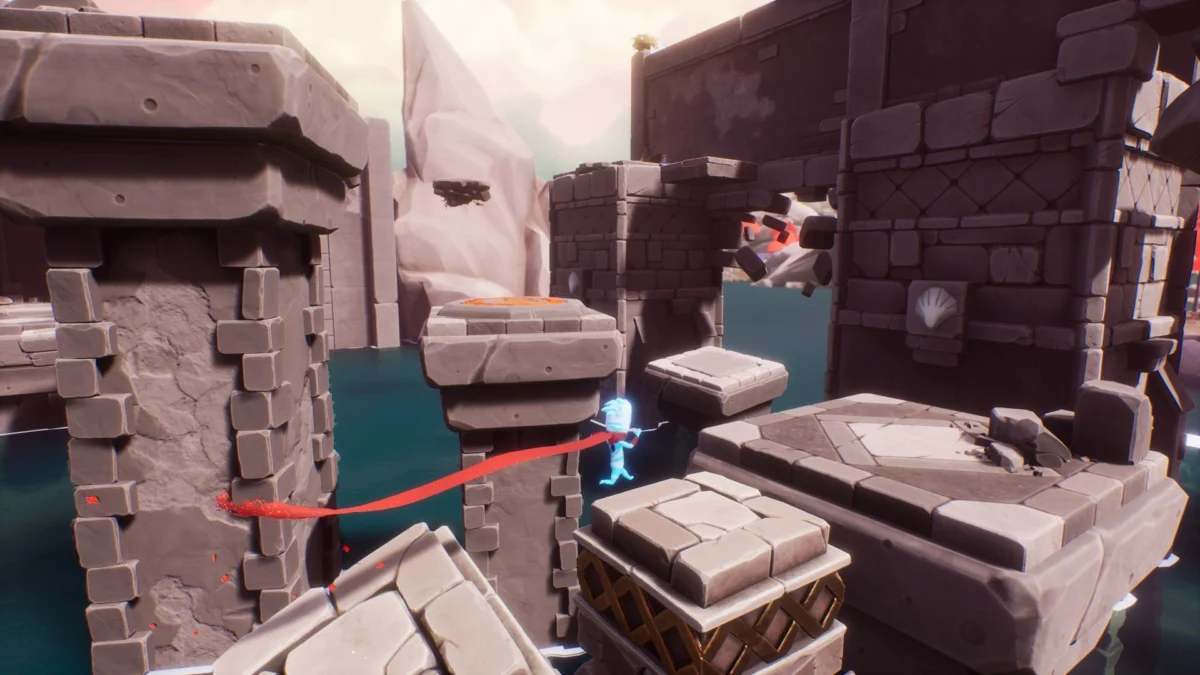
The "scarf" is more than a mere cosmetic accessory; it is the game’s primary mechanic and the player’s primary companion. Its ability to shapeshift is the engine that drives the gameplay, allowing the player to overcome obstacles through dynamic movement and environmental interaction. The relationship between the nomad and the scarf is the emotional anchor of the experience, establishing a wordless bond that evolves as the player progresses through the game’s various challenges.
Chronology and Progression: A Guided Exploration
The structure of Scarf is deliberately paced, favoring a slow, meditative exploration over the high-octane twitch reflexes required by many modern platformers.

The Early Stages: Establishing Agency
The game introduces players to its mechanics with a gentle hand. The initial environments—lush forests and arid deserts—serve as a tutorial space where players learn to navigate via simple jumping, ledge-climbing, and basic physics puzzles. Unlike many open-world games that force players down rigid corridors, Scarf offers a sense of autonomy. It provides "visual signposting" through light particles, which subtly guide the player toward points of interest without resorting to intrusive HUD elements or objective markers.
Mid-Game Evolution: The Shapeshifting Mechanic
As the player progresses, the scarf begins to unlock new abilities. It can transform into a hang glider to traverse deep chasms, a hook to swing across gaps, or other tools required for environmental traversal. This transition is remarkably fluid. The gameplay loop here shifts from simple navigation to a more rhythmic, acrobatic experience. The developers ensure that these abilities are introduced in a way that feels organic, rewarding the player for their curiosity and persistence in the face of increasingly complex terrain.
The Climax and Resolution
As the story approaches its conclusion, the game’s pacing tightens. The narrative, initially presented through sparse visual cues and environmental storytelling, begins to coalesce into a clearer picture. The final act moves away from the "collect-a-thon" mechanics of the mid-game to focus entirely on the emotional payoff of the reunion, delivering a narrative "heel turn" that recontextualizes the entire experience.
Supporting Data: Visual and Auditory Craftsmanship
One of the most striking aspects of Scarf is its commitment to aesthetic cohesion. The game employs a matte, vibrant color palette that evokes the feeling of a living, breathing painting.
Visual Fidelity and Art Style
The art style is designed to be "easy on the eyes," maintaining a consistent, pleasing visual language that remains inviting even after several hours of play. The environments are distinct—ranging from crystalline caverns to wind-swept plains—each with its own specific lighting and color themes. This visual clarity is essential, as it helps the player identify interactive elements without needing to rely on tutorial text or icons.

The Role of Audio
The soundtrack is an adaptive orchestral score that mirrors the player’s emotional state. In wide, open vistas, the music swells with grand, sweeping melodies, creating a sense of scale and wonder. In enclosed spaces or moments of contemplation, the score recedes, allowing for crisp, ambient sound design to take center stage. This interplay between music and silence is crucial for maintaining the game’s atmospheric immersion.
Official Design Philosophy: Why No Combat?
A notable design decision in Scarf is the total omission of a combat system. While this may surprise some players accustomed to the genre, it is a deliberate, thematic choice.
A Pacifist Approach
There are no enemies to defeat, no health bars to monitor, and no "game over" screens triggered by combat. Instead, the game’s challenges are entirely focused on movement and puzzle-solving. The developers have stated that including combat would not only be unnecessary—given the lack of antagonistic entities—but would also fundamentally undermine the game’s narrative. The goal is to foster a sense of harmony with the world rather than dominance over it.
The Scarf as an Entity
The developers emphasize that the scarf is not merely a tool for the player to exploit. It reacts to its environment, sometimes unwinding from the nomad’s neck to investigate things independently. This design choice serves two purposes:
- Mechanical: It forces the player to adapt when they are "stripped" of their abilities, creating a moment of vulnerability that highlights the player’s reliance on their companion.
- Narrative: It reinforces the idea that the scarf is a living creature with its own agency, effectively turning the game into a story about a partnership rather than a story about a hero with a piece of equipment.
Implications: A Deeper Social Commentary
While Scarf may appear to be a straightforward platformer on the surface, the narrative complexity reveals itself through the collection of "lore fragments." These fragments are presented as neolithic cave art, accompanied by a somber narration.

Deciphering the Lore
Players who take the time to collect these fragments and piece them together in the menu will find a story that is far more ambitious than it first appears. As the narrative unfolds, it moves from a simple rescue mission to a sobering, allegorical examination of ecological destruction and the nature of freedom.
Challenging the "Platformer" Label
The game’s reliance on collection—gathering portal fragments, sigils, and orbs—has been a point of contention among some critics. The "laundry list" of items to find can lead to a sense of repetition, and the slow pace may frustrate those looking for a fast-paced platforming challenge. However, it is important to understand that Scarf is not designed to test the player’s reflexes or to provide a high-difficulty experience.
It is designed to be an introspective, allegorical tale. To label it as "just another platformer" is to miss the point of its existence. Its value lies in the experience of the journey itself, the satisfaction of subtle problem-solving, and the emotional resonance of the bond between the nomad and the scarf.
Conclusion
Scarf is a testament to the idea that games can be, and often should be, more than the sum of their mechanics. By prioritizing atmosphere, emotional connection, and a gentle, thoughtful narrative over challenge and conflict, it offers a refreshing alternative in a crowded genre. For those willing to set aside the desire for constant action and instead embrace the slow, deliberate pace of the game, Scarf provides a heartfelt experience that lingers long after the final credits roll. It is a reminder that sometimes, the most powerful stories are told not with words, but with the quiet, persistent act of moving forward together.

