

Published: December 20, 2021
In the vast landscape of modern indie gaming, titles often struggle to balance derivative mechanics with original artistic expression. Scarf, a 3D puzzle-platformer that arrived with quiet confidence in late 2021, stands as a testament to the power of atmosphere over complexity. Drawing clear inspiration from the seminal 2012 hit Journey, Scarf invites players into an ancient, evocative world where a silent nomad and a sentient, polymorphic companion embark on a journey of discovery. While it may not reinvent the platforming genre, its emotional resonance and thematic depth elevate it well above the status of a mere homage.
Main Facts: A Symbiotic Journey
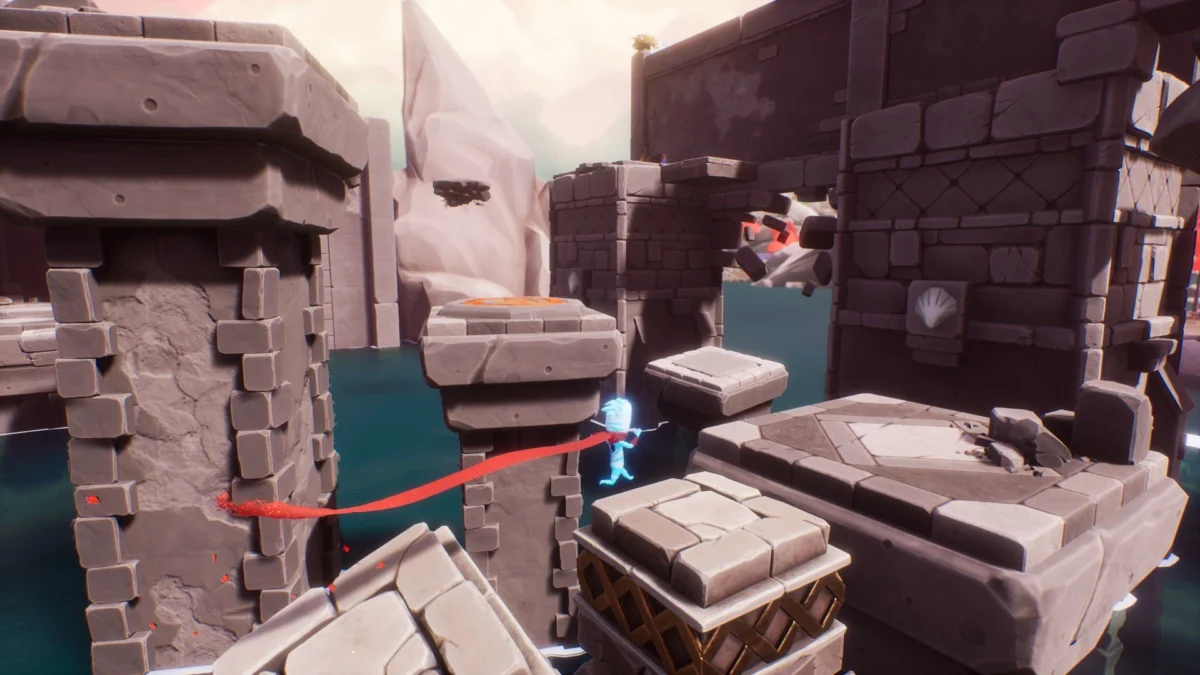
At the heart of Scarf lies a simple, poignant premise. The player assumes the role of a nomad traversing a series of visually distinct, sprawling landscapes. They are not alone in this endeavor; they are tethered to a dragon-shaped, polymorphic scarf that has been cruelly separated from its parent. The primary objective is to retrieve scattered fragments of a portal, which, when fully restored, will facilitate a long-awaited reunion between the child-like scarf and its mother.
The game is a masterclass in visual storytelling. Eschewing traditional dialogue, Scarf relies on environmental cues and an adaptive orchestral score to dictate the emotional tenor of the experience. The art style features a "matte vibrancy," characterized by rich, painterly colors that remain gentle on the eyes even during extended play sessions. The sound design is equally intentional, with music that swells during moments of exploration in vast, open vistas and fades into crisp, ambient stillness during intimate puzzles.
Chronology of the Experience: From Nomad to Guardian
The journey in Scarf is structured as a rhythmic cycle of exploration, ability acquisition, and environmental puzzle-solving.

- The Awakening: The player begins in a state of vulnerability, learning the basic traversal mechanics. The world feels immense and intimidating, setting the stage for the bond that will develop between the player and the scarf.
- The Bond Formation: As the player progresses, the scarf begins to display its unique traits. It is not merely a piece of equipment; it is an active participant in the narrative. It investigates the surroundings independently, occasionally drifting away from the player, which reinforces the stakes of their partnership.
- The Ability Expansion: As the game progresses, the scarf shapeshifts into various tools, allowing the player to manipulate the environment. This mechanics-driven narrative keeps the gameplay loop fresh, as players adapt to new ways of moving through the world.
- The Narrative Climax: The game concludes with a significant, well-executed narrative shift. The "heel turn" in the story recontextualizes the player’s actions, moving the experience from a standard adventure into a deeper, more sobering exploration of morality and environmentalism.
Supporting Data: Mechanics and Accessibility
While Scarf is not designed to be a high-octane mechanical challenge, its design choices cater to a specific type of player—one who values pacing and introspection.
Platforming and Controls
The platforming in Scarf is intentionally accessible. The controls are responsive, and while the movement occasionally feels "floaty," the lack of punishing mechanics mitigates any potential frustration. Checkpoints are generous; falling into a bottomless pit or failing a jump merely resets the player at the last ledge, ensuring that the momentum of the story is never permanently broken.
Puzzle Design
The puzzles follow standard genre conventions: weight switches, crumbling platforms, and fluid-based physics. For veterans of the platformer genre, these puzzles present little difficulty. However, they serve a vital purpose in pacing the game, forcing the player to pause and engage with the environment before moving on. The game utilizes subtle visual signposting, such as light particles that gather around points of interest, to guide the player without the need for intrusive tutorials or objective markers.
The Absence of Combat
One of the most defining choices in Scarf is the total omission of a combat system. There are no enemies to defeat and no weapons to wield. By removing conflict, the developers have successfully preserved the purity of the narrative. It reinforces the idea that the player’s role is that of a protector and explorer, rather than a conqueror.
Official Perspectives and Narrative Depth
The developers behind Scarf have crafted a narrative that is far more ambitious than its initial, whimsical aesthetic might suggest. Throughout the game, players encounter "collectable cutscenes"—fragments of lore rendered in the style of neolithic cave art.

These vignettes are accompanied by a solemn narrator and provide context for the world’s history. Initially, these fragments may seem disconnected, but the game encourages players to review them via the pause menu to piece together the overarching tragedy of the world.
The narrative ultimately pivots into a powerful allegory regarding:
- Freedom: What does it mean to be liberated, and what are the costs of that freedom?
- Ecology: The relationship between the inhabitants of the world and the land itself, and the repercussions of humanity’s (or the nomad’s) influence on the environment.
The developer’s decision to hide this social commentary behind an accessible, gentle gameplay exterior was a calculated move to ensure the message was delivered through experience rather than exposition.
Implications: A Critique of the ‘Collect-a-Thon’
Despite its emotional success, Scarf is not without its flaws. The game leans heavily into the "collect-a-thon" structure, which can occasionally dampen the momentum of the narrative. Players are tasked with gathering portal fragments, sigils, orbs, and hidden lore items.
The primary friction occurs when the player’s progress is gated behind a requirement to hunt for these items. This padding can make the game feel slow, particularly for players who prefer a more streamlined experience. While the pacing is intentional—designed to encourage players to "stop and smell the roses"—it may feel tedious to those seeking a more traditional, high-stakes adventure.

However, the implications of these design choices are ultimately positive. Scarf does not attempt to be a game that challenges the player’s reflexes or tactical planning. Instead, it seeks to provide a space for quiet reflection. By the time the player reaches the conclusion, the "laundry list" of items collected feels less like a chore and more like a necessary investment in a world that has finally revealed its true, somber identity.
Conclusion: A Worthwhile Journey
Scarf is a game that is easily dismissed if one looks only at the surface. Critics might label it as "just another platformer" because it doesn’t invent new mechanics or push the boundaries of physics-based puzzles. Yet, to do so would be to miss the point entirely.
The game is a short, impactful experience that can be finished in a single sitting. It offers a rare, meditative atmosphere that is increasingly difficult to find in the current gaming market. By prioritizing the bond between the nomad and the scarf, the game succeeds in creating a lasting emotional connection.
It is a title for the player who wants to be told a story, who appreciates the artistry of a well-rendered landscape, and who is willing to look past a few repetitive collection tasks to uncover a deeply moving message about our own world. Scarf proves that you don’t need to reinvent the wheel to make a lasting impression—sometimes, you just need a beautiful scarf and a story worth telling.

