

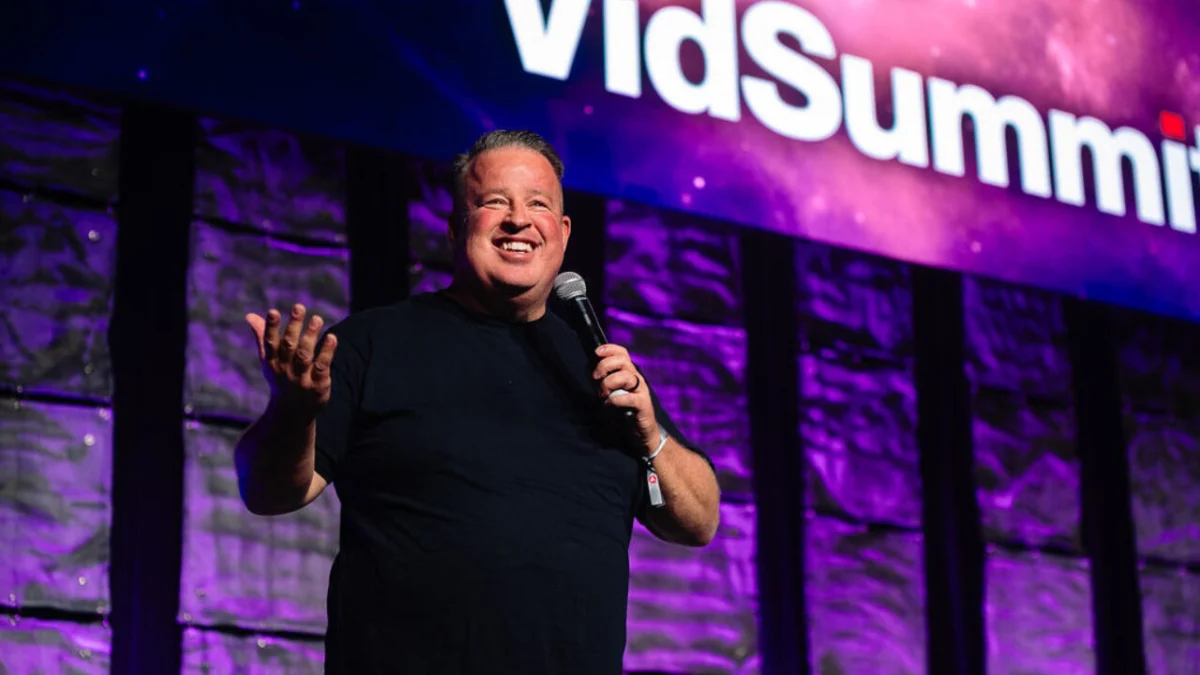
In the rapidly shifting landscape of the digital economy, few figures have cast as long a shadow as Derral Eves. A veteran strategist who has guided over two dozen channels to the coveted "million-subscriber" milestone—amassing over 60 billion views in the process—Eves has spent his career demystifying the black box of the YouTube algorithm. Now, as the creator economy enters a new, hyper-mature phase in 2026, Eves is doubling down on his mission to professionalize the industry through two primary vehicles: his flagship annual event, VidSummit, and the newly released, comprehensive guidebook, The YouTube Formula 2.0.
The Evolution of VidSummit: A Hub for Global Creators
When Derral Eves launched VidSummit in 2013, the creator economy was in its infancy. Platforms were still figuring out their monetization models, and the term "influencer" had yet to achieve its current ubiquity. Eves envisioned a space that moved beyond the superficial glitz of fan conventions. He wanted a "bizdev concert"—a high-level, practical summit where creators could treat their channels not as hobbies, but as sustainable, long-term businesses.
Heading into the 2026 event, scheduled for September 29 through October 1 at the Irving Convention Center in Texas, the summit is poised to reach record-breaking attendance. It serves as a testament to the maturation of the industry. "For me, if you want to create a future you believe in, you need to be an active participant in the present to make that happen," Eves tells Tubefilter.
For Eves, the summit is more than a networking opportunity; it is a corrective measure for a digital culture he once feared. Reflecting on the early days of the platform, he admits, "There was a time where I really feared for future generations. The reason was that the content everybody was watching and engaging with—some of it was very deplorable." By fostering a community of creators dedicated to meaningful, high-impact storytelling, Eves has successfully cultivated an ecosystem where professional ethics and commercial viability intersect.
A Chronology of Influence: From Strategy to Synthesis
The journey to The YouTube Formula 2.0 is rooted in decades of empirical data. Eves did not rise to prominence by chasing trends; he succeeded by analyzing human behavior and platform mechanics.
- 2013: The inaugural VidSummit takes place, establishing a blueprint for creator-to-creator knowledge sharing.
- 2021: Eves publishes The YouTube Formula. The book becomes a foundational text for creators looking to move beyond "luck" and into systematic growth. It codifies years of consulting work into a repeatable framework.
- 2023–2025: The creator landscape experiences a seismic shift. YouTube aggressively expands its reach into the living room, effectively replacing traditional broadcast television. Meanwhile, short-form content (Shorts) matures from an experimental feature into a primary discovery engine.
- September 15, 2026: Eves releases The YouTube Formula 2.0. The updated manual incorporates the vast changes in viewer consumption, advanced analytics, and the integration of generative AI.
This timeline reflects a career built on iterative learning. Eves is the first to admit that while the core principles of engagement remain static—understanding human psychology—the mechanisms of the platform are in constant flux.
The Data-Driven Pivot: Why 2.0 Was Necessary
The transition from the original YouTube Formula to the 2.0 version is not merely a cosmetic update. According to Eves, the foundation of the book remains sturdy, but the architecture of the platform has undergone a total renovation.
The Rise of the Living Room
Perhaps the most significant change is the consumption environment. "YouTube has taken over the television," Eves notes. "Just in the last couple of years, they’ve really aggressively taken over the television, and it’s changed the way people watch TV." This shift requires creators to rethink their production quality, pacing, and visual storytelling, moving away from "webcam-style" content toward high-fidelity, long-form narratives that compete with Netflix and Hulu for the viewer’s attention in the living room.
The Granular Revolution
When Eves wrote the first edition, the available performance metrics were rudimentary—largely confined to distinguishing between "new" and "returning" viewers. Today, the creator dashboard is a sophisticated data warehouse. The 2.0 edition teaches creators how to deep-dive into these granular metrics to understand not just what viewers are watching, but why they leave or stay. By integrating real-world case studies, the book provides a roadmap for turning this data into actionable strategy.
The AI Imperative
Generative AI is the final piece of the puzzle. Eves views AI not as a threat, but as a force multiplier. In the book, he addresses the integration of AI tools in research, scriptwriting, and production, noting that for the past four years, the industry has had the "pedal to the floor" on technological acceleration. The 2.0 manual provides the guardrails necessary to use these tools effectively without sacrificing the "human" element that sustains long-term loyalty.
Official Responses and Philosophical Pillars
Eves is adamant that his work is not about the pursuit of fame or personal wealth. "That’s why I grind," he says. "It’s not about the fame, it’s not about the money. I couldn’t care less about that. It’s about the impact. Any project I gravitate toward, everything I do, I think, ‘Okay, what’s the generational impact?’"
This philosophy of "generational impact" is the connective tissue between his books and the summit. He wants creators to leave his events and close his books feeling equipped to build empires that will outlast the current algorithm update. His favorite feedback, he shares, comes from families—parents reading the book with their children, treating it less like a dry textbook and more like a manual for understanding how humans respond to content.
Implications for the Future of Media
The implications of Eves’ work are profound. As creators continue to usurp traditional media gatekeepers, the need for professionalization becomes critical. By providing a common language and a standardized set of best practices, Eves is effectively creating the "textbook" for the modern media mogul.
The "Try, Fail, Analyze, Adjust" Cycle
One of the most critical chapters in the new book, Try, Fail, Analyze, Adjust: A YouTube History Lesson, serves as a mantra for the modern creator. It acknowledges that the industry is one of constant failure. The difference between a hobbyist and a professional, Eves argues, is the ability to conduct a "post-mortem" on every piece of content. Whether it is a failed thumbnail test or a video that didn’t hit the expected view count, the "2.0" framework encourages creators to treat every interaction as a diagnostic tool.
The Global Scope
VidSummit 2026 is expected to draw over 4,000 attendees, representing a global cross-section of the creator economy. The impact of these attendees is not just limited to their own revenue streams; they are the people shaping the next generation of culture, politics, and education. By bringing them together, Eves is facilitating a global exchange of ideas that is arguably more influential than traditional media conglomerates.
Conclusion: An Invitation to the Future
As the industry moves toward 2027 and beyond, the message from Derral Eves is clear: the era of the "accidental influencer" is ending, and the era of the "intentional creator" has begun. Whether through the tactical advice found in The YouTube Formula 2.0 or the collaborative energy of VidSummit, Eves is providing the tools necessary for anyone with a vision to build a sustainable career.
For those looking to participate in this evolution, the upcoming VidSummit in Texas offers more than just workshops; it offers a seat at the table where the future of media is being drafted. With tickets in limited supply, the event serves as a bellwether for the industry’s trajectory. As Eves continues to iterate on his formulas and refine his strategies, one thing remains constant: his focus on the human element. "I do treat it not as a textbook," he says of his latest work, "but more as a manual of understanding how humans respond to content." In a world increasingly driven by machines, that understanding is perhaps the most valuable asset a creator can possess.
For more information on the upcoming event or to secure a copy of the new manual, visit VidSummit.com and YTFormula.com.

