

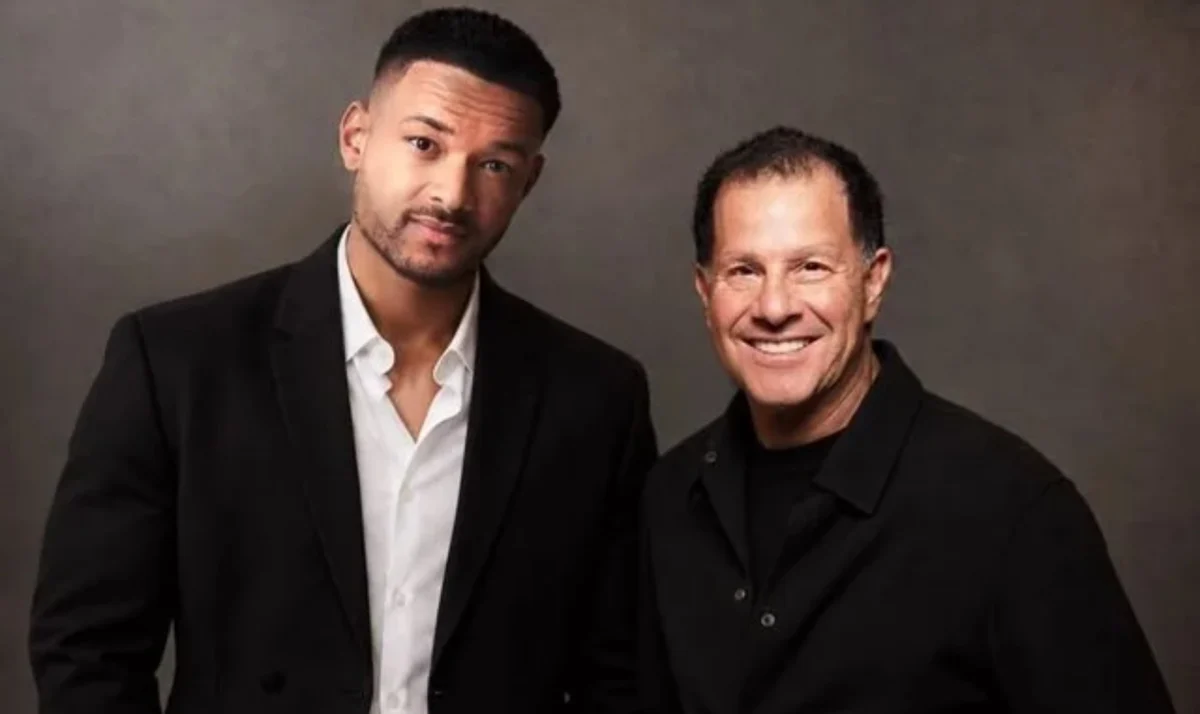
The creator economy is undergoing a seismic shift, transitioning from a landscape defined by ad-revenue reliance to one dominated by vertically integrated, consumer-facing empires. Signaling this evolution, podcasting mogul Steven Bartlett—the visionary behind the $425 million Diary of a CEO media entity—has announced his most ambitious venture to date: OBSN.
In partnership with billionaire retail titan Jamie Salter, founder of Authentic Brands Group, Bartlett is launching a $400 million investment vehicle designed to transform high-potential creators into global, multi-category brand owners. The fund, aptly named OBSN (pronounced "obsession"), aims to bridge the gap between digital influence and institutional-grade commerce.
The Genesis: From Influencer to Infrastructure
The launch of OBSN represents the logical next step for Steven Bartlett, whose own career trajectory has been defined by a transition from tech entrepreneur to global media powerhouse. Last year, Bartlett secured an eight-figure investment that cemented his business’s valuation at $425 million, making Diary of a CEO one of the most valuable podcast franchises in history.
However, Bartlett has never been content with merely generating content. He has spent the last 24 months actively scaling creator-led startups and backing emerging voices, such as Maggie Sellers Reum, the force behind the Hot Smart Rich brand.
Jamie Salter, the co-architect of this new venture, brings a legacy of brand stewardship. Through Authentic Brands, Salter has masterminded the acquisition and revitalization of iconic names including Reebok, while simultaneously reimagining the IP and commercial viability of cultural legends like Elvis Presley and Marilyn Monroe. By pairing Bartlett’s mastery of digital distribution and audience psychology with Salter’s expertise in global licensing, retail, and supply chain logistics, OBSN seeks to solve the "scalability bottleneck" that frequently plagues creator-founded companies.
Chronology of a Powerhouse Collaboration
To understand the weight of the OBSN launch, one must look at the recent timeline of events that preceded this $400 million commitment:
- May 2025: Steven Bartlett enters the equity space by becoming a co-owner of Stan, a strategic move to position himself as a primary backer for creator-founders.
- October 2025: Bartlett secures a significant, eight-figure funding round for his media portfolio, establishing a company valuation of $425 million and providing the liquidity required for future capital deployment.
- November 2025: Bartlett expands his investment reach, targeting niche creator entrepreneurs, including a $1.1 million injection into the mentorship app of Instagram personality Tayla Cannon.
- December 2025: Bartlett formalizes his interest in "lifestyle media" by investing in Maggie Sellers Reum, identifying the Hot Smart Rich brand as a blueprint for future retail expansion.
- September 2026: The official launch of OBSN is announced, marking the transition from individual angel investments to a structured, institutionalized $400 million fund.
The Philosophy: Moving Beyond "Merch"
The central thesis of OBSN is that the traditional "merchandise drop" model is obsolete. Creators have historically settled for low-margin, high-volume apparel sales that lack long-term brand equity. Bartlett and Salter are aiming for something much more sophisticated.
In a recent interview with Inc., Bartlett challenged the status quo, asking, "Now, the question is, would you buy Hot Smart Rich fragrance? Would you buy Hot Smart Rich apparel? What does it look like? Does it look like Gucci? Does it look like Prada?"
This is the core of the OBSN mission: to treat a creator’s brand not as a digital add-on, but as a premium intellectual property that can compete with century-old fashion houses. The goal is to provide creators with the "back-end" infrastructure—manufacturing, global distribution, and brand positioning—that they currently lack, allowing them to scale their influence into tangible, recurring revenue streams.
Supporting Data: A Crowded Field of Capital
OBSN is entering an increasingly competitive ecosystem. Venture capital and private equity firms have finally woken up to the fact that creators are the new storefronts for consumer behavior.
- Night: The talent management powerhouse recently closed a $70 million funding round specifically earmarked for backing creator-led businesses.
- CAA and TPG: The powerhouse agency and its equity partner are currently deploying $250 million to capitalize on the shift toward creator-owned IP.
- Slow Ventures: Having already invested in Bartlett’s own empire, Slow Ventures continues to scout for "high-value vertical" creators, focusing on sectors like wellness, fintech, and professional development.
While these firms offer capital, OBSN distinguishes itself through the "Authentic Brands" factor. While other firms provide the money, Salter’s involvement provides the physical retail shelf space and the sophisticated supply chain architecture that most digital-first creators struggle to build on their own.
Official Responses and Strategic Intent
In the public discourse surrounding the announcement, the focus has remained on the "obsession" with quality. Bartlett has repeatedly emphasized that OBSN is not looking for quick, viral hits. Instead, they are looking for creators with deep, loyal communities who have the potential to build "category-defining" products.
For Jamie Salter, the partnership is an opportunity to digitize his firm’s traditional retail playbook. "We are looking at the next generation of brands," Salter’s team has signaled in industry briefings. "The brand of the future isn’t started in a boardroom; it’s started in a podcast studio or on a smartphone. Our job is to give that brand the infrastructure to become a household name."
Implications: The Future of the Creator Economy
The launch of OBSN has profound implications for the creator economy, signaling a move toward maturity.
1. The Death of the "Influencer" Label
The term "influencer" is increasingly being replaced by "founder." OBSN’s existence forces a shift in how creators view their own careers. If a creator can access $400 million in institutional backing, they are no longer dependent on brand deals or platform algorithms. They become business owners with long-term exit potential.
2. The Rise of Vertical Integration
We are likely to see a surge in "creator-led" CPG (Consumer Packaged Goods) companies. As OBSN deploys its capital, expect to see high-end fragrances, tech hardware, luxury home goods, and even financial services launched under the banners of prominent media personalities.
3. Professionalization of the Back-End
Creators are notoriously bad at the "boring" parts of business: logistics, warehousing, international regulation, and compliance. By partnering with organizations like Authentic Brands, creators can outsource the complexity of commerce, allowing them to remain focused on the creative output that built the audience in the first place.
4. Market Consolidation
With firms like CAA, Night, and now OBSN aggressively acquiring equity in the creator space, the market is poised for consolidation. We may soon see a secondary market for creator-led startups, where smaller entities are acquired by larger conglomerates looking to bolster their demographic reach.
Conclusion
The launch of OBSN is a testament to the fact that the creator economy is no longer a niche digital trend; it is a fundamental pillar of the global consumer market. With $400 million in backing and the combined expertise of two of the most influential figures in modern media and retail, OBSN is positioned to turn the "creator-as-brand" concept into a multi-billion dollar reality.
As the industry watches, the success of this venture will likely dictate the next decade of creator monetization. For the ambitious creator with a vision that transcends a screen, the era of the institutionalized, high-end, creator-owned brand has officially arrived. Interested parties and potential partners are encouraged to visit the official OBSN website to learn more about the fund’s selection criteria and upcoming initiatives.

