

By PC Gaming News Desk
Main Facts: A New Era for Games Workshop’s Brutal Fantasy Sport
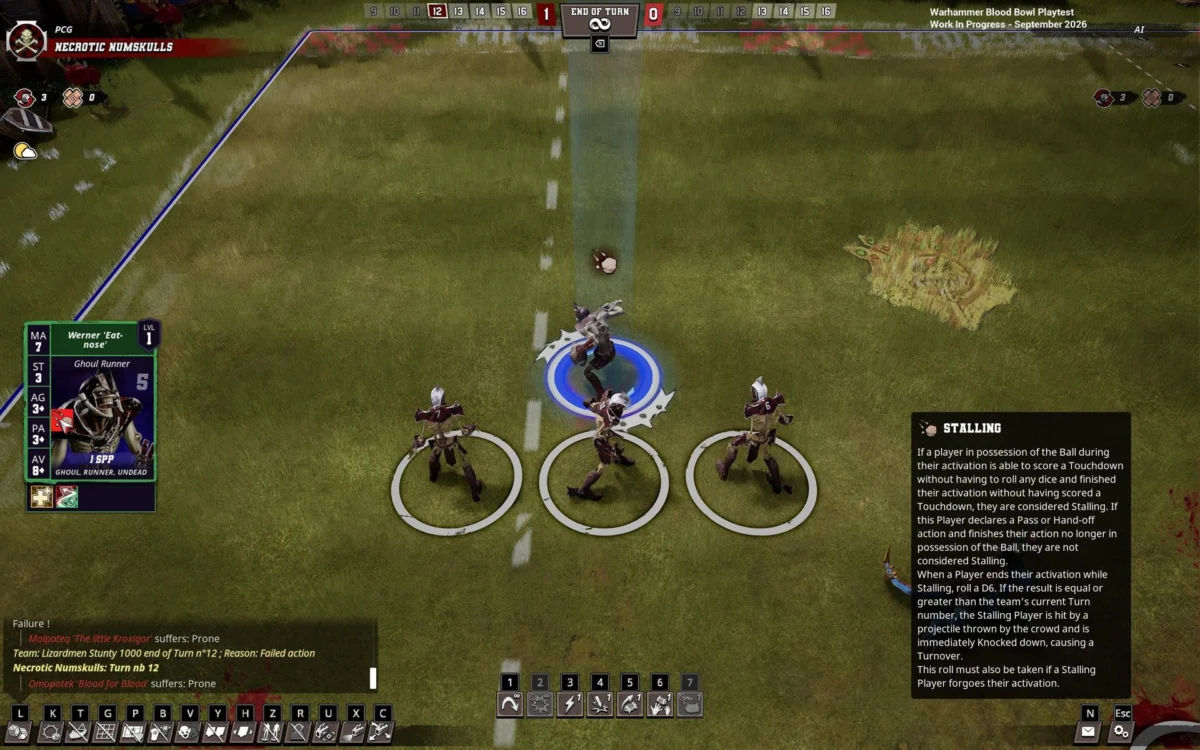
Slitherine and the development teams behind Warhammer: Blood Bowl are gearing up for a comprehensive mechanical and structural overhaul of the franchise. Ahead of a confirmed full release slated for the end of the year, a public playtest beta is launching on Steam on October 7.
This upcoming iteration of the digital adaptation introduces a suite of long-awaited quality-of-life updates, a much-needed rework of the artificial intelligence, and the adaptation of Games Workshop’s latest tabletop rules updates—most notably, Season 3 regulations and the fast-paced, smaller-scale "Rumble Mode."
While veteran coaches will recognize the core tactical framework of tactical positioning, bone-crunching blocks, and volatile dice rolls, these sweeping updates aim to make matches faster, penalties for stalling harsher, and single-player experiences significantly more cohesive.
Chronology: From Tabletop Origins to the Upcoming Steam Playtest
The evolutionary timeline of Blood Bowl‘s latest digital incarnation highlights a steady march toward modernization and accessibility:
- The Tabletop Foundation: Games Workshop introduced structural rules refreshes through its Sevens format—inspired by concepts like 40K in 40 Minutes and Rugby Sevens—alongside the tactical adjustments of Season 3 rules to curb defensive stalling and encourage active ball movement.
- The Digital Legacy: Following historical community feedback regarding Blood Bowl 3—where between 70% to 80% of matches were played solo against the computer—developers prioritized single-player improvements and match pacing.
- The Beta Phase (Current): A closed-to-open playtest period allows selected critics and players to test out the streamlined mechanics, save-and-quit functionality, and revised campaign structures.
- October 7, 2024: The public playtest beta officially opens on Steam, allowing the broader community to experience Rumble Mode, AI adjustments, and updated team management UI ahead of launch.
- Late 2024: The full commercial release of Warhammer: Blood Bowl is scheduled to deploy on PC and potentially other platforms, bringing with it unreleased factions and final economy implementations.
Supporting Data: By the Numbers and Key Features
To understand how the new update alters the tactical landscape of Blood Bowl, consider the structural shifts introduced in the beta:
- 7-a-Side Action: Rumble Mode reduces standard rosters from 11 players down to 7, mirroring the tabletop Sevens format and reducing footprint clutter on the pitch.
- Shorter Halves: Matches are condensed into two halves consisting of 6 turns each (down from the traditional 8 turns), severely tightening strategic windows.
- Double-Cost Rerolls: Team rerolls cost twice as much in Rumble Mode, dramatically increasing the stakes of every single action and accelerating turnovers due to the game’s strict failure penalties.
- Solo Focus: Industry data highlights that roughly 70% to 80% of total matches in the franchise are played in solo modes against AI opponents, directly justifying the heavy engineering focus placed on improving computer-controlled decision-making.
- 2+ Secure Action: The newly introduced Season 3 Secure the Ball action allows players to pick up loose balls on a roll of 2+, provided they sacrifice the remainder of that specific unit’s activation.
- Nominated MVPs: Post-match Star Player Points (SPPs) for Most Valuable Player awards are no longer entirely random; instead, they are restricted to a pre-nominated pool of 6 players (or 4 players in Rumble Mode), preventing benchwarmers from soaking up vital progression rewards.
Official Responses and Developer Insights
While direct corporate press releases from Slitherine outline the broad roadmap—such as the inclusion of upcoming factions like the Tomb Kings and Bretonnians—early playtest impressions offer a transparent look at the philosophy driving these changes.
Early reviews from playtesters highlight that the developers’ primary goal is removing logistical friction. For years, digital Blood Bowl matches demanded a heavy time commitment, often discouraging players from launching a match if they had less than an hour to spare. The introduction of a functional save-and-quit option for AI matches directly addresses this, removing the penalty of lost progress when life interrupts a gaming session.
Furthermore, community feedback regarding the notoriously rigid and occasionally counter-intuitive computer AI has driven behind-the-scenes algorithm rewrites. Playtesters have noted that while the AI still occasionally attempts overly ambitious maneuvers (such as a fragile Skink picking a fight with a heavily armored Mummy), it now demonstrates a sophisticated grasp of fundamental strategies:
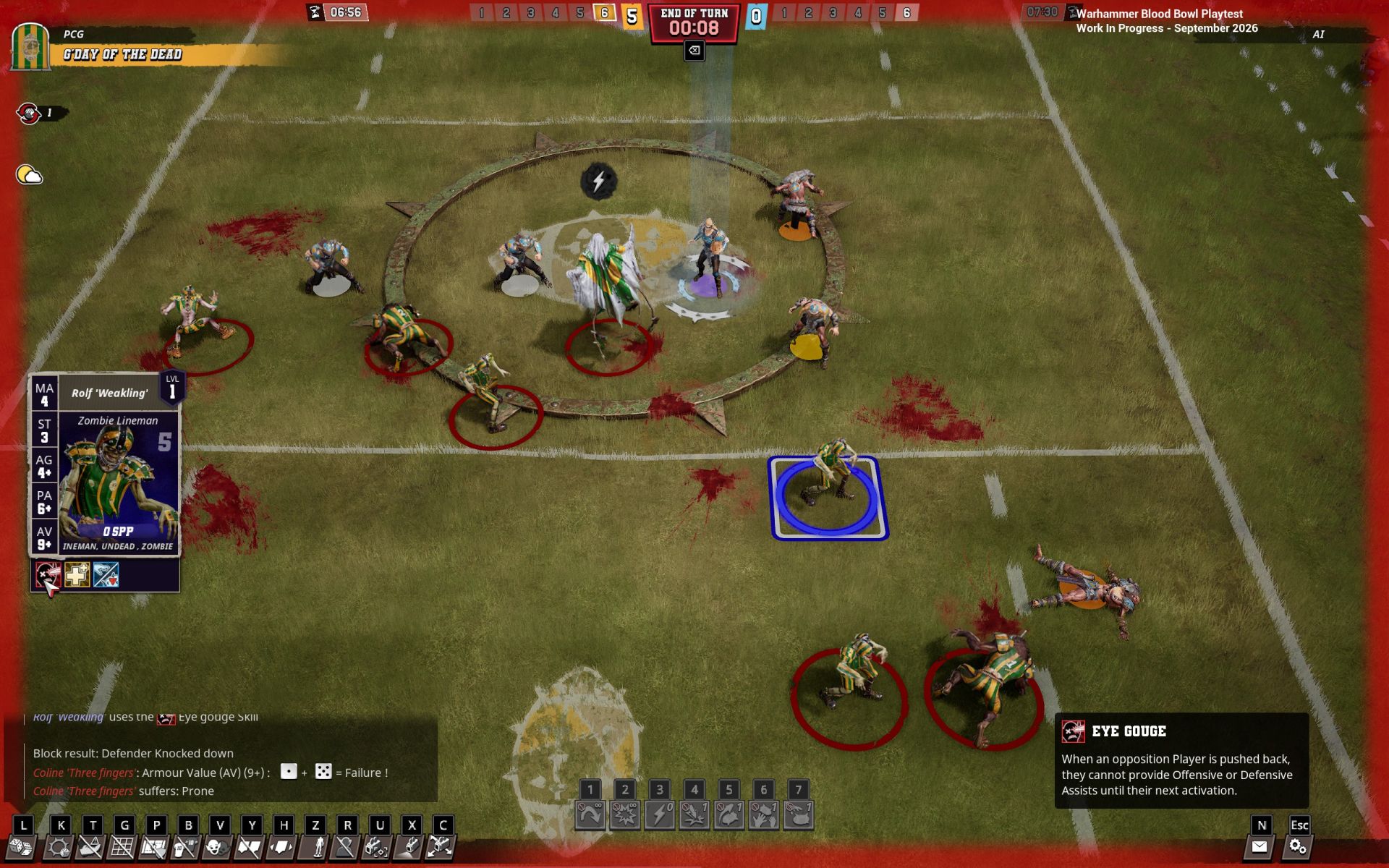
- Selecting optimal dice combinations during block actions.
- Executing passing plays instead of defaulting exclusively to defensive "caging" formations.
- Navigating the constraints of the smaller Rumble Mode pitch with improved tactical awareness.
Implications: How the Meta and Community Will Change
The combination of Season 3 rules and Rumble Mode introduces profound implications for both casual and competitive coaches.
1. Speed and Accessibility
By shrinking the pitch, eliminating the traditional frontline line-of-scrimmage setup (thus protecting fragile teams from immediate first-turn devastation), and cutting down turn counts, Rumble Mode transforms Blood Bowl into an easily digestible tactical puzzle. Players who found traditional 11-a-side matches too slow or mentally exhausting now have a streamlined alternative that fits comfortably into shorter gaming sessions.
2. Tactical Shifts and Faction Balancing
The economic penalty of doubled reroll costs in Rumble Mode elevates the value of intrinsic player skills. Abilities like Dodge become exponentially more powerful, and niche teams that rely on disruption—such as Halflings, thanks to their Master Chef’s ability to pilfer opponent rerolls—suddenly find fertile ground to excel.
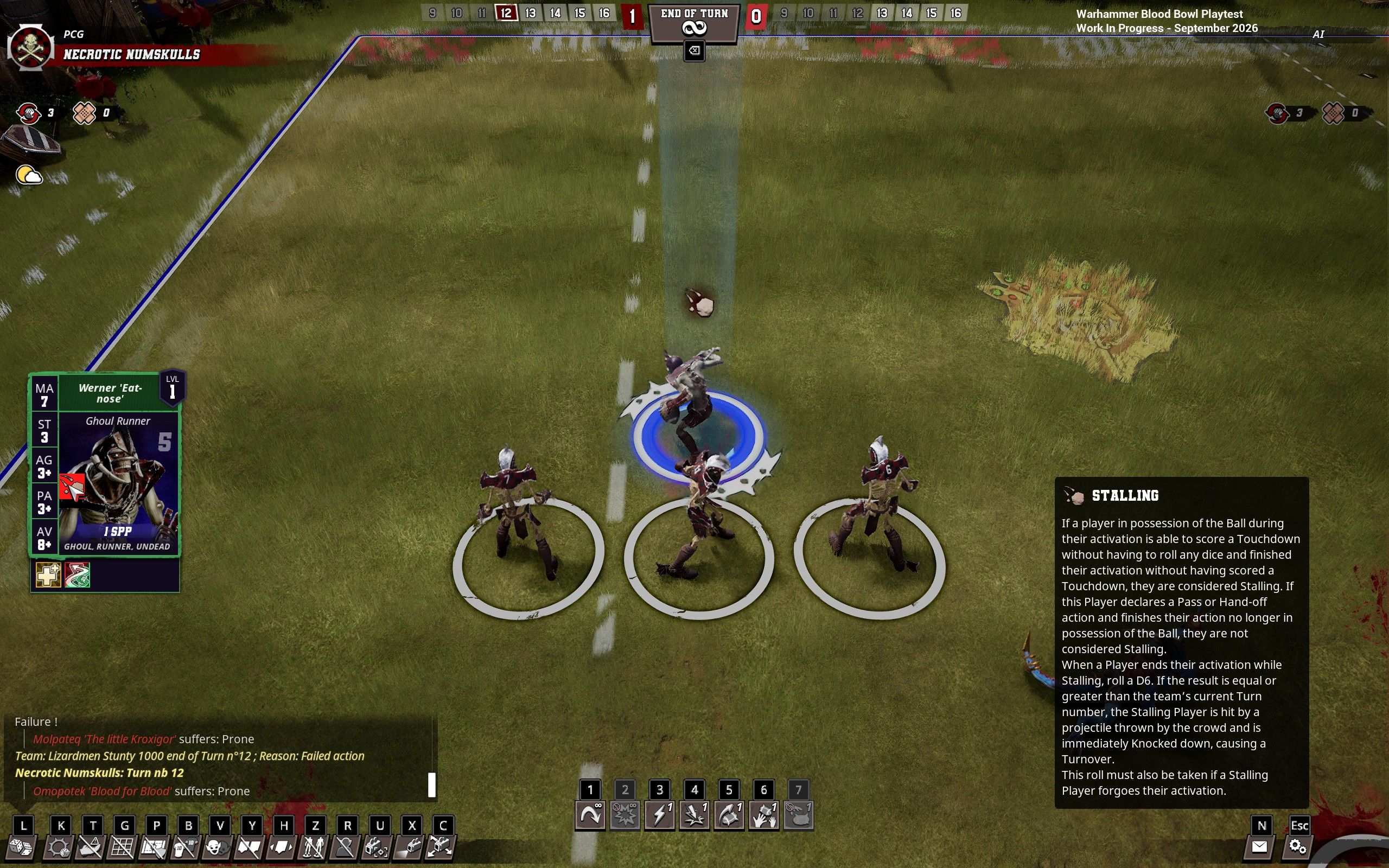
Additionally, the eradication of "Wildly Inaccurate" passing outcomes and deflections under the new Season 3 rulebook encourages actual passing strategies over the historical meta of slow, brutal line-grinding attrition.
3. Quality of Life and Onboarding
The new campaign defaults—starting new players off with the streamlined 7-a-side rules via the Ussingen Rookies—create a smoother learning curve for newcomers. Coupled with UI additions like the skill recommendation tracker (which displays the exact percentage choices other players make for specific character developments, such as prioritizing Guard on Mummies), the game actively bridges the gap between casual fans and hardcore tabletop veterans without forcing players to constantly alt-tab to external strategy wikis.
4. Remaining Questions
Despite overwhelmingly positive early impressions from the playtest build, several variables remain unaddressed. The current beta excludes the promised Tomb Kings and Bretonnians factions, leaving their specific meta-impact unknown. Furthermore, the in-game shop, monetization models, and seasonal pass structures have yet to be revealed, leaving the community watchful of how post-launch content will be funded when the full game drops later this year.

