

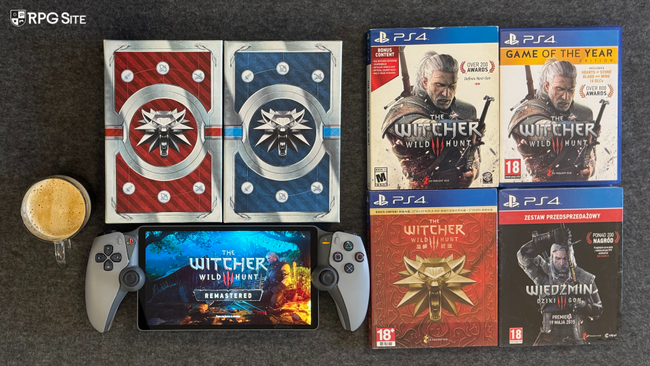
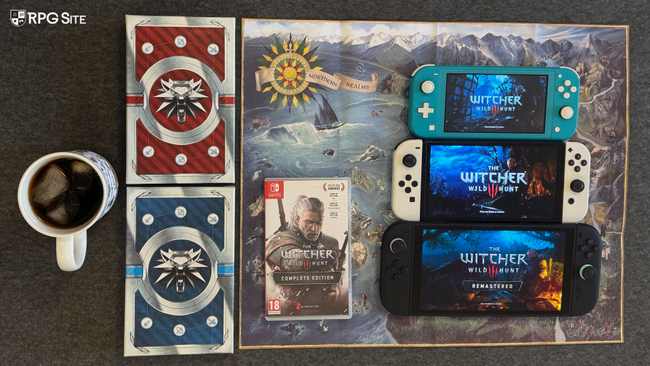
Last week marked a monumental moment for fans of dark fantasy as CD Projekt Red officially launched The Witcher 3: Wild Hunt – Remastered across all current-generation consoles and PC platforms. Alongside traditional upgrades for established systems, the release serves as the grand debut of the definitive edition on the next-generation Nintendo Switch 2, the high-performance PlayStation 5 Pro, Xbox PC, and Battle.net.
Ahead of the global launch, Senior Publishing Producer Oleg Shatulo sat down to discuss the monumental undertaking. The conversation ranged from harnessing DLSS technology on the Switch 2 and navigating cross-save complexities to balancing engine architecture, implementing platform-specific controller features, and preserving performance integrity on handheld PCs like the Steam Deck.
The Genesis of a Modern Classic
Why Remaster a Masterpiece?
Despite The Witcher 3: Wild Hunt having cemented its legacy as one of the defining role-playing games of the previous decade, CD Projekt Red recognized a unique convergence of factors that made a full remaster timely and necessary. According to Shatulo, the project was fueled by a dual desire: pushing the studio’s internal technological boundaries further while running concurrent development on the upcoming The Witcher 3 expansion, Songs of the Past.
Rather than executing a simple visual patch, the studio envisioned a comprehensive modernization. This effort targeted both veteran players returning for another journey across the Continent and a fresh wave of players experiencing Geralt’s epic tale for the first time over a decade after its original debut.
Beyond Surface-Level Visuals: Rewriting the Foundation
When the project was greenlit internally, the development roadmap immediately prioritized deep gameplay overhauls alongside high-fidelity graphics. Shatulo noted that achieving this balance required a fundamental reworking of the engine’s technological foundation.
The studio methodically reviewed a decade’s worth of player feedback, addressing long-standing friction points in combat fluidity, character progression systems, user interface layouts, and accessibility options. These changes were carefully curated to modernize the core experience without diluting the original spirit and atmosphere that fans fell in love with back in 2015.

Platform-Specific Engineering: Switch 2, PS5 Pro, and Steam Deck
The Leap to Nintendo Switch 2
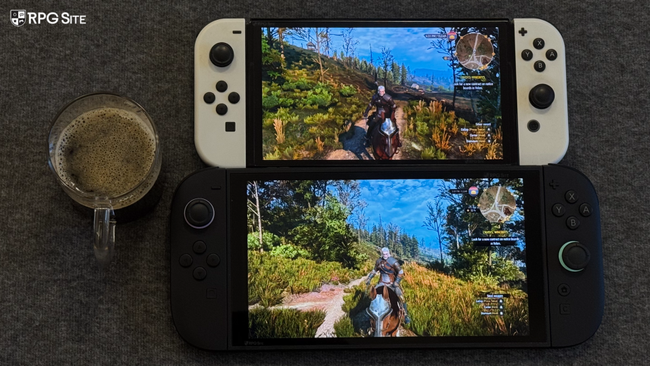
Following CD Projekt Red’s foundational experience porting Cyberpunk 2077 to Nintendo’s next-generation hardware, bringing The Witcher 3 to the Switch 2 felt like a natural next step. Initially, the team considered a straightforward visual and performance optimization tailored for the new console. However, as the broader Remastered initiative gathered momentum, ambitions scaled upward.
Rather than treating the Switch 2 version as an isolated handheld port, the development team integrated it into the core remastering vision. This allowed the platform to receive a native, feature-complete version of the upgrade rather than a scaled-down derivative.
[Original Nintendo Switch] ---> (CDPR Cross-Progression / GOG) ---> [Nintendo Switch 2 Remastered]
*(Note: One-way migration path; older saves cannot ingest Remastered progress)*
Navigating DLSS and Hardware Optimization
Working with Deep Learning Super Sampling (DLSS) on the Switch 2 presented unique challenges. While lessons learned from the Cyberpunk 2077 Switch 2 port provided a solid technical foundation, Shatulo emphasized that porting required meticulous tuning. Because The Witcher 3 utilizes an entirely different rendering pipeline, content structure, and performance profile, engineers had to independently balance image reconstruction quality against tight thermal and power budgets on handheld hardware.
A similar dedication to optimization governed PC handhelds like the Steam Deck. Maintaining strict performance parity with the DirectX 12 version of the previous Next-Gen update stood as a core developmental pillar. Despite the heavier computational demands of the remaster’s visual enhancements, CD Projekt Red ensured that lower-powered PC hardware could still run the game smoothly without sacrificing fundamental fidelity.
Controller Integration: DualSense and HD Rumble 2
The development team fully embraced platform-specific hardware capabilities to enhance immersion. The PlayStation 5 and PC versions carry forward the advanced DualSense integration introduced in the previous generation update, leveraging adaptive triggers and granular haptic feedback for combat, magic Signs, and world exploration.
On the Nintendo Switch 2, the team utilized advanced input options by integrating HD Rumble 2, native mouse controls, gyro aiming, and motion controls. Shatulo stressed that these features were selectively deployed to genuinely enhance player immersion rather than serving as superficial hardware gimmicks.
Cross-Save Mechanics and Ecosystem Complexities
One of the most heavily scrutinized elements of modern multi-platform releases is seamless save migration. Shatulo detailed the massive engineering effort required to ensure that player save files remain fully compatible across generations and storefronts, particularly given major under-the-hood overhauls like the completely revamped Skill Tree.
The One-Way Street of Save Migration
- Forward Compatibility: Players can seamlessly import save data from older versions of The Witcher 3 (such as the base PlayStation 4, Xbox One, or original Switch versions) into the new Remastered client via CD Projekt Red’s cross-progression account system.
- Backward Incompatibility: Once a save file is loaded, progressed, and saved within the Remastered edition, it cannot be exported back to older, non-remastered versions of the game. Structural systemic changes—such as altered progression trees—make bidirectional compatibility technically impossible.
- Trophy and Achievement Synchronization: For players upgrading within the same platform family (where the remaster is delivered as a direct update), trophies and achievements carry over automatically. However, when migrating saves cross-platform via cloud progression, achievements do not auto-pop; players must satisfy the platform-specific unlock requirements natively.
Xbox Play Anywhere Integration
Addressing the PC ecosystem, Shatulo confirmed that the new Xbox version features robust Xbox Play Anywhere support. Operating as a standalone PC client through the Microsoft Store—distinct from Steam, GOG, the Epic Games Store, and Battle.net—this version maintains absolute feature parity with other PC releases while bridging console and PC digital libraries seamlessly.
Implications and Industry Impact
The launch of The Witcher 3: Wild Hunt – Remastered establishes a fascinating precedent for how AAA developers can revisit, modernize, and unify their older catalogs for contemporary hardware ecosystems. By ensuring that platforms as diverse as the high-end PlayStation 5 Pro and the portable Nintendo Switch 2 receive native, deeply optimized versions of the same core update, CD Projekt Red has bridged historical generational divides.
While studio representatives remained tight-lipped regarding future projects—declining to comment on potential remasters for The Witcher 2: Assassins of Kings, upcoming macOS ports, future ray-tracing patches for the PS5 Pro, or a dedicated 60fps performance mode for the Switch 2—the immediate reception of the remaster speaks volumes.
For newcomers stepping onto the Path for the first time, or veterans embarking on their fifth playthrough, The Witcher 3: Wild Hunt – Remastered stands firmly as the definitive, uncompromised standard for experiencing one of modern gaming’s greatest masterpieces.

