

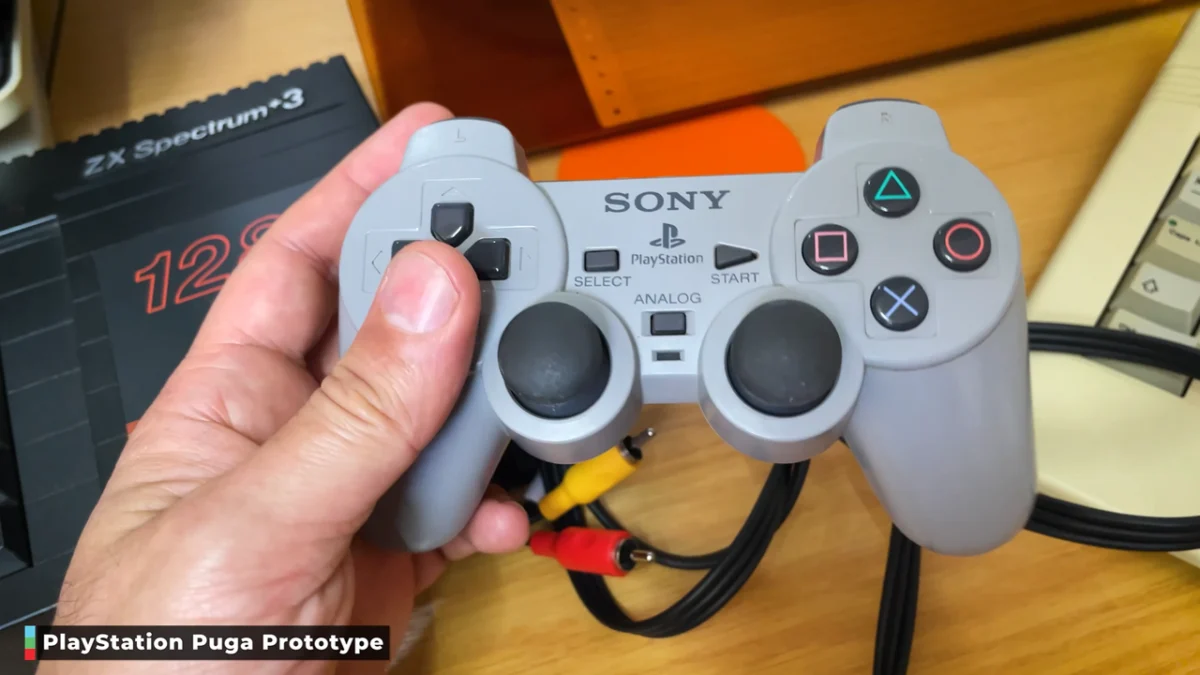
A pioneering vision of portable gaming, born from necessity and thwarted by internal complexities, has recently been brought to light, offering a fascinating glimpse into Sony’s early 2000s hardware ambitions. Brian "Biscuit" Watson, a seasoned game developer with a career spanning four decades, revealed the existence of the "PlayStation Puga" – a prototype PlayStation 1 console ingeniously integrated into a controller – during an appearance on The Retro Collective YouTube channel. This revelation not only uncovers a significant piece of unreleased gaming hardware but also highlights the intricate challenges of product development, market entry, and intellectual property licensing within a global technology giant.
Main Facts: A Console in the Palm of Your Hand
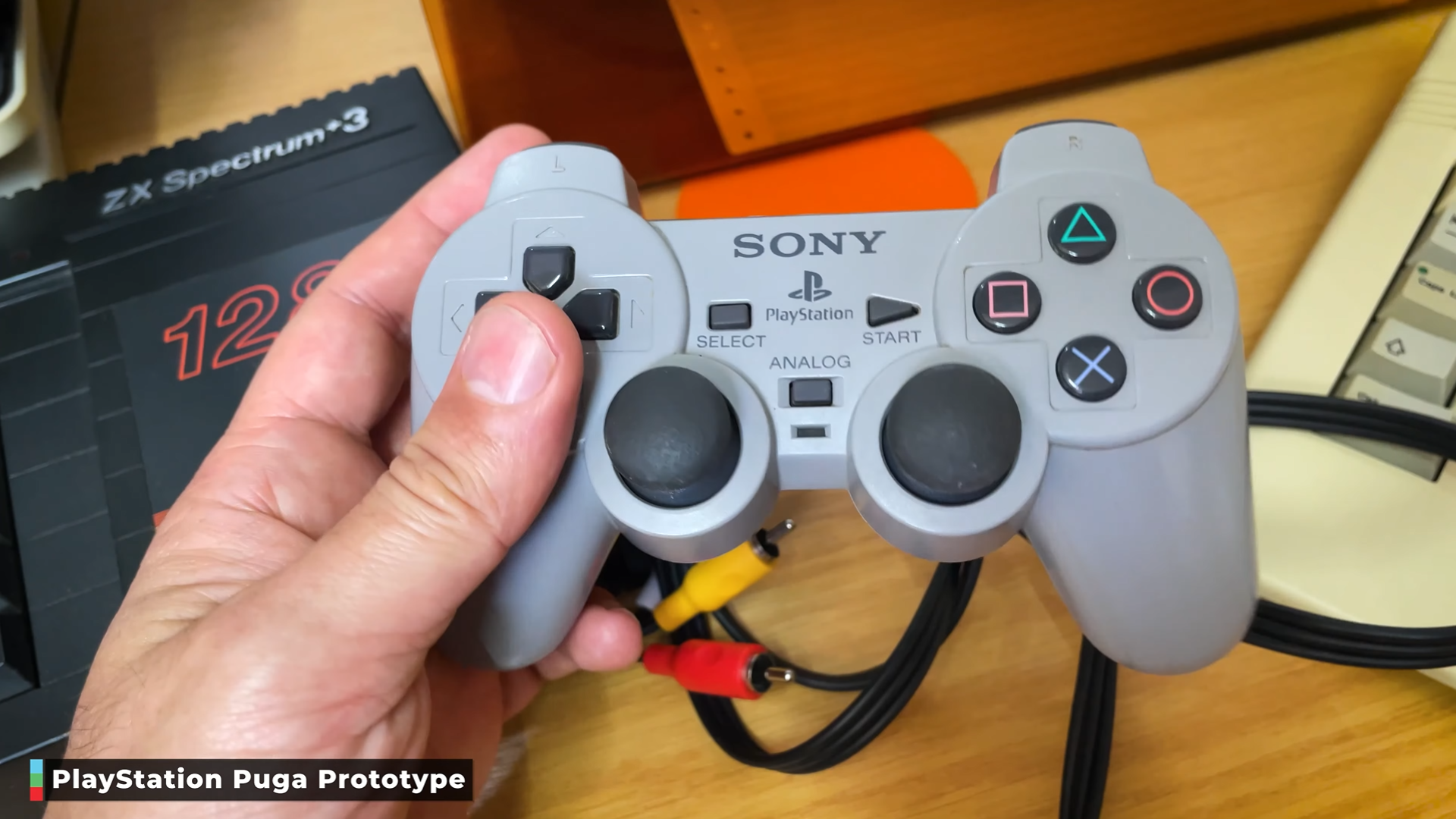
The PlayStation Puga was no ordinary accessory; it was a complete, albeit miniaturized, PlayStation 1 console embedded directly within a controller. Watson described it as a "handheld" designed with a very specific strategic objective: to penetrate the challenging Brazilian market. At the turn of the millennium, Brazil was known for its stringent import regulations and high tariffs on foreign electronics, making local manufacturing and affordability paramount for market success. The Puga was conceived as a solution, intended for in-country production to circumvent these economic barriers and offer an accessible gaming experience.
Technically, the Puga was remarkably ambitious for its time. It was designed to house 4GB of internal memory, a substantial capacity that Watson claimed could store up to ten PlayStation 1 games. Powering this innovative device were four standard AA-sized batteries, which, astonishingly, promised an impressive battery life of approximately 20 hours. Connectivity to a television set was facilitated via an included cable, transforming the integrated controller-console into a fully functional home gaming system. Under the hood, the Puga boasted an Arm-based processor, clocked at a respectable 650 MHz, which was tasked with emulating the original PlayStation 1 architecture. Watson confirmed that the prototype he possesses, though not fully operational due to missing software, successfully boots into a debug stub, confirming its foundational functionality and the robustness of its core design.
Chronology: From Concept to Cancellation
The journey of the PlayStation Puga, as pieced together from Watson’s account and historical context, paints a vivid picture of innovation meeting corporate realities.
The Early 2000s Context: A Market Ripe for Disruption
The early 2000s were a pivotal time in the gaming industry. The PlayStation 2 had launched to phenomenal success, solidifying Sony’s dominance in the console space. However, the market for portable gaming was still largely defined by Nintendo’s Game Boy line. Sony, keen on exploring new avenues and expanding its global footprint, would have been acutely aware of untapped markets, particularly in emerging economies. Brazil, with its large population and growing middle class, represented a significant opportunity, but one fraught with regulatory hurdles. Importing fully assembled electronics into Brazil incurred heavy taxes and duties, often doubling or tripling the retail price and making consoles unaffordable for many consumers. This economic reality spurred the idea of a locally manufactured, cost-effective solution.
Brian Watson’s Involvement and the Project Genesis
While Watson did not explicitly detail his exact role in the Puga project, his decades-long career as a game developer, including work on emulation technology, places him squarely within the circles where such projects would be conceived and executed. It is plausible he was involved in the technical aspects, particularly the development of the PS1 emulator that would run on the Puga’s Arm processor.
The concept for the Puga likely emerged from Sony’s internal strategy meetings aimed at addressing specific regional market challenges. Instead of merely adapting existing hardware, the decision was made to create a bespoke solution: a self-contained, highly integrated system that could be produced domestically in Brazil. This "console-in-a-controller" form factor was revolutionary, promising simplicity, portability, and an all-in-one gaming solution that would appeal to budget-conscious consumers.
The Development Phase: Technical Acumen and Challenges
The development of the Puga would have involved significant engineering prowess. Miniaturizing the PS1’s core components into a controller, designing a power-efficient Arm-based emulator, and ensuring robust performance on AA batteries were no small feats. The 650 MHz Arm processor, while seemingly modest by today’s standards, was powerful enough to emulate the 33.86 MHz MIPS R3000 CPU of the original PlayStation, along with its intricate graphics and sound processors. Achieving 20 hours of battery life would have required meticulous power management, optimizing every component for efficiency. The 4GB of internal storage was also a substantial provision, considering the average PS1 game size, and would have been a compelling selling point for a device aimed at offering immediate, pre-loaded content.
The Licensing Quagmire: An Unexpected and Fatal Obstacle
As the hardware development progressed smoothly and the prototype demonstrated impressive functionality, an unforeseen and ultimately insurmountable challenge arose: content licensing. According to Watson, the project hit a brick wall when attempting to secure the rights to include game titles. "The unfortunate problem is that Sony licensing couldn’t get their act together about the royalty terms for each of the games," Watson explained. This issue extended to both third-party publishers, such as Rockstar, who were reportedly demanding exorbitant royalty fees, and, more astonishingly, Sony’s own internal game studios.
Watson vividly recounted the frustration: "what really stuck in my craw with that one was even if it was a Sony game, they had to negotiate with a separate unit of Sony, and they were never happy about how much royalty they were getting." This internal bureaucratic friction, coupled with the high demands from external developers, effectively choked the project. The Puga was designed to be sold at a very low price point, with an anticipated profit margin of only 10 cents per unit. With such razor-thin margins on the hardware itself, the high royalty costs for games made the entire business model untenable. Without a compelling library of pre-loaded games, the device’s primary appeal—its all-in-one, ready-to-play nature—would be lost.
Cancellation and the Puga’s Enduring Legacy
Facing an intractable problem with content acquisition and an inability to achieve a viable profit model, Sony made the difficult decision to cancel the PlayStation Puga project. The promising hardware, which had demonstrated impressive technical capabilities, was shelved. However, the story of the Puga did not end there. As Watson revealed, the sophisticated emulator technology developed for the Puga was not wasted. It found a new life years later, forming the technological backbone of the Sony Ericsson (and later simply Sony) Xperia Play, a "PlayStation Certified" smartphone released in 2011 that featured a slide-out game controller and was capable of playing classic PlayStation titles. This demonstrates a crucial lesson in R&D: even "failed" projects can yield valuable intellectual property that fuels future innovations.
Supporting Data: Contextualizing the Puga’s Ambition
The Puga’s story is deeply intertwined with the economic realities, technological capabilities, and business models prevalent in the early 2000s. Understanding these factors helps to appreciate both its innovative spirit and the reasons for its ultimate demise.
The Brazilian Market Landscape: A Fortress of Tariffs
Brazil’s economic policies in the late 20th and early 21st centuries were characterized by protectionist measures designed to foster domestic industries and control foreign currency outflows. Import tariffs on consumer electronics, including gaming consoles, were notoriously high, often exceeding 100% of the product’s value. This made imported consoles prohibitively expensive for the average Brazilian consumer, creating a significant barrier to market entry for international companies like Sony.
To navigate this landscape, companies often resorted to local manufacturing, which could significantly reduce the final retail price by avoiding import duties and benefiting from various government incentives for job creation and technology transfer. The Puga’s design philosophy, with its intent for in-country production, was a direct response to these specific market conditions. Sony envisioned an affordable, accessible gaming device that could bypass the import wall and capture a large, underserved consumer base. The potential market was enormous; Brazil is the largest country in South America by population, and its gaming community, though hampered by high prices, was passionate and growing.
Technical Feasibility of the Puga: Ahead of Its Time
The Puga’s proposed technical specifications were ambitious, pushing the boundaries of portable gaming at the time.
- Processor and Emulation: The choice of an Arm-based 650 MHz processor for PS1 emulation was forward-thinking. While the original PS1’s MIPS R3000 CPU ran at a modest 33.86 MHz, emulating its complex architecture (including its dedicated GPU, SPU, and CD-ROM controller) in real-time on different hardware requires significantly more processing power. A 650 MHz Arm chip would have been a strong candidate for this task, capable of handling the instruction translation and resource management necessary for smooth emulation. This demonstrated Sony’s commitment to delivering an authentic PS1 experience, not just a simplified portable version.
- Storage (4GB): In the early 2000s, 4GB of flash memory was a considerable amount for a handheld device. To put this in perspective, many early MP3 players had storage in the hundreds of megabytes, and portable media players were just emerging. PS1 games, typically ranging from 300MB to 700MB, would indeed fit comfortably within 4GB. The ability to pre-load ten games would have been a major selling point, offering instant gratification and a substantial library out of the box, addressing the common issue of game availability in restricted markets.
- Battery Life (20 Hours): The claim of 20 hours on four AA batteries is truly remarkable for any gaming device, let alone one powerful enough to emulate a console. For comparison, the Nintendo Game Boy Advance, released in 2001, offered around 15 hours on two AA batteries for simpler 2D games. The Game Gear, a more powerful but battery-hungry handheld from Sega, famously drained six AA batteries in just 3-5 hours. Achieving 20 hours with a 650 MHz processor and PS1 emulation would have required extremely efficient hardware design, sophisticated power management algorithms, and perhaps a lower power mode when idle or during simpler game sequences. This aspect alone highlights the advanced engineering that went into the Puga.
- Form Factor and Industrial Design: Integrating a full console into a controller posed significant ergonomic and thermal challenges. The device would need to be comfortable to hold for extended periods, despite housing internal components that generate heat. The design would also have to incorporate a display (or at least a robust TV-out port), power input, and potentially other ports, all while maintaining a sleek and user-friendly aesthetic.
Licensing & Royalty Structures: The Business Bottleneck
The Puga’s downfall underscores a fundamental truth in the gaming industry: hardware is often a means to an end; software is where the primary and sustained profits lie. Console manufacturers frequently sell hardware at a loss or break-even, recouping costs and generating significant revenue through game sales, licensing fees, and subscription services.

- Industry Standards: Typical royalty rates for game publishers can vary widely but are often a percentage of the game’s retail price. For a company like Sony, trying to pre-load games onto a low-cost device, these royalties would have eaten directly into the already minuscule 10-cent profit margin per unit.
- The "10 Cents" Problem: A profit of 10 cents per unit on hardware is exceptionally low. This strategy relies heavily on volume sales and, crucially, high-margin software sales. If the cost of licensing the pre-installed games exceeded this 10-cent margin, or even approached it, the entire venture would become financially unviable.
- The Sony Ecosystem’s Irony: The most striking aspect of the licensing debacle was the internal struggle. Sony Computer Entertainment (the hardware division) needing to negotiate with other Sony divisions (like Sony Interactive Entertainment for first-party game IP) and those divisions demanding royalties highlights the complexities of large, diversified corporations. Each division often operates as a separate profit center, with its own financial targets and performance metrics. While seemingly counterintuitive for the greater good of the parent company, such internal negotiations are not uncommon and can create significant roadblocks if not managed effectively at the executive level. The failure to align internal interests ultimately doomed the Puga.
Official Responses: A Quiet Chapter in Corporate History
As of the revelation by Brian Watson, there has been no official statement or acknowledgment from Sony regarding the PlayStation Puga. This silence is largely expected and understandable. Companies rarely comment on unreleased prototypes from decades past, especially those that never saw the light of day. Such projects are often considered internal R&D efforts, many of which never progress beyond the conceptual or prototype stage. Acknowledging every shelved project would be an immense undertaking and offer little strategic benefit to a company focused on its current and future product lines.
Historical Context of Unreleased Hardware
The Puga’s story is not unique in the annals of consumer electronics. Major technology companies, including Sony, Nintendo, Microsoft, Apple, and others, routinely invest in numerous prototypes and experimental devices that never reach mass production. Reasons for cancellation are varied: technical hurdles, market shifts, competitive pressures, changing corporate priorities, and, as in the Puga’s case, insurmountable business challenges like licensing. These unreleased projects are often a testament to the continuous innovation and rigorous decision-making processes that occur behind closed doors. They represent creative risks and exploratory ventures that, even in failure, contribute to institutional knowledge and future successes, as evidenced by the Puga’s emulator technology making its way into the Xperia Play.
Implications: What Might Have Been, and Lessons Learned
The story of the PlayStation Puga is more than just an interesting anecdote about a lost piece of gaming history; it offers profound implications for understanding market strategy, product development, and the intricate dynamics of the gaming industry.
What If the Puga Had Launched?
The "what if" scenario surrounding the Puga is tantalizing.
- Impact on Handheld Gaming: Had the Puga launched successfully, it could have fundamentally altered the trajectory of portable gaming. Sony’s entry into a dedicated handheld console space, predating the PSP by several years, might have offered a strong alternative to Nintendo’s dominance. A portable PS1 experience, complete with an integrated controller and a substantial game library, could have created a new category of "console-quality" portable gaming much earlier than it actually emerged.
- Impact on Sony’s Strategy: The Puga could have given Sony an earlier and more successful foothold in the handheld market, potentially influencing its subsequent strategies with the PSP and PS Vita. It would have demonstrated Sony’s capability to innovate in the portable space and its commitment to diverse market segments.
- The Brazilian Market: For Brazil, the Puga could have been a game-changer. An affordable, locally manufactured console would have democratized gaming access for countless individuals who were priced out of the market. It could have fostered a stronger local gaming culture and provided an economic boost through manufacturing jobs and related industries. The Puga might have become an iconic device in Brazilian households, much like the Master System and Mega Drive were for a previous generation due to local production deals.
Lessons Learned for the Industry
The Puga’s saga offers several enduring lessons:
- The Primacy of Content Licensing: The project’s failure due to licensing issues, particularly internal ones, serves as a stark reminder of how critical and complex intellectual property rights are in the entertainment industry. Even with groundbreaking hardware, a lack of accessible and affordable content can be a fatal flaw. It underscores the necessity of harmonized strategies across different divisions of a large corporation.
- Hardware as a Platform: The 10-cent profit margin on the Puga hardware reinforces the business model where consoles are often loss leaders, serving primarily as platforms to drive software sales. The long-term profitability hinges on the ecosystem of games, accessories, and services built around the hardware.
- The Value of "Failed" R&D: The most optimistic takeaway is that no innovation is truly wasted. The Puga’s advanced PS1 emulator, despite the console’s cancellation, found a new application in the Sony Xperia Play. This exemplifies how research and development efforts, even when they don’t lead to an immediate product, can contribute to a company’s technological expertise and pave the way for future successful ventures. It highlights the iterative nature of innovation in technology.
Preserving Gaming History and Modern Relevance
Brian Watson’s decision to share the story of the PlayStation Puga is invaluable for the preservation of gaming history. So much of the industry’s rich past, particularly unreleased prototypes and behind-the-scenes struggles, remains hidden. Developers like Watson, who were intimately involved in these projects, are crucial custodians of this knowledge. Their willingness to share these stories on platforms like The Retro Collective enriches our understanding of how the industry evolved, the challenges faced, and the sheer ingenuity involved in bringing (or attempting to bring) new gaming experiences to life.
Furthermore, the Puga’s ambition resonates strongly with modern portable gaming. Today, devices like the Nintendo Switch, Steam Deck, and the burgeoning mobile gaming market embody the very dream the Puga represented: console-quality gaming on the go, often with integrated controls. The Puga was a visionary attempt to realize this dream decades ago, demonstrating that the desire for powerful, portable, and accessible gaming is a persistent force that continues to drive innovation in the industry. The PlayStation Puga, though never released, stands as a testament to Sony’s relentless pursuit of new frontiers and a cautionary tale about the multifaceted challenges inherent in turning groundbreaking ideas into market realities.

