

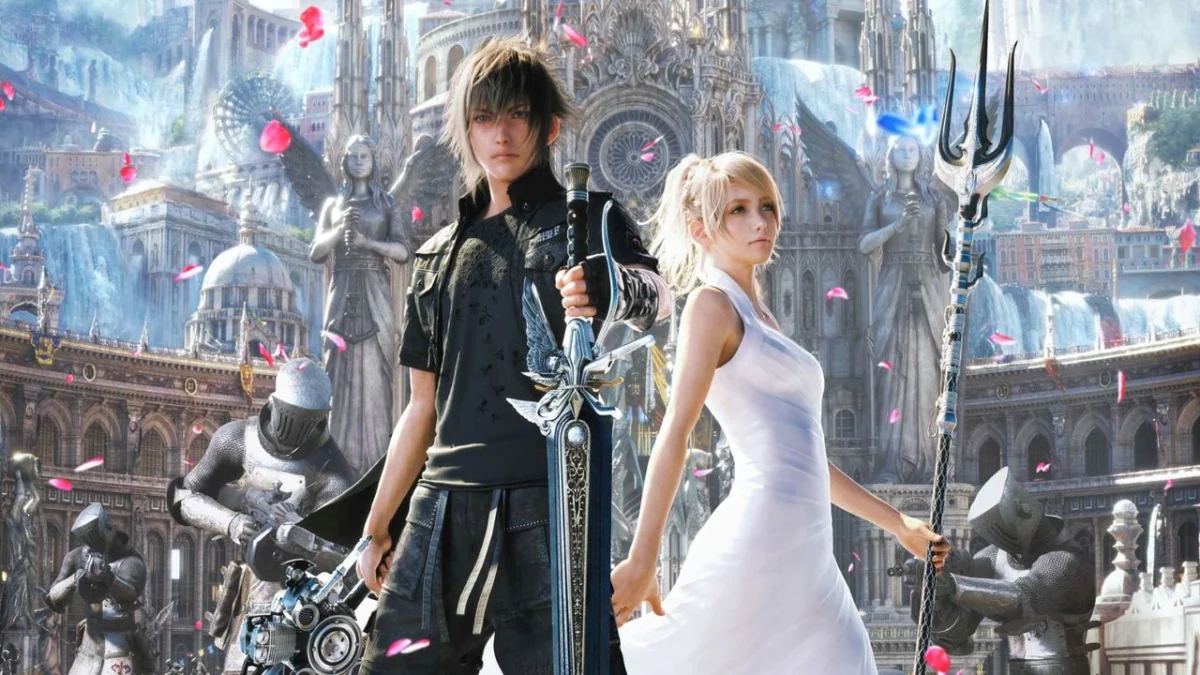
The landscape of portable gaming has undergone a seismic shift since the launch of the Nintendo Switch 2. As the console continues to establish itself as a powerhouse capable of handling titles once thought exclusive to high-end home consoles and PCs, fans have begun to look toward the back catalog of the previous decade. Specifically, eyes have turned to the epic, sprawling road trip of Final Fantasy 15.
During a recent shareholder’s meeting, Square Enix addressed the persistent rumors surrounding a potential port of the 2016 juggernaut to Nintendo’s latest hardware. While the company stopped short of a formal announcement, the door remains firmly ajar, sparking a renewed conversation about technical feasibility, the legacy of the title, and the shifting strategy of one of Japan’s most storied publishers.
A Legacy of Technical Ambition
Final Fantasy 15 was, by all accounts, a technical marvel when it debuted in 2016. Developed on the proprietary Luminous Engine, the game featured a vast, interconnected open world, a complex real-time combat system, and a level of graphical fidelity that pushed the PlayStation 4 and Xbox One to their limits. The story of Prince Noctis and his three companions—Gladiolus, Ignis, and Prompto—became a cultural touchstone, marking a significant departure for a franchise that had traditionally leaned into linear storytelling and turn-based mechanics.
Over the last two decades, the title has evolved significantly. Through the Royal Edition and various DLC expansions, Square Enix refined the game’s core systems, added playable chapters for the companions, and enhanced the overall visual presentation. However, the very nature of its "ambitious and scarily big" world has always made a port to lower-power hardware seem like an exercise in futility. With the advent of the Switch 2, which boasts significantly improved processing power and support for modern upscaling technologies, that narrative is beginning to change.
Chronology of Square Enix’s Switch 2 Strategy
Square Enix has arguably been the most aggressive third-party supporter of the Nintendo Switch 2 since its launch last summer. The publisher’s strategy has been twofold: breathing new life into legacy titles and bringing modern, high-fidelity experiences to the handheld format.
- The Early Adopters: Following the console’s launch, Square Enix quickly pivoted to support the system with refreshed versions of its classic Dragon Quest library, alongside smaller titles like The Adventures of Elliot: The Millennium Tales.
- The Final Fantasy Influx: The publisher’s commitment deepened significantly with the transition of its flagship franchise to the platform. Players have already seen the release of a native Final Fantasy 10/10-2 HD remaster and the highly successful port of Final Fantasy 7 Remake.
- The Next Frontier: Anticipation is currently building for the upcoming Final Fantasy 7 Revelation, further cementing the Switch 2 as a legitimate home for the franchise’s modern entries.
This momentum has led stakeholders to ask a logical question: If the engine powering Final Fantasy 7 Rebirth—a game of massive scope and technical intensity—can be optimized for the Switch 2, why shouldn’t Final Fantasy 15 follow suit?
Official Stance: The Hardware Constraint Dialogue
The inquiry during the recent shareholder meeting was direct: Is Final Fantasy 15 in development for the Switch 2? Square Enix’s response was characteristically nuanced.
"While there are certain hardware constraints when it comes to faithfully replicating the exact experience of Final Fantasy 15," the company stated, "we can say that it is not entirely impossible."
This statement serves as a carefully calibrated middle ground. By acknowledging "hardware constraints," Square Enix is likely referring to the Luminous Engine’s reliance on specific lighting and physics assets that were designed for older, traditional console architecture. However, the admission that a port is "not entirely impossible" suggests that the company’s internal engineering teams have likely conducted feasibility studies.
When pressed on whether a port was actively being greenlit for production, the company adopted a more diplomatic tone: "We will pass along your input to the development team as a valuable perspective on marketing and future platform options." While this is standard corporate language for "don’t hold your breath," in the context of the gaming industry, it serves as an acknowledgment that consumer interest is being tracked and quantified.
Technical Implications: The "Portability" Challenge
The primary obstacle to a Final Fantasy 15 port is not merely raw power, but the optimization of its specific game design. The world of Eos is designed to be explored via the Regalia—the game’s iconic car—or on foot, with massive distances between points of interest.
- Asset Streaming: The Luminous Engine relies on sophisticated streaming technology to keep the open world seamless. Translating this for the Switch 2’s unique memory architecture would require a significant overhaul of how the game loads assets.
- Visual Fidelity vs. Performance: To keep the game running at a playable frame rate in handheld mode, the developers would have to decide which visual compromises are acceptable. Would they opt for a lower resolution, or would they utilize advanced AI-based upscaling (such as DLSS or similar tech) to maintain a crisp image?
- Battery and Thermal Management: As a long-form RPG, Final Fantasy 15 is intended to be played for hours at a time. Ensuring that the console doesn’t overheat or deplete its battery within ninety minutes is a major hurdle for any "AAA" open-world port on a handheld device.
However, the industry has seen miracles before. With titles like The Witcher 3: Wild Hunt and Hogwarts Legacy successfully making the jump to portable hardware, the technical feasibility of bringing Final Fantasy 15 to the Switch 2 is arguably higher today than it has ever been.
The Market Case: Why Now?
Beyond the technical hurdles lies the economic reality. Square Enix has been vocal about its strategy to "follow what truly resonates with fans." This philosophy has led to a pivot toward more traditional, narrative-driven experiences, as well as a focus on high-performance remakes.
Final Fantasy 15 occupies a unique space in the franchise’s history. Despite its rocky development and the mixed reception of its narrative structure at launch, it remains a commercial success with a deeply devoted fan base. For many, the road trip aspect—the bond between the four protagonists—is the heart of the experience, and it is a gameplay loop that lends itself surprisingly well to the "pick-up-and-play" nature of the Switch 2.
Furthermore, as the console lifecycle progresses, publishers often look to back-catalog titles to fill gaps in the release calendar. A definitive "Complete Edition" of Final Fantasy 15, including all post-launch DLC and refined combat mechanics, would be a compelling offering for a new generation of players who may have missed the game during its original 2016 run.
Conclusion: A "Wait and See" Strategy
While we are unlikely to see a surprise launch of Final Fantasy 15 on the Switch 2 in the immediate future, the shift in Square Enix’s messaging is palpable. They are no longer dismissing the hardware’s capabilities. Instead, they are measuring the appetite of their audience.
The company is clearly balancing the prestige of its brand with the reality of technical porting costs. For now, the "boys-on-the-road" adventure remains a desktop-bound experience. But for those who dream of wandering the plains of Leide or driving the Regalia while on the move, the door is not locked. It is simply a matter of whether the market demand outweighs the engineering effort. Given the current trajectory of the Nintendo Switch 2, that equation may tilt in favor of a port sooner than we think.

