

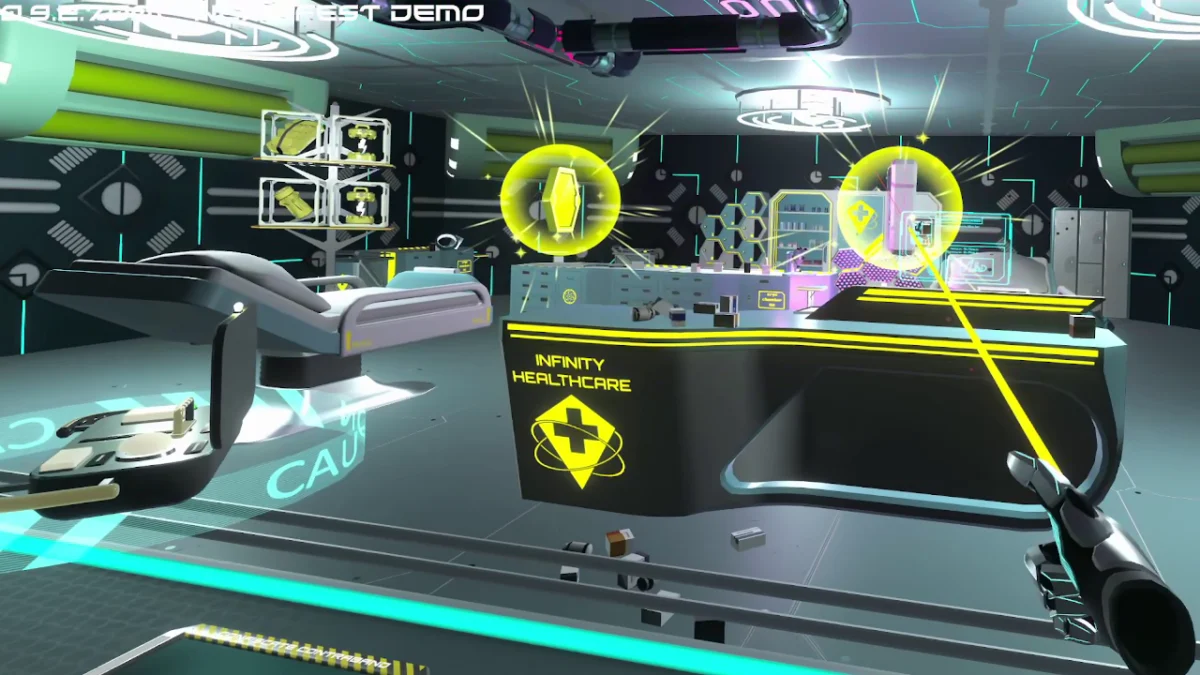
As Steam Next Fest brings a fresh wave of virtual reality titles to enthusiasts worldwide, one particular sci-fi hybrid has managed to turn heads and spark discussions within the VR community. Developed by FusionPlay and published by Impact Inked, RAID VR pitches itself as an imaginative cross-genre experiment: imagine the charming, meticulous workplace management of Border Bots VR colliding with the high-stakes thrills of an extraction shooter like Ghosts of Tabor, all set against the unforgiving backdrop of outer space.
During our hands-on time with the PC VR demo—tested using a Meta Quest 3 via Virtual Desktop on a high-end rig featuring a Ryzen 7 9850X3D and an RTX 5070 Ti—we discovered a uniquely compelling gameplay loop. Yet, we also found a title that occasionally plays its hand a little too safe, seemingly sacrificing deeper mechanical freedom in the name of broad accessibility.
Main Facts
- Game RAID VR
- Developer: FusionPlay
- Publisher: Impact Inked
- Genres: Co-op Sci-Fi Roguelite Shooter / Interstellar Customs Simulator
- Platforms: Steam (PC VR demo available now); upcoming release on Meta Quest platforms.
- Pricing & Availability: The Steam Next Fest demo is completely free to play. The official Meta Quest store page lists the full release at $12.99, with a pre-order discount reducing the price to $9.99.
- Demo Scope: Spans from player rank 4 to rank 6, offering approximately 30 to 35 minutes of gameplay. The demo currently limits co-op sessions to two players, whereas the full release will support up to four-player cooperative squads.
Chronology: A Shift in the Life of an Interception Agent
Punching the Clock at the Intergalactic Checkpoint
The RAID VR demo drops players straight into the thick of things, initializing your shift at rank 4 and concluding upon reaching rank 6. This progression path takes roughly half an hour, establishing a brisk, arcade-like pacing right out of the gate.
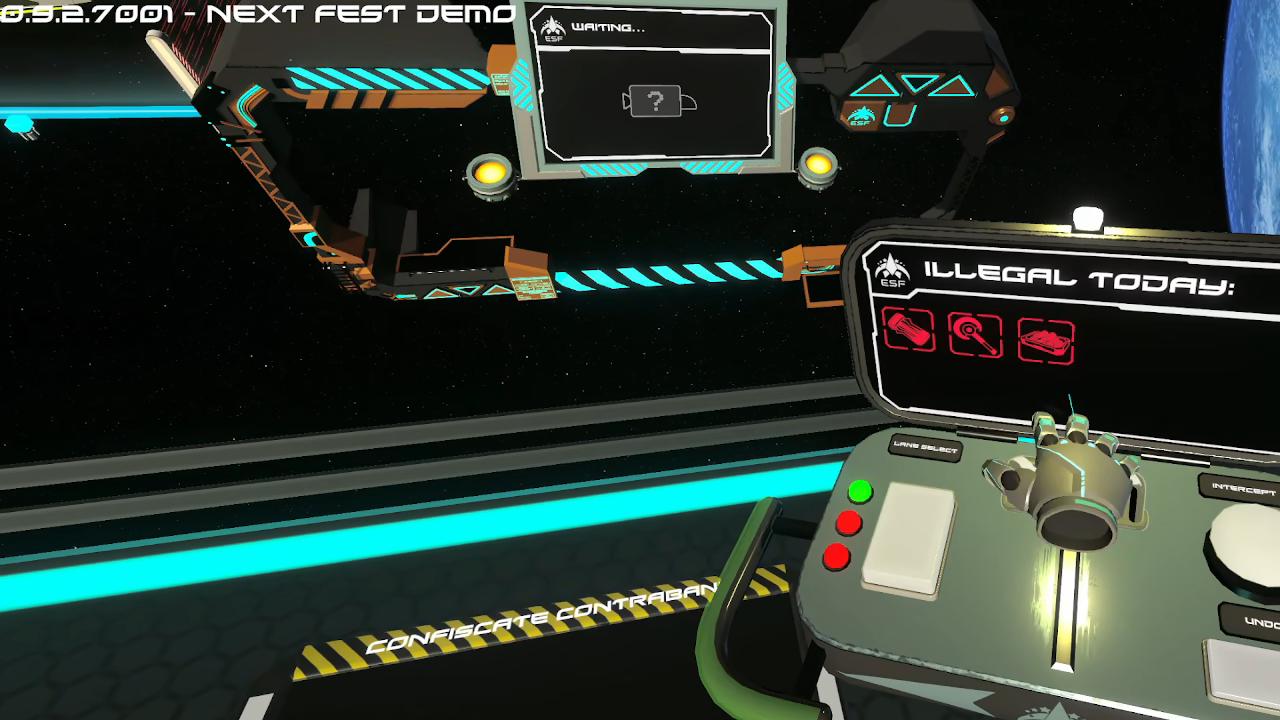
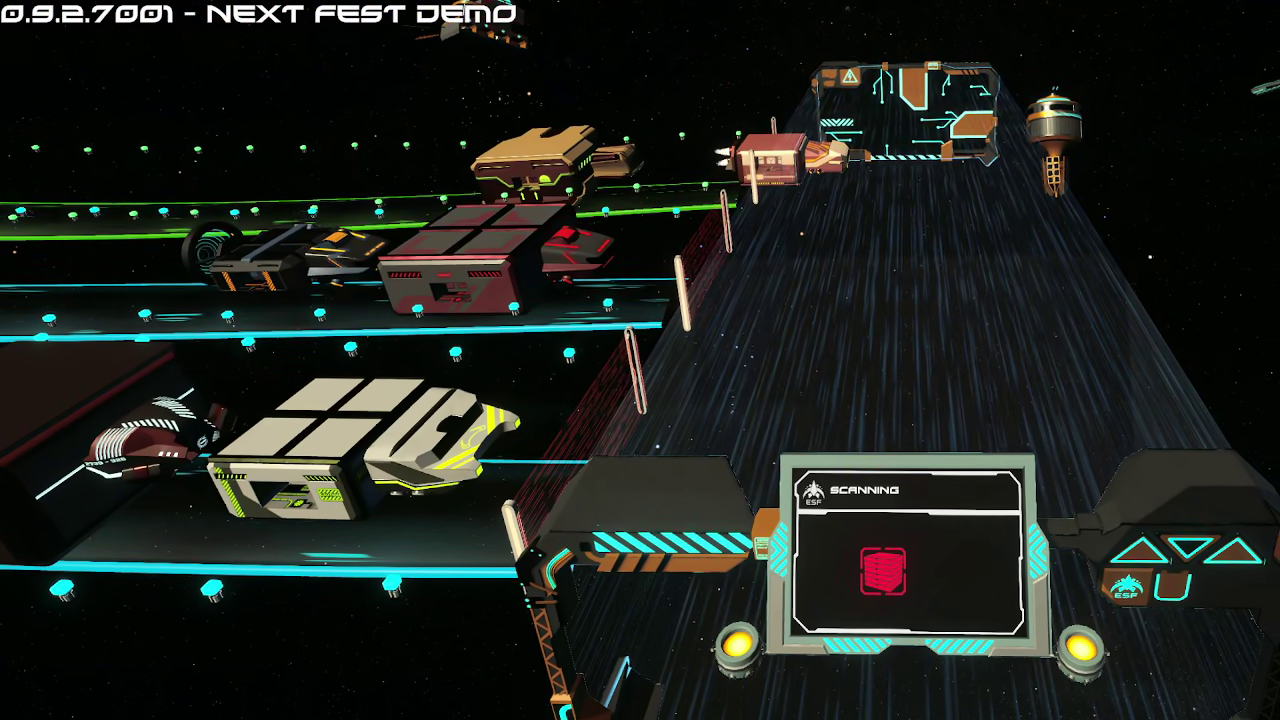
At the start of your workday, massive cargo spaceships line up across multiple approach lanes. Players navigate these lanes using an intuitive, physical control panel. Your primary duty as a pseudo-intergalactic customs agent is to scan incoming vessels for illegal contraband. The game provides a dynamic checklist of prohibited items, categorized by specific icons, types, and color codes.
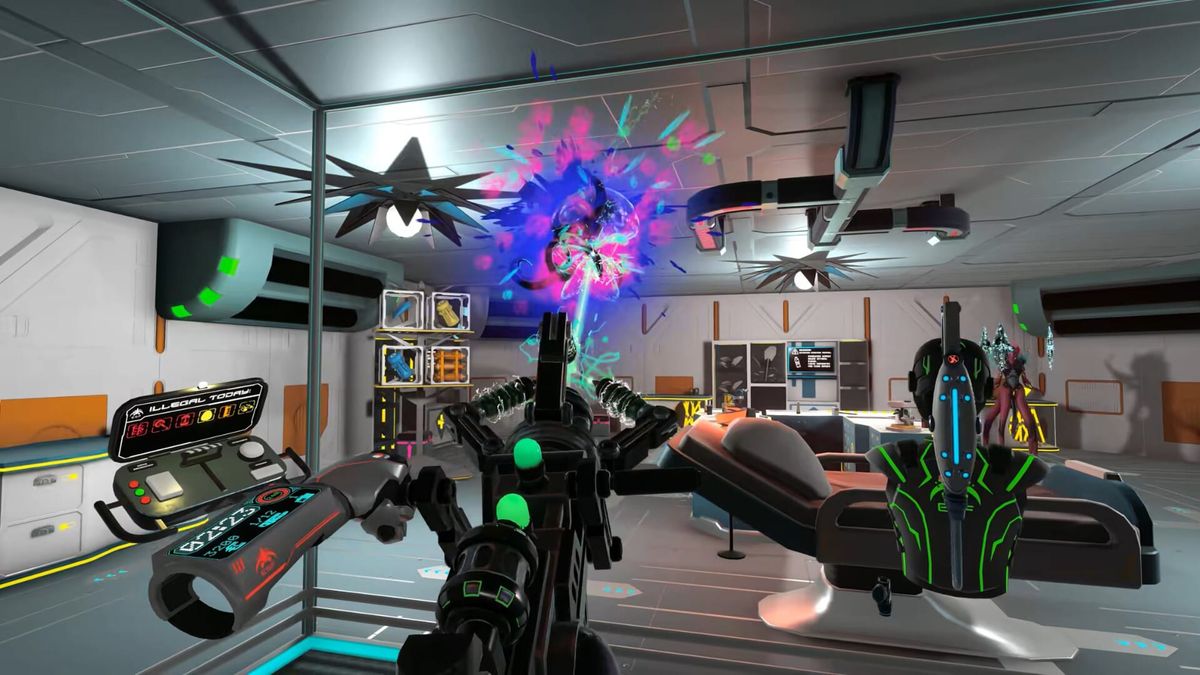
Once a scan concludes, a timer kicks in. You are forced to make a split-second executive decision: clear the vessel to proceed on its journey, or flag it for interception. Choosing the latter triggers a tractor-beam sequence that docks the suspect ship directly to your station, paving the way for a tactical boarding action.
The Interception and Combat Loop
Upon docking, players board the vessel to purge the offending cargo and deal with any hostile smugglers onboard. Unfortunately, this is where the game’s design begins to reveal structural restrictions.
Rather than facilitating a dynamic, room-scale firefight where players can actively flank and hunt down enemies, movement is tightly corralled. You are restricted to a small, rectangular boundary at the front of the room. From this limited vantage point, you dispatch robotic foes from a distance and fend off occasional melee combatants wielding energy swords.
Encounters are designed to be swift—often concluding in under a minute. Once the smoke clears, players utilize a telekinetic grab system to reel in hidden contraband, dumping the illicit goods into a disposal vortex located just beneath their original standing platform. While functional, the tight confines leave veterans of room-scale VR shooters wanting more spatial freedom, raising questions about how comfortably four players will fit into such a constrained area when full co-op launches.
The Twist: Anticlimactic Inspections and Full-Scale Raids
Not every intercepted ship leads to an all-out gunfight. To maintain the frantic momentum of timed shifts, certain docked vessels contain zero combat encounters. Players simply board, sweep up collectible loot, seize the targeted contraband, and extract within thirty seconds. While this efficiency makes sense from a time-management perspective, it can feel deflating for players pumped up for a firefight.
Conversely, the demo also features randomized events where a heavily armed smuggler ship warps in, demanding immediate and absolute attention. These are full-scale ship raids featuring multi-room layouts, locked doors, and keycard hunts. Ironically, navigating these expansive raid maps highlights just how restrictive the standard checkpoint interceptions truly are; once you experience the freedom of a full raid, returning to a static guard-box feels jarring.
Supporting Data & Technical Breakdown
Arsenal Design and Mechanical Trade-Offs
RAID VR boasts a colorful, cel-shaded art style that translates cleanly inside the headset, supported by crisp audio cues that ground the sci-fi environment. Weapons feature inventive designs—none more memorable than a comedic rocket launcher that fires tiny, screeching alien projectiles.
However, the combat mechanics rely heavily on cooldowns and pre-determined loadouts rather than manual, immersive reloading:
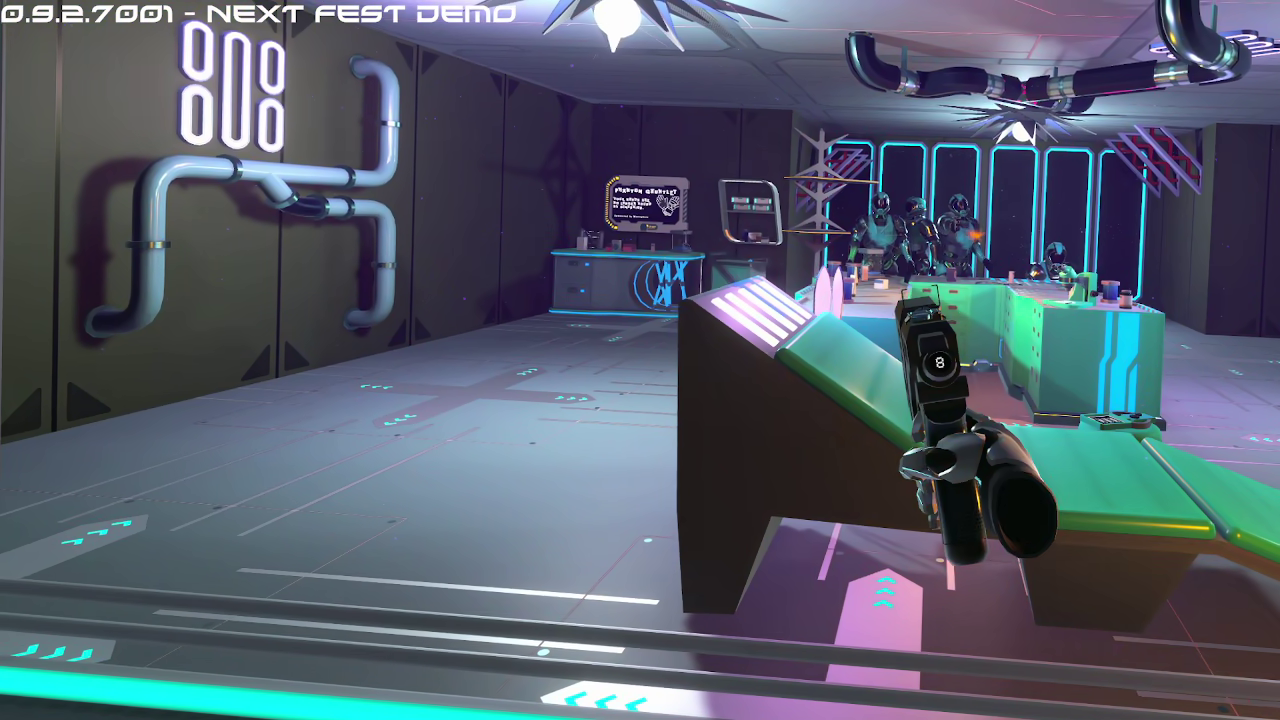
- Timed Reloads: Firearms and defensive shields utilize a timed recharge system rather than manual magazine extraction and insertion. This prevents players from permanently dual-wielding and going guns-blazing, forcing tactical retreats and Matrix-style bullet-dodging when weapons overheat.
- Pacing and Movement: The default walking speed is conspicuously slow, and the game notably lacks a sprint option. Because enemy movement speeds and projectile velocities are similarly unhurried, the difficulty curve feels remarkably gentle. Even when swarmed by up to four robotic bots simultaneously, seasoned VR shooters will rarely feel genuinely threatened.
Comfort and Accessibility Specs
FusionPlay has incorporated several standard comfort features to accommodate different playstyles:
- Locomotion Options: Supports both snap and smooth turning, alongside height adjustments for seated gameplay. Limited teleportation options are available, though the core interception zones are compact enough to accommodate true room-scale movement for players with adequate physical space.
- Omissions: The current build lacks a motion vignette setting, which might affect motion-sickness-prone users during extended sessions, though the overall design remains relatively comfortable for the mainstream VR audience.
Official Responses and Developer Intentions
Speaking on the design philosophy behind RAID VR, the development team at FusionPlay has consistently emphasized accessibility and pick-up-and-play mechanics over hardcore simulation. By streamlining movement and automating reload mechanics, the studio aims to lower the barrier to entry typical of complex VR extraction shooters like Ghosts of Tabor, making the experience approachable for casual and cooperative gamers alike.
Publisher Impact Inked has positioned the title as an affordable entry point into cooperative VR gaming, pricing the full release at an accessible $12.99 with a pre-order incentive of $9.99. While the developers have not yet addressed specific feedback regarding the restrictive boundaries of standard ship interceptions, the transition from two-player demo co-op to four-player squad play remains one of the most anticipated pillars of the forthcoming launch.
Implications for the VR Landscape
RAID VR occupies a fascinating intersection in the virtual reality ecosystem. It attempts to bridge the gap between casual arcade job-simulators and high-octane extraction shooters, proving that the core concept of acting as an intergalactic customs officer is inherently fun.
The primary implication moving forward is a familiar balancing act for VR developers: accessibility versus depth. By sanding down the rough edges—slowing down enemies, locking players into restrictive combat boxes, and automating weapon reloads—FusionPlay has ensured that RAID VR is welcoming, low-stress, and easy to learn. Yet, in doing so, it risks alienating the hardcore shooter community that craves adrenaline, spatial freedom, and mechanical complexity.
Whether RAID VR can sustain its novelty across longer sessions once the full game launches remains to be seen. For now, the Steam Next Fest demo has successfully accomplished its primary mission: it has secured a spot on many players’ wishlists and left the community eager to see how the formula evolves upon its ultimate release.

