

Main Facts
- Transformers: Beyond Reality Redux
- Platform: Meta Quest (Reviewed on Meta Quest 3S)
- Release Date: September 10, 2026
- Developer & Publisher: META4 Interactive / META4 Interactive Inc.
- Price: $19.99
- Genre: Arcade-style, on-rails virtual reality first-person shooter
- Core Premise: Players step into the shoes of humanity’s last line of defense in the Transformers universe, moving automatically through six campaign stages while blasting through waves of generic Decepticon forces.
- Critical Consensus: The game suffers from lackluster combat feedback, uninspired level design, a severe visual downgrade compared to its previous PlayStation VR2 iteration, and a general lack of mechanical depth, earning it a mediocre 2.5-star rating.
Chronology: From PlayStation Arcade Halls to Meta Quest Headsets
The journey of Transformers: Beyond Reality began in 2022 when developer META4 Interactive first introduced the arcade-style, on-rails VR shooter to the original PlayStation VR (PSVR) ecosystem. Designed to capture the nostalgic spirit of coin-op light-gun classics, the title translated the high-octane vehicular mayhem of the Hasbro franchise into a strictly controlled, movement-automated virtual reality experience.
Following its initial release, the game received a surprise port to Sony’s advanced hardware platform, launching on the PlayStation VR2 (PSVR2) in 2023. This version sought to leverage the newer headset’s improved visual fidelity, dynamic lighting, and enhanced haptic capabilities, offering a marginally sharper look into the eternal war between the Autobots and Decepticons.
Now, shifting gears toward standalone mobile VR hardware, META4 Interactive has launched Transformers: Beyond Reality Redux for the Meta Quest ecosystem on September 10, 2026. Priced at $19.99, the Redux moniker promises minor gameplay adjustments and optimizations tailored explicitly for Meta’s standalone headsets. However, rather than breathing fresh life into the franchise, the transition to the Quest hardware exposes deep cracks in the core design, highlighting the severe compromises required to bring the software to untethered devices.
Supporting Data: Gameplay Mechanics, Performance, and Visual Downgrades
The On-Rails Formula Falls Flat
At its core, Transformers: Beyond Reality Redux adheres strictly to the classic arcade rail-shooter blueprint—a genre populated by revered veterans like Virtua Cop, Time Crisis, and The House of the Dead. Players are automatically guided through environments, leaving them with one primary directive: shoot everything that moves until it explodes. The campaign spans six distinct stages, each culminating in a scripted boss encounter, backed up by a continuous arcade mode.
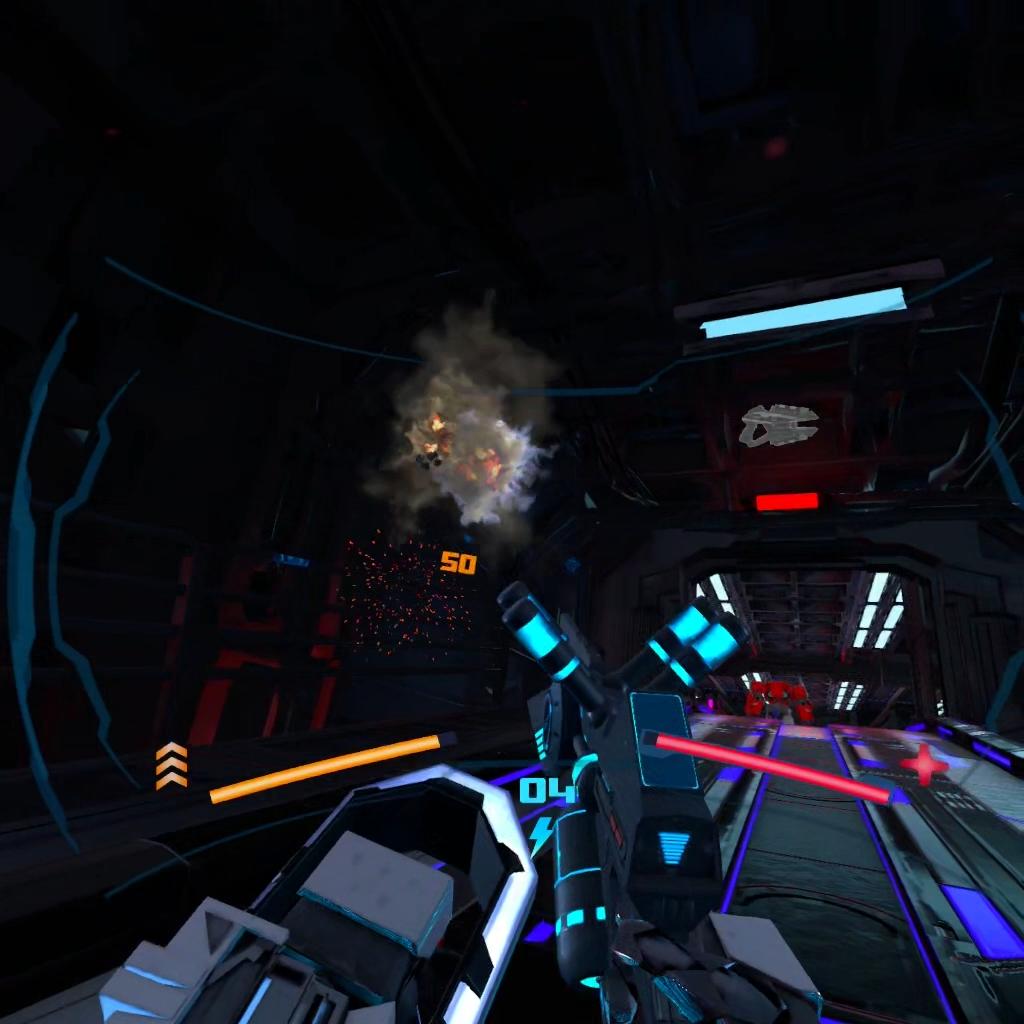
Yet, where historical arcade cabinets thrived on visceral feedback, Transformers falters completely. In The House of the Dead, obliterating zombie heads offers immediate tactile and visual gratification; in Time Crisis, stepping on a pedal and feeling real-world mechanical gun recoil heightens adrenaline. By contrast, pulling the trigger in Beyond Reality Redux feels limp and uninspired. Weapons fire continuously with the perceived impact and velocity of an inchworm. There is a total absence of destructive force, weight, or meaningful haptic feedback when blaster fire connects with enemy targets.
Visual and Technical Compromises
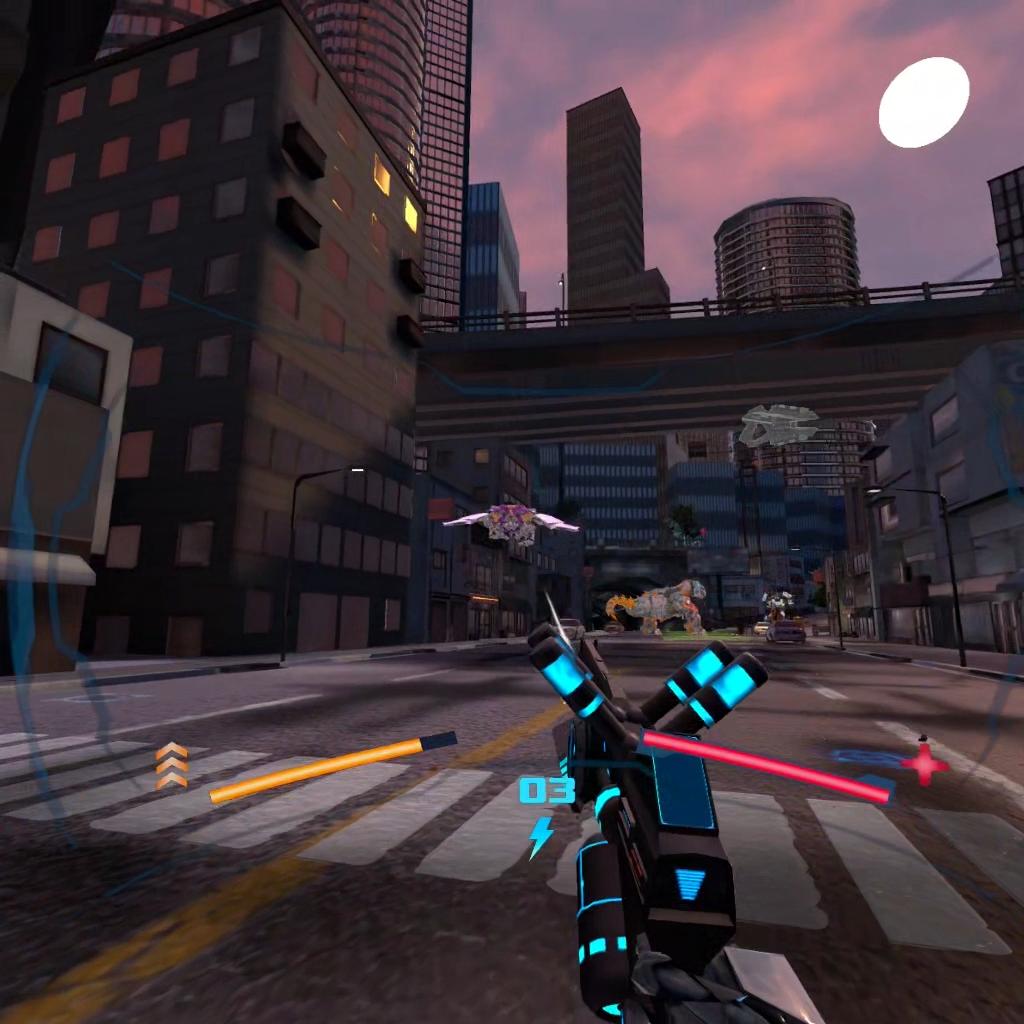
The visual department represents perhaps the most disappointing aspect of the Meta Quest port. When measured against its PSVR2 predecessor, Transformers: Beyond Reality Redux suffers from a drastic and unforgiving downgrade. Textures frequently appear entirely missing, while character models and static environments are stripped of critical geometric detail.
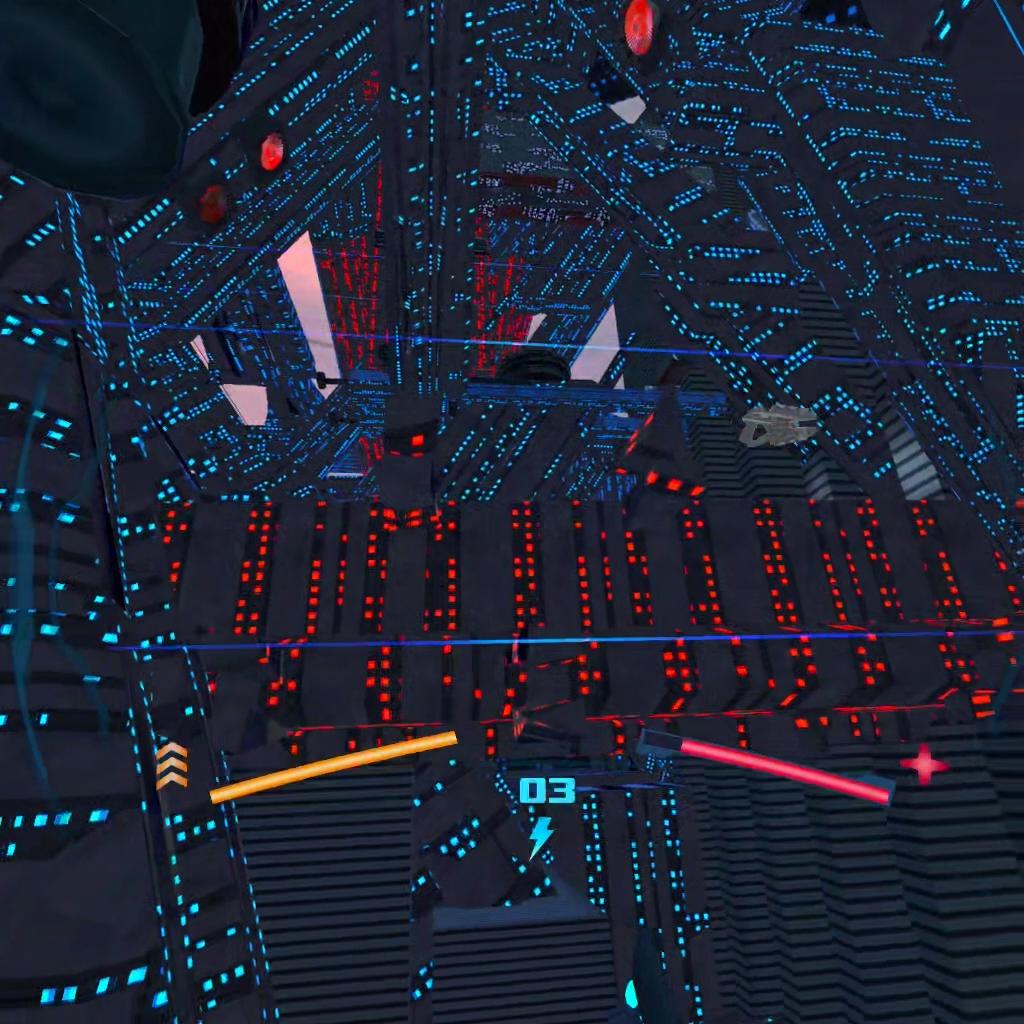
Lighting conditions are chronically bland, turning potentially iconic sci-fi battlefields into generic, monotone corridors. Coupled with weak visual effects, these shortcomings are difficult to justify, especially given the inherently simple structural demands of an on-rails shooter. Despite the hardware limitations of standalone VR, competing titles have proven that stylized or optimized art directions can mitigate performance constraints far more effectively than a blanket stripping-away of visual assets.
Accessibility and Comfort Settings
From a comfort and ergonomic standpoint, the game accommodates various playstyles:
- Locomotion: Because the experience is entirely on-rails, manual movement is absent. The camera continuously pushes the player forward, upward, or downward. While the pacing is generally slow enough to stave off severe motion sickness for most users, susceptibility varies on an individual basis.
- Play Style: Though officially recommended for a standing position—encouraging physical ducking under laser gates and dodging enemy fire—the game is so forgiving that players can easily remain seated, absorb incoming hits, and suffer no mechanical penalty.
- Customization: Basic settings allow users to designate either their left or right hand as the primary weapon control point.
Official Responses and Developer Intentions
META4 Interactive positioned Transformers: Beyond Reality Redux as an accessible entry point for standalone VR enthusiasts eager to interact directly with iconic Hasbro characters. The overarching narrative premise attempts to establish high stakes: Earth’s greatest defenders are temporarily sidelined—such as Optimus Prime suffering a concussion—leaving humanity’s survival reliant on the player’s proficiency with a specialized laser sidearm.
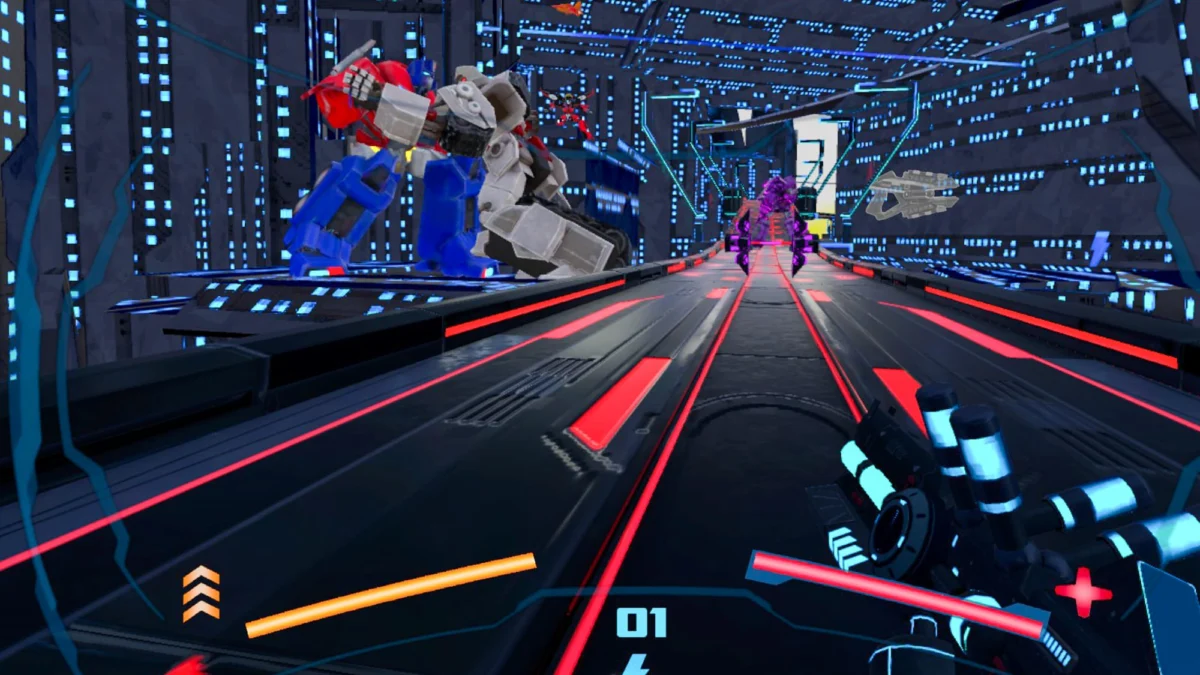
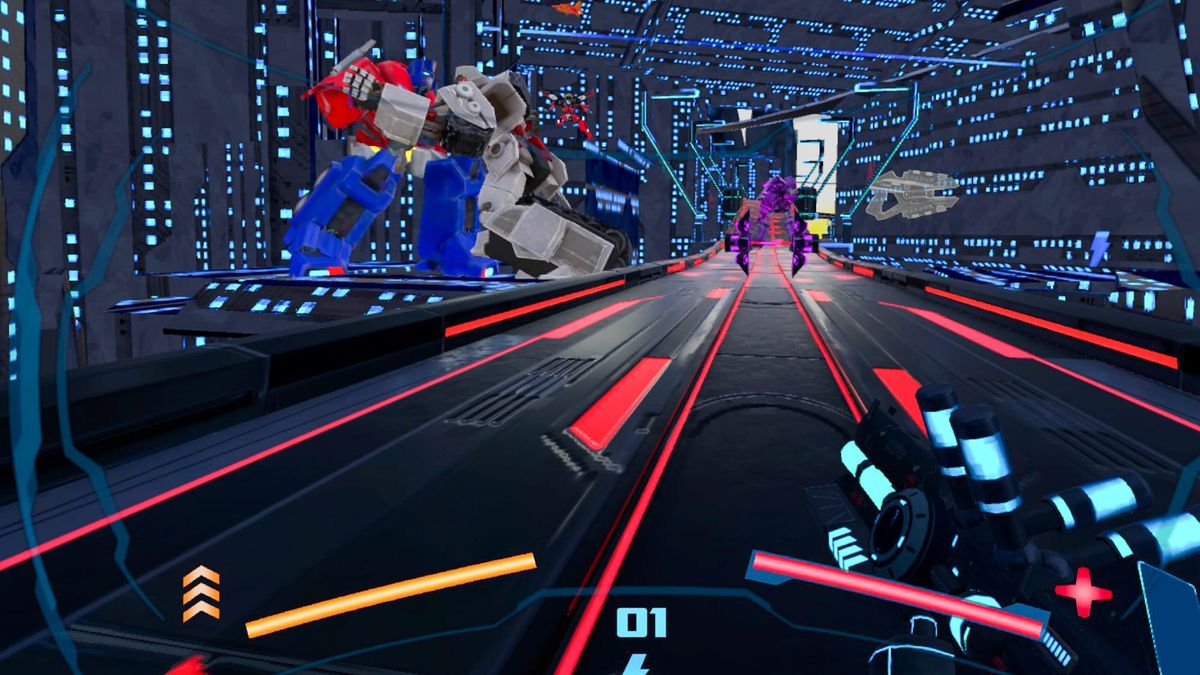
Throughout the campaign, recognizable Decepticons materialize to deliver brief, snarky dialogue lines, swiftly countered by fan-favorite Autobots shouting warnings like "Oh, no you don’t!" Following a fleeting, six-second cinematic scuffle, the giant robots routinely vanish off cliffs, down corridors, or into the stratosphere, leaving the player with the parting instruction to "save the day!"
Regrettably, developer intentions to make the player feel like an indispensable action hero clash violently with the mechanical reality. Rather than fostering a gripping power fantasy, the dialogue and repetitive encounters read more like an uninspired PowerPoint presentation. Players merely point a laser reticle at floating targets while holding up a generic energy shield to deflect incoming fire.
Implications for the VR Arcade-Shooter Genre and the Meta Quest Library
The release of Transformers: Beyond Reality Redux carries notable implications for both the retro-revival arcade shooter genre within virtual reality and the broader economic landscape of the Meta Quest software library.
The Perils of Low-Effort Porting
As standalone headsets like the Meta Quest 3 and Quest 3S dominate market share, developers face mounting pressure to port older console or PC-VR titles to mobile-chipset hardware. Transformers serves as a cautionary tale of what happens when a game relies entirely on a powerful intellectual property (IP) to carry sub-par mechanics. Without engaging moment-to-moment action, intelligent enemy variety, or rewarding feedback loops, a recognizable nameplate cannot indefinitely sustain player engagement.
Alternative Value Propositions for Consumers
At a price point of $19.99, Beyond Reality Redux competes in a crowded marketplace filled with exceptionally polished standalone VR experiences. For Quest-only owners, the financial investment yields roughly two hours of monotonous shooting galleries and unengaging arcade loops.
Fans drawn in by nostalgia—desirous of hearing original voice actors and witnessing Optimus Prime or Megatron rendered at true room scale—will likely find their enthusiasm evaporating before the halfway mark. As critics and players alike note, seasoned VR enthusiasts seeking a genuine arcade fix would be far better served revisiting classic emulated cabinets or exploring deeply refined modern indie shooters natively built for standalone hardware. Ultimately, Transformers: Beyond Reality Redux proves that even giant robots cannot lift a heavy-handed, uninspired port out of mediocrity.

