

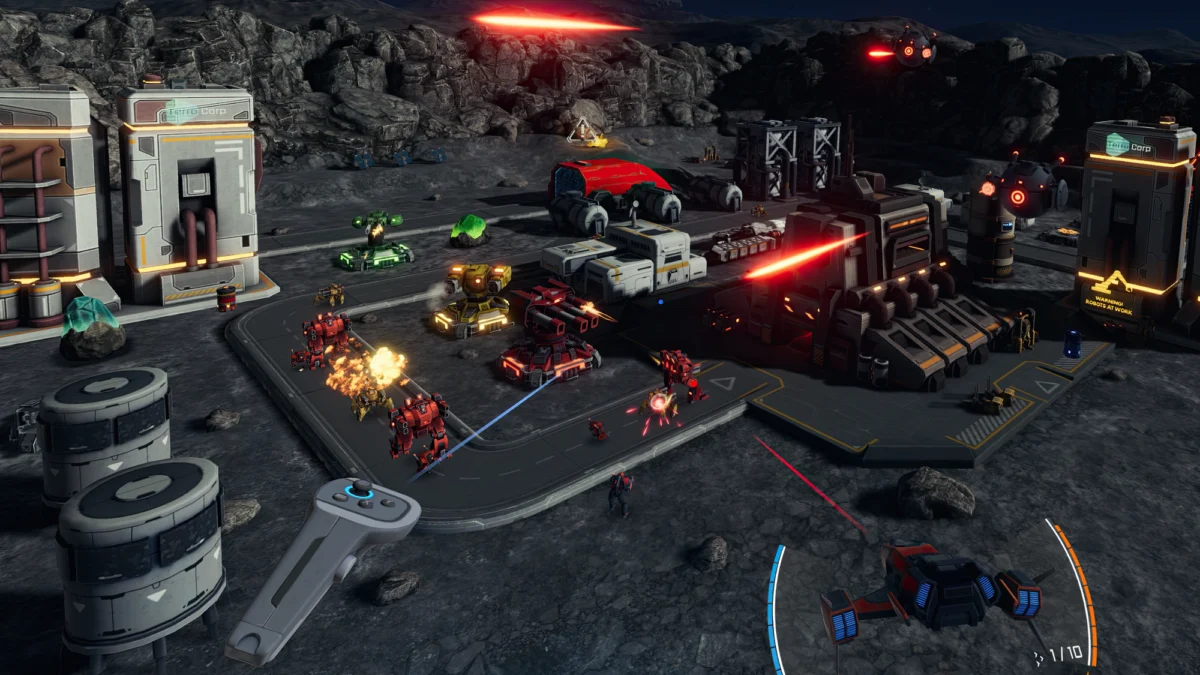
The virtual reality industry finds itself at a critical, if precarious, juncture. While the technology behind headsets continues to leap forward in fidelity, resolution, and tracking precision, the commercial viability of VR-exclusive titles has become increasingly difficult to sustain. The latest casualty of this market contraction is Iron Guard: Salvation, the sequel to the well-received 2021 tower defense title Iron Guard.
Developer Xlab Digital, a boutique studio that has long championed the immersive potential of VR, has announced a significant strategic shift. Citing sales figures for Salvation that represent only 20% of the original game’s performance, the developer is pivoting toward a hybrid model. This week, on June 18, the studio will release Iron Guard: Day Zero for the PlayStation 5, marking a transition into the flatscreen gaming market. This move serves as a microcosm of a broader, industry-wide trend that sees acclaimed VR studios forced to port their titles to traditional screens just to keep the lights on.
The Chronology of a Market Shift
To understand the current state of Iron Guard, one must look back at the trajectory of the series. The original Iron Guard launched in 2021 to a warm reception. In a niche genre—tower defense—the game managed to carve out a loyal audience, finding success on platforms like SteamVR, PlayStation VR2, and the Meta Quest. By all accounts, the first title was a success; it performed well enough to fund the development of its successor.
Iron Guard: Salvation was intended to be the studio’s "big" leap. Boasting higher fidelity, more complex gameplay loops, and expanded content, it was designed to capitalize on the momentum of its predecessor. However, the market landscape for VR changed drastically between 2021 and 2024. Despite maintaining strong review scores and positive community sentiment, the sales for Salvation failed to materialize at the same rate.
Faced with these figures, Xlab Digital began exploring alternatives. Following intensive feedback from the PlayStation community, the studio pivoted to develop Iron Guard: Day Zero. By retrofitting the experience for the PS5’s standard interface, the team hopes to broaden its player base. As part of this transition, Xlab has officially "retired" the original flatscreen Steam version of Iron Guard, opting instead to bundle it for free for all existing and future owners of either VR title. While Day Zero is currently console-exclusive, Xlab has expressed an intent to bring the flatscreen version to Steam at a later date.
Supporting Data: The Disparity Between Quality and Sales
The disparity between the first and second Iron Guard titles is a stark example of a recurring theme in the VR ecosystem: "Sequel Fatigue" combined with "Market Saturation." Xlab Digital noted that while Salvation was objectively a "bigger game with higher fidelity and more fun gameplay features," the conversion rate of players was significantly lower.
In a candid discussion on Reddit, a representative from Xlab Digital broke down the financial reality of the studio. "Funny/Sad enough, the first Iron Guard VR game made a decent return, in fact, it funded the entire sequel… but the sequel… seems to be harder to sell and has done 1/5th the sales."
This data point is particularly troubling because it highlights that quality is no longer a guaranteed indicator of commercial success in the VR space. Even when studios deliver on the promises of better mechanics and visuals, the consumer base for dedicated VR hardware is not growing at a rate sufficient to support the rising costs of development. Xlab clarified that as a small team, their goals are modest: they are not looking to buy islands or become industry titans. They simply want to "continue pushing our skills and do more bigger VR titles." Yet, even that modest goal has become a hurdle, as the "rough patch" in the VR market persists.
Official Responses: The Developer’s Perspective
The response from Xlab Digital reveals a deep-seated frustration with the current state of the industry. The studio’s messaging is a blend of hope for the future and pragmatic resignation regarding the present.
"Not done with VR for sure, but taking a pause as it has been a rough patch trying to find enough players to continue, even after excellent reviews across all VR platforms," the studio stated in its Reddit response. The developer’s hope is that the flatscreen transition acts as a "gateway" for players. By lowering the barrier to entry—both through the device type and a heavy discount on the price—Xlab hopes that players will experience the game in its flatscreen form and eventually be tempted to try the "whole different experience" that VR offers.
This strategy suggests that developers now view VR as a premium, niche experience that requires a pre-existing fanbase to sustain. By building that audience on traditional platforms, they hope to create a pipeline that leads players into the immersive ecosystem, rather than expecting the VR ecosystem to sustain itself in isolation.
The Broader Implications: A Trend of Consolidation
Xlab Digital is far from alone in this pivot. The last twelve months have seen a wave of industry shifts that signal a significant contraction in the VR market. This "flatscreen pivot" is not a sign of the death of VR, but rather a sign that the industry is undergoing a painful correction.
The Moss and Arizona Sunshine Examples
Prominent studios are making similar moves to survive. Polyarc Games, the studio behind the celebrated Moss series, recently made headlines not just for its porting of Moss to traditional screens, but for the difficult decision to lay off two-thirds of its staff. The move to bring Moss to PC and consoles is a clear attempt to monetize a successful IP across a wider surface area.
Similarly, Vertigo Games, a heavyweight in the VR space, has recently undergone significant restructuring, including the closure of one of its studios. Like Xlab, they have turned to the Arizona Sunshine franchise to anchor their strategy, pushing flatscreen ports to ensure their titles remain relevant to a broader audience.
The Hybrid Model
The industry is moving toward a "hybrid model" where games are built with VR in mind, but are designed to function just as well on a 2D monitor. The 7th Guest remake is another prime example; the developers provided the flatscreen version for free to VR owners, effectively acknowledging that the audience for a VR-only experience is not large enough to support a project’s development costs in the current economic climate.
Conclusion: The Future of Immersive Gaming
The case of Iron Guard: Salvation is a warning flare for the VR industry. It suggests that even the most dedicated and talented developers are finding it nearly impossible to sustain a business model based solely on VR exclusivity. When a game with high review scores and a solid pedigree sees a revenue drop-off of 80% between iterations, it indicates that the "VR early adopter" phase has ended, and the "mass market" phase has failed to take hold.
For the player, this shift may seem like a betrayal of the VR mission. However, from the developer’s perspective, the move to flatscreen is a survival mechanism. If studios like Xlab Digital, Polyarc, and Vertigo Games are to continue creating immersive experiences, they must be allowed to subsidize those projects with the steady, predictable revenue that traditional gaming platforms provide.
The challenge for the next few years will be whether these studios can balance the design requirements of two very different mediums. Can a game feel "native" to VR while also providing a satisfying, non-gimmicky experience on a flatscreen? If Xlab Digital’s Day Zero proves successful, it may provide a roadmap for other indie developers to follow. If it fails, the industry may see an even sharper decline in independent VR development, leaving the medium to be dominated only by the largest, most well-capitalized tech giants who can afford to lose money on hardware-selling software.
The VR market is currently in a "rough patch," as Xlab put it. Whether this is a permanent state of affairs or merely a temporary cooling-off period remains to be seen. For now, the focus is clear: expand to survive, or risk being left behind in a virtual world that simply isn’t big enough to live in yet.

