

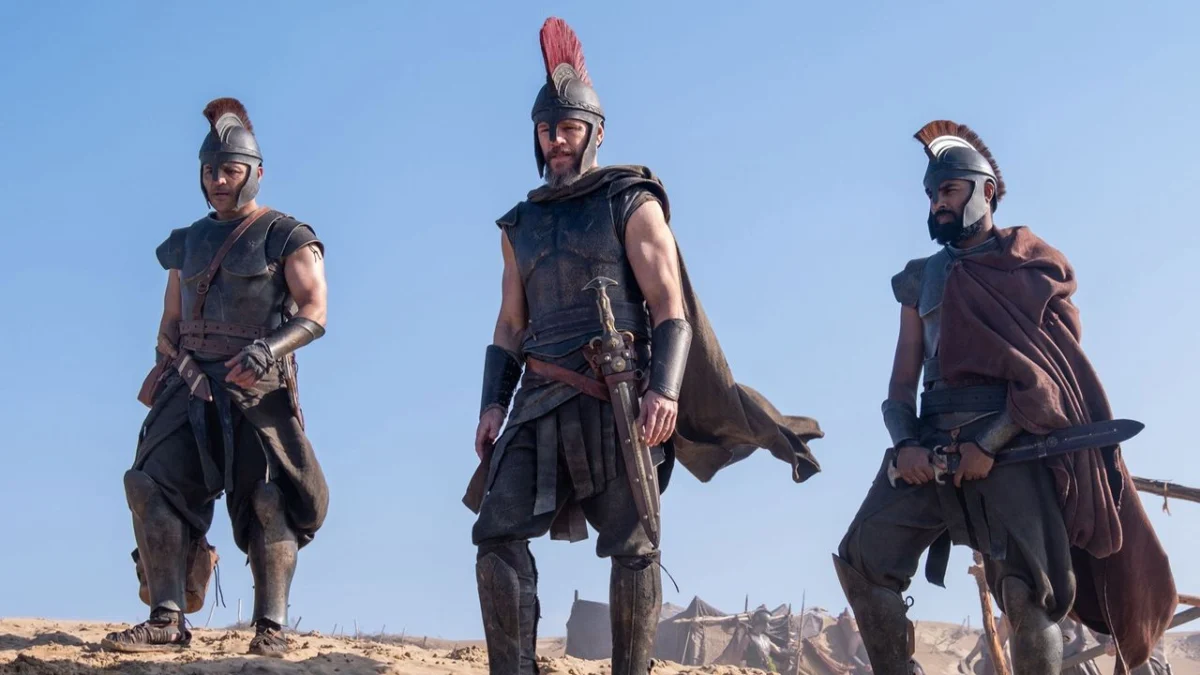
In the pantheon of contemporary cinema, few names command as much reverence for the "tangible" as Christopher Nolan. From the spinning hallways of Inception to the Trinity test’s atomic fire in Oppenheimer, Nolan has built a career on the rejection of the digital shortcut. His latest endeavor, a sprawling adaptation of Homer’s The Odyssey, appears to be his most physically demanding project to date. As the production prepares for its July 17, 2026, release, new insights from the set reveal a filmmaking process that blurred the lines between performance and survival, particularly during the film’s much-anticipated encounter with the Cyclops.
Main Facts: A Myth Reborn Through Practicality
The core of Nolan’s The Odyssey lies in its commitment to the "visceral reality" of the Bronze Age. Himesh Patel, who portrays Odysseus’ second-in-command, Eurylochus, recently shared the harrowing and awe-inspiring details of the production. According to Patel, the cast didn’t just act out the journey; they lived a version of it. The production eschewed the safety of green-screen soundstages in London or Los Angeles, opting instead for the rugged coastlines and ancient caverns of the Mediterranean.
Central to the film’s narrative is the "Cyclops sequence," a cornerstone of Greek mythology. While modern audiences might expect a CGI-heavy spectacle, Nolan’s approach utilized a combination of massive practical rigs, real-world locations, and what Patel describes as "beautiful accidents." The film features Bill Irwin as the titanic Polyphemus (the Cyclops), using a blend of sophisticated puppetry and scale-work to maintain the physical presence Nolan demands.
The production’s reliance on real-world elements extended even to the smallest details. During the filming of the escape from the Cyclops’ cave, a natural swarm of bees descended upon the set. Rather than clearing the area or treating it as a nuisance, the sound and camera teams integrated the event into the film, capturing the authentic buzz of nature that now soundtracks one of the movie’s most tense moments.
Chronology: From the Peloponnese to the Big Screen
The journey of Nolan’s The Odyssey began shortly after the awards circuit for Oppenheimer. Seeking a project that combined historical weight with fantastical scale, Nolan turned to the foundational text of Western literature. Pre-production involved an exhaustive search for locations that could double as the mythic landscape of Ithaca, Ismarus, and the land of the Lotus-Eaters.
- Location Scouting (Late 2024): Nolan and his production design team identified Nestor’s Cave in Greece as a primary location. Known mythologically as the birthplace of Zeus, the cave offered the geological "gravitas" required for the Cyclops’ lair.
- The Transformation (Early 2025): The crew arrived at Nestor’s Cave. In a feat of engineering, they converted the ancient site into a functional soundstage. This involved rigging lighting through narrow fissures in the cave ceiling and transporting heavy filming equipment across the Mediterranean waters.
- The "Bee" Incident (Spring 2025): During the filming of the cave sequences, the production encountered the aforementioned swarm of bees. This "godly interjection" was captured in real-time, adding an unplanned layer of sensory detail to the scene.
- Post-Production (Present): The film is currently in the final stages of editing and sound mixing, with a focus on maintaining the "visceral quality" Patel noted, ensuring that the practical effects translate into a seamless cinematic experience.
Supporting Data: The Technical Architecture of Nestor’s Cave
Filming in a location like Nestor’s Cave presents logistical nightmares that would deter most directors. However, for Nolan, the geological authenticity is a character in itself. The cave, located near Pylos, features a massive vaulted ceiling and a history that stretches back to the Neolithic period.
To make the cave "film-ready," the production team had to find a "tiny gap at the top" to run miles of cabling. This allowed them to harness a rig of lighting that could mimic the shifting Greek sun while providing the controlled environment necessary for high-definition cinematography. Patel noted that looking out from the "set" offered a view of the actual Mediterranean, a constant reminder to the actors of the stakes of their characters’ journey.
The safety of the cast was managed by elite marine and stunt teams. Nolan’s methodology relies on a high level of trust; he expects his actors to possess the "common sense" to navigate dangerous environments while providing a safety net that is invisible to the camera. This balance allowed the actors to lug real armor up hilltops and face crashing waves without the artificiality of a motion-capture suit, creating a performance style that Patel describes as inherently more "raw" than standard blockbuster fare.
Official Responses: Himesh Patel on the Nolan Experience
In an interview with GamesRadar+, Himesh Patel reflected on the unique atmosphere Nolan creates on set. He emphasized that the director’s reputation for intensity is matched by his trust in the cast and crew.
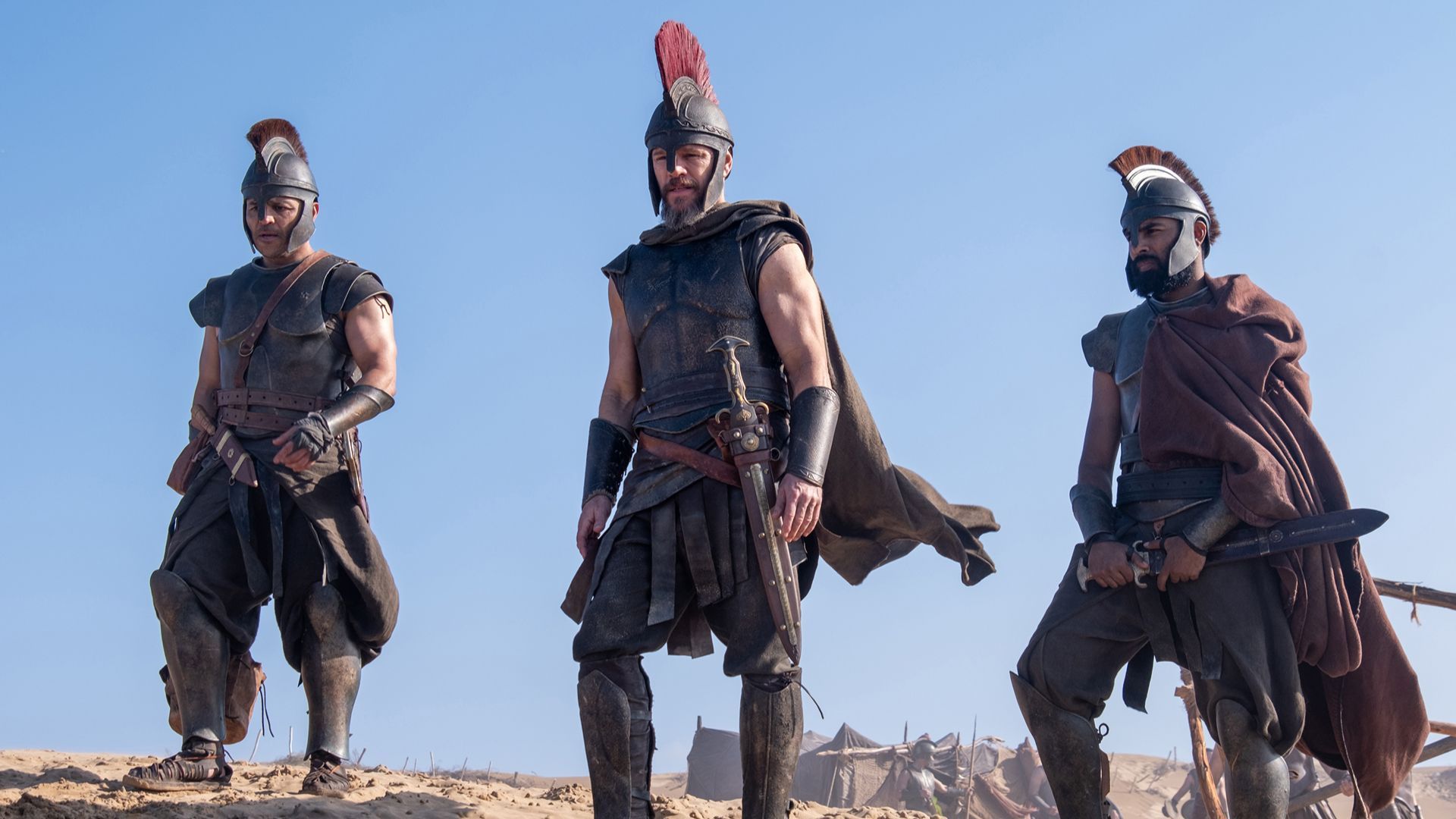
"He’s a rare filmmaker, in that he trusts we have a certain level of common sense to keep ourselves safe," Patel said. "But he’s also got the best stunt teams around, the best marine teams around, that kept us safe and kept us from ever being in any real danger."
Patel’s account of the "bee incident" serves as a microcosm for the entire production. When the swarm appeared, the production didn’t panic. "When we broke for lunch and they were like, ‘Just wait five minutes.’ The sound team captured the sound of the bees. Sometimes you have these beautiful accidents." This willingness to embrace the unpredictability of nature is what Patel believes gives the film its "visceral reality."
Regarding the location, Patel expressed a sense of awe that stayed with the cast throughout the shoot. "It was just kind of amazing to be going there and reminding ourselves that we’re in an actual cave… we look outside and there’s actually the Mediterranean around us."
Implications: A New Standard for the Mythological Epic
The production of The Odyssey carries significant implications for the future of the "Sword and Sandal" genre and the broader film industry.
1. The Rejection of the "Uncanny Valley"
By choosing practical effects for the Cyclops and real locations for the journey, Nolan is making a statement against the over-reliance on CGI. In an era where audiences are increasingly fatigued by "weightless" digital action, The Odyssey promises a return to the tactile. The success of this approach could encourage other studios to invest in practical location shooting rather than digital volume sets (like Disney’s "The Volume").
2. The Educational and Cultural Impact
Filming in Nestor’s Cave and other Greek landmarks brings a renewed focus to the preservation and cultural importance of these sites. The film is expected to spark a global interest in Homeric scholarship, much like Oppenheimer did for the history of the Manhattan Project.
3. Himesh Patel’s Career Trajectory
For Patel, The Odyssey represents a significant step into the world of high-concept, auteur-driven blockbusters. His role as Eurylochus places him at the heart of the film’s emotional conflict—the tension between Odysseus’s ambition and the survival of his crew. Patel’s ability to thrive in Nolan’s "visceral" environment marks him as a versatile talent capable of anchoring massive productions.
4. The Summer 2026 Box Office
Scheduled for a July 17 release, The Odyssey is positioned to be the tentpole event of 2026. Given Nolan’s track record, the film is not just a movie; it is an "event" that demands to be seen on the largest screen possible (IMAX 70mm). The industry will be watching closely to see if a 3,000-year-old poem can dominate the modern box office through the sheer power of practical filmmaking.
As the buzz—both from the bees and the critics—continues to build, The Odyssey stands as a testament to the idea that the oldest stories can be made new again, provided the filmmaker is willing to brave the waves and the caves to find the truth within the myth.

