

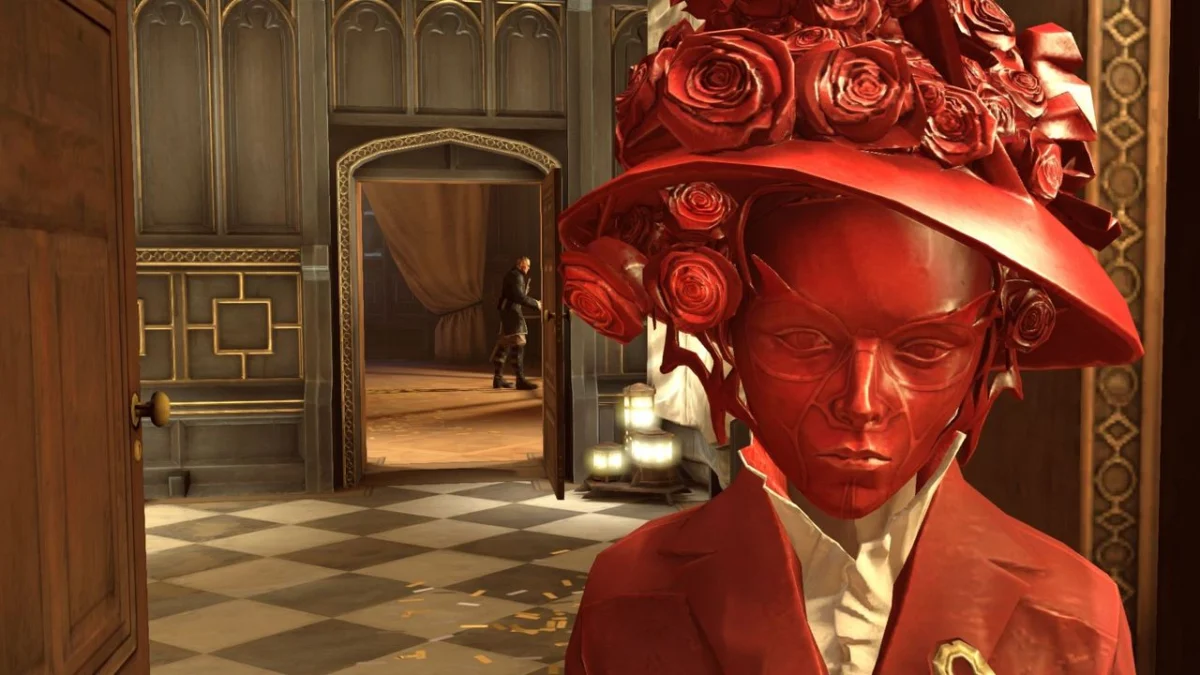
Fourteen years after its release, Dishonored remains a foundational pillar of the immersive sim genre. Its intricate level design, emergent gameplay, and distinct aesthetic have cemented its status as a masterpiece of modern gaming. Recently, the game’s co-creative directors, Raphaël Colantonio and Harvey Smith, have taken fans on a nostalgic journey, streaming a series of retrospective playthroughs that pull back the curtain on the development of the seminal 2012 title.
Joined by key members of the original Arkane Studios team—including lead gameplay programmer Stevan Hird and level designer Anthony Huso—the group has been revisiting the iconic streets of Dunwall level by level. While the streams serve as a lighthearted look back at a beloved classic, they have inadvertently provided a treasure trove of "lost" design concepts and fascinating insights into the philosophy that built one of the most atmospheric worlds in interactive media.
The Art of the Loading Screen: A Forgotten Narrative Tool
During their playthrough of "Lady Boyle’s Last Party"—arguably one of the most iconic missions in the entire series—the conversation shifted from the mechanics of stealth to the structural evolution of game design. As the team navigated the transitions between the bustling streets outside the Boyle estate and the opulent, high-stakes interior of the mansion, they encountered the game’s period-appropriate loading screens.
In an era where "seamless" open worlds and the total elimination of loading transitions have become the industry standard, Harvey Smith offered a surprisingly candid defense of the humble loading screen.
"People think it’s an improvement that we got rid of loading screens," Smith remarked during the stream. "But honestly, I think a break between one area and the next—where you feel like, ‘OK, that is behind me, I’m in a new pristine area’—and also being able to do the tips as part of the world-building, the art, and the little in-fiction notes? I actually have a soft spot for all that."
For Smith, the loading screen was not merely a technical necessity necessitated by the hardware limitations of the seventh console generation; it was a psychological checkpoint. It allowed the player to reset their focus, absorb lore snippets, and appreciate the distinct atmospheric shift between zones. Colantonio echoed this sentiment, agreeing that the transition provided a necessary rhythm to the player’s experience—a design beat that has been lost in the pursuit of constant, uninterrupted movement.
From Thief 4 to Dunwall: The Road Not Taken
The retrospectives have also served to clarify the turbulent, yet creatively fertile, history of Arkane Studios. Before the world of Dishonored was fully realized, the team was exploring various intellectual properties and creative directions. One of the most striking revelations from the series is the fact that Arkane was, at one point, tapped to develop a new entry in the legendary Thief franchise.
"Before Dishonored, Arkane was tapped to make Thief 4," Colantonio revealed. While the project ultimately did not come to fruition under their banner, the influence of the Thief series is palpable in Dishonored’s DNA. The team also explored concepts involving a Blade Runner game—a revelation that highlights the studio’s long-standing obsession with dense, dystopian urban environments.
These "what if" scenarios underscore the studio’s trajectory: a collection of developers deeply enamored with the stealth-action genre, attempting to reconcile their love for classic immersive sims like Thief and Deus Ex with their own, unique voice. The pivot to Dishonored allowed them to synthesize these inspirations into something entirely original, rather than being confined by the constraints of an existing franchise.
Lost Mechanics: The Tale of the Severed Hand
Perhaps the most gripping revelation shared by the developers was a discarded plot mechanic involving the game’s protagonist, Corvo Attano. In the final version of the game, Corvo receives his supernatural "Blink" ability from the mysterious Outsider, manifesting as a mark on his hand. However, early design documents suggested a much more visceral fate for that limb.
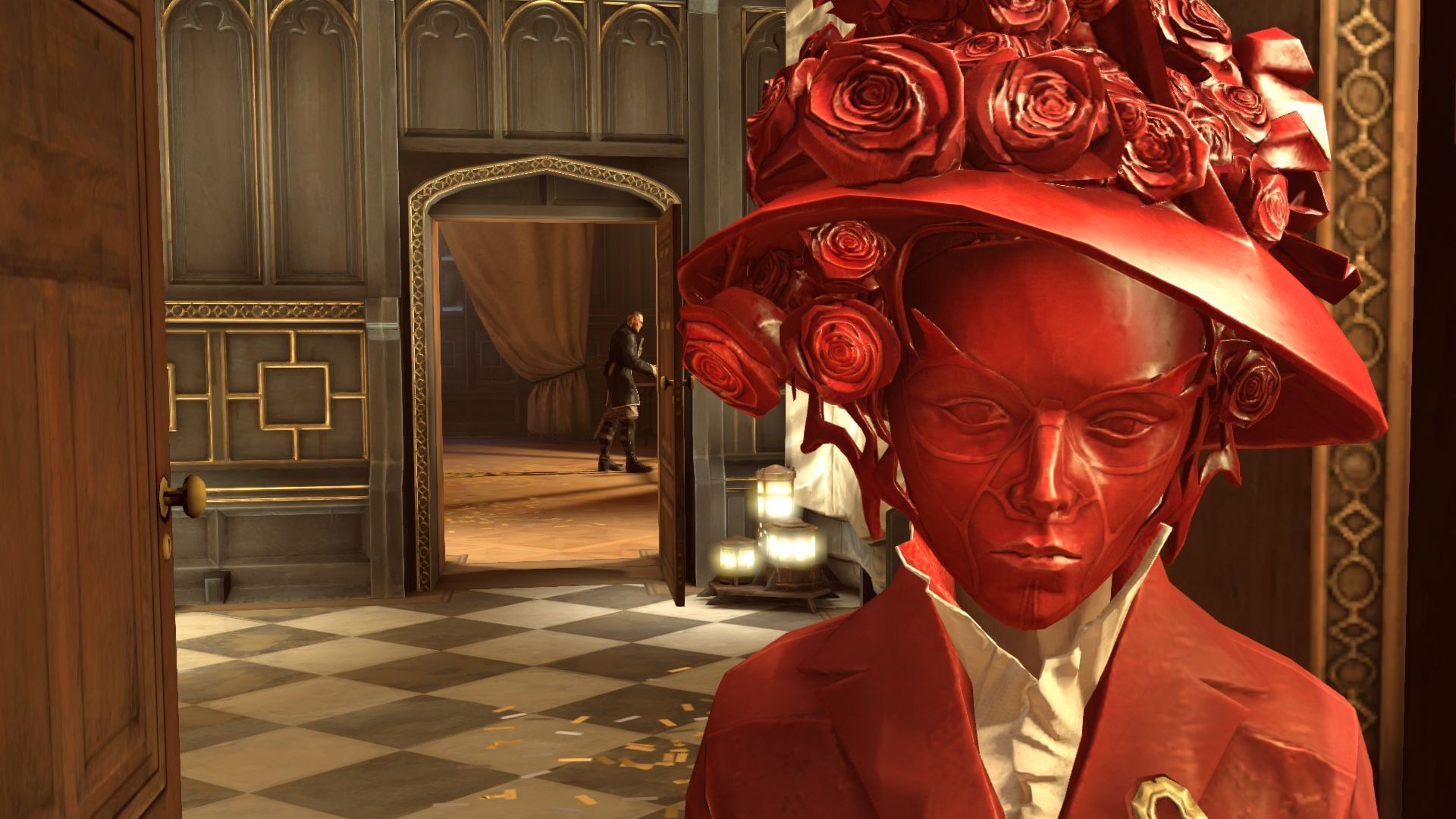
"I love the idea that your creepy marked-by-the-Outsider hand, your undead hand, either you have to play through as it for a while to get it back to Corvo or you had to go find it," Smith explained.
The proposal would have seen Corvo potentially losing his hand—the very conduit of his power—and forcing the player to engage in a gameplay loop centered around retrieving it. It is a testament to the game’s brutal, dark fantasy aesthetic that such a concept was even considered. While the mechanic was ultimately cut from the final release of Dishonored, the team noted that "nothing is wasted."
The concept of a severed, mummified hand serving as a source of power was later re-integrated into the series. In Dishonored 2, the protagonist Emily Kaldwin uses a mummified hand, marked by the Outsider, to channel supernatural abilities. It is a prime example of the "recycling" philosophy at Arkane, where a good idea, no matter how gruesome or ambitious, eventually finds its place in the world.
The "Sloppy" Playthrough: A Humanizing Perspective
Watching the original creators play their own work has also been a humbling exercise. Colantonio, in particular, has been quick to apologize for his "super sloppy" playstyle throughout the stream. After 14 years, muscle memory has faded, and the challenge of navigating the game while simultaneously discussing its development and design intent has led to high-chaos scenarios and narrow escapes.
For the audience, however, this lack of perfection is endearing. It highlights the sheer density of Dishonored’s systems. Even the people who built the game find themselves surprised by the interactions, the guard behavior, and the layout of the levels they meticulously crafted over a decade ago. It serves as a reminder that Dishonored was designed to be a sandbox—a place where players were encouraged to make mistakes, improvise, and "break" the game in creative ways.
Implications for the Future of Immersive Sims
As the team approaches the final levels of the base game, speculation among the community has reached a fever pitch. Fans are clamoring for the developers to tackle the Knife of Dunwall and Brigmore Witches expansions—content widely regarded as some of the strongest narrative work in the series.
Beyond the immediate scope of Dishonored, these streams have ignited hope for future retrospectives. If the team can revisit Dishonored with such candidness, could a similar treatment be given to Prey (2017)? The desire for more insight into the "Arkane process" is clear, as the studio’s work has consistently pushed the boundaries of player agency.
The implications of these streams go beyond mere nostalgia. They provide a masterclass in game development history, reminding the industry that design decisions are rarely made in a vacuum. Whether it is the inclusion of a loading screen to facilitate narrative pacing or the decision to cut a complex, hand-severing mechanic to refine the core flow of combat, every choice was made with the player’s experience in mind.
Conclusion
Arkane Studios has always been defined by its commitment to player choice and environmental storytelling. By returning to Dishonored, Colantonio and Smith are not just reliving their past; they are reaffirming the values that made the game a classic.
In a modern gaming landscape often dominated by massive, feature-bloated titles, there is a refreshing honesty in the developers’ appreciation for the smaller, "stricter" design choices of the past. As they continue their playthrough, one thing remains clear: the city of Dunwall is as alive today as it was in 2012, and its creators are still finding new ways to marvel at the shadows they cast within it. Whether they eventually tackle Prey or simply conclude this journey through the streets of Dunwall, these streams serve as a vital document for any fan of the immersive sim genre, proving that while technology changes, the art of building a compelling world remains eternal.

