

Main Facts
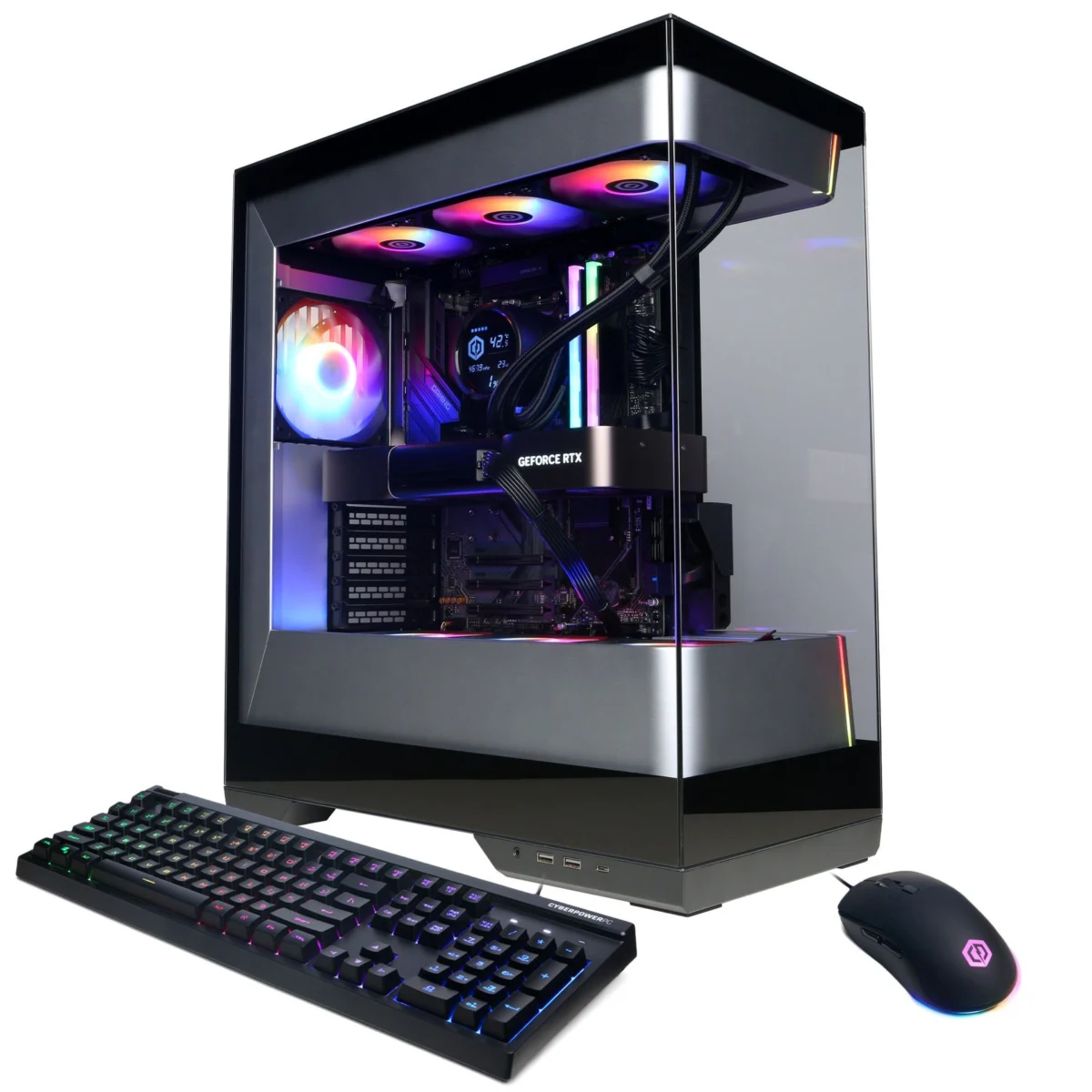
In the rapidly evolving landscape of high-performance desktop computing, finding a prebuilt gaming PC that offers genuine component-level value without an exorbitant "convenience tax" has historically been a rarity. However, a standout configuration has emerged that is currently redefining expectations for high-end hardware pricing. The CyberPowerPC SLC8500WST, priced at $2,299, pairs two of the most sought-after and formidable pieces of silicon from the current hardware generation: AMD’s reigning gaming CPU champion, the Ryzen 7 9800X3D, and NVIDIA’s powerhouse graphic architecture, the GeForce RTX 5080.
To understand why this system is turning heads across the enthusiast community, one only needs to look at the raw component math. The standalone retail value for an aftermarket GeForce RTX 5080 traditionally hovers around a baseline of $1,579, while the coveted AMD Ryzen 7 9800X3D carries a retail price tag of roughly $449. Combined, these two core components alone account for $2,028 of the system’s total cost. That leaves a remarkably slim margin of just $271 to cover all remaining components necessary to build a functional, high-end PC—including a robust motherboard, a liquid cooling solution or high-tier air cooler, 32GB of high-speed DDR5 memory, a fast 1TB PCIe 4.0 NVMe solid-state drive, an appropriately rated power supply unit (PSU), and a modern, airflow-optimized chassis.
In today’s component market, purchasing 32GB of DDR5 RAM and a reliable 1TB PCIe 4.0 SSD independently would heavily eat into that $271 remainder, making the prospect of acquiring a fully assembled, tested, and warrantied system at this price point an anomaly. For gamers and content creators looking to skip the hassle of a DIY build while simultaneously beating individual component acquisition costs, the CyberPowerPC SLC8500WST represents arguably the most compelling prebuilt value proposition currently available on the market.
Chronology
The journey toward this unprecedented prebuilt pricing milestone is the culmination of a series of strategic product launches, supply chain shifts, and intense hardware competition throughout late 2024 and mid-2025.
The Foundation: The Rise of Zen 5 X3D
The timeline begins with AMD’s rollout of its Zen 5 architecture, followed closely by the highly anticipated introduction of the 3D V-Cache variants. The Ryzen 7 9800X3D entered the market amidst immense hype, quickly establishing itself through independent reviews as the definitive king of gaming performance. Its combination of high instructions-per-clock (IPC) gains and massive cache capacity solved numerous latency bottlenecks that plague high-refresh-rate gaming. Demand immediately outstripped supply, keeping retail prices firm around the $449 mark and making the chip a centerpiece for enthusiast-tier custom loops and boutique builds.
The Next-Gen GPU Transition
Simultaneously, the graphics card market underwent a seismic shift with the introduction of NVIDIA’s GeForce RTX 50-series architecture. Led by the high-end rollout of the RTX 5090 and the performance-to-enthusiast-focused RTX 5080, the graphics landscape moved into a new era of ray tracing efficiency, AI-driven upscaling capabilities, and massive raw compute power. Custom board partner variants and Founders Edition cards commanded steep entry prices, with baseline models starting near $1,579. For months, adopting this tier of graphical fidelity meant allocating the lion’s share of a standard PC building budget to the GPU alone.
System Integration and Market Disruption
As inventory for both the Ryzen 7 9800X3D and the RTX 5080 stabilized enough for tier-one system integrators to secure bulk allocations, major builders began designing configurations tailored specifically to high-end value seekers. CyberPowerPC leveraged its massive supply chain network to assemble the SLC8500WST. By absorbing component costs through volume purchasing, the company dropped the system onto major retail platforms like Walmart at the aggressive price point of $2,299. This move caught both DIY builders and competing system integrators off guard, instantly converting the prebuilt desktop into a viral topic of discussion across hardware forums, tech subreddits, and enthusiast review sites.
Supporting Data
To fully appreciate the mathematical improbability of the $2,299 price tag, a detailed breakdown of estimated individual component costs illuminates the financial reality of building a comparable system from scratch.
| Component Category | Part Description | Estimated Individual Retail Cost |
|---|---|---|
| CPU | AMD Ryzen 7 9800X3D (8 Cores, 16 Threads) | ~$449.00 |
| GPU | NVIDIA GeForce RTX 5080 (16GB GDDR7) | ~$1,579.00 |
| RAM | 32GB High-Speed DDR5 Kit | ~$90.00 – $110.00 |
| Storage | 1TB PCIe 4.0 NVMe M.2 SSD | ~$70.00 – $85.00 |
| Motherboard | Mid-to-High Tier AM5 Chipset (e.g., B650/X670) | ~$160.00 – $220.00 |
| Cooling & PSU | Liquid Cooler (AIO) & 850W+ 80+ Gold PSU | ~$180.00 – $240.00 |
| Chassis | Tempered Glass Mid-Tower Case with Fans | ~$85.00 – $120.00 |
| Total Estimated DIY Cost | If sourcing parts independently | ~$2,613.00 – $2,843.00 |
When evaluating these figures, the savings become stark. Buying the parts separately—even during standard promotional sales—typically pushes total expenditure well past the $2,600 threshold. CyberPowerPC’s ability to deliver the exact same core horsepower for $2,299 means consumers are effectively getting the motherboard, power supply, cooling, enclosure, assembly labor, and a professional warranty at a negative or negligible markup.
Furthermore, the performance profile supported by this hardware combination is staggering. The Ryzen 7 9800X3D eliminates frame drops in heavily CPU-bound simulation, strategy, and competitive titles, while the RTX 5080 powers native 4K gaming experiences with ray tracing maxed out, easily leveraging technologies like DLSS 3 to push ultra-high refresh rates across modern display panels.
Official Responses and Industry Reactions
The emergence of deeply discounted, next-generation prebuilt systems like the CyberPowerPC SLC8500WST has triggered widespread commentary across the consumer tech landscape.
System integrators have pointed to shifting macroeconomic factors and stabilized component supply chains as the primary reasons such aggressive pricing structures are currently feasible. A representative close to retail distribution channels noted that volume-based B2B (business-to-business) pricing agreements allow large-scale builders to acquire silicon wafers and graphics boards at rates fundamentally inaccessible to individual retail consumers.
Meanwhile, DIY enthusiasts and prominent tech reviewers have responded with a mix of awe and validation. Historically, the community mantra has always advised against purchasing prebuilt systems due to inflated margins, subpar proprietary motherboards, and cheap power supplies. However, configurations featuring the Ryzen 7 9800X3D and RTX 5080 have forced a recalibration of that advice. Prominent hardware analysts have publicly conceded that math is math: when the core CPU and GPU prices alone consume nearly the entirety of a system’s asking price, the traditional arguments against prebuilts temporarily dissolve.
Consumer advocacy groups and retail monitors have also emphasized the transient nature of such deals. Because component pricing fluctuates dynamically based on global supply, tariffs, and generational transitions, industry insiders warn that sub-$2,300 pricing for an RTX 5080 and X3D pairing is unlikely to remain a permanent fixture of the market once initial promotional allocations are exhausted.
Implications
The success and viral reception of the CyberPowerPC SLC8500WST carry significant implications for both the consumer market and the broader PC gaming industry.
1. A Paradigm Shift for the DIY Community
For decades, building your own PC was universally recognized as the definitive method for maximizing budget efficiency. The current generation of high-end hardware pricing threatens to upend that dynamic. When system integrators can leverage wholesale supply chains to sell prebuilts cheaper than the sum of their standalone parts, the friction of troubleshooting, RMA management, and physical assembly shifts heavily in favor of buying pre-assembled units. This could drive a temporary surge in prebuilt adoption among gamers who previously would have exclusively built their own rigs.
2. Pressure on Competitors
The aggressive positioning of a sub-$2,300 RTX 5080 and Ryzen 7 9800X3D system places immediate competitive pressure on rival system builders such as iBUYPOWER, Origin PC, Maingear, and Falcon Northwest. To capture market share in a cost-conscious economic climate, competing brands will be forced to re-evaluate their own margin strategies, potentially leading to a broader price war or increased bundling incentives across the high-end prebuilt sector.
3. Accelerated Adoption of Next-Gen Technologies
By lowering the financial barrier to entry for top-tier hardware, configurations like the SLC8500WST accelerate the broader adoption of next-generation gaming standards. More users gaining access to powerful ray-tracing hardware and high-cache CPUs encourages game developers to push graphical fidelity, advanced physics, and complex simulation features further, knowing a larger installed base possesses the necessary horsepower to run them effectively.
Ultimately, the $2,299 CyberPowerPC system serves as a rare bright spot in a market frequently criticized for inflating costs. Whether buying for future-proof longevity, high-refresh-rate competitive gaming, or intensive content creation workloads, consumers currently have a unique window to acquire top-tier performance without paying the traditional enthusiast tax.

