

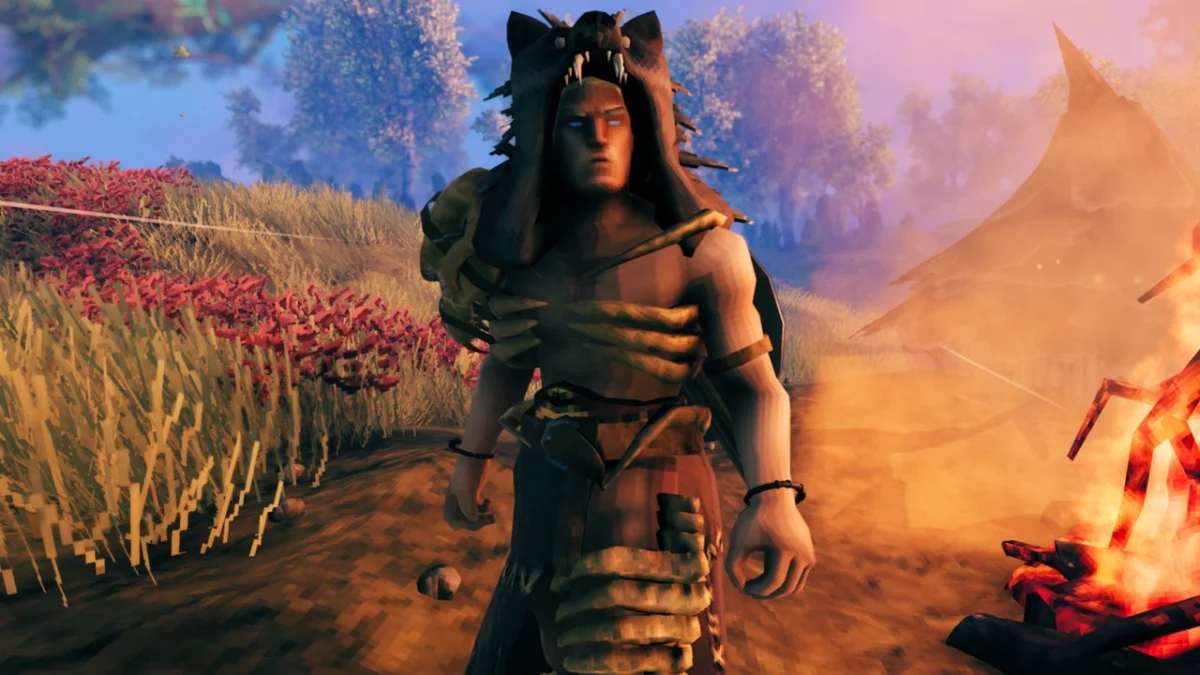
For over half a decade, the misty, brutal, and breathtaking landscapes of Valheim have served as a digital hearth for millions of Vikings. Since its explosive early access launch in early 2021, Iron Gate Studios’ survival-crafting sensation has defied the odds, consistently ranking as one of the most played and beloved titles on Steam. Now, the saga approaches its final chapter: Iron Gate has officially confirmed that Valheim will transition to its full 1.0 release on September 9.
This transition marks more than just a version number change; it represents the conclusion of an era, a shift in pricing, and a final, icy expansion that promises to test the mettle of even the most seasoned explorers.
The Long Road to 1.0: A Chronology of Survival
The journey of Valheim is a testament to the "indie-that-could" narrative. Upon its initial release, the game captured the imagination of the gaming public with its unique blend of Norse mythology, procedural generation, and accessible yet deep building mechanics.
- February 2021: Valheim launches into Steam Early Access. It immediately breaks concurrent player records, selling millions of copies in mere weeks.
- 2021–2023: Iron Gate provides a steady cadence of updates, including the Hearth and Home expansion, which overhauled the game’s building and food systems, and the Mistlands update, which added a significant, high-difficulty biome.
- 2023–2024: The Ashlands update introduces fire-blasted landscapes, further expanding the world’s lore and mechanical complexity.
- September 9, 2025: The official 1.0 release date. The game officially graduates from early access, bringing the Deep North biome and a permanent price adjustment.
The Final Frontier: Deep North and Mechanical Overhauls
As the 1.0 release looms, the headline feature is the addition of the "Deep North" biome. For years, players have stared at the icy, unreachable northern reaches of their maps, wondering what secrets lay beyond the blizzard. The 1.0 update will finally unlock this frozen wasteland, providing a final challenge for players to conquer.
Alongside the new biome, the 1.0 update includes a suite of technical refinements. Iron Gate is introducing Steam achievements for the first time, incentivizing both veterans and newcomers to revisit early-game milestones like the defeat of Eikthyr. However, the developers have noted that for players seeking to "complete" their achievement list, this will likely require starting fresh to trigger the game’s tracking systems for previously cleared bosses.
Official Responses and the Future of Support
Perhaps the most contentious aspect of the 1.0 announcement is the ambiguity surrounding the game’s future. In a comprehensive FAQ released to address community concerns, Iron Gate was notably non-committal regarding post-1.0 content.
"We will continue to improve the game with bugfixes and quality of life stuff," the studio stated. "Though for exactly how long the game will continue to receive updates is currently too soon to say. Likewise, it is too soon to say whether or not there will be more content added to the game in the future—but as always, we will be sure to announce any news on our channels!"
This "wait and see" approach has left a segment of the hardcore player base feeling uncertain. For a game that built its reputation on a roadmap of promised features, the absence of a long-term content plan signals that Iron Gate is preparing to shift its focus toward new projects.
The Ocean Biome Controversy
Among the most vocal segments of the Valheim community, particularly on platforms like Reddit, is the disappointment regarding the "Ocean" biome. In the game’s original, early-access-era roadmap, the ocean was slated for a significant overhaul to make the vast, empty stretches of water between continents more dangerous and rewarding.
With the 1.0 update, that promise has been effectively sidelined. Players who have spent hundreds of hours sailing—navigating the doldrums and the occasional sea serpent—have expressed frustration that the ocean will remain largely as it is. One user, reflecting the sentiment of many, remarked, "Hundreds of km on boat just for the ocean to have three things in it and being empty for the most part." While the developers have not explicitly ruled out future ocean patches, the 1.0 designation suggests that the game’s core architecture will remain largely static in terms of map generation and environmental features.
Technical Realities: The "Megabuild" Problem
One of the most persistent issues for the Valheim community is the performance impact of "megabuilds"—massive, complex castles or bases that push the game’s engine to its limits. Many fans hoped that the 1.0 release would include a complete optimization overhaul to allow for larger, smoother construction projects.
Iron Gate’s FAQ serves as a sobering reality check: "While 1.0 includes optimizations to some areas of the game, large builds in particular would not be highly impacted by these changes."
However, it is not all bad news for performance. The team confirmed that they have focused on "decreasing the microstutters that occur when loading new zones in and out of memory," as well as "faster saving" and various minor systemic tweaks. While the dream of perfectly smooth 100-hour-project bases may remain elusive, the general "moment-to-moment" experience is expected to be more polished than ever.
Financial Implications and Strategic Buying
With the transition to 1.0 comes a transition in pricing. Valheim will move from its current $20 price point to $30. This price hike is common for titles leaving early access, reflecting the perceived increase in value and stability.
For prospective players who have yet to jump into the Viking fray, the math is straightforward: the current Steam pricing represents a significant discount. If the game has been lingering on your wishlist, the time between now and September 9 represents the final window to secure the experience at its lower entry fee.
The Legacy of Valheim
When Valheim launched, it captured a specific cultural moment. The world was in the midst of a pandemic, and the ability to link up with friends to build a longhouse, hunt deer, and survive the harsh winters of the tenth Norse world provided a vital sense of community and escapism.
Whether or not the game receives further content updates after September 9, its legacy is already secure. It proved that a small, dedicated team could create a world that felt vast, dangerous, and deeply personal. It shifted the expectations for what a survival-crafting game could be, emphasizing atmosphere and exploration over mere grind.
As we look toward the September release, the community finds itself at a crossroads. For some, the lack of an ocean update and the ambiguity regarding future content is a letdown. For others, the release of 1.0 is a triumphant "mission accomplished." Regardless of where one stands, the gates to the Deep North are opening soon. It is time to sharpen your axes, repair your shields, and prepare for one final journey into the cold.
Valheim 1.0 arrives on September 9. Whether this is the end of the road or simply the end of the beginning, the sagas written by players over the last five years will remain in the history books of the gaming industry for years to come.

