

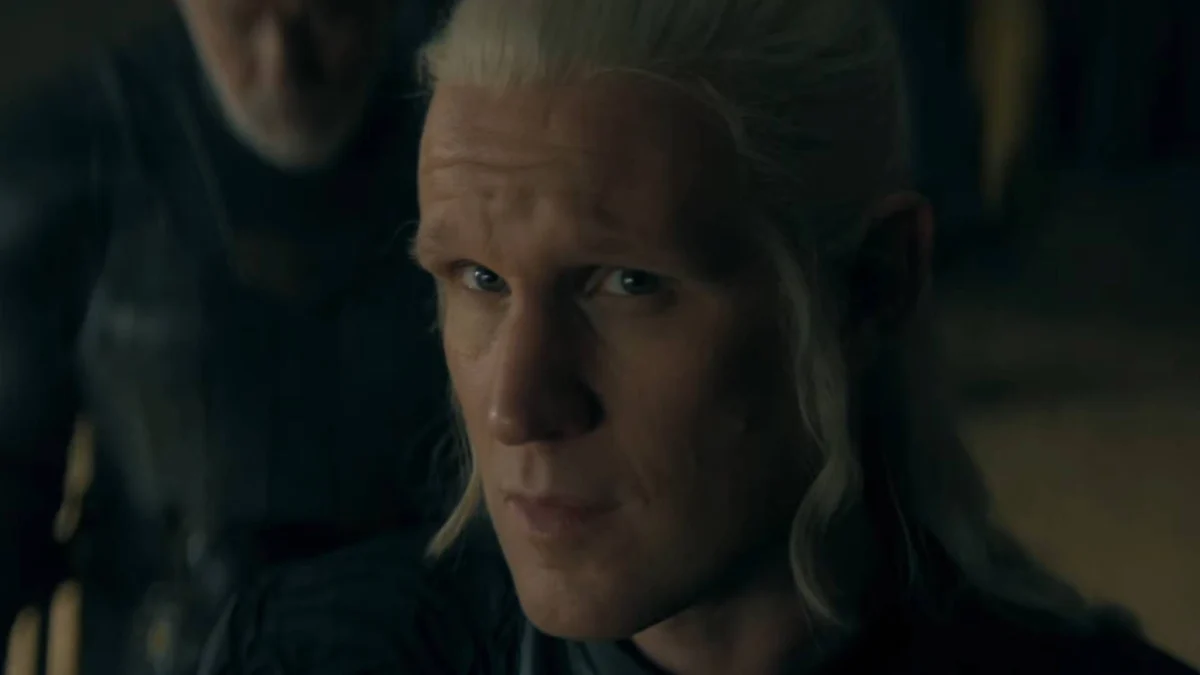
As HBO’s House of the Dragon prepares to enter the mid-game of the Targaryen civil war, the "Dance of the Dragons," the stakes have never been higher for the inhabitants of Westeros—or for the actors tasked with bringing George R.R. Martin’s brutal history to life. In a recent and revealing interview with SFX Magazine, Matt Smith, who portrays the mercurial Prince Daemon Targaryen, addressed the mounting anticipation surrounding one of the most iconic confrontations in high-fantasy literature: the Battle Above the Gods Eye.
While Season 3 is set to ignite with the long-awaited Battle of the Gullet, the shadow of the Gods Eye looms large over the series’ eventual conclusion in Season 4. Smith’s reflections offer a rare glimpse into the creative process of a show caught between the rigid expectations of source material and the fluid demands of prestige television production.
Main Facts: The Anticipation of a Draconic Apocalypse
The primary revelation from the recent discourse surrounding House of the Dragon is the confirmation of the show’s trajectory toward its final act. Showrunner Ryan Condal has previously confirmed that the series will conclude with Season 4, leaving only two seasons to cover the remaining breadth of the Targaryen internecine conflict.
Central to this conclusion is the "Battle Above the Gods Eye," a duel between Daemon Targaryen (mounted on Caraxes) and his nephew Aemond Targaryen (mounted on the massive Vhagar). In the source text, Fire & Blood, this encounter is described as a catastrophic and poetic end for two of the story’s most complex figures.
In his conversation with SFX, Matt Smith admitted that while he is aware of the "big bookmarks" in the narrative, the specific details of how—and if—the show will replicate the book’s exact events remain a mystery even to him. Smith noted that the production team often deviates from the book to suit the medium of television, a choice he views as "above [his] pay grade," though he expressed a personal hope to see the Gods Eye sequence realized on screen.
Furthermore, it has been confirmed that Season 3 will open with the Battle of the Gullet, a naval engagement of unprecedented scale that was originally expected to conclude Season 2. This shift suggests a concentrated effort by HBO to front-load Season 3 with high-octane spectacle.
Chronology: The Road to the Gods Eye
To understand the weight of Smith’s comments, one must look at the chronological progression of the series and the strategic delays implemented by the writing team.
- Season 1: The Seeds of Discord (101 AC – 129 AC): The inaugural season focused on the decades-long decay of the Targaryen family, ending with the death of King Viserys I and the accidental killing of Lucerys Velaryon by Aemond Targaryen, which served as the "point of no return."
- Season 2: The Opening Salvos (129 AC): Season 2 explored the immediate fallout of the war, characterized by the "Blood and Cheese" incident and the Battle at Rook’s Rest. Crucially, Season 2 concluded with the various factions amassing their forces, but it notably omitted the Battle of the Gullet, a major turning point in the books.
- Season 3: The Sea and the Sky (Expected 2026): Production is slated to begin in early 2025. This season is expected to be dominated by the Battle of the Gullet and the Fall of King’s Landing. Matt Smith’s Daemon spent much of Season 2 in a hallucinatory state at Harrenhal, but Season 3 will see him return to the field as a primary commander.
- Season 4: The Final Descent: The series finale will likely center on the devastation of the Reach and the ultimate showdown at the Gods Eye, leading to the eventual conclusion of the Dance of the Dragons.
Supporting Data: The Magnitude of the Conflict
The "Battle Above the Gods Eye" is not merely another skirmish; it is widely considered the emotional and visceral climax of the Targaryen war. To understand why fans—and Matt Smith—are so invested, one must look at the "data" of the dragons involved:
- Vhagar: The oldest and largest dragon in the world during the Dance. At the time of the Gods Eye, Vhagar is a veteran of a hundred battles, nearly the size of Balerion the Black Dread. Her rider, Aemond "One-Eye," has become the Greens’ most formidable weapon.
- Caraxes: Known as the "Blood Wyrm," Caraxes is lean, agile, and formidable. Though significantly smaller than Vhagar, Caraxes is experienced in war, having served Daemon in the Stepstones.
- The Setting: The Gods Eye is the largest lake in the Seven Kingdoms, situated next to the cursed castle of Harrenhal. The geography provides a haunting, isolated backdrop for a duel that, in the book, results in no survivors.
The delay of the Battle of the Gullet from Season 2 to Season 3 also speaks to the "data" of production. Ryan Condal explained that the Gullet is perhaps the most difficult sequence to film in the entire franchise, requiring massive water tanks, ship builds, and complex CGI for five different dragons. By moving this to the start of Season 3, the production team ensures it has the budget and time to meet the "Game of Thrones" standard of excellence.
Official Responses: Matt Smith and the Creative Philosophy
Matt Smith’s response to SFX Magazine highlights a recurring tension in the adaptation of George R.R. Martin’s work. When asked about Daemon’s fate, Smith stated:
"They don’t really tell you what elements they’re going to write about… Sometimes I thought maybe they would follow this line of the book, and they chose not to, so you just don’t really know. Whether I agree with that or not, it’s above my pay grade, really."
This diplomatic response touches on a recent controversy involving George R.R. Martin himself. The author recently posted (and subsequently deleted) a blog post criticizing certain "butterfly effect" changes made in Season 2—specifically the exclusion of the character Maelor Targaryen—which he argued could weaken the impact of future events, including the finale.
Smith’s comments suggest that the actors are kept at an arm’s length from the long-term script arcs to prevent leaks and to allow for "creative influence" in the moment. However, Smith’s personal investment is clear: "One assumes they’re headed there [the Gods Eye], but you never know… I’m going to cross my fingers too."
Showrunner Ryan Condal has defended the pacing, stating that the show is a "visual history" that must occasionally condense the sprawling, contradictory accounts of Fire & Blood into a singular, coherent narrative.
Implications: The Legacy of the Dance
The implications of how House of the Dragon handles the Gods Eye and the Battle of the Gullet extend beyond mere fan service. They will define the legacy of the show in several ways:
1. The "Ending" Problem:
Game of Thrones was famously criticized for its rushed final seasons. By announcing a four-season limit early, Condal and HBO are attempting to avoid this pitfall. However, the density of the remaining material—including the First and Second Battles of Tumbleton, the Hour of the Wolf, and the Gods Eye—means Seasons 3 and 4 must maintain a breakneck pace.
2. Technical Innovation:
The Battle of the Gullet and the Gods Eye represent the pinnacle of dragon-on-dragon combat. Success here will set a new benchmark for television VFX. Failure or a "scaled-down" version could alienate a core audience that has come to expect cinematic quality from HBO.
3. Character Deconstruction:
For Matt Smith’s Daemon, the Gods Eye represents a moment of potential redemption or ultimate nihilism. The show has spent significant time humanizing Daemon and exploring his insecurities. If the show adheres to the book’s ending for him, it will be one of the most tragic arcs in the franchise. If they change it—as Smith hinted they might—it could spark a debate as divisive as the finale of the original series.
4. The Future of the Franchise:
With A Knight of the Seven Kingdoms currently in production and other spin-offs in development, the success of House of the Dragon’s final seasons is crucial for maintaining the "Westeros Cinematic Universe." The Gods Eye is the spectacle that must prove this world still has the power to shock and awe.
As the production for Season 3 gears up for its 2026 debut, the words of Matt Smith serve as a reminder that even for those at the center of the storm, the "Dance" is as unpredictable as the dragons themselves. For now, fans can only wait, cross their fingers, and look to the skies over the Gods Eye.

