

The landscape of Steam’s most-played games has long been dominated by titans of industry—multiplayer juggernauts like Counter-Strike 2, Dota 2, and PUBG. However, in recent months, a peculiar trend has emerged, shifting the focus from high-octane competitive shooters to minimalist, low-effort idle games. The latest entry to surge into the upper echelons of this chart is Task Bar Hero, a title that has rapidly garnered hundreds of thousands of concurrent players. While it shares the spotlight with predecessors like Bongo Cat and the viral sensation Banana, Task Bar Hero represents a significant escalation in the intersection of idle gameplay, digital marketplace speculation, and controversial anti-cheat measures.
The Rise of the Idle Juggernaut
Since its launch at the end of May, Task Bar Hero has defied conventional expectations of what constitutes a "popular" game. Unlike traditional titles that require active engagement, Task Bar Hero operates primarily in the background, minimizing to the user’s taskbar while the player goes about their digital life.
The game’s ascent was nothing short of meteoric. By early June, it had reached a staggering peak of roughly 450,000 concurrent players. By the following weekend, that figure climbed to an all-time peak of 526,596. To put this in perspective, Task Bar Hero currently sits in the pantheon of Steam’s most-played titles, consistently outperforming established giants like Dota 2, PUBG, and the highly anticipated Path of Exile 2.
While casual observers might be baffled by the appeal of a game that barely requires interaction, the core of the experience lies not in the "gameplay" itself, but in the passive generation of digital assets. Much like Banana, which achieved notoriety for its simple JPEGs that could be traded on the Steam Marketplace, Task Bar Hero leverages the allure of potential financial gain to maintain its high player count.
A Chronology of the Marketplace Gold Rush
The obsession with Task Bar Hero did not occur in a vacuum; it is the latest iteration of a "play-to-earn" culture that has been brewing on Steam for some time.
- The Precedent: The trend was popularized by Bongo Cat, an interactive desktop companion that maintained a steady presence in the top charts for over a year. While Bongo Cat focused on charm and personalization, it laid the groundwork for developers to see that a small, persistent app could sustain a massive audience.
- The Banana Effect: The release of Banana changed the paradigm entirely. By offering rare "banana" skins that could be sold for real wallet funds, it attracted a wave of users, many of whom were clearly automated bots. The controversy surrounding Banana—which involved developers with histories tied to dubious cryptocurrency projects—set the stage for the current skepticism surrounding Task Bar Hero.
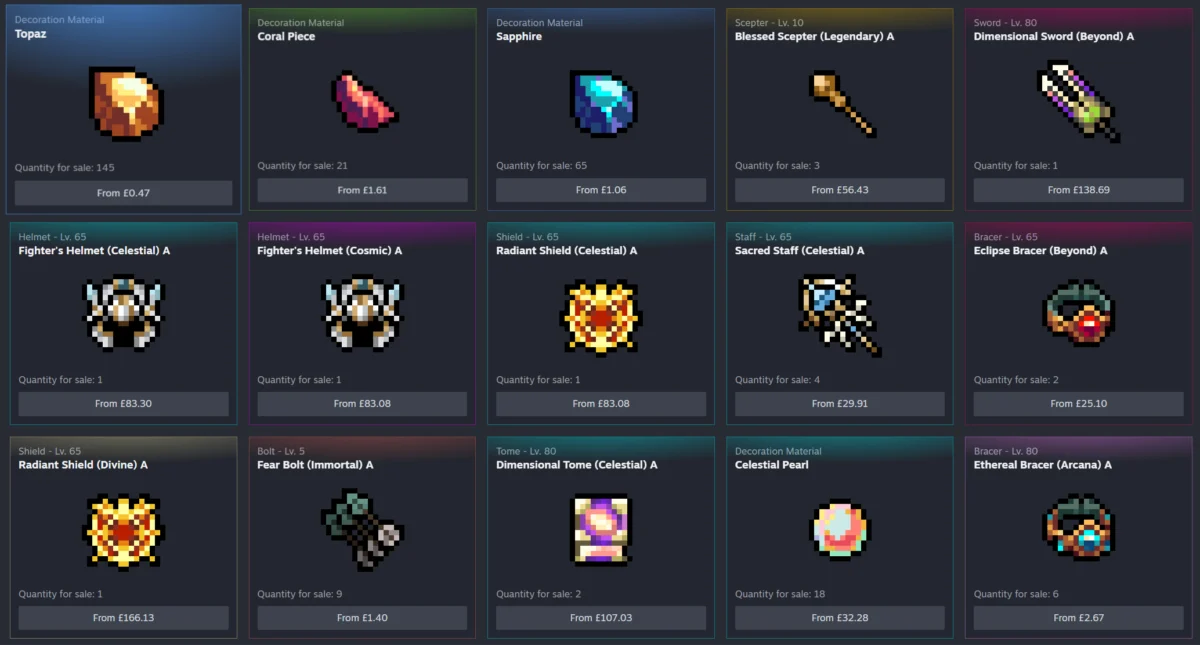
- The Launch of Task Bar Hero: Following its late May release, the game saw an immediate influx of players. The core loop of clicking and idling to earn weapons and armor, which are subsequently listed on the Steam Marketplace, drove exponential growth. Within days, players were reporting items listed for hundreds of dollars, with rare "legendary" items occasionally surfacing with price tags exceeding £1,000.
Analyzing the Economy: Value or Illusion?
The economic ecosystem of Task Bar Hero is, by most objective measures, highly volatile and potentially artificial. A quick scan of the Steam Marketplace reveals a vast disparity in item values. While the vast majority of items earned through gameplay are essentially worthless—often selling for pennies—the presence of high-value listings creates a "lottery effect" that keeps players engaged.
Industry experts and long-time Steam users have pointed to the suspicious nature of these transactions. It is widely believed that a significant portion of the concurrent player base is composed of bot farms. These farms utilize automated scripts to run multiple instances of the game, harvesting thousands of items simultaneously to manipulate supply and demand. By artificially inflating the perceived value of these digital goods, the bot operators hope to profit from the transaction fees and the occasional desperate purchase from real users who believe they are acquiring a rare asset.
The Cost of Progress: Anti-Cheat and False Flags
Perhaps the most alarming aspect of Task Bar Hero is its aggressive, yet poorly implemented, approach to security. Because the game is designed to reside in the taskbar, it must interact with the operating system in a way that is inherently intrusive.
Many users have reported that the game’s internal anti-cheat system is hyper-sensitive, often flagging perfectly legitimate software running on the user’s PC as "unauthorized programs." This has led to a wave of "false flag" VAC (Valve Anti-Cheat) bans or account marks, which appear permanently on a user’s Steam profile.
For many, the discovery that their account has been tarnished for the sake of an idle game is a devastating realization. As one disgruntled player noted on Reddit, the damage to a long-standing Steam account is often irreversible, turning a harmless idle game into a liability. The paradox is clear: the game claims to use these security measures to protect the integrity of its marketplace, but in doing so, it destroys the very accounts it relies on for its player count.
Official Responses and Data Collection
In response to the growing backlash and reports of botting, the developers of Task Bar Hero recently issued a statement regarding the transition to a server-based model. They claim this move is intended to curb the proliferation of unauthorized programs and improve the game’s stability.
"As the game’s structure changes to a server-based model, the amount of information we collect will increase," the developers stated. "Additional data will be introduced to help identify users of unauthorized programs."
While the developers maintain that they are only collecting standard diagnostic data—such as user IDs, game versions, and device specifications—the move has only fueled further suspicion. Privacy advocates are wary of the increased surveillance, noting that the combination of marketplace trading and intensive data collection creates a high-risk environment for the average user. Whether this data collection will actually curb the botting problem remains to be seen, but the community remains largely skeptical, viewing the move as a desperate attempt to maintain legitimacy in a system that is fundamentally broken.
Implications for the Future of Steam
The Task Bar Hero phenomenon raises profound questions about the future of the Steam platform. Valve has long prided itself on being a curated, high-quality storefront, but the emergence of these "idle-for-profit" games suggests that the platform is becoming a playground for speculative economies.
If the trend continues, we may see a decline in the quality of the "Most Played" charts, as genuine games are pushed aside by automated scripts and idle apps. Furthermore, the risk to user accounts via false-flag bans presents a genuine security concern that Valve may eventually be forced to address.
For the average player, the choice is simple: is the pursuit of a few cents worth the risk of account penalties and the installation of intrusive software? For those who prefer to avoid the drama, the traditional gaming experience remains the superior choice. As for the developers of Task Bar Hero, they are currently riding a wave of massive engagement, but whether this will be a lasting legacy or another footnote in the history of Steam’s questionable trends remains an open question.
For now, the battle between legitimate developers and the economy-skewing bot farms continues. While some players chase the high of a "legendary" item drop, others are moving on to more traditional, engaging experiences—finding their own digital utopias elsewhere, far away from the clutter and controversy of the taskbar.

