

In a significant realignment of talent within the upper echelons of Silicon Valley’s hardware engineering sector, Paul Meade—the visionary executive who steered the physical development of Apple’s Vision Pro—has resigned from the Cupertino giant to join OpenAI. This high-profile departure marks a pivotal moment for both companies, signaling a shift in the hardware strategies of the tech industry’s most influential players as they pivot toward a future defined by ambient computing and artificial intelligence.
First reported by Bloomberg’s Mark Gurman, Meade’s exit concludes a fourteen-year tenure at Apple, during which he became the indispensable architect of the company’s most complex consumer electronics products. His move to OpenAI is particularly striking, as it suggests the AI research laboratory is accelerating its transition from a software-first organization to a hardware-integrated powerhouse.
The Architect of the Vision Era: A Chronology of Paul Meade’s Apple Career
To understand the weight of this departure, one must look at the trajectory of Meade’s career at Apple, which spanned the company’s most transformative decade.
The iPad and iPhone Foundations (2010–2017)
Meade joined Apple in 2010, arriving during a period of unprecedented growth for the company’s mobile division. He began as a key manager for the iPad, helping to refine the production pipelines of the device that redefined portable computing. By 2012, he was promoted to head of iPhone program management. In this role, Meade was instrumental in the rigorous logistics and engineering discipline required to mass-produce the world’s most successful smartphone, establishing himself as a "fixer" capable of translating abstract industrial design into reliable, scalable hardware.
The Technology Development Group (2017–2023)
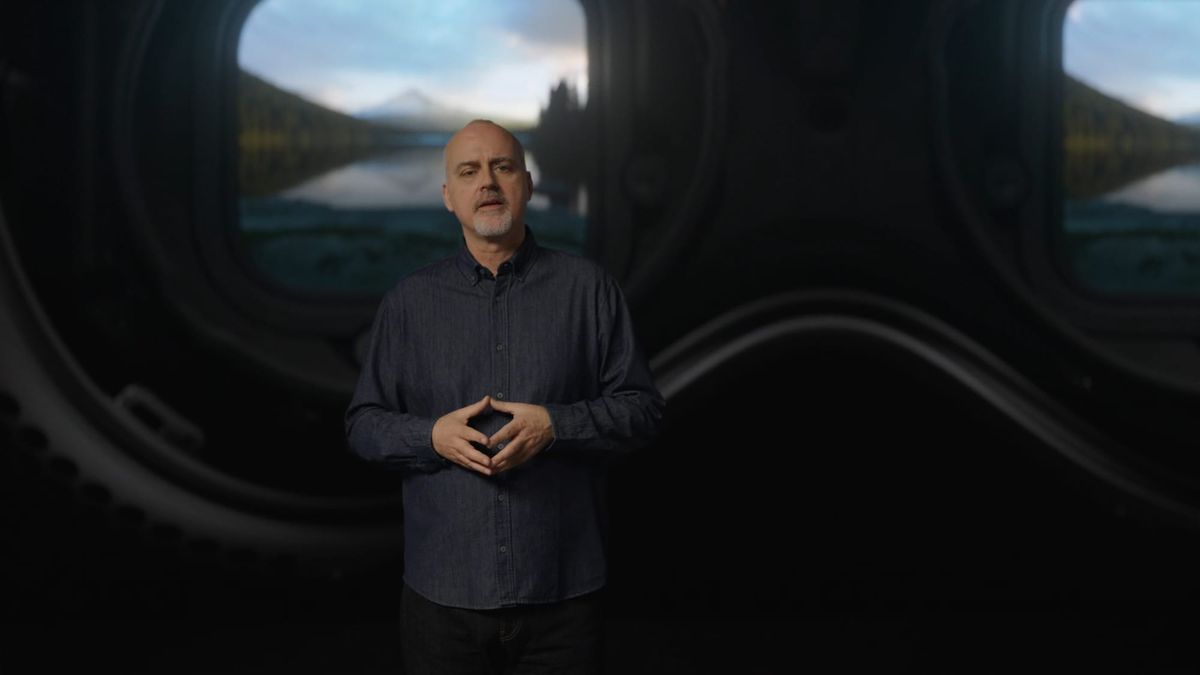
In 2017, Meade joined Apple’s secretive Technology Development Group (TDG). Tasked with the "moonshot" goal of developing virtual and augmented reality, Meade quickly ascended the ranks. By 2019, he had taken the lead on hardware engineering for what would eventually become the Vision Pro. Under the leadership of Mike Rockwell, Meade served as the top lieutenant—a role that required reconciling Apple’s legendary design standards with the extreme technical limitations of spatial computing. His work was pivotal in finalizing the headset’s complex sensor arrays, cooling systems, and ergonomics, ensuring the product was ready for its public unveiling.
The Restructuring and the Pivot to Smart Glasses (2023–2026)
Last year, a major corporate shake-up saw Mike Rockwell moved to oversee Siri and the visionOS team, a move interpreted by many as an attempt to reinvigorate Apple’s lagging AI efforts. Following this, Meade assumed sole responsibility for the hardware development of future Vision headsets and the much-anticipated "Apple Glasses." It was under his watch that the company prioritized a shift from bulky, expensive headsets toward lightweight, displayless smart glasses—a product category that is now widely considered the "Holy Grail" of personal computing.
Supporting Data: The Strategic Pivot to Smart Glasses
The industry’s fascination with smart glasses has moved from science fiction to a primary strategic objective for major tech firms. Apple’s internal pivot, guided by Meade, was rooted in the realization that while the Vision Pro is a technological marvel, its mass-market potential is restricted by its form factor.
According to reports, Apple’s upcoming "Apple Glasses" are designed to avoid the "goggle" aesthetic that has hindered adoption for products like the Vision Pro and Meta’s Quest series. Instead, the vision centers on:

- Displayless Architecture: By removing internal displays, the glasses can remain lightweight and aesthetically similar to traditional eyewear.
- Multimodal AI Integration: The devices are expected to leverage an Apple S-series chipset—similar to those in the Apple Watch—to process data locally.
- Advanced Sensory Suites: The integration of dual oval-shaped cameras is intended to provide one lens for high-quality media capture and another for sophisticated computer vision tasks, such as real-time object recognition and spatial mapping.
- Use Cases: These devices are slated to facilitate turn-by-turn navigation, live language translation, and hands-free communication, positioning them as an "ambient" layer over the user’s daily reality.
The contrast with Meta’s Ray-Ban smart glasses is clear. While Meta has focused on social media integration and affordability, Apple’s strategy—at least as defined during Meade’s tenure—prioritizes high-end materials and proprietary hardware-software synergy to create a "premium" experience that justifies a higher price point.
Official Responses and Industry Context
Neither Apple nor OpenAI has released a formal, detailed press release regarding the move, maintaining their standard protocol of discretion. However, the move has sent ripples through the industry.
OpenAI has been historically reticent about hardware. CEO Sam Altman has publicly expressed skepticism regarding the smart glasses form factor in the past, suggesting that current technology does not yet offer a compelling enough value proposition for the average consumer. Yet, reports from The Information and other outlets suggest that OpenAI’s leadership is reconsidering this stance.
If OpenAI is indeed building hardware, the recruitment of Meade is a massive "vote of confidence" in the necessity of physical devices for future AI interfaces. By bringing in a veteran who has navigated the challenges of battery life, heat dissipation, and sensor calibration at the highest level of the industry, OpenAI is signaling that it no longer views itself as merely an API or app provider.
Implications: The Battle for the Next Computing Platform
Meade’s departure carries profound implications for both companies and the broader technology ecosystem.
For Apple: A Talent Drain or a Natural Transition?
The loss of an executive who oversaw the "heavy lifting" of the Vision Pro is undeniably a blow. As Apple struggles to define the roadmap for its spatial computing division, the loss of a key hardware lead could slow development timelines. However, some analysts argue that Apple’s internal structure is robust enough to absorb such departures. The question remains: can Apple’s remaining leadership keep the "Apple Glasses" project on track for a launch next year without the engineer who served as the linchpin for the product’s architecture?
For OpenAI: Entering the Physical Arena
OpenAI’s foray into hardware is likely to be distinct from Apple’s. Industry whispers suggest that the company’s first hardware product may not be glasses at all, but rather a "screenless, pocket-sized, contextually aware AI companion." This device would likely function as a digital concierge, processing the world around it through a microphone and camera to provide real-time assistance, bridging the gap between a smartphone and a smart speaker.
By hiring Meade, OpenAI is acquiring the "know-how" to build devices that are not just "AI-powered" but "AI-first." The integration of sophisticated large language models (LLMs) into hardware requires a deep understanding of thermal constraints and low-latency processing—areas where Meade’s experience at Apple is unparalleled.

The Broader Market
We are witnessing a shift where software companies are becoming hardware companies and vice versa. As AI becomes more advanced, the "container" for that AI becomes the new battleground. Whether it is a pair of glasses, a pendant, or a specialized phone, the next iteration of the personal computer will be defined by its ability to act as an ambient, persistent agent.
Paul Meade’s move from the creator of the world’s most advanced headset to the company behind the world’s most advanced AI underscores a new reality: the future of artificial intelligence will not be confined to the screen. It will be worn, carried, and integrated into the very fabric of our physical environments. As these two tech giants navigate this transition, the work of engineers like Meade will be the deciding factor in whether the next generation of hardware fulfills the promise of the AI revolution or remains a costly, impractical experiment.

