

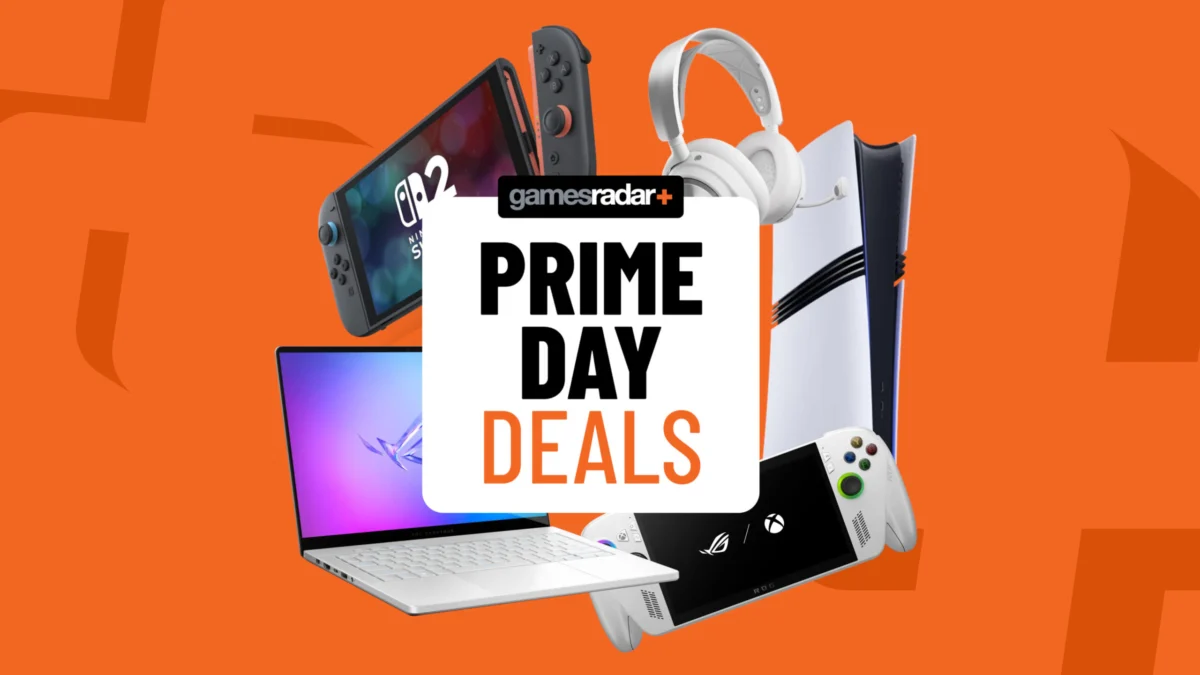
The mid-year retail landscape has undergone a seismic shift over the last decade, evolving from a quiet period of inventory management into a high-stakes "Christmas in July" for the global gaming community. As Amazon prepares to officially launch its Prime Day event at midnight tonight, the gaming industry finds itself at a critical juncture. With the PlayStation 5 and Xbox Series X|S entering the mature phase of their lifecycles and rumors of Nintendo’s next-generation hardware reaching a fever pitch, this year’s four-day sales window—running from June 23 to June 26—represents more than just a series of discounts; it is a battle for ecosystem dominance.
Main Facts: A Multi-Front Retail Conflict
While the event bears the "Prime Day" branding, the reality of the 2024 summer sales season is far more complex. Amazon’s flagship event has triggered a defensive "price-matching" cascade across the retail sector. Major players including Best Buy, Walmart, Newegg, and the Amazon-owned Woot are aggressively vying for the attention of a consumer base that has become increasingly price-sensitive in the face of global inflation.
The core of this year’s event centers on four primary pillars:
- Console Hardware: Strategic price cuts on the PlayStation 5 Slim and Xbox Series X to clear inventory ahead of rumored mid-generation refreshes.
- Handheld Resurgence: Significant discounts on the Nintendo Switch OLED and PC gaming handhelds like the ASUS ROG Ally and Lenovo Legion Go.
- PC Component Stabilization: A return to competitive pricing for GPUs and high-capacity SSDs after years of supply chain volatility.
- First-Party Software: Deep discounts on 2023’s blockbusters and early 2024 hits to bolster digital and physical library attachment rates.
Chronology: The Evolution of the 96-Hour Window
The timeline of this year’s event demonstrates a sophisticated strategy of "consumer exhaustion." Rather than a singular burst of activity, the sale has been structured as a tiered rollout designed to capture early-movers and late-night impulse buyers alike.
The Pre-Event Phase (June 15 – June 22)
Leading up to the midnight launch, retailers utilized "Early Access" deals to anchor consumer loyalty. During this phase, peripheral devices—specifically controllers like the DualSense and Xbox Wireless Controller—saw price drops of up to 30%. This served a dual purpose: clearing out older colorways and ensuring that when consumers buy consoles or games during the main event, they already have the necessary accessories.
The Launch Threshold (Midnight Tonight)
The official start of Prime Day marks the release of "Doorbuster" deals. Historically, this is when high-demand hardware, such as the PlayStation 5 Disc Edition and limited-edition Nintendo Switch bundles, see their steepest reductions. Market analysts expect Amazon to utilize "Invite-Only" deals for high-value items to manage server load and prevent bot-scalping, a persistent issue in previous years.
The Competitive Response (June 23 – June 26)
As Amazon’s servers go live, competitors like Best Buy and Newegg are expected to launch counter-offensives. Best Buy’s "Member Deals Days" specifically targets PC gamers, often offering superior warranties or "open-box" discounts that Amazon cannot match. Walmart, meanwhile, focuses on the "value gamer," leveraging its massive physical footprint to offer "Rollback" prices on physical copies of games that often undercut digital storefronts.
Supporting Data: The Economics of Gaming in 2024
To understand the significance of these discounts, one must look at the current market data surrounding gaming hardware and software.
The Console Plateau
The PlayStation 5 and Xbox Series X have both surpassed the 50-million and 25-million unit marks, respectively. However, year-over-year growth has slowed. Retailers are currently using Prime Day to incentivize the "late-adopter" demographic. Data suggests that a price point of $449 for a disc-based PS5 is the "psychological floor" required to move significant units during the summer months.
PC Component Trends
For PC enthusiasts, the data tells a story of recovery. After the 2021-2022 GPU crisis, inventory of NVIDIA’s 40-series and AMD’s 7000-series cards has reached a surplus. Prime Day 2024 is expected to see the first major "across-the-board" price cuts on mid-range GPUs (such as the RTX 4070), as manufacturers prepare for the transition to next-generation architectures in late 2024 or early 2025.
The "Woot" Factor
Woot, an independent subsidiary of Amazon, has emerged as a critical player in the gaming ecosystem. By operating as a clearance house, Woot often offers "all-time low" prices on Nintendo Switch titles and refurbished hardware. Their involvement in the Prime Day ecosystem allows Amazon to offer extreme discounts without devaluing the "premium" branding of the main Amazon.com storefront.
Official Responses and Retailer Positioning
The rhetoric from major retailers highlights a shift toward "membership-centric" retail. Amazon’s requirement of a Prime membership for its best deals is a strategy mirrored by its competitors.
Amazon’s Stance:
The retail giant has doubled down on its "four-day" duration, a departure from the traditional 48-hour event. An Amazon spokesperson noted that the extension is intended to "provide members more time to discover deals across a broader range of categories," though industry insiders suggest it is a move to maximize data collection on consumer behavior during the transition to the year’s second half.
The Best Buy and Newegg Counter-Narrative:
Both Best Buy and Newegg have positioned themselves as the "expert’s choice." By offering "price-match guarantees" that extend through the duration of Prime Day, they aim to capture consumers who are wary of Amazon’s third-party seller marketplace, which has occasionally been criticized for counterfeit peripherals or misleading "list price" inflations.
The Nintendo Factor:
While Nintendo rarely comments on specific retail events, their strategy during this period is clear: software bundles. As the Switch enters its eighth year, the company is using these sales to maintain its "active user" count, bundling aging hits like Mario Kart 8 Deluxe with hardware to ensure the platform remains a staple in households until its successor is unveiled.
Implications: What This Means for the Industry
The outcome of the June 23–26 sales window will have lasting implications for the gaming industry’s trajectory through the end of the year.
1. The Normalization of the "Summer Black Friday"
The success of this event solidifies the mid-year point as a mandatory fiscal milestone. Developers and publishers now plan their release calendars around these sales, often holding back "Complete Edition" re-releases until the summer to capitalize on the influx of new console owners.
2. Handhelds as a Primary Category
This year marks the first time that PC gaming handhelds are being treated as a "primary" category alongside traditional consoles. The heavy discounting of the Steam Deck’s competitors indicates that the market is moving toward a more mobile-centric future, forcing Sony and Microsoft to reconsider their positions on dedicated portable hardware.
3. The Death of MSRP
We are entering an era where the "Manufacturer’s Suggested Retail Price" (MSRP) is increasingly irrelevant. Through constant "flash sales," "member-only pricing," and "limited-time coupons," the actual transaction price of gaming hardware has become fluid. This creates a "waiting game" culture among consumers, where sales are no longer a surprise but a scheduled expectation.
4. Sustainability and Logistics
The environmental impact of a four-day global shipping surge cannot be ignored. As millions of consoles and components are moved across the globe in a 96-hour window, retailers are under increasing pressure to optimize logistics. Amazon’s push for "no-box" shipping and consolidated delivery dates is a direct response to the logistical strain caused by the sheer volume of Prime Day orders.
Conclusion: A Critical Window for Consumers
For the average gamer, the period between tonight’s midnight launch and the close of sales on June 26 represents the most significant opportunity to upgrade their setup before the holiday rush. However, the complexity of the modern retail landscape requires a discerning eye. While Amazon provides the convenience and the headline-grabbing discounts, the true "wins" for the consumer often lie in the cross-retailer competition—where Best Buy, Walmart, and Newegg fight to prove that they can offer more than just a lower price, but a better overall value.
As the countdown to midnight begins, the industry watches closely. The data gathered over the next four days will not only dictate the financial health of these retail giants but will also signal the readiness of the gaming public for the next generation of interactive entertainment.

