

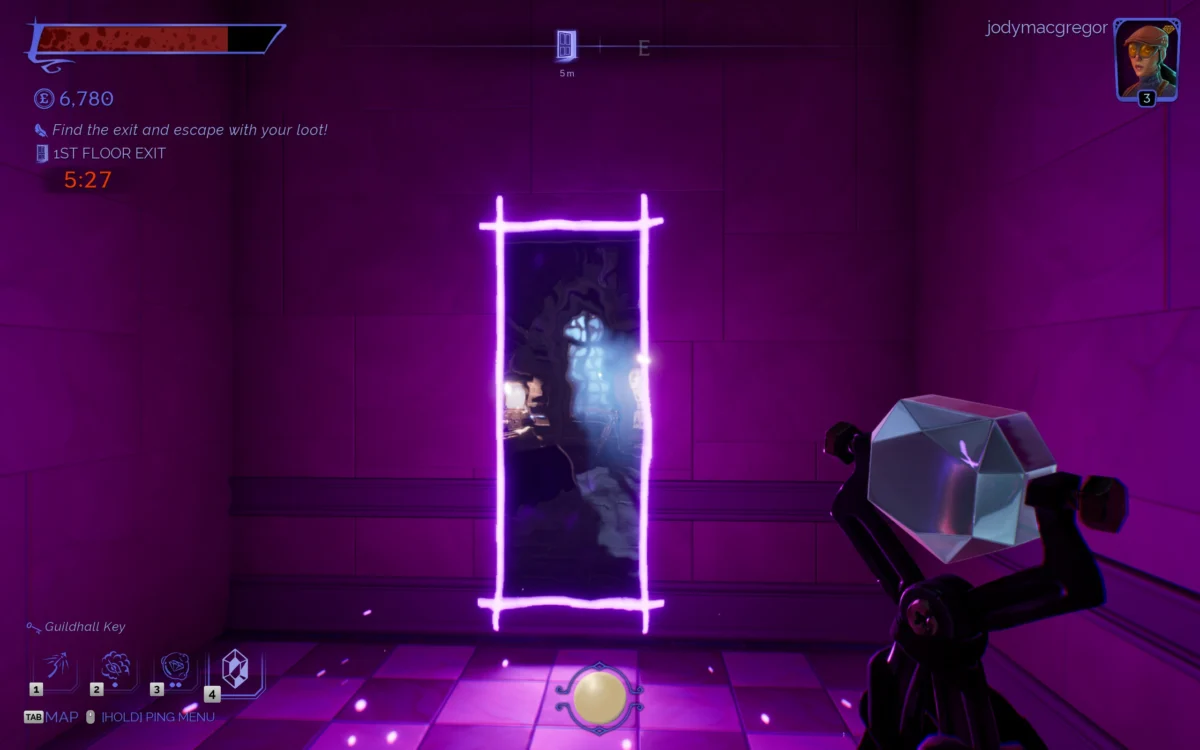
The landscape of independent game development is often characterized by high stakes and narrow margins for error. For OtherSide Entertainment, the studio behind the ambitious stealth title Thick as Thieves, the journey from initial anticipation to the current state of industry contraction serves as a sobering case study. Following a turbulent launch and two successive rounds of staff reductions, the studio has confirmed that development on Thick as Thieves will cease, leaving the title in a state of indefinite maintenance.
The Chronology of a Troubled Launch
Thick as Thieves arrived in May with a pedigree that promised a revival of the classic immersive-sim stealth genre. However, the reception was immediate and largely polarized. Upon release, the game suffered from a content deficit that many critics and players felt was indicative of an early access title, rather than a finished product.
The game launched with only two maps. While the campaign attempted to inject variety by rotating objectives and alternating between solo and co-op play, the core experience felt thin and repetitive. Players were quick to point out technical shortcomings, such as the lack of rebindable keys—a baseline expectation for PC gaming—and a controversial time-limit mechanic that hampered the methodical, patient pacing typically associated with the stealth genre.
Although the developers attempted to rectify the most egregious complaints with a post-launch content update, the momentum had already stalled. The game’s reputation, marred by the perception of being "half-baked" or released as a desperate fundraising measure, proved difficult to overcome. The subsequent cancellation of other internal projects at OtherSide Entertainment compounded these issues, leading to a drastic reduction in workforce. Today, the studio operates with a skeleton crew of fewer than 10 employees.
The Economics of Perception: Was $5 Too Low?
One of the more fascinating elements of the Thick as Thieves narrative is the strategic decision to launch the game at a $5 price point. While accessibility is generally viewed as a positive trait in indie gaming, in this instance, it may have inadvertently signaled a lack of confidence in the product.
By pricing the game so aggressively low, OtherSide Entertainment and publisher Megabit created an unintended impression of "cheapness." In the eyes of many potential players, the low price tag didn’t necessarily look like a bargain; instead, it looked like an admission that the game lacked the depth or quality to command a standard market rate. This perception of desperation—the idea that the game was thrown out as a quick revenue stream rather than a polished, intentional design—dogged the title from its opening day.
Even if the price had been higher, the game faced an uphill battle. Thick as Thieves was originally pitched as a PvPvE experience, a genre that requires a robust, active player base to function properly. The pivot toward including solo play, while well-intentioned, did not bridge the gap between the game’s initial promise and its final, diminished reality.
Official Responses and the Future of the Title
In a candid statement released via Steam, game director Jeff Hickman addressed the community with the sobering reality of the studio’s position. "Working in the gaming industry is at times delightful and at other times heartbreaking," Hickman wrote, acknowledging the pain of the recent layoffs and the cessation of development.
Hickman confirmed that, given the current size of the team, continuing to produce new content, modes, or systems is no longer a viable path. However, the studio has prioritized the long-term playability of the game. To ensure that Thick as Thieves does not vanish into the digital ether, OtherSide and Megabit are currently transitioning the game’s infrastructure.
"This mainly involves putting together a new version of the game that uses Peer to Peer servers for co-op play," Hickman explained. "The gameplay and flow of your experience will remain virtually identical, but will not need the use of dedicated servers in the cloud."
This transition is critical for the game’s preservation. By removing the reliance on centralized cloud servers, the developers are ensuring that those who have purchased the game can continue to play with friends indefinitely. Furthermore, the single-player experience will remain entirely unaffected by this migration. Once this technical transition is complete, Megabit will assume the role of steward, managing the title and providing ongoing support for critical bugs and maintenance.
Industry Implications: The Sustainability of the Mid-Tier
The collapse of the Thick as Thieves project is emblematic of a broader, more systemic issue within the games industry. As the cost of development rises and the competition for player attention becomes increasingly fierce, the "mid-tier" game—projects that are not massive AAA blockbusters but are more substantial than simple hobbyist titles—is struggling to find a sustainable business model.
When a studio like OtherSide, which carries the weight of legacy expectations and veteran talent, finds itself unable to sustain a small-scale stealth game, it sends a ripple of concern through the indie community. The failure of Thick as Thieves is not just about the game itself; it is about the difficulty of maintaining a live-service or online-dependent game without the capital to weather a poor launch.
Furthermore, the reliance on rapid, post-launch patches to fix fundamental design issues is a risky strategy that rarely pays off in the modern marketplace. The "fix it later" mentality has been met with increasing cynicism from consumers, who now have a wealth of high-quality, polished alternatives to choose from.
The Legacy of the Stealth Genre
Despite its shortcomings, the ambition behind Thick as Thieves resonated with a specific sub-sect of the gaming community: the "Thief" fans. There remains a deep, unquenched thirst for the methodical, systems-driven stealth gameplay that defined titles like the original Thief or Dishonored.
The fact that Thick as Thieves was so highly anticipated—and so thoroughly dissected upon release—proves that the appetite for the genre is not the problem. The challenge lies in execution and the ability to scale content correctly. The game’s reliance on a limited map pool and the confusion regarding its identity (shifting between PvPvE and solo play) created a friction that players were unwilling to overlook.
As OtherSide Entertainment transitions into its new, smaller iteration, the legacy of Thick as Thieves will likely be remembered as a cautionary tale. It stands as a reminder that even the most talented teams, when faced with the harsh realities of limited resources and a fast-moving market, can find their most passionate projects unraveling.
For the players, the future of the game is now one of preservation rather than evolution. The transition to peer-to-peer networking is a respectful final gesture from the developers, acknowledging the community that invested their time and money into the project. While no further content will arrive to expand the world of Thick as Thieves, the game will persist, a quiet, finished artifact of an ambition that ultimately proved too heavy for the studio to carry.
As the industry moves forward, the story of Thick as Thieves will likely serve as a reference point for future developers: a reminder that when it comes to the fragile ecosystem of game releases, the first impression is not just important—it is often the only one that counts.

