

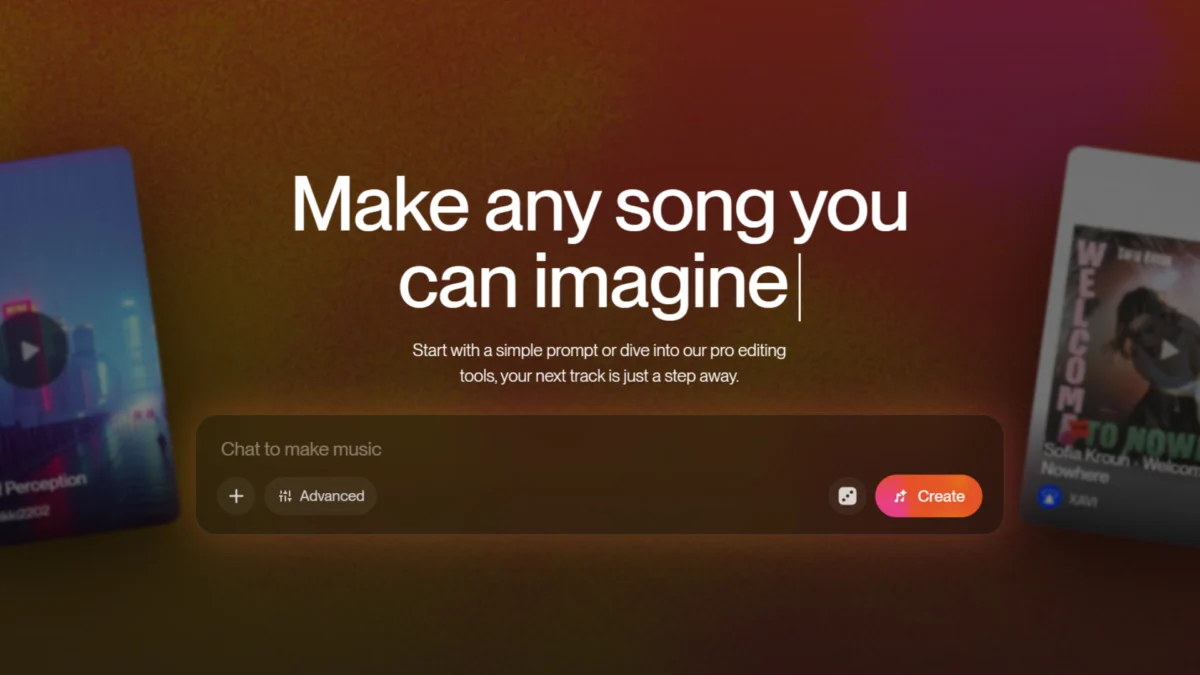
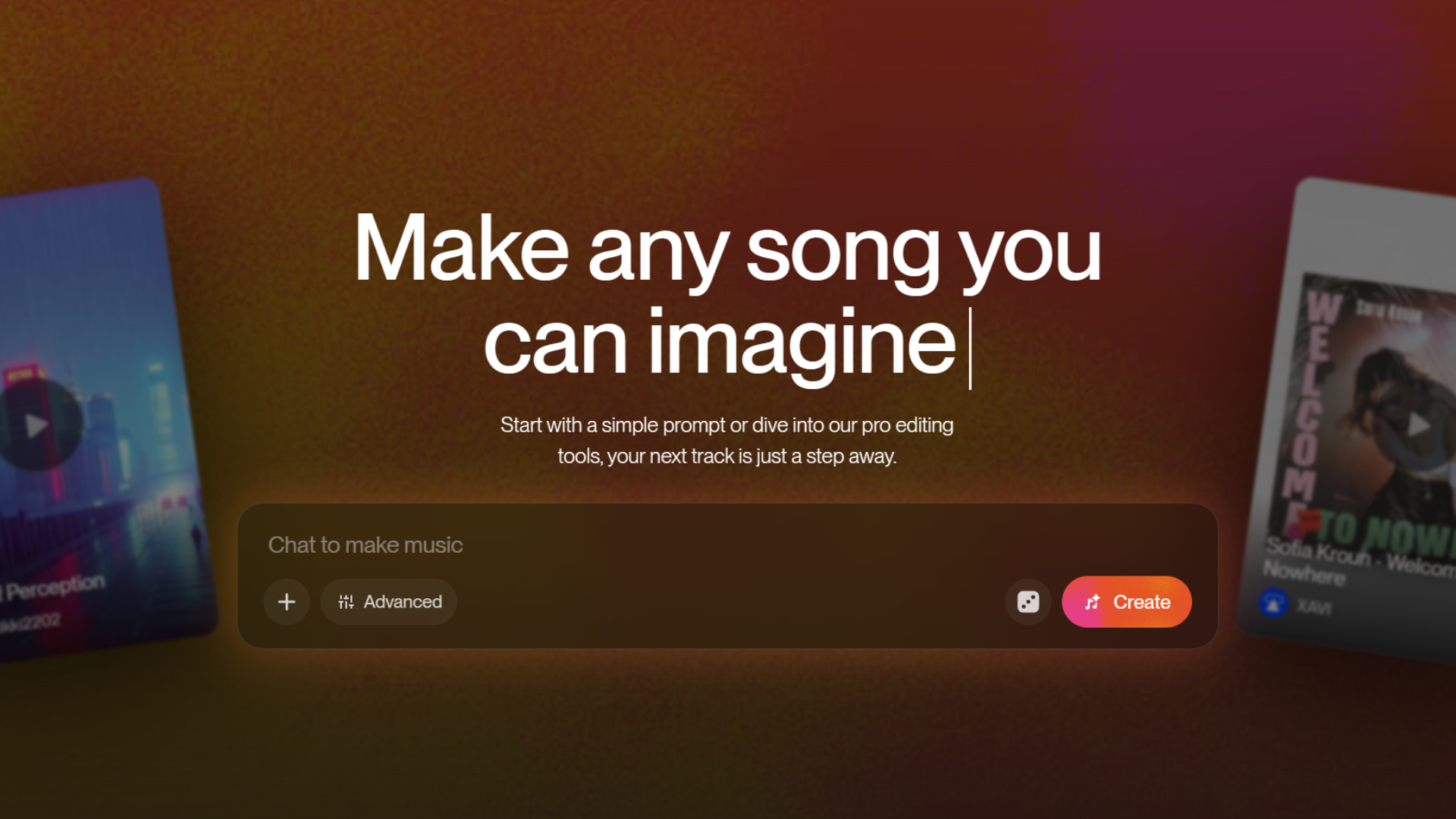
The boundary between technological innovation and intellectual property theft has never been more porous. Recent revelations regarding Suno, one of the most prominent AI music generators in the industry, have sent shockwaves through the music world. A significant security breach has not only exposed internal company data but has also provided the most concrete evidence to date of the sheer scale at which generative AI platforms ingest copyrighted material to train their models.
The breach, first reported by 404 Media, confirms what many in the music industry had long suspected: platforms like Suno are not merely "learning" music in a human-like fashion; they are systematically vacuuming up vast archives of audio files from the world’s most popular streaming and hosting platforms.
The Breach: What the Data Reveals
According to the leaked documentation obtained from the Suno database, the company’s internal architecture was heavily reliant on massive datasets aggregated from YouTube Music, Deezer, and Genius. The files within the breach categorize these inputs with startling precision, listing millions of clips and hundreds of thousands of hours of audio content.
The scope of the ingestion is staggering. One file, explicitly titled "youtube_music," contains records indicating that over two million individual music clips were scraped for training purposes. Other datasets break down the intake by volume, citing figures such as:
- 113,879 hours of YouTube Music content.
- 152,162 hours of tagged YouTube Music data.
- 17,615 hours of lyrical and metadata content from Genius.
- 12,287 hours of audio from Deezer.
These figures represent a conservative estimate, accounting for at least a decade’s worth of human-composed, produced, and performed music. The documentation further reveals that Suno did not merely rely on public access; it utilized sophisticated third-party proxies to bypass restrictions. Furthermore, the company integrated PodcastIndex—a service designed to aggregate open podcast feeds—to identify and ingest hundreds of thousands of individual podcast episodes, expanding their training library well beyond traditional music tracks into the realm of spoken word and audio production.
A Chronology of Conflict
To understand how we arrived at this moment, one must look at the timeline of the "AI vs. Artist" conflict:
- Pre-2024: Suno operates in relative secrecy, building its foundational models using what it describes as "publicly available data."
- Early 2024: During initial legal scrutiny, Suno makes a pivotal admission in court, confirming that its models were trained on "essentially all music files of reasonable quality that are accessible on the open internet."
- Mid-2024: The Recording Industry Association of America (RIAA) files lawsuits against Suno, alleging massive, unauthorized "stream-ripping" and copyright infringement.
- November 2025: Suno experiences a limited security incident. The company later characterizes this as a breach involving "outdated source code."
- Post-Breach (Present Day): The leaked data confirms the RIAA’s long-standing accusations, validating the argument that the company’s "fair use" defense may be built on a foundation of massive, automated copyright infringement.
The Legal Landscape: The "Fair Use" Defense
The core of Suno’s defense rests on the legal doctrine of "fair use." In the United States, this doctrine allows for the limited use of copyrighted material without permission for purposes such as criticism, news reporting, teaching, or research. Companies like Suno, Anthropic, and Meta argue that training AI is a transformative process—that the resulting model is a new creation that does not compete directly with the original, copyrighted works.
However, the legal landscape is shifting. While a U.S. judge ruled in June that Anthropic’s use of copyrighted content to train its models fell under fair use, that ruling came with caveats, specifically regarding the unauthorized use of pirated material. Meta also secured a victory in a similar copyright case involving authors’ books.
Suno’s legal team maintains that because their tool outputs songs that are statistically and sonically distinct from the originals, the ingestion of the source data is a legally permissible "intermediate step." Yet, the scale of this ingestion—billions of data points—tests the absolute limits of the fair use doctrine. Critics argue that "transformative" does not mean "non-infringing," especially when the output is designed to mimic the style, voice, and compositional structure of the very artists whose work was scraped without compensation.
Official Responses and Corporate Strategy
In response to the 404 Media report, a Suno spokesperson provided a statement that attempts to reconcile their data practices with the recent security incident:
"As we have stated in public filings and disclosures, Suno’s AI models have been trained on publicly available music files and related metadata accessible on third-party websites on the open internet," the company stated. Addressing the breach, they added, "In November of 2025, we determined that Suno had been the subject of a limited security incident that was quickly contained… the incident primarily involved outdated source code that is no longer in use at Suno, and that no sensitive personal information was compromised."
The company continues to emphasize its commitment to "safeguards." They claim to have invested in technology designed to prevent the impersonation of specific artists and have pledged to develop better AI-identification tools to help track and label machine-generated content. However, for many artists, these assurances ring hollow, as they do not address the foundational issue of consent or the dilution of royalty pools.
Implications for the Future of Music
The implications of this data dump extend far beyond a single company’s security woes. We are witnessing a fundamental shift in the economics of creativity.
1. The Dilution of Royalty Pools
Musicians and artist representatives have launched campaigns such as "Say No to Suno," arguing that AI-generated "slop"—low-effort, derivative music—is flooding streaming platforms. This influx dilutes the revenue streams of legitimate, working-class artists. If a platform is built on the backs of millions of songs that never saw a royalty payment, it creates an uneven playing field where human artists are effectively subsidizing their own replacements.
2. The Creative Existential Crisis
For professionals like Catherine Anne Davies, a board member for the Featured Artists Coalition, the issue is not just economic; it is ethical. "Most people don’t even want their work to be used for training AI," Davies noted in a recent interview. While there is an appetite for AI as an assistive tool—a "co-pilot" for arrangement or sound design—the current model of generative AI, which aims to replace the songwriter, is viewed with deep hostility. The industry is currently in a state of suspended animation, waiting to see if legislation will catch up to the technology.
3. The Future of Intellectual Property Law
If the courts continue to side with AI companies under the banner of "fair use," the music industry may be forced to radically restructure. We could see a future where artists are forced to place their music behind "paywalls" or utilize technical protections that prevent web-crawlers from accessing their work—a "digital fortress" approach that contradicts the current open-web model of music distribution.
Conclusion
The Suno data breach serves as a stark reminder that the "open internet" is no longer an open playing field. It is a minefield of proprietary data being harvested to power the next generation of generative models. As the legal battles continue, the question remains: Can the creative industries survive in an ecosystem where their life’s work is treated as raw material, freely available for industrial-scale extraction?
For now, the divide between the tech giants and the artist community only grows wider. As AI models become more sophisticated, the debate will likely shift from whether this is "fair use" to whether our current legal framework is even equipped to handle the total digitization and re-synthesis of human culture. One thing is certain: the era of "AI in music" has moved past the novelty phase and into a period of deep, systemic, and potentially permanent conflict.

