


For millions of players, the virtual earth is little more than an obstacle to be bypassed in pursuit of structural resources. Titles like Minecraft have conditioned generations of gamers to treat the subsurface landscape as a utilitarian expanse—a chaotic labyrinth of stone where the primary goal is strip-mining for coal, iron, and diamonds to fuel grand architectural ambitions. In these worlds, raw minerals are merely numbers on a HUD or static building blocks.
Enter Abyssal Lapidary, an upcoming indie simulation developed by LightWorm that challenges this casual relationship with geology. Blending meticulous crafting mechanics, shopkeeping simulation, and a deliberate, methodical pace, the game asks players to look closer at what lies beneath the dirt. Recently stepping into the spotlight with a playable Steam demo, Abyssal Lapidary transforms the obscure art of lapidary—the cutting, shaping, grinding, and polishing of minerals into precious gems—into a compelling, high-stakes trade.
Main Facts: What Is Abyssal Lapidary?
At its core, Abyssal Lapidary is a first-person artisanal simulation and storefront management game. Set within a sprawling, slightly melancholic estate that houses a struggling family business, players assume the role of an aspiring lapidarist. The core gameplay loop revolves around a symbiotic cycle of enterprise and craftsmanship:
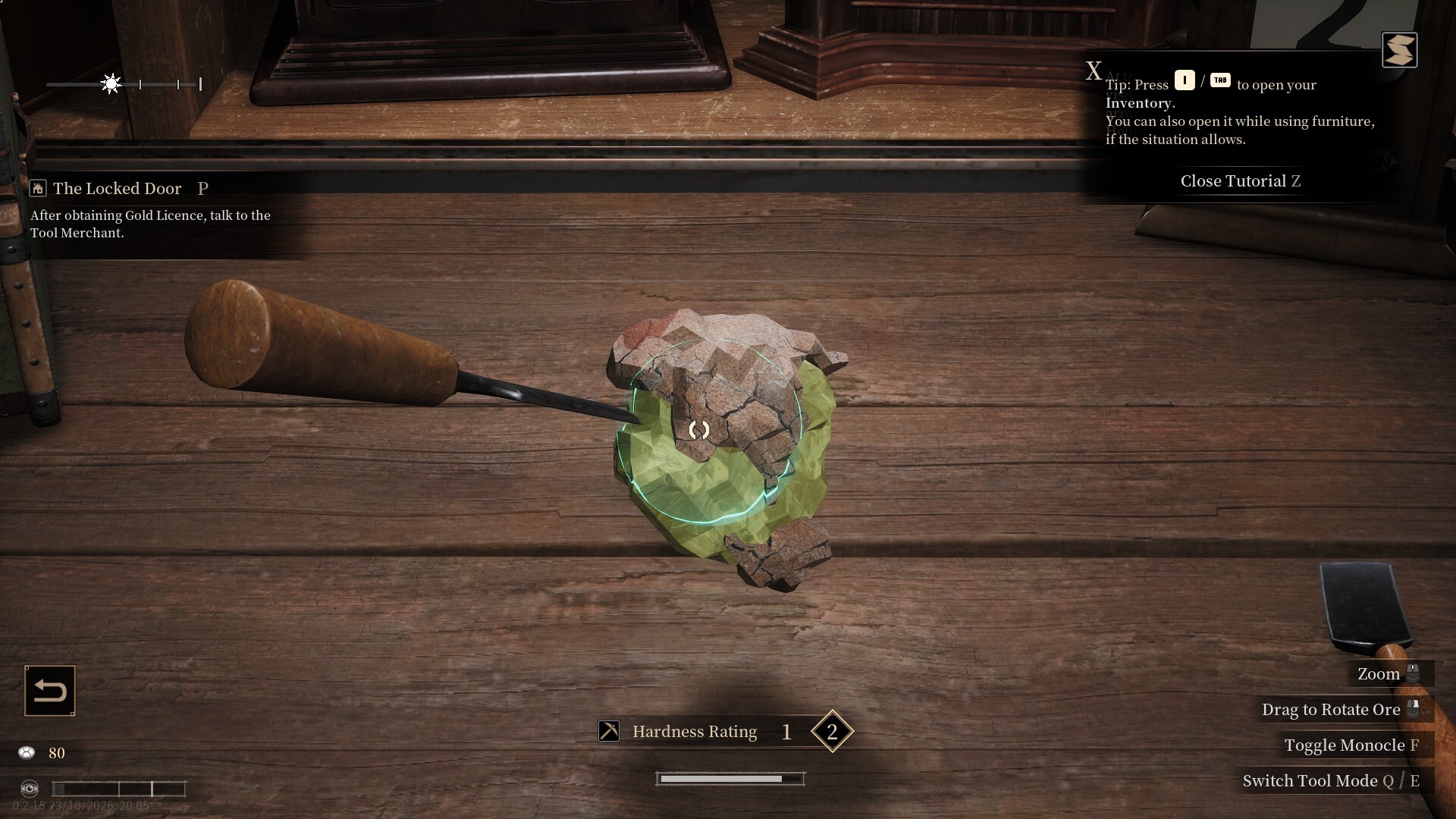
- Procurement and Geology: Players acquire raw mineral specimens through local trade, exploration, and direct mining, breaking open unassuming rocks to discover hidden crystalline treasures.
- Refining and Faceting: Using specialized workstations, players hammer, sand, and shape raw gems into historically significant cuts—such as single cuts, table cuts, and point cuts—balancing precision against the risk of ruining the material.
- Commerce and Community: A bustling front-of-house storefront allows players to interact with a quirky cast of locals, customers, and shady financiers, buying and selling goods, and building reputation.
- Progression Systems: Earning renown unlocks advanced licenses, granting access to more sophisticated tools, locked areas of the estate, and rarer mineral classifications.
The title’s demo has quickly caught the attention of simulation enthusiasts on Steam, drawing praise for its tactile crafting minigames and atmospheric, unhurried rhythm.
Chronology: A Day in the Life of a Novice Lapidarist
To understand the rhythm of Abyssal Lapidary, one must follow the structured arc of a standard in-game day. The experience balances administrative duties with moments of intense, high-focus craftsmanship.

Morning: Arrival and Assessment
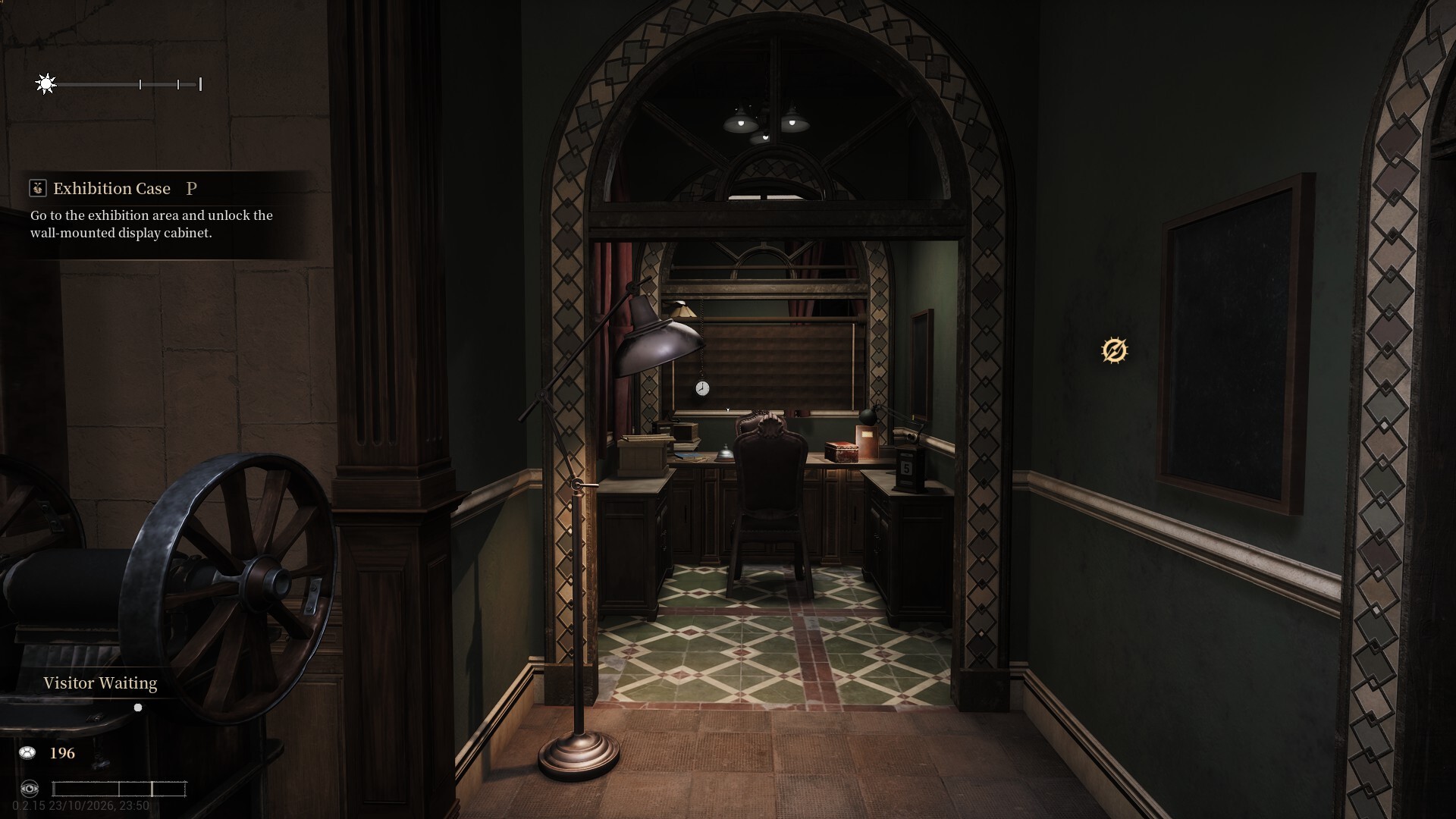
The game begins abruptly, dropping the player into a surprisingly luxurious, albeit declining, business estate complete with a scenic second-story balcony. Initially, the layout of the building is restricted; doors on the lower level remain firmly locked behind progression gates, funneling the player’s early focus into a centralized workshop area.
Morning hours are typically defined by preparation. Players visit the tool-maintenance station to ensure their hammers, chisels, and sanding belts are in working order. Before the doors officially open to the public, the estate serves as a quiet sanctuary for planning out the day’s mineral extraction quotas.
Midday: Commerce and Eccentric Encounters
Once the storefront opens, the atmosphere shifts. Throughout the day, a steady stream of eccentric locals wanders into the shop, injecting narrative flavor into the quiet simulation.
- The Customers: Everyday townsfolk drop by looking to purchase finished, polished gemstones or offload raw, unclassified mineral chunks.
- The Artifact Hunter: A mysterious patron frequently visits with inquiries about rare, anomalous historical artifacts, hinting at a deeper lore beneath the surface of the sleepy mining community.
- The Financier: A suspiciously accommodating merchant offers business loans, tempting cash-strapped players with easy capital that likely carries heavy long-term consequences.
- The Tea Vendor: A local resident sells soothing herbal teas. While the precise mechanical benefits of these brews remain intentionally ambiguous in the early demo build, purchasing them quickly becomes a habitual part of the daily routine.
Afternoon: The Hammer and the Rock
With customer transactions concluded, the afternoon is dedicated to the grueling physical labor of stone-breaking. Sitting at the workbench, players rhythmically hammer away at heavy, unassuming rocks, holding their breath to see if ordinary exterior surfaces conceal prized internal formations. Early-game discoveries—such as ordinary apatite, fine apatite, and crude duskstone—offer immediate dopamine hits and validate the player’s growing confidence in geological identification.
Successfully selling these initial wares generates crucial capital and, more importantly, "renown." Accumulating enough reputation allows the player to apply for elevated professional credentials, such as the coveted Silver License.
Evening: The Faceting Table and the Art of the Cut
Securing the Silver License unlocks the crowning mechanic of the current demo: the gem faceting table. This piece of machinery functions much like a high-speed metal sanding station, requiring players to press rough gemstones against a rotating abrasive disc to carve them into precise geometric configurations.
This is where Abyssal Lapidary transitions from a simple management sim into a tense test of hand-eye coordination and timing. The margin for error is razor-thin:
- Under-grinding leaves the stone bulky, irregular, and drastically undervalued on the open market.
- Over-grinding strips away too much mass, destroying the gemstone and rendering hours of labor worthless.
- The Sweet Spot: There is a brief, critical window of time where optimal pressure and duration yield a masterfully faceted gem, maximizing its monetary value.
Recognizing that a cash-strapped beginner cannot afford catastrophic mistakes, these high-stakes crafting sessions require absolute concentration.
Supporting Data: Mechanics and Progression Depth
While the demo showcases a relatively contained vertical slice of the full game, the underlying design framework points toward considerable depth:
- Time Management: Because simulated days can occasionally drag or require extended periods of waiting for materials, the developers have included a time-fast-forward mechanic. This prevents the gameplay loop from stagnating into passive observation while waiting for shop hours to shift.
- Economic Scaling: Raw materials yield exponentially higher returns once processed. Uncut minerals serve as low-risk, low-reward inventory, whereas masterfully faceted specialty stones command top dollar from affluent collectors.
- Expansion Potential: The presence of locked doors, restricted workbenches, and multi-tiered licensing structures indicates that the full release will scale outward, introducing exotic mineral types, advanced chemical treatments, and complex jewelry-setting mechanics.
Official Responses and Developer Insights
LightWorm has kept communication channels active with the community following the demo launch. In developer diaries and Steam community posts, the team emphasized that Abyssal Lapidary was conceived as an antidote to the hyper-fast, action-oriented pacing common in modern survival and crafting games.
"We wanted to create a space where players could slow down and appreciate the tactile, meditative qualities of physical labor," a LightWorm representative noted in a recent update. "Geology and lapidary arts are rich with hidden intricacies. By turning the workbench into a puzzle space where millimeter-level precision dictates your financial survival, we hope to spark a genuine appreciation for the materials players usually smash and ignore in other titles."
Early player feedback has been overwhelmingly positive, particularly regarding the satisfying weight of the hammering mechanics and the atmospheric cozy-simulation tone, drawing favorable comparisons to niche management games like Dunk Dunk or Potion Craft.
Implications: A New Niche in Cozy Simulation Gaming
The success of Abyssal Lapidary‘s demo highlights a broader trend within the PC gaming ecosystem: the appetite for hyper-specific, highly specialized vocational simulations. Where past decades saw simulator games mocked as mundane shovelware, modern indie titles have elevated blue-collar and artisanal professions into high-art cozy experiences. By focusing on a single, deeply underrepresented trade—lapidary—LightWorm has carved out a unique identity in a crowded market.
For players, the game offers a dual appeal. On one hand, it satisfies the familiar, primal urge to hoard resources, mine the earth, and watch numbers go up. On the other hand, it forces a mindfulness that traditional survival games actively discourage. You cannot simply hold down the left-mouse button and zone out; you must study the grain, respect the fragility of the crystal, and master the machinery.
As development continues toward a full release, Abyssal Lapidary stands poised to educate as much as it entertains. For a generation of gamers raised on voxel-based mining blocks, it might finally bridge the gap between virtual resource hoarding and real-world mineralogy—turning casual stone-breakers into genuine lapidary enthusiasts who can finally tell the difference between a garnet and a chrysoberyl.

