

In the landscape of arcade racing, few titles have achieved the cult-classic status of Sonic & All-Stars Racing Transformed. Released by Sumo Digital in 2013, the game arrived during a transitional era for Sega—a company still reconciling its identity as a former hardware titan and a modern, multi-platform publisher. While the industry consensus at the time viewed the title as a mere attempt to capture the lightning-in-a-bottle success of Nintendo’s Mario Kart, history has proven it to be far more: it is a masterclass in chaotic, high-skill arcade design and a surreal celebration of Sega’s corporate history.
The Main Facts: A Genre-Bending Masterpiece
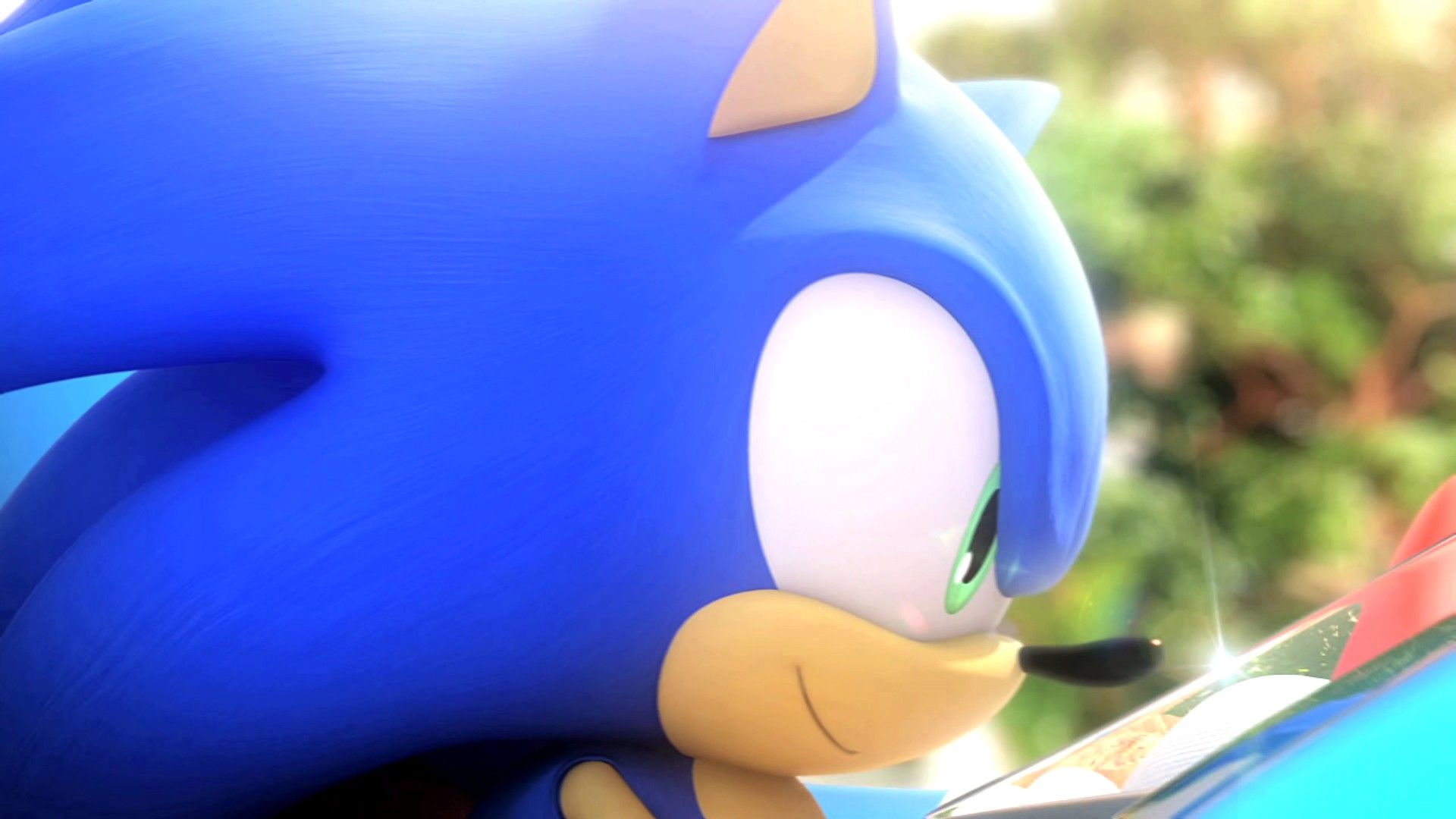
At its core, Sonic & All-Stars Racing Transformed is a kart racer that refuses to stay on the road. The game’s defining hook is the "transformation" mechanic. As players navigate tracks, the environment undergoes dramatic, scripted shifts—a bridge collapses, a building crumbles, or a mountain road turns into a sheer cliff—forcing the player’s vehicle to morph instantly from a land-based kart into a boat or a plane.
This design choice elevates the gameplay from a standard circuit racer to a dynamic, multi-modal experience. Unlike many of its contemporaries that rely heavily on rubber-banding or simplistic steering, Transformed demands a high degree of technical mastery. The drifting mechanics are precise, the boost management is critical, and the skill ceiling is surprisingly high for a game featuring a colorful cast of mascots.
A Chronology of the Sega Identity Crisis
To understand why Transformed feels so idiosyncratic, one must look at the timeline of Sega’s post-console era. By the early 2010s, Sega had firmly pivoted to software. The "console wars" of the 90s had concluded with Nintendo’s "radiant coherence"—a strategy defined by consistent art styles, recognizable worlds, and a singular, iron-fisted vision of quality control.
Sega, by contrast, possessed a sprawling, eclectic, and often bizarre library of intellectual properties. When Sumo Digital was tasked with building a racer to compete with Mario Kart, they were handed a brand that was fractured. However, rather than attempting to force a "radiant coherence" upon the game, Sumo leaned into the chaos.
The inclusion of characters like the protagonist from Shenmue—driving an OutRun arcade cabinet—or the manager from Football Manager (a literal, suit-wearing man in a car) serves as a meta-commentary on Sega’s identity. The game is a graveyard of dreams, a museum of arcade history, and a celebration of the company’s transition from hardware manufacturer to a publisher of diverse, often niche, PC strategy and simulation titles.
Supporting Data: Technical Performance and Design
The game’s longevity is a testament to its robust underlying code. Even by modern standards, the physics engine holds up remarkably well.
- Release Date: January 31, 2013
- Developer: Sumo Digital
- Publisher: Sega
- Platform Availability: Originally consoles, later ported to PC (Steam Deck Verified)
- Core Loop: Three-stage transformation physics (Land/Water/Air) requiring distinct handling adjustments.
The "need to know" metrics for the game are modest, but the experience is anything but. On a standard PC build (such as the Core i7-6700K/GTX 980 setup often cited in legacy reviews), the game remains a buttery-smooth 60fps experience. Its status as "Steam Deck Verified" ensures that a new generation of players can experience these tracks on the go, further cementing its place in the pantheon of "must-play" arcade racers.

Official Responses and Industry Reception
Upon its release, Sonic & All-Stars Racing Transformed was met with critical acclaim, though it often lived in the shadow of Nintendo’s juggernaut. Reviewers praised the ingenuity of the track designs—which often drew from After Burner, Panzer Dragoon, and Total War—but many were caught off guard by the surreal roster.
"It’s weird that the Super Monkey Ball monkey isn’t in a ball," wrote one critic, echoing the confusion of a public used to the uniform aesthetic of the Mushroom Kingdom. However, the gaming community quickly pivoted from confusion to affection. The game proved that if you cannot out-Nintendo Nintendo, you should instead lean into the specific, weird, and wonderful history of your own studio.
The Implications: Why It Still Matters
Why do we still care about a decade-old kart racer? The answer lies in the "skill-expressive" nature of the game. Mario Kart is designed as a party game—a great equalizer where the best player can be undone by a blue shell. Transformed is designed as a racing game first and a party game second.
The implications for the genre are significant. Transformed proved that arcade racers could be both accessible and deep. It allowed for high-level competitive play where mastery of the transformation drift—the ability to maintain momentum across changing vehicle states—separated the casual players from the experts.
Furthermore, the game serves as a bridge between generations. It introduced younger players to the history of Sega, from the arcade cabinets of the 80s to the strategy simulations of the 2010s. It is a rare example of corporate IP usage that feels genuinely enthusiastic rather than calculated.
The Legacy of the "Blue Weirdo"
Looking back, the success of Transformed highlights a lesson that many publishers continue to ignore: authenticity to one’s own brand, even when that brand is a chaotic, disparate mess, is more compelling than a polished imitation of a competitor.
In the modern era, where games like Crossworlds continue the legacy of the "Sonic racer," Transformed remains the benchmark. It is a game that is not just fun to play, but fun to experience. It is a testament to a time when developers at Sumo Digital felt empowered to put a football manager in a boat, have him race against a Roman centurion, and treat the whole affair with the serious, high-octane respect of a Grand Prix.
For the reader looking to dive back into this classic, the message is clear: do not look for the polish of Nintendo. Look for the messy, brilliant, and exhilarating chaos of Sega. You might start the race for the novelty of playing as a man from Football Manager, but you will stay for the tight, responsive, and demanding racing mechanics that make Sonic & All-Stars Racing Transformed one of the finest arcade experiences ever brought to the PC.
As we look toward the future of the genre, with fangames like Dr. Robotnik’s Ring Racers continuing to push the boundaries of what these characters can do, we owe a debt of gratitude to the team at Sumo Digital. They didn’t just make a kart racer; they created a piece of history that, much like its titular hero, refuses to slow down.

