

Main Facts
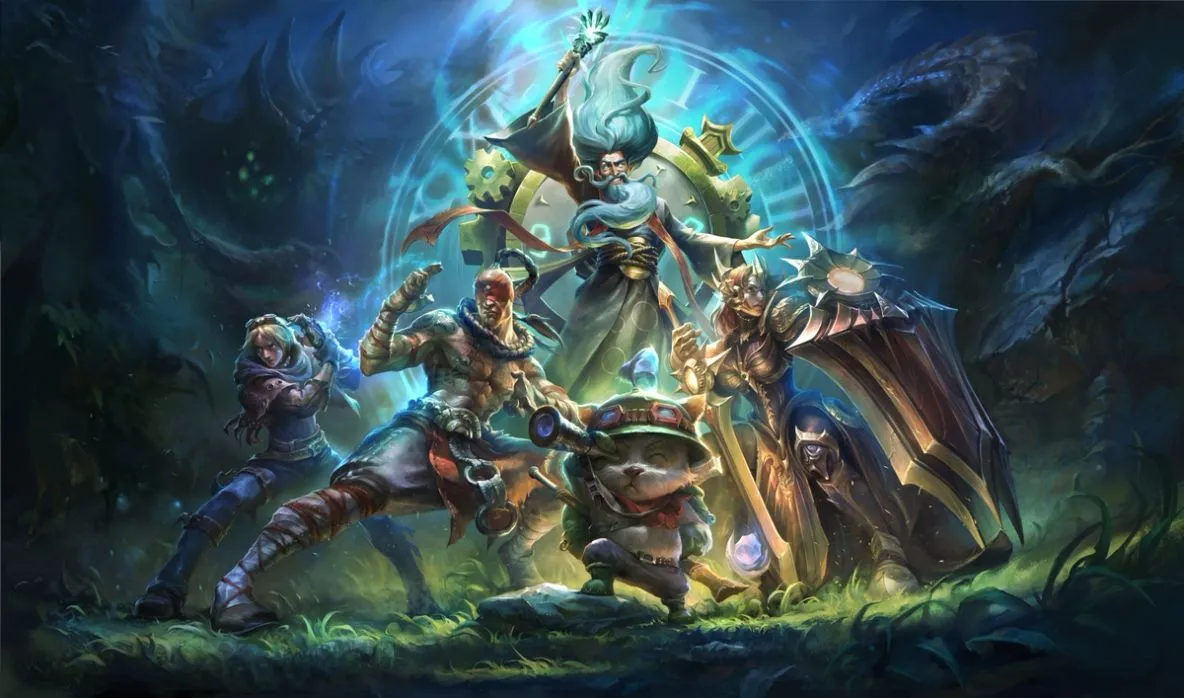
Riot Games has announced that League of Legends Classic—a specialized game mode designed to channel nostalgia by stripping away a decade of updates, mechanics, and champions—will officially go offline in January 2027. Launched to great fanfare just six months prior, the mode was billed as a time capsule for veteran players, featuring a retro iteration of the Summoner’s Rift map, a restricted champion pool pre-dating 2013, and a promise to release "new" old content at a rapid pace.
Despite an initial wave of curiosity and positive sentiment, player retention proved unsustainable. According to developer updates, the vast majority of the player base has since migrated back to the modern, live-service ecosystem of contemporary League of Legends. Consequently, the current competitive season will be the mode’s last. Riot has stated that refunds will be issued for any Classic-specific content rendered obsolete by the shutdown. However, the development team intends to leave the door open for future iterations, hinting that Classic may eventually return on a rotating, event-only basis featuring mechanical tweaks and adjustments.
Chronology: The Rise and Fall of League of Legends Classic
To understand the sudden closure of League of Legends Classic, it is necessary to trace the timeline of its conceptualization, launch, and subsequent decline.
- The Nostalgia Era (Pre-2013): For years, segments of the League of Legends community pined for an era before massive mechanical overhauls, the introduction of hyper-mobile champions, and the total redesign of the classic map layout. Communities frequently debated what "Peak League" actually looked like.
- August 2026 (The Launch and Early Skepticism): Riot Games rolled out League of Legends Classic as a direct response to years of community petitions and forum requests. Almost immediately, esports veterans and long-time community figures like Alex "Xpecial" Chu voiced concerns regarding the viability of a retro MOBA. Chu noted that "classic" meant something different to every individual player, depending on the exact year they started playing.
- Late 2026 (Fading Momentum): While the launch generated significant initial traffic driven by nostalgia and player curiosity, the concurrent player numbers began to drop precipitously. Gamers gravitated back to the balanced ecosystems, regular updates, and high-stakes competitive environment of the modern game.
- December 2026 (The Final Roadmap): Riot Games confirmed that patch 26.21 would continue as planned, introducing legacy champions like Mordekaiser, Yorick, Hecarim, and Lucian, with Volibear, Urgot, and Udyr slated for subsequent patches before the shutdown.
- January 2027 (Scheduled Sunset): League of Legends Classic will officially go offline, marking the end of a six-month experiment. Riot intends to take the mode "back to the box," utilizing player data and community feedback to reassess how retro experiences might be packaged in the future.
Supporting Data and Community Perspectives
The decision to shutter League of Legends Classic after only half a year highlights a fundamental friction between nostalgia-driven game modes and the realities of modern player habits. Unlike legacy revivals in the MMORPG space—such as World of Warcraft Classic or Old School RuneScape—competitive multiplayer online battle arenas (MOBAs) operate under a vastly different psychological framework.
In the MMORPG genre, older versions of games succeed because they offer sprawling, immersive, low-pressure virtual worlds that players can inhabit as an alternative home. They function as slow-burn digital ecosystems where players can socialize, grind at their own pace, and escape the high-velocity demands of modern AAA titles.
League of Legends, by contrast, is an inherently adversarial, high-stress competitive environment. Alex Chu pointed out this critical distinction during the mode’s launch window:
"Classic was never going to be a huge success at launch, because everyone has a different version of classic… Modern League can’t do any of that, because modern League has to appeal to everyone. Classic only has to appeal to enough people."
Furthermore, the pacing of historical updates worked against the longevity of the mode. Back in 2013, Riot Games released new champions at a breakneck pace—often every two to three weeks—fundamentally altering the meta constantly. By contrast, early MMORPGs typically relied on yearly expansions, giving players ample time to master a static world state. In League of Legends Classic, the rapid-fire injection of old-school champions under modern analytical scrutiny meant that "solved" metas arrived far faster than they did a decade ago, accelerating player burnout.
Official Responses from Riot Games
In a transparent developer update published on the official League of Legends website, Riot addressed the community directly regarding the closure of the mode.
"We’ve seen a lot of players have fun revisiting the olden days with Classic," a Riot spokesperson wrote. "At this point though, most have gone back to other parts of League. As a result, the current season will be the last. We’ll then put Classic back in the box for now, with the goal of bringing it back, likely as an event mode with adjustments and additions."
Riot acknowledged that the experiment provided invaluable data regarding how the community interacts with the game’s history. The company noted that it will soon publish a comprehensive retrospective detailing what elements of Classic succeeded, where the developers adhered too strictly to historical accuracy, and where excessive historical fidelity ultimately constrained the entertainment value of the experience.
Despite the abrupt end of the permanent mode, Riot confirmed that it plans to honor its immediate content roadmap. At least seven legacy champions are still scheduled to be integrated into the client before the final shutdown, ensuring that players who invested time into the mode will still receive the promised historical roster additions.
"This game mode was a true labor of love from so many Rioters, and seeing you all dive back in to reclaim the nostalgia, reconnect with old friends, and relive your glory days made it a truly special moment for everyone," the spokesperson added. "Every post on social media asking for Classic, every vote cast in the Council, and every minute spent leashing for your jungler again helped us bring this to life, so thank you very much."
Broader Implications for Live-Service Games and Retro Revivals
The rise and rapid fall of League of Legends Classic serves as a cautionary tale for live-service developers attempting to monetize player nostalgia. While games like RuneScape and World of Warcraft proved that historical builds can sustain massive, dedicated player bases for years, those successes rely heavily on persistent world structures and RPG progression systems.
For competitive esports titles, the appetite for historical play tends to manifest as a transient curiosity rather than a sustainable, long-term habit. Once the initial wave of nostalgic dopamine fades, players are inevitably confronted with the mechanical imbalances, clunky user interfaces, and design limitations that developers worked for over a decade to fix.
For Riot Games, the experiment is far from a total failure. By treating the six-month run as a massive, live-playtest diagnostic tool, the developer has gathered critical insights into how the community perceives the evolution of its flagship title. While League of Legends Classic may be heading back to the drawing board, the data harvested from its brief existence will likely inform how Riot handles commemorative events, legacy content, and community-driven game modes for years to come.

