

By Tech Desk | Updated for the Hardware Market
In an era where building or upgrading a high-end gaming PC feels like an exercise in financial endurance, a strange and welcome phenomenon is quietly unfolding in the hardware market. While the costs of graphics cards, high-end CPUs, and specialized motherboards continue to spiral upward into the stratosphere, the price of premium display technology is plummeting at an astonishing rate.
For years, OLED (Organic Light-Emitting Diode) monitors were treated as exotic luxury items. Boasting infinite contrast ratios, pitch-blacks, and instantaneous pixel response times, they were strictly the domain of hardcore enthusiasts willing to part with upwards of $1,000 to $1,500 for a desktop screen.
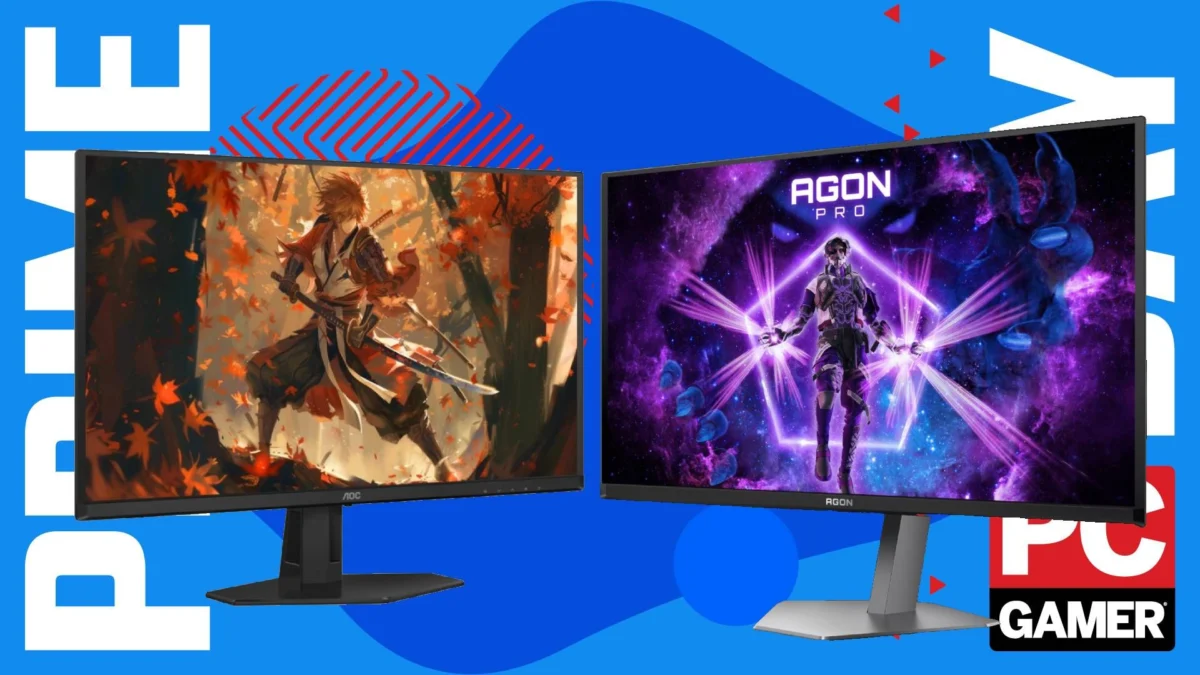
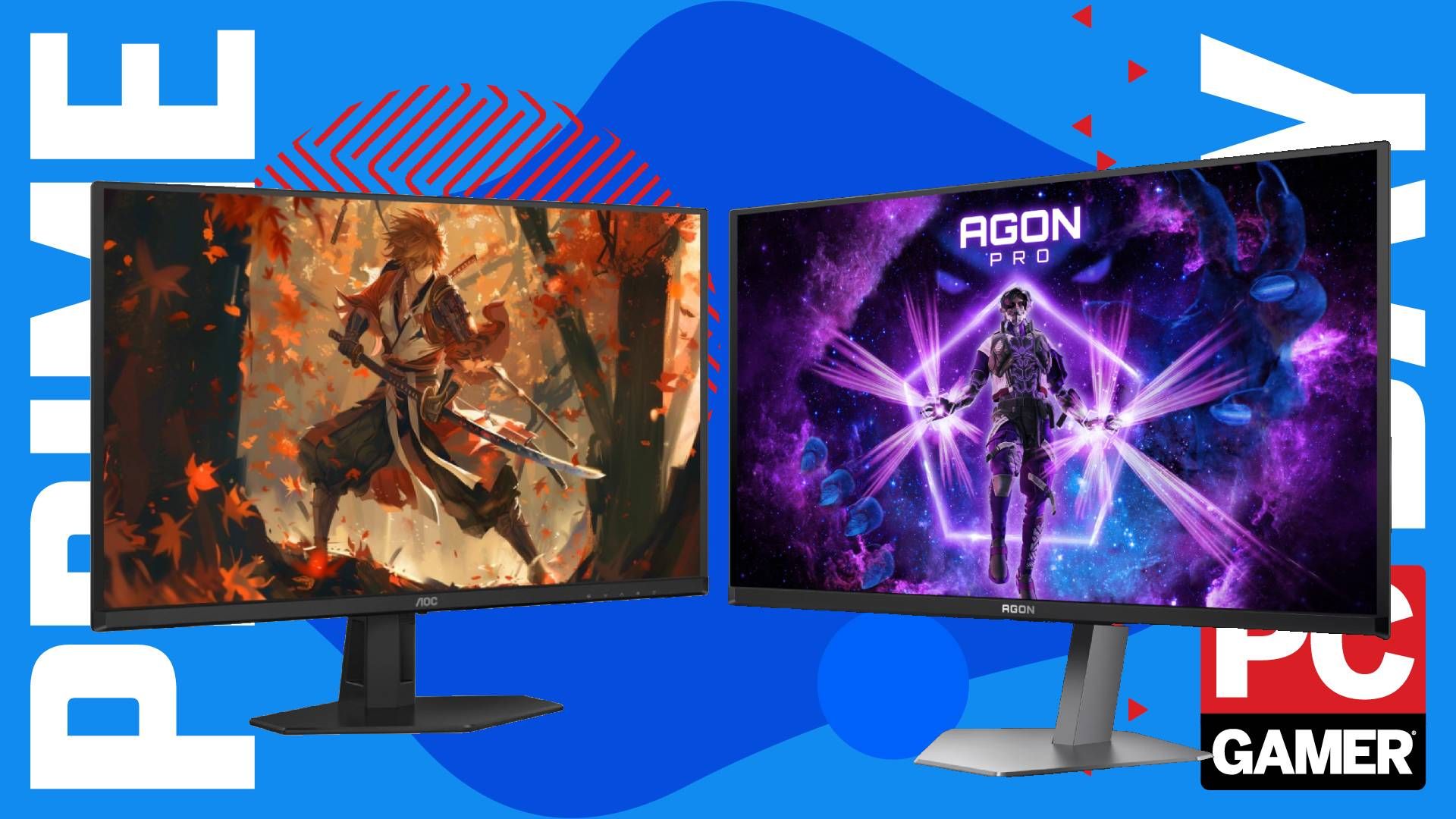
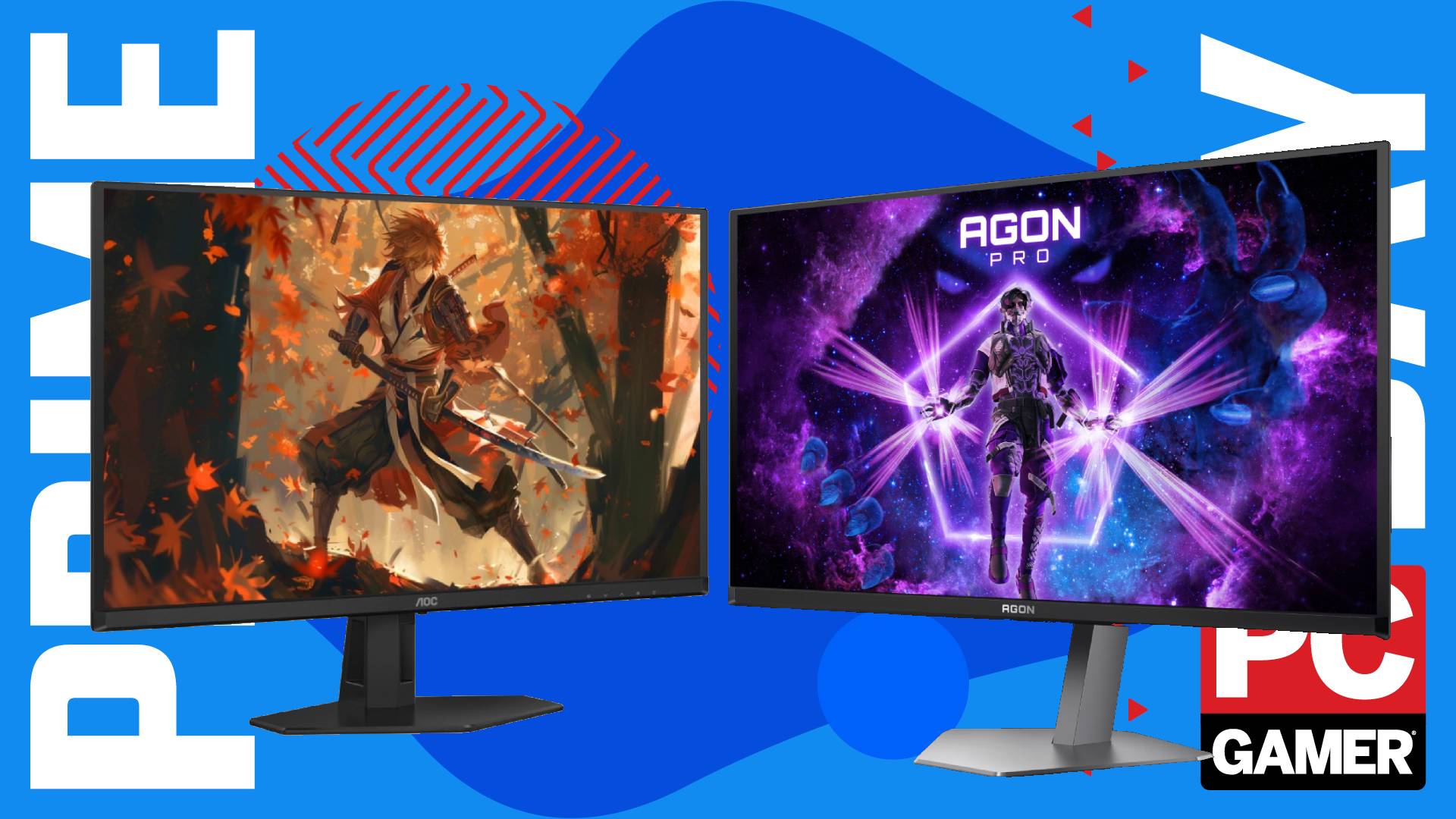
Today, that paradigm is shifting dramatically. Thanks to aggressive manufacturing scaling, new panel iterations from display giants like Samsung, and intense retail competition, high-performance OLED gaming monitors are routinely crossing below the psychological threshold of $300. Leading this charge is AOC, a brand that has recently introduced a pair of 27-inch 1440p OLED displays that threaten to redefine what budget-conscious gamers can expect from their desktop setups.
Main Facts: The New Wave of Sub-$300 OLED Monitors
The core development capturing the attention of hardware analysts and PC gamers alike is the introduction of ultra-affordable 27-inch OLED displays from manufacturer AOC, available now through major retailers like Amazon.
- The Entry-Level Contender: The AOC Q27GADE has hit the market with an aggressive price tag of $279.99. It offers a 27-inch screen size, a sharp 2560×1440 (1440p) resolution, and a 144 Hz refresh rate.
- The Step-Up Alternative: For just roughly $50 more, the AOC Agon Pro AG276QZD2 is available for $332. This model maintains the 27-inch 1440p form factor but significantly upgrades performance metrics to a 240 Hz refresh rate and vastly improved brightness specs.
- The Underlying Technology: Both monitors rely on advanced QD-OLED (Quantum Dot OLED) panels, heavily signaling the deployment of Samsung’s new, cost-effective entry-level panel tier designed specifically to democratize self-emissive display technology.
Chronology: From Luxury Status to Mass-Market Disruption
To fully understand how we arrived at a sub-$300 OLED monitor market, it helps to look at the timeline of how this technology has evolved over the past half-decade.
Phase 1: The Television and High-End Monitor Era (2019–2021)
During this initial phase, OLED technology was predominantly found in large-format living room televisions—most notably spearheaded by LG—and ultra-expensive professional reference monitors. When OLED finally trickled down to PC gaming displays around 2021 and 2022, manufacturers positioned them as halo products. Early models commanded prices well north of $1,000, plagued by early fears of burn-in and low initial production yields.
Phase 2: The $800–$1,000 Standard (2022–2023)
As panel production stabilized, major display manufacturers—including Dell/Alienware, ASUS, MSI, and Samsung—began releasing 27-inch 1440p and 32-inch 4K OLED gaming monitors. While these screens were universally praised by reviewers for their motion clarity and HDR capabilities, they remained out of reach for average consumers, hovering steadily between $800 and $1,200.
Phase 3: The Price Collapse and the Sub-$400 Threshold (Late 2024–Present)
The market landscape shifted drastically as panel supply outstripped initial high-end demand. Panel manufacturers began designing lower-cost, entry-tier OLED cuts specifically to capture the massive mid-range PC gaming demographic. Over the past several months, monitors like Alienware’s AW2726DM and various Samsung-powered alternatives began breaking the $400 barrier. Now, with AOC’s latest drops dipping below the $280 mark, the market has officially entered its discount era.
Supporting Data: Technical Specifications and Trade-Offs
When a premium technology drops in price so precipitously, consumers naturally ask: What are we giving up to save this money? A forensic examination of the hardware reveals the specific engineering compromises made to hit these price points.
The Budget Model: AOC Q27GADE ($279.99)
- Panel Type: QD-OLED (Samsung entry-level tier)
- Resolution: 2560 x 1440 (QHD)
- Refresh Rate: 144 Hz
- Response Time: 0.03 ms (GtG)
- Brightness: Approximately 200 nits full-screen, 400 nits peak HDR
- Analysis: While the 144 Hz refresh rate is lower than the current esports standard of 240 Hz or 360 Hz, the instantaneous 0.03 ms response time and pixel-level lighting control mean motion blur is virtually non-existent. However, the 200/400-nit brightness profile means these monitors are best enjoyed in controlled, dim lighting environments rather than sunlit rooms.
The Upgraded Model: AOC Agon Pro AG276QZD2 ($332.00)
- Panel Type: QD-OLED
- Resolution: 2560 x 1440 (QHD)
- Refresh Rate: 240 Hz
- Response Time: 0.03 ms (GtG)
- Brightness: 240 nits full-screen, 1,000 nits peak HDR
- Analysis: For an extra $50, this variant removes nearly all major compromises. It doubles the refresh rate to a fluid 240 Hz and pushes peak HDR brightness to 1,000 nits, allowing specular highlights in games and movies to genuinely pop. Industry analysts widely consider this model the current sweet-spot champion for price-to-performance ratio.
Official Responses and Manufacturer Strategies
Because brands like AOC and Samsung are currently deploying these budget panels rapidly through retail channels like Amazon and major electronics distributors, official product documentation has occasionally lagged behind retail availability.
AOC, for instance, has kept details surrounding the exact technical lineage of the Q27GADE quiet, omitting comprehensive data sheets from its official corporate website. Retail partners have had to fill in the specifications gap.
Industry insiders note that this "quiet rollout" strategy is deliberate. Manufacturers are keen to test market elasticity—evaluating how quickly consumers will snap up budget-tier self-emissive displays without cannibalizing sales of their higher-margin, flagship 4K 240Hz monitors. Early sales figures from major retail sales events (such as Amazon Prime Day and subsequent hardware clearances) indicate that consumer demand for sub-$300 OLEDs is overwhelmingly high, suggesting that manufacturers will likely expand this budget tier aggressively over the coming fiscal year.
Implications: What This Means for the Future of PC Gaming
The arrival of sub-$300 OLED monitors is more than just a win for bargain hunters; it signals a fundamental structural shift in how desktop components are valued and consumed.
1. The Death of Entry-Level IPS for Serious Gamers?
For over a decade, In-Plane Switching (IPS) panels have dominated the budget and mid-range gaming monitor market. While IPS technology has matured to offer decent refresh rates and accurate colors, it inherently struggles with contrast due to backlight bleed and slow pixel transitions relative to OLED. With high-performance OLED panels now matching or undercutting the historical pricing of premium IPS monitors, the value proposition of traditional LCD technology in the mid-range tier is facing a severe existential crisis.
2. A Counterweight to Spiraling PC Component Costs
As high-end graphics cards routinely demand upwards of $700 to $1,600, and top-tier CPUs and memory kits continue to strain household budgets, the PC gaming community has grown increasingly vocal about hardware inflation. The unexpected deflation of display technology acts as a vital economic counterweight. Gamers can funnel more of their overall budget into raw GPU and CPU processing power, knowing they no longer need to spend a small fortune on a world-class visual interface.
3. Considerations and Caveats
Despite the excitement, buyers must remain pragmatic. Entry-level OLED panels still carry inherent risks, including potential burn-in risks over years of static desktop use (though modern pixel-orbiting and refresh utilities mitigate this significantly) and lower sustained full-screen brightness compared to high-end Mini-LED displays.
Nevertheless, for those willing to spend around $300 to $330, displays like the AOC Agon Pro AG276QZD2 prove that you no longer need to empty your savings account to experience the absolute pinnacle of gaming display technology.

