

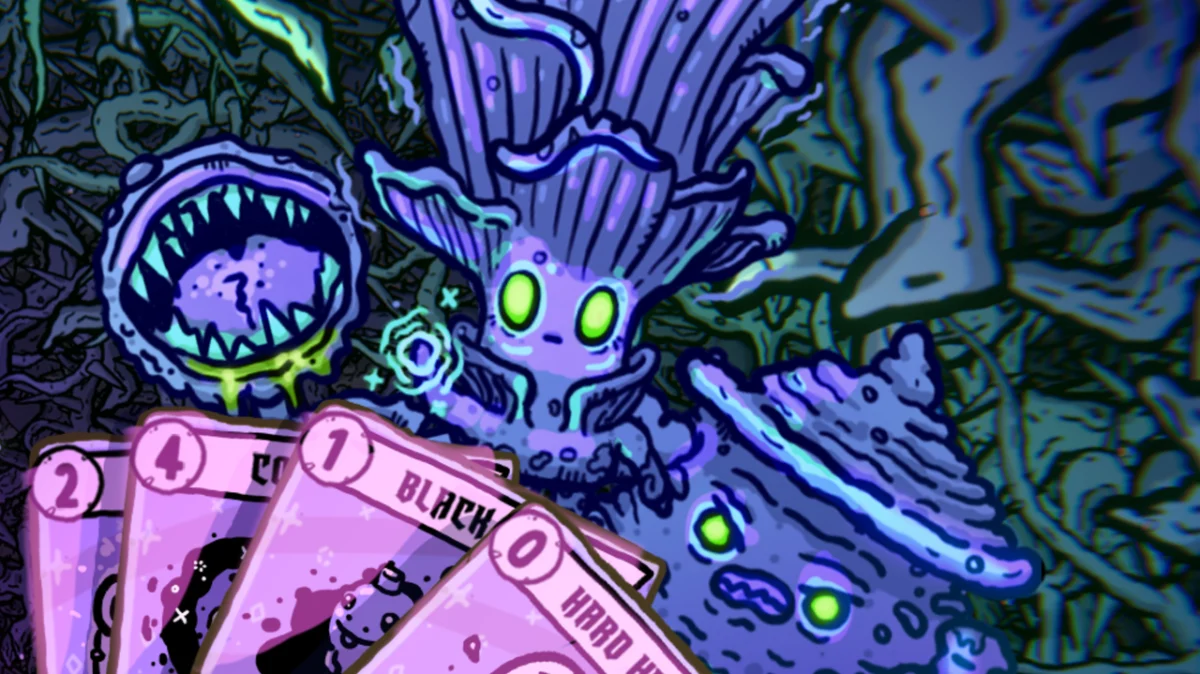
For fans of niche obsessions, few things compare to finding a game that caters to hyper-specific tastes. Whether it is running around as a spore-laden artificer in a tabletop Dungeons & Dragons campaign or hunting for rare mycological specimens in the real world, the fascination with mushrooms has long permeated pop culture. Yet, seeing them take center stage in a video game—let alone a deeply strategic, subterranean roguelike deckbuilder—offers an entirely different flavor of entertainment. Enter Shroom and Gloom, an imaginative indie title published by Devolver Digital that forces players to navigate, manipulate, and literally consume a world overrun by sentient fungi.
Blending tactile resource management with a macabre sense of humor and striking hand-drawn visuals, Shroom and Gloom stands out in an oversaturated deckbuilder market. Rather than relying on standard gameplay loops popularized by genre giants like Slay the Spire, this title introduces a dual-deck architecture that forces players to treat exploration and combat as two entirely distinct tactical puzzles.
Main Facts: The Anatomy of a Mycological Nightmare
At its core, Shroom and Gloom drops players into a sprawling, subterranean labyrinth rich with vines, bones, and aggressively hostile mushrooms. The overarching objective is deceptively simple: battle through shifting areas, complete distinct quests, unlock new characters, gather powerful survival items, and chart an optimal path through an underground cavern system.
However, the game immediately subverts expectations by splitting a player’s mechanics across two separate decks:
- The Exploration Deck: Utilized while navigating the dungeon corridors, this deck features tools such as shovels to unearth hidden cards, lighters to ignite campfires for warmth, and heavy-duty instruments to smash open locked doors.
- The Combat Deck: Activated when ambushed by groups of fungal foes, this deck holds cards designed to deal direct damage, stun adversaries, or restore health.
Compounding this mechanical split is the exploration stamina system. Players possess a strictly limited amount of stamina per zone. Overindulging in the exploration deck—such as enthusiastically digging up every loose pile of dirt and breaking open every treasure chest in sight—can quickly bankrupt a player’s stamina reserves. Failing to manage this resource means being unable to break the lock on the final door required to progress, inevitably forcing a premature and punishing rest.
Chronology of a Run: From Overzealous Excavation to Fungal Feasts
Understanding the flow of a typical expedition in Shroom and Gloom requires looking at how a run unfolds step-by-step.

Phase 1: The Early Exploration Trap
A typical run begins at the entrance of a damp, hand-drawn subterranean tunnel. Players start drawing from their exploration deck, eager to uncover randomized rewards. In the early stages, the temptation to use every tool at one’s disposal is immense. Shovels dig up helpful passive buffs, while lighters illuminate dark corners.
However, poor stamina management spells disaster early on. Expending all available energy on minor loot caches leaves players stranded before a heavy iron door, lacking the stamina required to break through. This forces a retreat into the dungeon’s unsafe environments.
Phase 2: Surviving the Campsite
Resting in a fungal forest is rarely a peaceful affair. The game’s atmosphere leans heavily into psychological gloom; campsites are littered with human remains and creeping spores. While players can mitigate the hazards of a campsite by lighting campfires, clearing away lingering shrooms, and burying skeletal remains, sleeping always carries an unavoidable penalty.
Before dozing off, the interface displays the exact amount of damage the character will sustain overnight. Because stamina is cleverly replenished after winning combat encounters rather than through quiet contemplation, veteran players quickly learn that forging ahead into battle is almost always safer than taking a dangerous rest.
Phase 3: The Culinary Combat Loop
When combat inevitably breaks out, the focus shifts to the combat deck. The gameplay here introduces a brilliantly grim mechanic: players don’t just attack their enemies—they season and eat them.
Combat encounters revolve around building creative, devastating combos. A standard high-tier offensive turn might begin by dusting a group of caps with specialized spices, splashing them with hot sauce to increase incoming damage, slicing through them with a rusted combat knife, and finishing the sequence with a blazing theatrical flourish.

Phase 4: Iterative Failure and Meta-Progression
Death in Shroom and Gloom is frequent, but it is rarely discouraging. Because the game features a relatively light meta-progression system—relying instead on a few persistent expedition-aid cards and unlockable characters with unique passive bonuses—success is tied directly to player knowledge.
Over multiple runs, players learn critical survival heuristics: which priority targets to eliminate first, which cards to draft in the early game, and quirky environmental interactions like the golden rule of "always feed the rat." Each failed run pushes the player further into the depths, turning inevitable defeat into a masterclass in tactical adaptation.
Supporting Data and Game Mechanics
While the game is currently available in early access via Steam, its underlying mathematical and structural design has already garnered praise from critics and strategy enthusiasts alike.
- Dual-Deck Balance: The friction between the exploration deck and combat deck creates a constant resource-allocation puzzle. Players must weigh the long-term utility of gathering supplies against the immediate necessity of keeping combat cards viable.
- Visual Presentation: The game utilizes a unique pseudo-3D parallax effect constructed from layers of hand-drawn 2D stills. This gives the subterranean tunnels a haunting, storybook-like depth that softens the blow of frequent character deaths.
- Accessibility and Replayability: Though complex in its tactical depth, the game avoids punishing players with overly convoluted progression trees. Instead, it relies on transparent risk-and-reward metrics, such as visible campsite damage counters, allowing both casual deckbuilder fans and hardcore roguelike veterans to find a comfortable entry point.
Official Responses and Developer Insights
Publisher Devolver Digital and the independent development team behind Shroom and Gloom have emphasized that the early access period is designed to be a collaborative journey with the community.
In initial launch statements, the developers noted that the concept for a dual-deck system originated from a desire to make dungeon exploration feel just as tense and tactical as actual combat. "In traditional roguelikes, moving from room to room is often treated as downtime between fights," a developer insight shared on community forums noted. "We wanted movement, exploration, and resource gathering to carry the same weight, anxiety, and decision-making depth as drawing a sword against a boss."
Player feedback during the early access rollout has already driven minor adjustments to stamina consumption rates and the frequency of certain random events, ensuring that the game’s idiosyncratic humor and punishing difficulty remain finely balanced.

Implications for the Roguelike Deckbuilder Genre
The release and reception of Shroom and Gloom signal a broader trend within the indie gaming sector: subverting established sub-genres through hyper-focused mechanical experimentation.
For years, the deckbuilder space has struggled with "clone fatigue," as numerous titles attempt to replicate the exact formula of genre-defining masterpieces without offering fresh hooks. By introducing spatial resource management (exploration stamina) and narrative-adjacent environmental hazards (campsite penalties), Shroom and Gloom proves that innovative design space still exists within card-based strategy games.
Furthermore, the game highlights the ongoing viability of the early access model for independent developers. By releasing into the wild with a strong core identity, striking hand-drawn art direction, and mechanically distinct ideas, Shroom and Gloom has cultivated a dedicated community eager to test its limits, offer feedback, and watch the title evolve throughout its development lifecycle.
Whether you are a seasoned card-shark looking for your next tactical fix or simply someone who enjoys watching a cartoon mushroom get flambéed with hot sauce, Shroom and Gloom is well worth digging into.

