


For millions of people, the sunrise routine has been standardized over the last few years: coffee in one hand, smartphone in the other, and a browser tab open to a 5×6 grid of empty squares. Wordle—the linguistic phenomenon that took the world by storm—cemented the "daily puzzle" format as a staple of modern digital culture. However, as the novelty of guessing five-letter words begins to wane for long-time devotees, a void has opened in the morning habits of casual gamers.
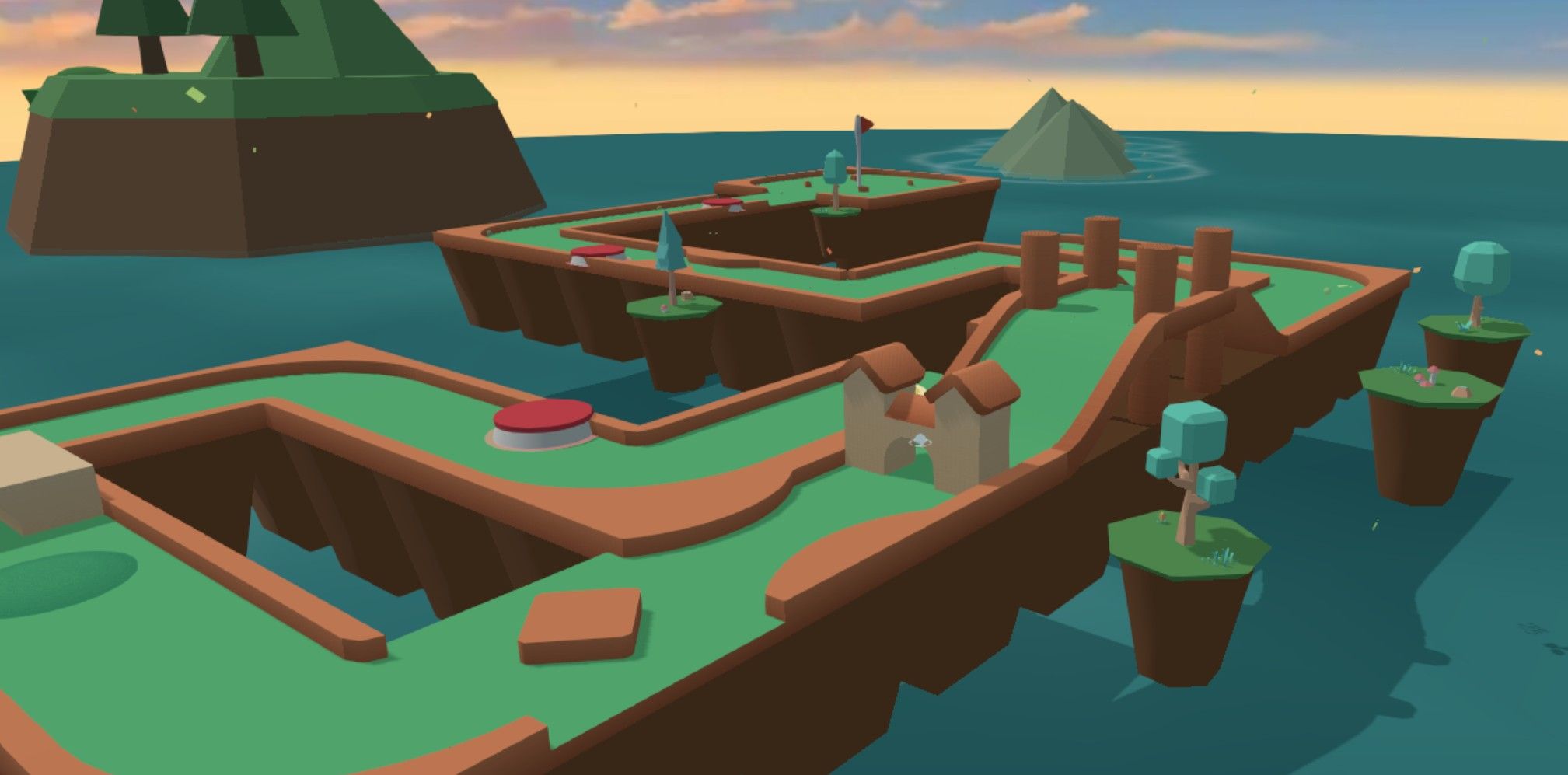
Enter Putt.day, a browser-based minigolf game that is quietly positioning itself as the spiritual successor to the daily word-guessing craze. By swapping letters for physics-based putts and complex 3D environments, developer ell.dev has created a bite-sized gaming experience that is as addictive as it is accessible.
The Evolution of the "Daily" Gaming Habit
The meteoric rise of Wordle proved that players crave a low-stakes, high-reward challenge that can be completed in under five minutes. It was the "water cooler" game of the digital age, providing a shared experience where everyone tackled the same puzzle simultaneously.
However, the "daily puzzle" genre is notoriously fickle. Once a player masters the strategy or grows tired of the format, the engagement drop-off is sharp. As many former Wordle enthusiasts have noted, the thrill of maintaining a streak can eventually transform from a delightful hobby into a mundane chore.
This is where Putt.day succeeds. It captures the exact same "one-a-day" dopamine loop but pivots to a different mechanical satisfaction: the tactile, physics-driven challenge of minigolf. It isn’t asking you to broaden your vocabulary; it is asking you to master momentum, angle, and patience.
Mechanics and Gameplay: A Lesson in Simplicity
At its core, Putt.day operates on a principle of "easy to learn, difficult to master." The controls are intuitive, reflecting the minimalist philosophy that made its predecessors so successful.
Players click and drag behind the ball to set the trajectory and power—a control scheme familiar to anyone who has played a mobile golf title. The further the drag, the more force is applied to the ball. Looking around the course is achieved by dragging elsewhere on the screen, while zooming is managed through the standard mouse wheel or pinch-to-zoom gestures.
The Physics of the Daily Course
Unlike the static nature of a grid of letters, Putt.day provides a 3D, browser-based environment. The courses, which change every 24 hours, are constructed using high-quality assets from Kenney, a well-known name in the game development community. These assets provide a clean, aesthetic, and reliable physics engine that allows for complex bank shots, loop-de-loops, and precarious edge-hugging maneuvers.
Because the game is browser-native, there is no need for high-end hardware or lengthy installations. It is a "load and play" experience that respects the user’s time, making it an ideal candidate for that narrow window of time before the workday begins.
A Chronology of the Daily Puzzle Phenomenon
To understand why Putt.day has gained traction, one must look at the timeline of the daily-puzzle trend:
- 2021 (The Wordle Boom): Josh Wardle releases Wordle to the public. It gains massive viral traction due to its simple shareable scorecard system.
- 2022 (The Proliferation): Following Wordle’s acquisition by the New York Times, an explosion of spin-offs appears, including Worldle (geography), Heardle (music), and Framed (movies).
- 2023 (The Saturation Point): Players begin to report "puzzle fatigue." The novelty of word-based games begins to plateau as users look for more interactive, physics-based alternatives.
- 2024 (The Physics Shift): Developers like ell.dev recognize the demand for "daily" games that aren’t text-based, leading to the rise of titles like Putt.day, which focus on spatial reasoning rather than linguistic skill.
Community Reception and Competitive Elements
While Putt.day is a solo experience, it borrows the most successful social feature from its predecessors: the shareable score. After completing a hole, players are encouraged to share their stroke count. This creates a friendly, low-pressure competitive environment.
In the offices of major gaming publications, including PC Gamer, the game has already become a staple. The "terrible at it" sentiment shared by many players is actually a feature, not a bug. By keeping the courses challenging, Putt.day ensures that hitting a "hole-in-one" or a "birdie" feels like a genuine achievement.
The lack of a mandatory sign-in system is another strategic win. Users value privacy and speed; the fact that Putt.day keeps track of streaks and statistics locally via browser data allows users to play anonymously without the friction of account creation. For those who find one hole per day insufficient, the game includes a robust archive feature, allowing users to dive into two months’ worth of past courses.
The Role of Public Domain Assets
A fascinating aspect of Putt.day is its reliance on public domain minigolf assets provided by Kenney. This highlights a growing trend in indie game development: the use of shared, high-quality asset libraries to lower the barrier to entry for developers.
By utilizing established assets, the developer was able to focus entirely on the game loop, the daily rotation system, and the web optimization. This demonstrates that you don’t need a massive studio or a proprietary engine to create a viral hit; you simply need a clear vision and an understanding of what makes a game "sticky."
Implications for the Future of Browser Gaming
What does the success of Putt.day tell us about the future of casual gaming?
- The Shift Toward Interactive Physics: As players move away from text-based puzzles, we are likely to see more browser games that utilize WebGL to provide 3D, physics-based experiences.
- The Persistence of "Micro-Gaming": The demand for games that can be completed in under five minutes remains high. People want to feel a sense of accomplishment during their morning commute or while waiting for their coffee.
- Low Friction is King: The removal of account requirements and the focus on "instant play" are critical to player retention in the browser gaming space.
- Social Connectivity through Minimalist Sharing: The "scorecard" format is a proven method for organic social media growth. By letting users brag about their scores without spoiling the puzzle for others, games like Putt.day maintain a "viral" loop that costs nothing in advertising.
Conclusion: Why You Should Give It a Shot
Whether you are a former Wordle fanatic looking for a new obsession or a casual gamer who enjoys the occasional minigolf challenge, Putt.day offers a refreshing change of pace. It is a masterclass in minimalist game design, proving that you don’t need a sprawling open world to keep players coming back day after day.
While some players might struggle with their stroke counts—as evidenced by the many "terrible" scores being shared online—the beauty of the game lies in the improvement. Each day brings a new course, a new set of obstacles, and a new chance to master the mechanics.
The next time you find yourself staring at an empty browser tab, consider skipping the word puzzles and picking up the virtual putter instead. You might find that the perfect start to your morning isn’t a five-letter word, but a well-executed shot on a digital green. After all, if you can’t make it to the golf course, bringing the course to your browser is the next best thing.

