

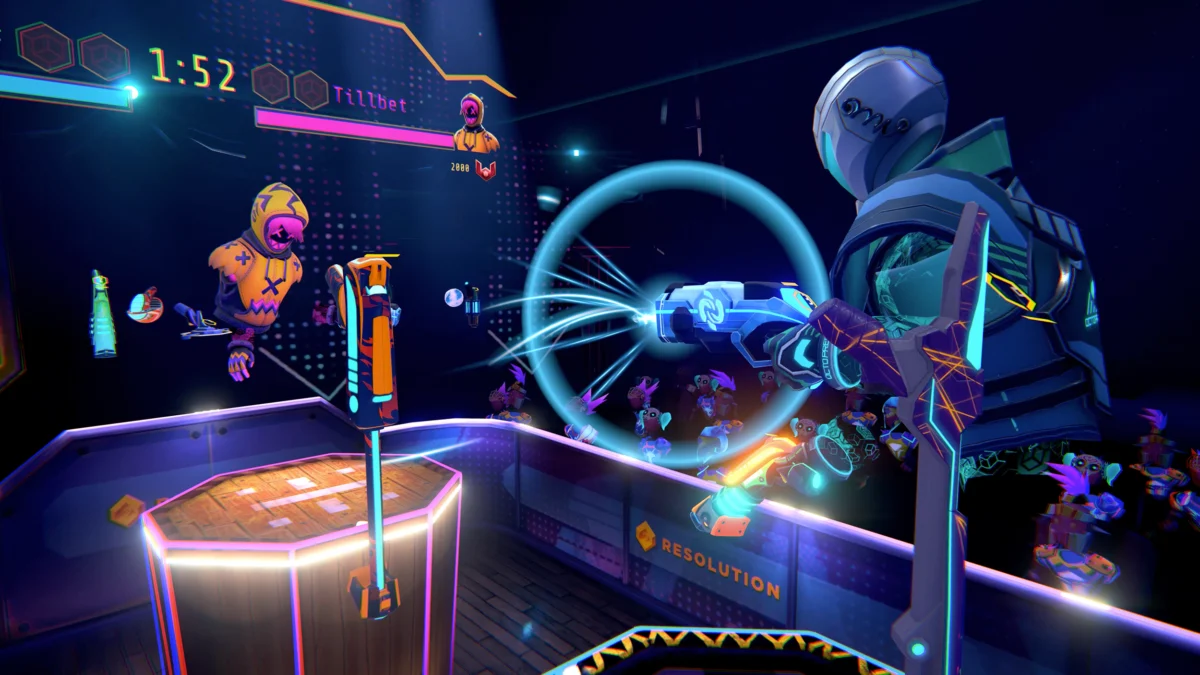
In an era where virtual reality (VR) is often criticized for being a novelty or a collection of "tech demos," specific titles emerge that redefine the medium’s potential for genuine athletic competition. Blaston, the high-octane duelling title developed by Resolution Games, has quietly cemented itself as a cornerstone of the VR ecosystem. What began as a spontaneous digital purchase for many has blossomed into a cult phenomenon, proving that the future of competitive gaming lies not in a controller, but in the physicality of the player.
The Genesis of a Digital Duel: Main Facts and Premise
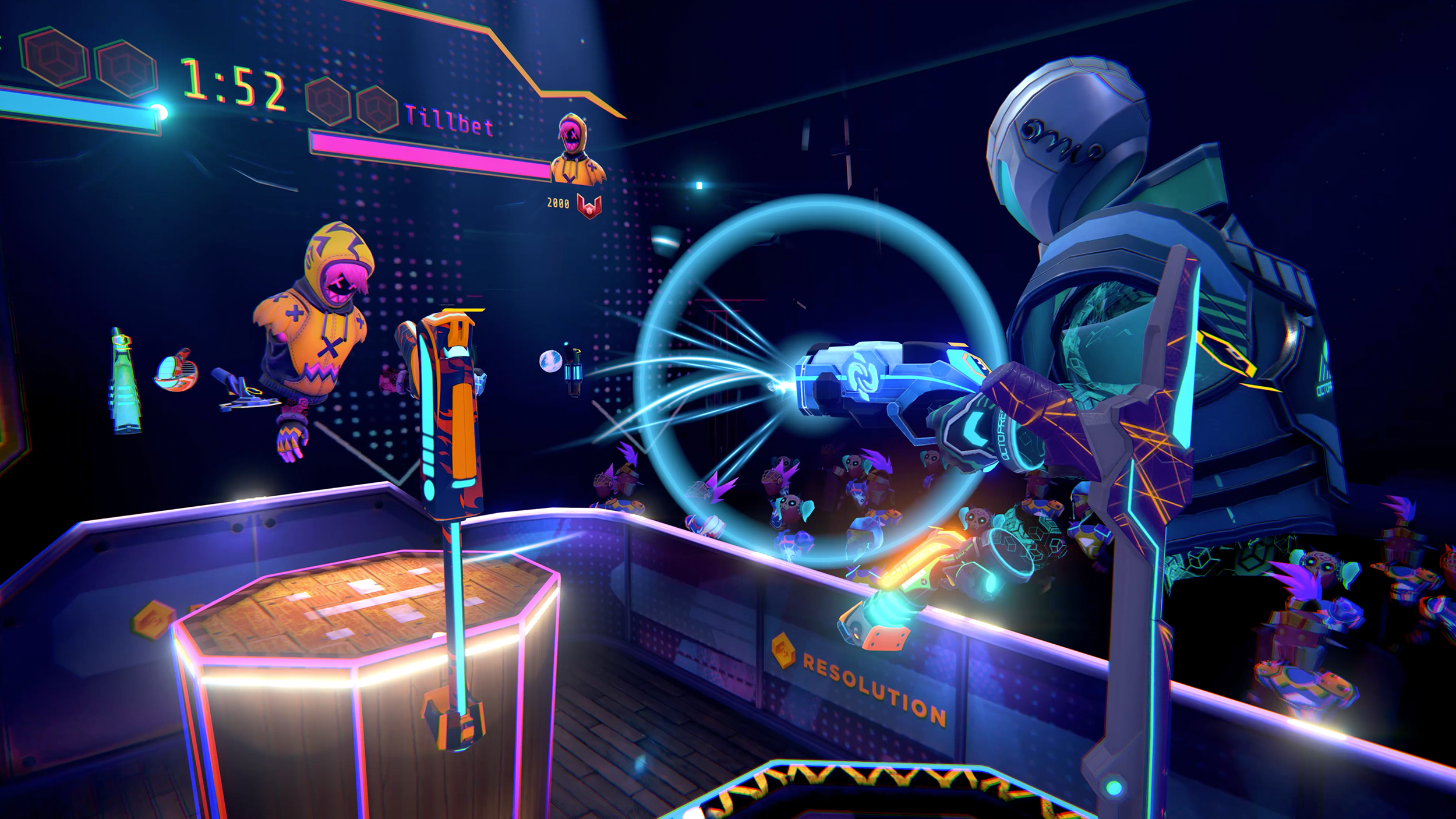
Blaston operates on a deceptively simple premise: two combatants are placed on opposing platforms within a confined, stylized arena. The objective is to deplete the opponent’s health bar using a curated arsenal of futuristic weaponry. However, unlike traditional first-person shooters, Blaston eliminates the "point-and-click" paradigm.
In this arena, weapons do not simply appear in your hands. Instead, they spawn at various fixed points around the player’s immediate vicinity. This core mechanic forces a constant state of movement. Players must physically reach, duck, weave, and dodge—both to collect their own weapons and to evade the incoming fire of their adversary. It is, at its heart, a game of spatial geometry and tactical endurance.
The game’s brilliance lies in its lack of "overpowered" gear. Rather than a hierarchical power structure, every weapon serves a specific tactical purpose. Some are designed for area denial, creating "kill zones" that force opponents to reposition, while others provide high-velocity projectiles that require precision timing. By stripping away the ability to simply aim down sights and shoot, Blaston transforms the player into a tactical athlete, where the primary weapon is the player’s own body.
A Chronological Evolution: From Niche Title to Competitive Staple
The journey of Blaston reflects the broader trajectory of VR gaming over the last three years. Initially released during a period where VR adoption was accelerating due to the accessibility of standalone headsets like the Oculus Quest 2, the game faced the daunting task of capturing an audience that was rapidly being saturated with content.
The Early Adoption Phase
When Blaston first hit the digital storefronts, it was initially perceived by many as a casual distraction. Early reviews focused on its "pick-up-and-play" nature. However, within weeks, the community dynamic shifted. The emergence of high-level competitive play, where veterans began mastering the spawn timers and weapon trajectories, elevated the game from a "party title" to a genuine esport.
The Post-Launch Expansion
Throughout late 2021 and into 2022, Resolution Games demonstrated a commitment to long-term support. Regular updates introduced new weapon tiers, seasonal balancing, and improved matchmaking protocols. These updates were not merely cosmetic; they fundamentally changed the meta-game. By analyzing the data of thousands of matches, the developers were able to ensure that no single strategy could dominate the leaderboard, forcing players to constantly adapt their playstyles.
Data-Driven Combat: Understanding the Meta
To understand why Blaston is so compelling, one must look at the data behind the gameplay. Unlike games that rely on twitch reflexes or hardware-assisted aiming, Blaston is a study in "predictive movement."
The Geometry of the Arena
The arena is deliberately small. This creates an intense psychological pressure, as players are rarely more than a few feet away from their opponent’s offensive output. Data from player heatmaps suggests that the most successful competitors are those who spend less than 15% of the match standing still. The "Average Calories Burned" per session for a Blaston player is significantly higher than that of standard VR shooters, placing it in the same category as Beat Saber or Supernatural in terms of physical exertion.
Weapon Synergy and Loadouts
Players can curate their loadouts before the match, leading to a complex meta-game similar to a trading card game. A common strategy involves pairing "slow-moving, high-damage" projectiles with "fast-moving, zoning" lasers. By forcing the opponent to move out of the way of a slow projectile, a player creates an opening to hit them with a faster, more precise strike. This "bait and switch" mechanic is the core of high-level Blaston strategy.
Official Perspectives: The Developer’s Vision
Resolution Games, the studio behind the title, has been vocal about their philosophy regarding the "VR-first" approach. In various developer diaries and community Q&As, they have emphasized that Blaston was designed to solve the "stationary VR" problem.
"We wanted to make a game where you don’t just look at the world; you inhabit it," says the lead design team. Their objective was to move away from the "teleportation" or "thumbstick movement" tropes that often cause motion sickness in VR. By anchoring the player to a platform and making the arena itself the game board, they achieved a high level of comfort without sacrificing intensity.
Furthermore, the studio has engaged heavily with the community to refine balance. Their transparent approach to patch notes—explaining why a weapon’s cooldown was increased or why a projectile speed was nerfed—has fostered a sense of partnership between the developers and the professional player base.
Implications: The Future of VR Esports
The success of Blaston serves as a case study for the future of virtual reality as a professional competitive medium. It proves that there is a massive appetite for games that prioritize physical skill and tactical depth over high-fidelity graphics or massive open worlds.
The Shift Toward Physical Esports
As we look toward the future, Blaston is positioned at the forefront of a shift toward "Physical Esports." We are seeing a movement away from sedentary gaming—where the primary physical interaction is a button press—toward a model where the athlete’s physical stamina and spatial awareness are the determining factors in victory.
Accessibility and the "Low Barrier, High Ceiling" Model
Blaston excels because it is easy to understand but incredibly difficult to master. A new player can jump in and have fun immediately, but the journey to the top of the leaderboards requires the dedication of an athlete. This "low barrier, high ceiling" model is essential for the longevity of any competitive title. It ensures that the player base is constantly being replenished by newcomers, while the competitive scene remains vibrant and challenging for the elite.
Conclusion: Why It Matters
In a year defined by the exhaustion of the real world, the escapism provided by titles like Blaston is not just a luxury; it is a necessity. It offers a rare combination of intense physical activity and deep, intellectual strategy. By turning the player into the focal point of the action, Blaston reminds us that VR is at its best when it encourages us to move, to think, and to compete in ways that were impossible just a few years ago.
Whether you are a casual player looking to break a sweat after a long day of work or a budding esports competitor, Blaston offers a unique experience that feels like the future of gaming. It is a testament to the fact that when you strip away the fluff and focus on the core interaction between the player and the digital space, you find something truly special. If you have access to a VR headset, Blaston is not just a game to buy; it is a digital arena that demands to be explored.

