

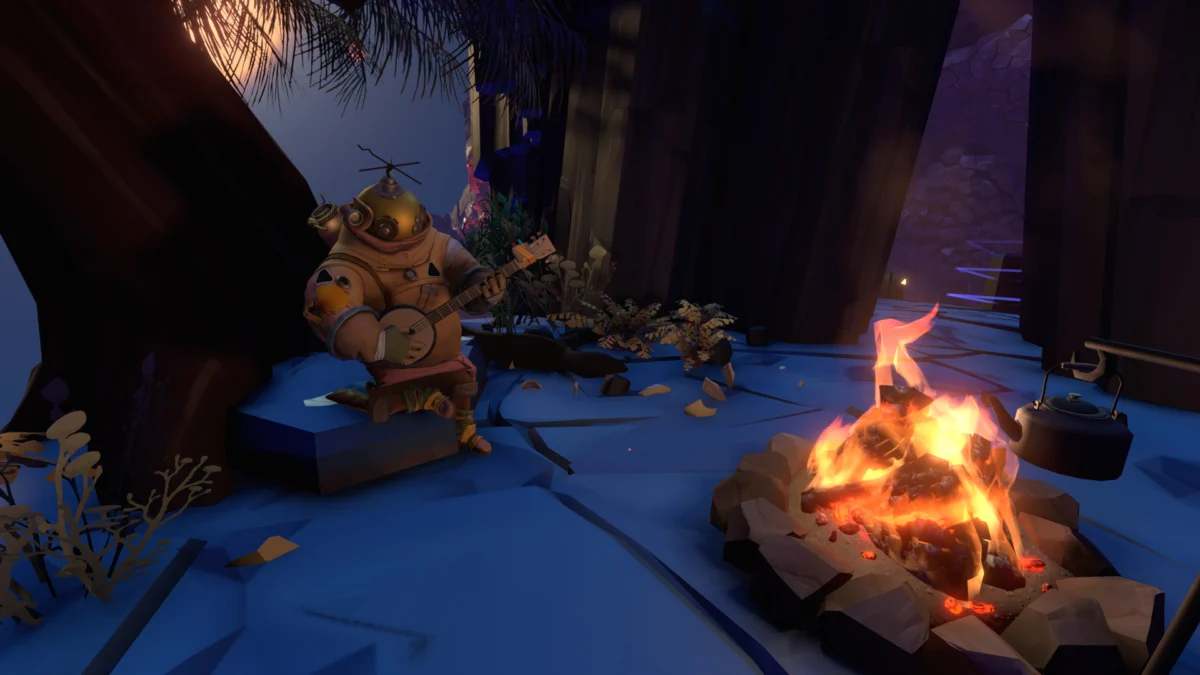
Since its debut in 2019, Outer Wilds has carved out a unique space in the digital landscape. It is not merely a game; it is a cultural phenomenon that has persisted in critical discussions, game design seminars, and player forums for years. Developed by Mobius Digital and published by Annapurna Interactive, this open-world mystery game about a solar system trapped in an endless time loop has defied conventional genre tropes to become a modern classic.
As we look back at the years following its release, it is clear that Outer Wilds is more than just an indie darling—it is an essential experience that redefines the relationship between player, knowledge, and narrative.
The Core Concept: Knowledge as the Only Progression
At its heart, Outer Wilds is a game built on the pillars of curiosity and consequence. You play as a space-faring recruit of the Outer Wilds Ventures, a fledgling space program. Your mission is simple: explore your solar system, document your findings, and uncover the history of an extinct civilization known as the Nomai.
The twist, and the primary driver of the game’s difficulty, is the 22-minute time loop. Every 22 minutes, the sun goes supernova, destroying everything in the solar system. You wake up back at the campfire on your home planet, Timber Hearth, with all your memories intact.
Unlike traditional RPGs, where you level up your character’s stats or acquire stronger equipment, Outer Wilds relies entirely on the player’s personal growth. You do not gain power; you gain understanding. Every piece of information you uncover—a translation of a Nomai wall, a map of a crumbling planet, or a realization about the nature of the loop—becomes a tool that helps you navigate the game’s challenges. This "knowledge-based progression" is the game’s crowning achievement, turning the player into an active detective rather than a passive participant.
A Chronology of Critical Acclaim
The journey of Outer Wilds began long before its 2019 launch. Originally conceived by Alex Beachum as his master’s thesis at the University of Southern California’s Interactive Media & Games Division, the project quickly gained traction due to its innovative core loop.
- 2012–2015: The Prototype Phase: Early prototypes were released for free on the internet, garnering a cult following. The positive reception encouraged Beachum and his team to form Mobius Digital.
- 2015: Crowdfunding Success: A successful Fig campaign provided the necessary capital to expand the game’s scope, transitioning from a student project into a fully realized commercial title.
- May 2019: Official Release: The game launched on PC and Xbox One. It was met with immediate critical acclaim, praised for its environmental storytelling and physics-based exploration.
- 2020–2021: Cross-Platform Expansion: Following its initial success, the game was ported to PlayStation 4 and eventually the Nintendo Switch, ensuring that the title reached the widest possible audience.
- September 2021: The Echoes of the Eye Expansion: Mobius Digital released Echoes of the Eye, a massive expansion that integrated seamlessly into the base game, adding new layers of mystery and horror that deepened the lore of the universe.
Supporting Data: The Impact of Outer Wilds
The game’s longevity is supported by an unusual trajectory in the gaming industry. While most titles experience a sharp decline in player engagement shortly after launch, Outer Wilds has seen a steady, "evergreen" popularity.
According to metrics from digital storefronts like Steam, Outer Wilds maintains a "Overwhelmingly Positive" rating, with a significant percentage of its user base citing it as their favorite game of the decade. Its presence on podcasts, "Game of the Year" retrospective lists, and video essay channels suggests that the game occupies a permanent spot in the zeitgeist.
Unlike AAA games that rely on high-fidelity graphics or multiplayer engagement to maintain a player base, Outer Wilds relies on word-of-mouth. Its design philosophy—that the game is best experienced with as little prior knowledge as possible—has created a community of gatekeepers who actively protect new players from spoilers, further cementing the game’s mystique.

The Design Philosophy: Fear, Failure, and Curiosity
One of the most frequent critiques of Outer Wilds is that it is "difficult" or "frustrating." The game does not hold your hand. It asks you to pilot a ship with realistic, often unforgiving physics, and it expects you to die—frequently.
However, this frustration is a deliberate design choice. The developers recognized that for a mystery to feel earned, the player must be allowed to fail. Whether you are crushed by a falling celestial body, run out of oxygen while exploring a deep-sea ruin, or get caught in a black hole, every death provides a learning opportunity.
The "bewitching" quality of the game lies in how it balances these high-stakes moments with quiet, contemplative exploration. You might spend ten minutes screaming at a platforming puzzle, only to spend the next twenty minutes sitting by a campfire on a desolate moon, listening to the haunting, banjo-heavy soundtrack composed by Andrew Prahlow. It is this emotional spectrum—from the panic of an impending supernova to the melancholic beauty of a dying universe—that makes Outer Wilds so profoundly moving.
Implications for the Gaming Industry
Outer Wilds has served as a masterclass for independent developers. It proves that there is a massive market for "unconventional" games. Its success implies several key takeaways for the industry:
- Complexity is an Asset: Players are capable of engaging with complex, non-linear narratives if the gameplay loop is intrinsically rewarding.
- The Death of the "Tutorial": By integrating tutorials into the natural progression of exploration, Outer Wilds demonstrates that players learn better through experimentation than through forced hand-holding.
- The Value of Short-Form Narratives: In an era of 100-hour open-world games bloated with repetitive tasks, Outer Wilds offers a dense, meaningful experience that can be completed in 15 to 20 hours. It proves that quality and density are superior to sheer scale.
Official Responses and Developer Insights
In various post-mortem interviews, the team at Mobius Digital has spoken about the difficulty of balancing a game that is entirely based on knowledge. "If a player learns something, they can’t un-learn it," Alex Beachum noted in a 2020 GDC talk. This created unique development challenges—ensuring that the game remained fun even if the player sequence-broke or discovered secrets in an order the developers didn’t anticipate.
The team also emphasized the importance of the game’s "emotional arc." The goal was never just to solve a puzzle, but to understand the motivations of the Nomai. By the end of the game, the player isn’t just saving the world; they are mourning it. This emotional connection to the narrative is why Outer Wilds continues to be recommended years after its release.
Final Verdict: Why You Must Play It Now
If you have yet to step into the cockpit of your ship and venture into the unknown, you are missing out on a singular experience. Outer Wilds is a rare example of a game that respects the player’s intelligence. It does not provide waypoints. It does not track your quests. It simply invites you to look up at the stars and wonder what happened to the people who came before you.
Whether you are looking for a challenge, a mystery, or a profoundly existential experience, Outer Wilds delivers. It is a testament to the idea that games can be art—not just in their visuals, but in their ability to make us question our place in the universe.
Don’t wait for a sale. Don’t wait for a "best of" list. If you value interactive storytelling, pick it up today. Just be prepared: once you start, you won’t be able to look at the night sky the same way again. The universe is waiting, and it has so much to tell you—if you’re brave enough to listen.

