

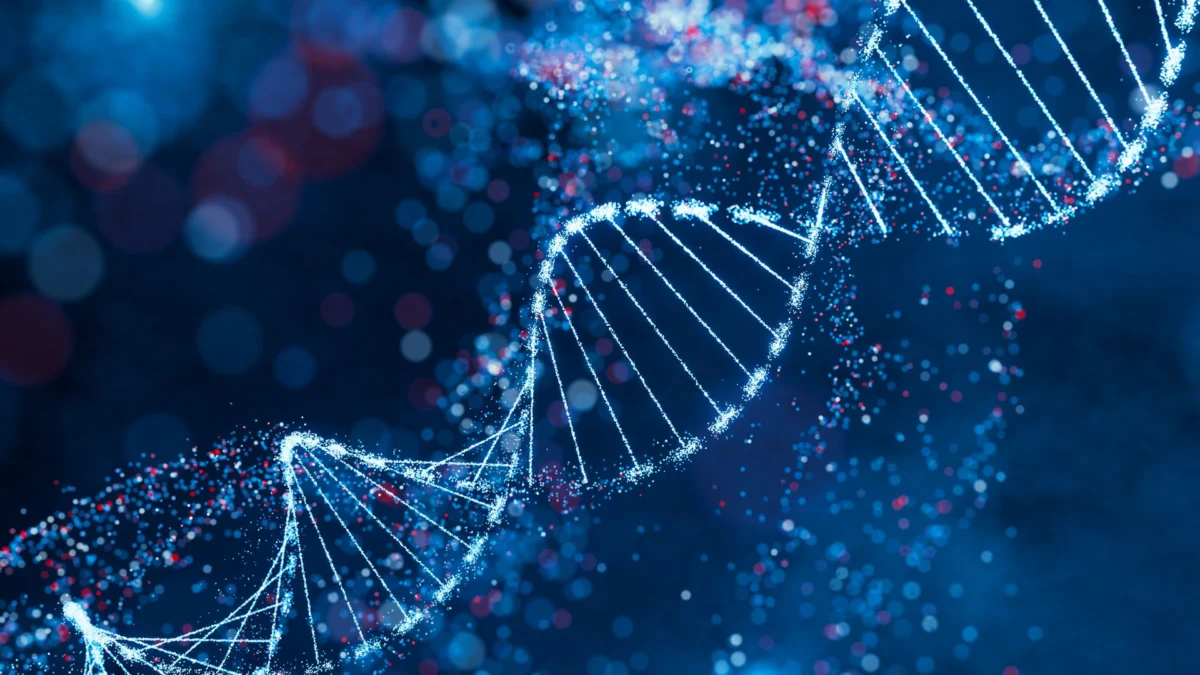
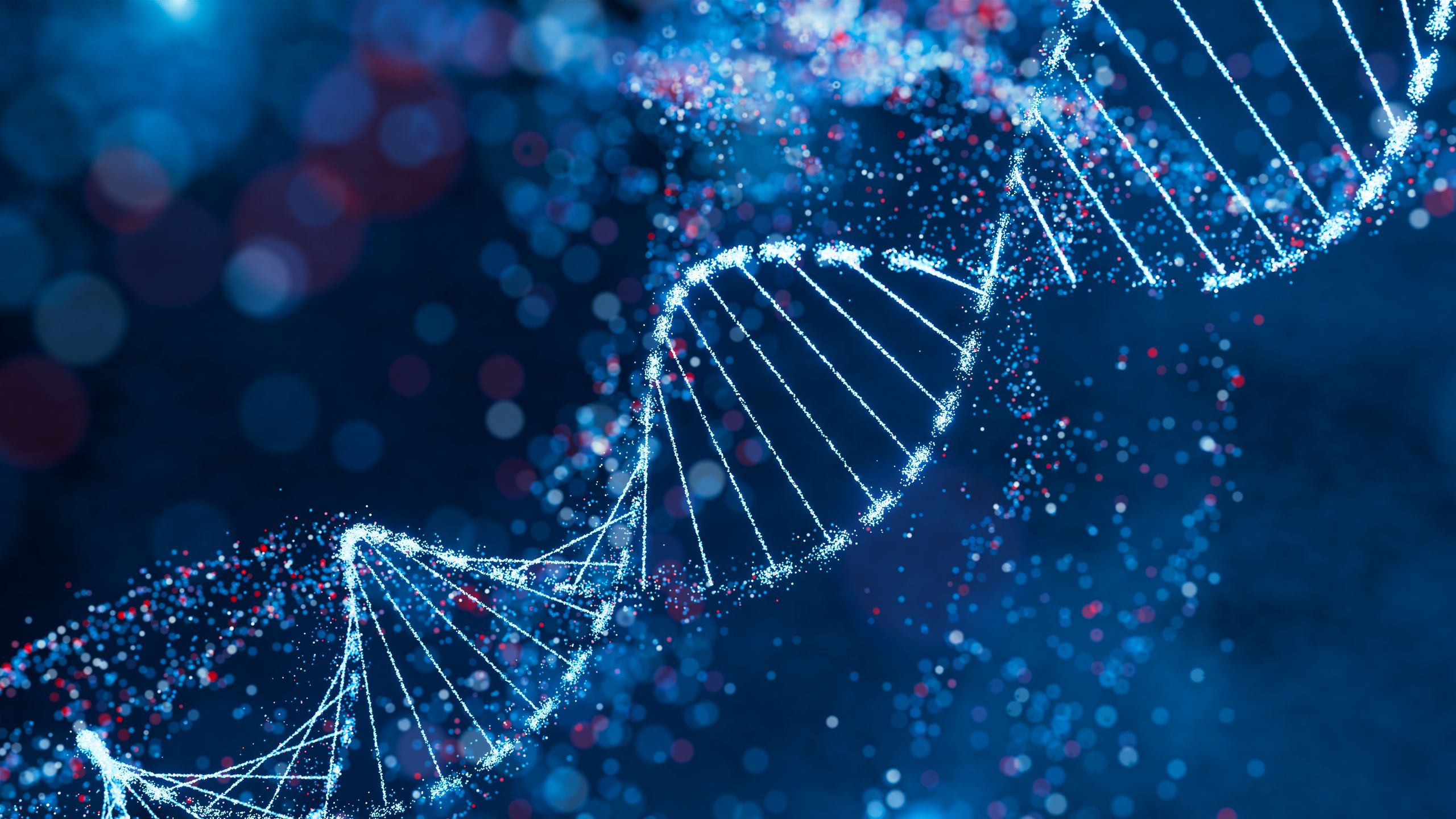
DUBLIN — In a development that blurs the lines between biology and digital architecture, researchers at Maynooth University in Ireland have unveiled a pioneering "first-of-its-kind" molecular computer. Powered entirely by the building blocks of life rather than silicon and electrical currents, this revolutionary system uses specially engineered DNA strands to execute intricate mathematical operations.
Detailed in a landmark paper published in the journal Nature on September 16, the system—dubbed the Scaffolded DNA Computer (SDC)—stands as one of the most complex and rapid molecular computers ever developed. By trading traditional microchips for biochemical reactions, the Maynooth team has bypassed the physical limitations of conventional hardware, successfully performing sophisticated 100-bit calculations and running 10 distinct molecular programs within a single, water-based test tube.
While still in its research infancy, the SDC points toward a transformative future. Experts suggest the technology could lay the groundwork for ultra-dense, long-term data storage, radically energy-efficient computing paradigms, and microscopic diagnostic tools capable of patrolling the interior of living human cells to detect diseases before symptoms manifest.
Main Facts: The Anatomy of a DNA Computer
At its core, the Scaffolded DNA Computer reimagines how information is processed. Traditional computers rely on transistors—microscopic switches that flip between binary states (zeros and ones) guided by the flow of electrical current. As silicon transistors approach the physical limits of miniaturization, researchers have increasingly looked to biological molecules to store and process data.
The SDC achieves computation through biochemical interactions rather than electricity. By leveraging the natural chemical affinity between complementary nucleotide bases (adenine pairing with thymine, and cytosine with guanine), the Maynooth University team programmed DNA strands to interact in precise, predetermined sequences. When these strands mix, they trigger cascades of chemical reactions that logically evaluate inputs and generate outputs, effectively mimicking the logic gates of a digital processor.
Key highlights of the breakthrough include:
- Zero Electricity Required: Operating entirely through biochemical self-assembly and reaction cascades, the SDC functions at room temperature in an aqueous solution without needing a power supply.
- Complex Processing Power: The system successfully executed 10 different molecular programs, including demanding 100-bit calculations—a massive leap in scale compared to previous proof-of-concept molecular devices.
- Self-Assembly via "DNA Origami": Rather than being painstakingly manufactured piece by piece, the hardware builds itself through a controlled physical process.
Chronology: From Concept to the Nature Publication
The realization of the Scaffolded DNA Computer was not an overnight success; it represents the culmination of years of theoretical modeling, biochemical trial-and-error, and advanced nanotechnology.
Phase 1: Theoretical Foundations and DNA Origami
The journey began with the refinement of "DNA origami," a technique pioneered in the mid-2000s that allows scientists to fold long single strands of DNA into arbitrary two- and three-dimensional shapes using shorter "staple" strands. The Maynooth researchers adapted this concept not merely for structural architecture, but as an active computational canvas. Using specialized computer-aided design software, the team mapped out the exact spatial coordinates for a long primary DNA scaffold and hundreds of customized staple strands.
Phase 2: Laboratory Synthesis and Fabrication
Moving from digital blueprints to physical reality, the team synthesized the custom DNA strands in a laboratory setting. The physical components were combined in a simple test tube containing a micro-drop of water and salt. By subjecting this mixture to a precise thermal cycle—heating it to near-denaturation temperatures and then gradually cooling it—the DNA strands naturally folded and locked into place. The result was a highly organized, microscopic computing grid built entirely from biological polymers.
Phase 3: Execution and Peer Review
With the physical grid established, the researchers introduced input DNA strands to initiate reaction cascades. Over rigorous testing phases, the SDC successfully completed 10 distinct molecular programs, culminating in the complex 100-bit calculations highlighted in their Nature publication. Following peer review, the findings were formally shared with the global scientific community on September 16, instantly drawing widespread acclaim from bioengineers and computer scientists alike.
Supporting Data: Understanding the SDC Architecture
To appreciate the significance of the Maynooth University breakthrough, it is helpful to examine the scale and mechanics of DNA-based data systems.
Conventional silicon microprocessors operate at gigahertz speeds, cycling billions of times per second, but they generate substantial waste heat and require a continuous electrical supply. In contrast, molecular computers operate on a chemical clock. While individual biochemical reactions may take milliseconds or seconds to unfold—vastly slower than modern electronic clock speeds—molecular computing achieves its power through massive parallelism.
| Metric / Feature | Traditional Silicon Computer | Scaffolded DNA Computer (SDC) |
|---|---|---|
| Primary Medium | Silicon semiconductors | Biological DNA polymers |
| Power Source | Electricity (Watts to kilowatts) | Chemical energy / Aqueous solution (Zero external power) |
| Data Representation | Binary electronic states (0s and 1s) | Base-pair matching and molecular conformation |
| Architecture | Von Neumann (sequential/multicore) | Parallel molecular reaction cascades |
| Calculations Demonstrated | Millions to trillions of instructions/sec | Complex 100-bit calculations |
The 100-bit computational milestone achieved by the SDC is particularly notable. In molecular computing, scaling the number of bits has historically been bottlenecked by "crosstalk"—where unintended DNA strands interact with one another, causing errors in the calculation. By utilizing a rigid, scaffolded structural grid, the Maynooth team successfully anchored the reacting strands in fixed spatial positions, drastically reducing crosstalk and maintaining high fidelity across complex operations.
Official Responses and Perspectives
The publication of the SDC research has ignited discussions across the scientific community regarding the future intersection of biology and information technology.
Lead researchers and institutional representatives emphasized the paradigm-shifting nature of building computers out of organic material. In statements accompanying the Nature release, the team highlighted that the SDC is not merely a novelty, but a functional blueprint for a new class of technology.
"This research points to new possibilities for long-term data storage, energy-efficient computation, and, in time, molecular systems that could operate inside cells for applications such as disease detection," the researchers noted.
Independent biophysicists and nanotechnology experts not involved in the study have also weighed in, praising the elegance of the DNA origami approach. Many have pointed out that while silicon processing is nearing the quantum tunneling limits of miniaturization—where Moore’s Law slows down—biological macromolecules offer an almost infinitely scalable alternative for packing vast amounts of data into microscopic spaces. DNA is, by its evolutionary design, nature’s ultimate high-density storage medium, capable of packing petabytes of information into a space the size of a grain of salt.
Implications: Where Does Molecular Computing Go From Here?
The successful deployment of the Scaffolded DNA Computer opens several exciting frontiers across multiple disciplines:
1. Ultra-Dense, Energy-Efficient Data Storage
Digital data centers consume staggering amounts of electricity to store and process the world’s ever-growing digital footprint. DNA data storage offers a radical solution. Because DNA molecules are remarkably stable—surviving for thousands of years under the right conditions—and require zero power to maintain their state, archival storage built on DNA scaffolds could revolutionize how humanity preserves information.
2. In Vivo Diagnostics and Smart Therapeutics
Perhaps the most captivating implication of the Maynooth breakthrough is the prospect of moving molecular computers out of the test tube and into living organisms. Because DNA is fully biocompatible, future iterations of the SDC could theoretically be engineered to circulate within human bloodstreams or reside inside individual cells.
Equipped with these microscopic diagnostic computers, medical science could create "smart" therapies. An in-cell SDC could continuously monitor cellular biomarkers, autonomously identifying the molecular signatures of cancer or viral infections in real-time, and release targeted therapeutic payloads precisely when and where they are needed.
3. Overcoming the Silicon Bottleneck
As artificial intelligence and machine learning demand ever-greater computational throughput, alternative computing paradigms are urgently needed. While quantum computing tackles speed through superposition, molecular computing offers a biochemical approach to parallel processing that could eventually complement or supersede traditional electronic architectures for specific chemical and biological simulations.
Conclusion
The unveiling of the Scaffolded DNA Computer by Maynooth University marks a defining moment in the evolution of computing technology. By successfully merging the precision of DNA origami with complex logical programming, the research team has bridged the gap between organic biology and digital computation.
While commercial applications remain on the horizon, the ability to execute 100-bit calculations in a drop of water without a single watt of electricity proves that the future of computing may not be built entirely in cleanrooms with silicon wafers. Instead, it may grow organically, one base pair at a time.

