


To the dedicated PC gaming community, few terms carry as much nostalgic weight—or spark as much passionate debate—as the "immersive sim." Mentioning titles like Deus Ex, Dishonored, System Shock, or New Blood Interactive’s upcoming Gloomwood immediately conjures mental images of creeping through air ducts, rifling through unattended desk drawers, stacking physics objects to reach high ledges, and wrestling with the moral weight of a calculated backstab.
Yet, behind the scenes, a growing consensus is emerging among the creators who pour years of their lives into crafting these complex virtual worlds: "immersive sim" is a commercial disaster of a label. Far from serving as an effective beacon to attract new players, it acts as a commercial barrier, alienating mainstream consumers and baffling major publishers.
As indie powerhouses and industry veterans grapple with the realities of marketing games that offer ultimate player agency, a vital question takes center stage: Is the immersive sim genre suffering from a fundamental design flaw, or is it merely the victim of a broken vocabulary?
Main Facts: The Branding Crisis of Player Agency
The core tension lies in the massive disconnect between how hardcore enthusiasts define a genre and how the general public perceives video game marketing. According to Dave Oshry, CEO of indie publisher New Blood Interactive—known for retro-inspired hits like Dusk, Ultrakill, and immersive sims-in-development Gloomwood and Fallen Aces—the term "immersive sim" is utterly devoid of practical marketing utility.
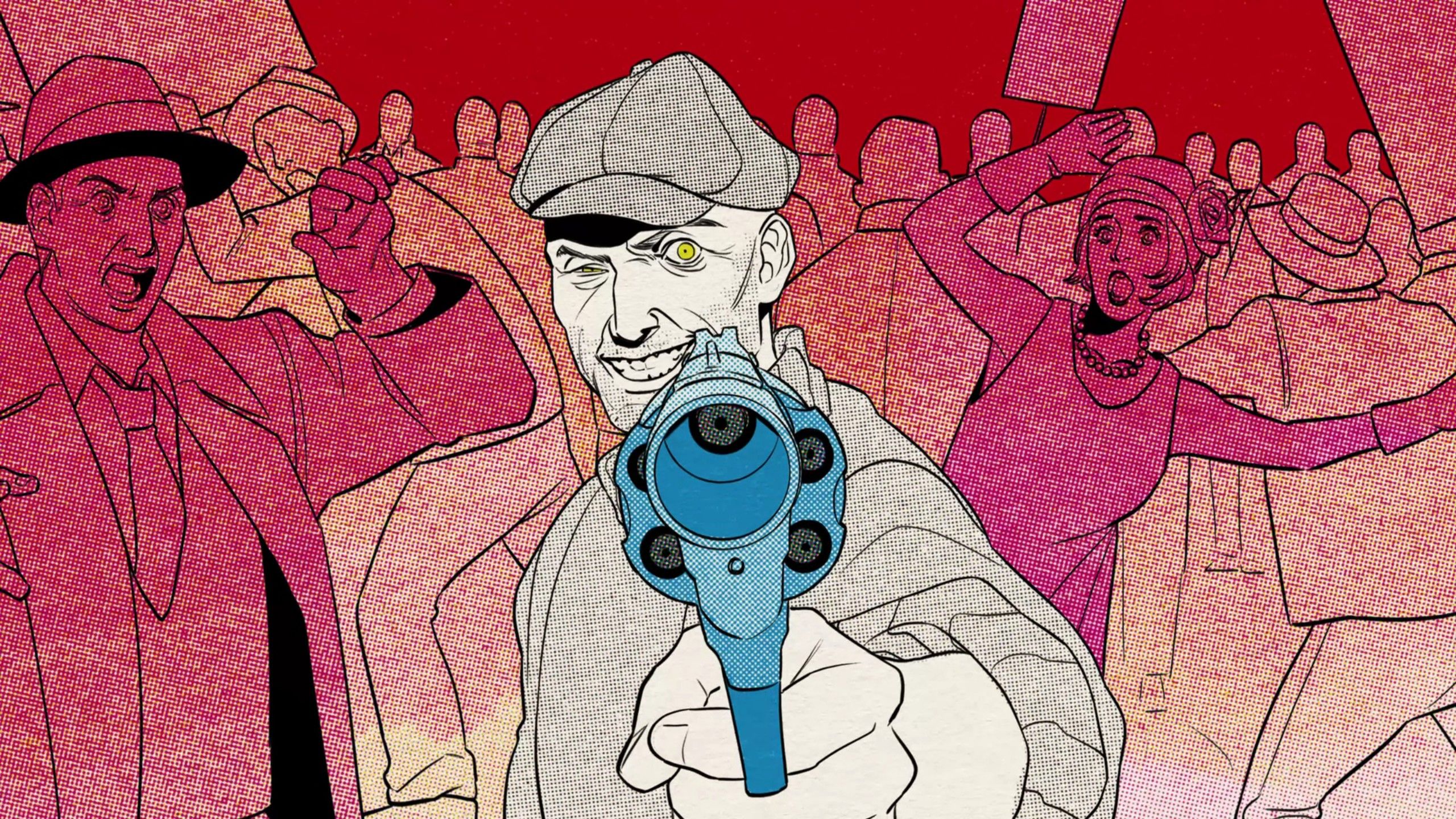
"Is it a good marketing term? No," Oshry states bluntly. "It sucks. It’s awful."
While New Blood made its initial name in the "boomer shooter" space—a term Oshry defends as universally understood shorthand for fast-paced, Doom-style first-person action—the company has spent years and millions of dollars funding deeply systemic, reactive games. Yet, Oshry admits he had never even encountered the phrase "immersive sim" until Gloomwood lead developer Dillon Rogers began building his atmospheric, Thief-and-Resident Evil-inspired open world.
When Rogers explained that his creation belonged to the lineage of immersive sims, Oshry’s reaction was one of pure bewilderment: "I have never heard that before in my life. What the fuck are you talking about?"
This semantic divide highlights a deeper issue within the games industry. While veterans of Looking Glass Studios and Ion Storm codified the term in the late 1990s to describe a philosophy of emergent gameplay, sandbox physics, and overlapping systems, the average consumer hears "simulation" and expects a tedious job or vehicle-handling trainer. Meanwhile, the players who do understand what an immersive sim means are already actively hunting for them, rendering the label redundant for conversion purposes.

Chronology: From Looking Glass to Modern Early Access
To understand how the industry arrived at this linguistic impasse, it is necessary to trace the historical evolution of first-person design paradigms.
- The 1990s (The Genesis): Groundbreaking studios like Looking Glass Technologies established foundational design pillars through titles like Ultima Underworld, System Shock, and Thief. During this era, vocabulary was fluid, and developers needed a way to describe games that prioritized problem-solving freedom over linear paths. Warren Spector and other industry leaders popularized "immersive simulation" in postmortems and interviews to encapsulate these design ideals.
- The 2000s (The RPG Era): With the turn of the millennium, landmark releases such as Deus Ex blurred the lines between genres. Oshry recalls that during his youth, Deus Ex was not categorized by its systemic nature, but rather as an "FPS-RPG." Because the game featured character sheets, skill points, and narrative choices, it fit comfortably into the established lexicon of role-playing games.
- The 2010s (Arkane and Mainstream Struggles): Arkane Studios kept the torch burning with Dishonored and 2017’s Prey. However, behind closed doors, developers faced grueling marketing battles. Arkane famously spent precious promotional time explaining what an immersive sim was to an uninitiated audience—time that could have been dedicated to selling the raw fun of mechanics like Prey‘s iconic Gloomwood-style GLOO cannon.
- The Present Day (The Indie Renaissance): Today, studios like New Blood Interactive are keeping the flame alive through early access titles like Gloomwood and Fallen Aces. However, publishers are strategically sidestepping the "imsim" tag entirely, opting instead for terms like "stealth trilogy" or traditional genre cross-pollinations to ensure commercial viability.
Supporting Data and Industry Perspectives
The commercial dangers of mislabeling immersive sims are not just theoretical; they have left a trail of financial underperformance and corporate restructuring across the industry.
When Bethesda launched Arkane Austin’s Prey in 2017, the game was critically acclaimed but commercially disappointed. The burden of educating the public on an obscure genre label heavily impacted its launch momentum. Years later, following the turbulent development of Redfall, the studio that gave the world Prey was ultimately closed by Microsoft—a devastating milestone for fans of systemic single-player design.
Industry veterans have long echoed these commercial realities. Raphael Colantonio, founder of Arkane Studios, noted in previous interviews that mainstream consumers simply do not understand what an immersive sim is.

"Nobody wonders what an RPG is," Colantonio explained. "We might debate whether Bethesda RPGs are an immersive sim or not, but who cares? The market just understands what an RPG is… If you say, ‘This is an immersive sim,’ you’re going to have a tiny percentage of people that are super excited… And then the other ones, they’re going to be like, ‘What is it?’"
This observation is underscored by the massive mainstream success of modern role-playing games that quietly adopt immersive sim principles without ever uttering the phrase. Larian Studios’ critically acclaimed Baldur’s Gate 3 is a prime example. While structured from an isometric perspective rather than a first-person view, Larian’s design philosophy heavily mirrors immersive sims—allowing players to stack crates, manipulate elemental surfaces, and solve environmental puzzles through unexpected mechanical interactions.
Yet, Larian markets Baldur’s Gate 3 strictly as an RPG. The result? Record-breaking sales, universal cultural penetration, and millions of copies sold. As Oshry points out, "You could argue that Baldur’s Gate 3 is an immersive sim… If you market something as an RPG, I think you’ll do better than marketing it as an immersive sim."
Official Responses and Strategic Pivots
Faced with these market realities, publishers are being forced to adapt their phrasing. New Blood Interactive has masterclass experience in positioning niche genres, successfully reviving retro FPS titles under the "boomer shooter" banner. However, when it comes to systemic games, they have had to exercise extreme caution.

When New Blood packages Gloomwood, Fallen Aces, and the Stalker-inspired Blood West together on digital storefronts like Steam, they deliberately avoid the industry buzzword. Instead, they bundle them under the umbrella of the "stealth trilogy."
"Because that’s what draws people in," Oshry explains. "If we called it the immersive sim trilogy, nobody would fucking buy the games."
Similarly, during the initial marketing push for Gloomwood, Oshry leaned into the elevator pitch "Thief with guns." While this immediately communicated the game’s atmospheric DNA to classic PC gamers, it also created its own set of expectations, as Gloomwood draws just as heavily from survival horror mainstays like Resident Evil and cosmic horror fiction like Call of Cthulhu. It remains a delicate balancing act: finding descriptive language that appeals to the masses without betraying the core DNA of the project.
Implications: The Future of Systemic Game Design
The ongoing debate over the term "immersive sim" points to a much deeper existential question for the video game industry: How can complex, high-budget, highly reactive single-player games survive in a risk-averse corporate landscape?

Major publishers often view immersive sims as financial liabilities precisely because they require specialized vocabulary to sell. When a genre is perceived as "niche" or "unworkable," financial backing dries up, leading to studio closures and a homogenized market dominated by safe, iterative sequels and live-service multiplayer templates.
However, the workaround implemented by indie developers and savvy publishers offers a glimmer of hope. By wrapping deeply systemic, player-driven mechanics in more accessible genre wrappings—such as RPGs, survival horror, or straightforward stealth action—creators can sneak intricate physics engines and emergent gameplay past the marketing gatekeepers and directly into the hands of unsuspecting consumers.
Ultimately, players do not fall in love with a game because of a hyphenated genre descriptor on the back of a box; they fall in love with the freedom to experiment, the joy of outsmarting an AI system through lateral thinking, and the satisfaction of leaving their own unique fingerprint on a virtual world. Whether publishers call it an immersive sim, an RPG, or a stealth game, the fundamental magic of systemic design will endure—provided the people funding them can figure out how to speak the market’s language.

