

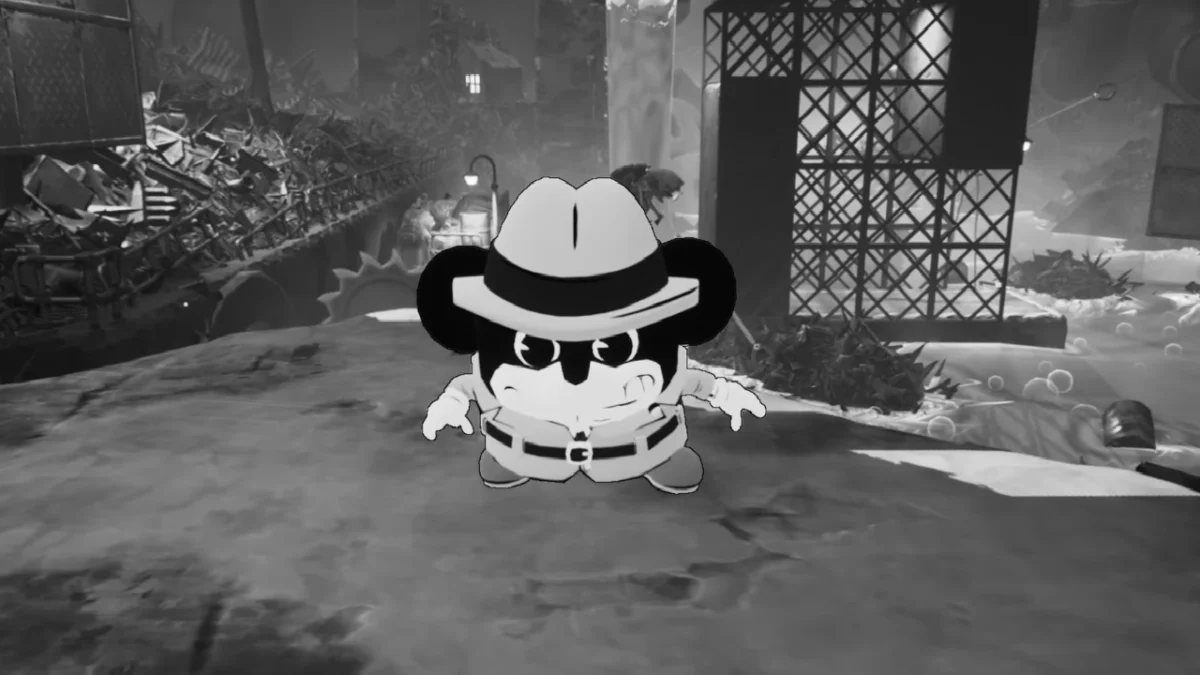
In an industry where unexpected promotional tie-ins and multi-developer crossovers have become almost routine—often feeling like calculated corporate synergy manufactured by committee—occasional pairings still manage to catch the gaming public completely off guard. The latest entry into this unpredictable lineage is a collaborative effort uniting two distinct, stylized indie properties: Team Meat’s newly launched Super Meat Boy 3D and Fumi Games’ upcoming noir-soaked first-person shooter, MOUSE: P.I. For Hire.
The crossover transforms the dapper, hard-boiled rodent protagonist of MOUSE into an austere, cube-shaped geometry, thrusting him headfirst into a brutal, hazard-laden gauntlet of whirling sawblades. To complete the stylistic immersion, the game’s palette shifts to a stark black-and-white filter when players step into the shoes of the newly angular private investigator, paying direct homage to the vintage 1930s rubber-hose animation style that defines his home title.
While these genre-bending collaborations often invite skepticism from players weary of monetization-driven meta-verses, this particular mashup bridges two distinct eras of independent game development. It honors a legacy of classic indie cameos while spotlighting two titles currently capturing the attention of PC and console players alike.
Main Facts: Breaking Down the Crossover
The mechanics and aesthetic transformations of this unusual team-up reveal a surprising level of attention to detail from both development camps:
- The Transformation: The titular mouse detective from MOUSE: P.I. For Hire is physically morphed into a blocky, cube-like iteration of himself, allowing him to conform to the precise physical specifications of the Super Meat Boy universe.
- Aesthetic Shifts: Activating the character triggers a complete visual overhaul, stripping away full-color rendering in favor of a striking, high-contrast monochrome color scheme reminiscent of classic 1920s and 30s animation shorts.
- The Environment: The detective is dropped straight into a lethal, precision-platforming labyrinth. The setting retains the trademark cruelty of the Super Meat Boy series, featuring rotating sawblades, bottomless pits, and twitch-reaction traps.
- Historical Precedent: The partnership taps into a rich history of indie crossovers, echoing past collaborations where Meat Boy crossed paths with titles like Bit.Trip and CommanderVideo.
Chronology of Indie Crossovers: From 2010s Pioneers to Modern Curiosities
To understand the cultural weight of the Super Meat Boy 3D and MOUSE crossover, it helps to look backward at how independent developers have historically shared their sandboxes.
The Golden Era of 2010s Indie Cameos (2010–2015)
Long before modern battle royale titles popularized the concept of cinematic universes colliding, the 2010s indie boom relied on grassroots cross-promotion. When Edmund McMillen and Tommy Refenes released the original Super Meat Boy in 2010, they established a blueprint for indie generosity. Meat Boy wasn’t just a standalone protagonist; he was an ambassador of the indie revolution.
Gamers could unlock and play as Meat Boy in titles like Gaijin Games’ Bit.Trip Runner, while Super Meat Boy itself featured an expansive roster of guest characters from other landmark indie games of the era, including Minecraft, Spelunky, Braid, and Bit.Trip. These appearances were rarely about corporate valuation; they were passion projects forged out of mutual respect between small teams working out of basements and spare bedrooms.
The Modern Adaptation: Stylized Collisions
As the video game market matured, crossovers evolved from simple sprite swaps into complex marketing beats. Yet, properties like Super Meat Boy and MOUSE: P.I. For Hire retain a gritty, stylized aesthetic that separates them from the glossy, corporate-friendly sheen of juggernauts like Fortnite.
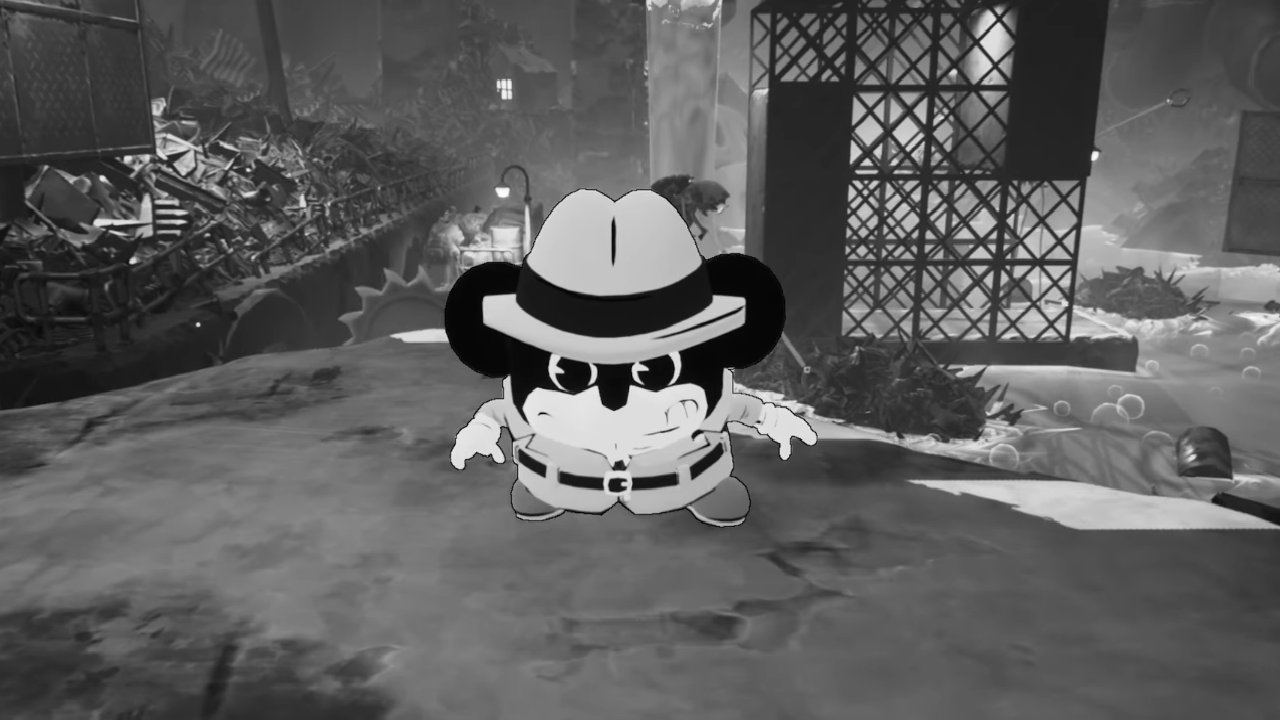
Super Meat Boy has always worn its gore-slick, high-difficulty identity on its sleeve, while Fumi Games’ MOUSE relies on a distinct, labor-intensive hand-drawn cartoon aesthetic modeled after early-to-mid 20th-century animation. Forcing a hard-boiled 1930s mouse detective into a literal cube and throwing him into a buzzsaw-filled meat grinder represents a delightfully absurd collision of distinct creative visions.
Supporting Data: Critical Reception and Community Standing
Both participating titles occupy interesting spaces in the contemporary gaming landscape, boasting distinct critical receptions and community profiles.
Super Meat Boy 3D: Shifting Dimensions
Transitioning a legendary 2D precision platformer into the third dimension is no small feat. Super Meat Boy 3D arrived with heavy expectations, carrying the legacy of a game that helped define the modern platforming genre.
Critical reception has been somewhat nuanced. Reviewers, such as PC Gamer’s Australian Editor Shaun Prescott, have noted that the 3D iteration occasionally struggles to capture the distinct counter-culture "vibe" and transgressive, tasteless charm originally infused by co-creator Edmund McMillen. However, from a pure mechanical standpoint, the core loop of running, jumping, dying, and instantly respawning remains tightly tuned.
Despite minor criticisms regarding its atmosphere, the platformer has resonated strongly with a segment of the audience, currently holding a "Very Positive" user review rating on Steam. Players looking for an uncompromising test of reflexes appear more than willing to overlook stylistic shifts in favor of punishing, fast-paced level design.
MOUSE: P.I. For Hire: A Noir Masterpiece in the Making
On the other side of the collaboration sits MOUSE: P.I. For Hire, a first-person shooter that immediately turned heads upon its announcement due to its breathtaking, authentic rubber-hose visual style.
Reviewers have been quick to point out that the game offers far more than a mere visual gimmick. In critical evaluations—such as an 86% review by contributor Phil Iwaniuk—MOUSE has been lauded as a "bona fide classic" in the making. Beyond its striking resemblance to vintage animated shorts, the game delivers robust FPS mechanics, atmospheric world-building, and sharp noir storytelling that elevates it well above standard stylistic novelties.
Official Responses and Developer Perspectives
While major triple-A publishers often rely on press release templates filled with corporate buzzwords, indie developers tend to approach crossovers with a mixture of irreverence and genuine creative camaraderie.
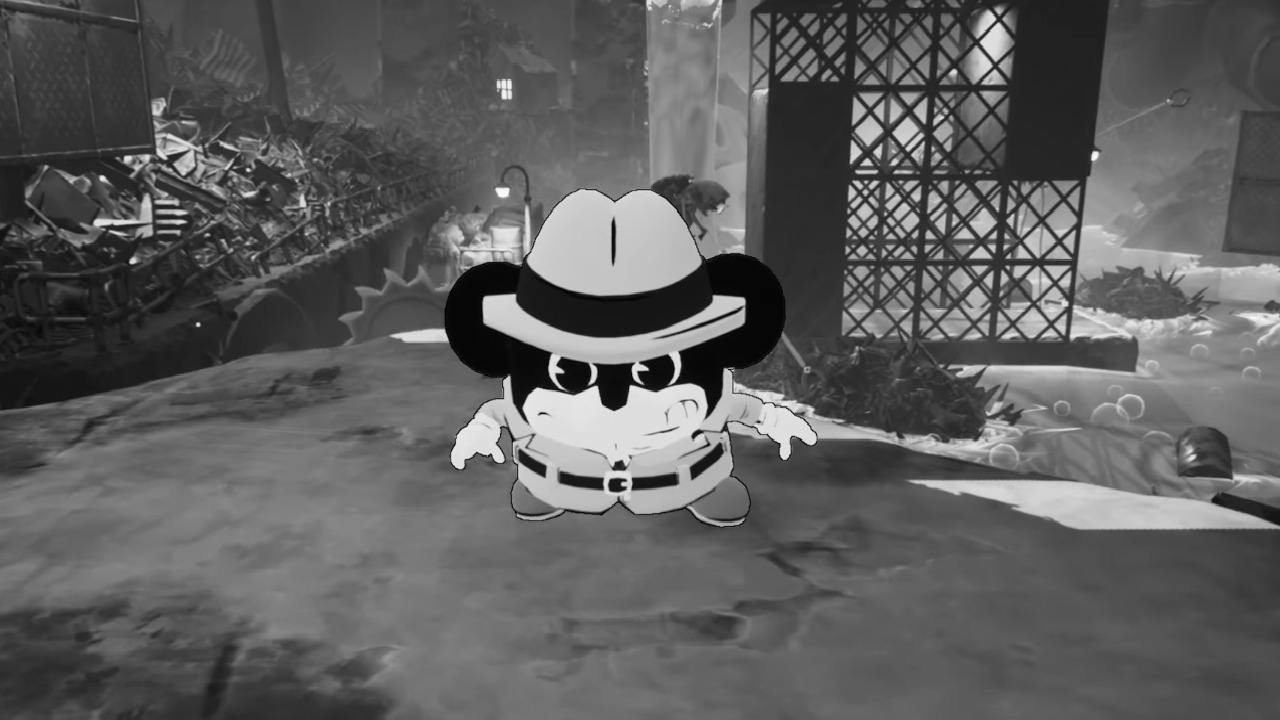
Representatives from Team Meat and Fumi Games have framed the collaboration not as a cynical market expansion tool, but as a celebratory nod to the unpredictable nature of independent game development. By taking a serious, atmospheric noir detective and reducing him to a bouncing red (or monochrome) cube destined for industrial execution, the studios lean directly into the dark comedy that has always underpinned both franchises.
Industry analysts note that such cross-pollination is increasingly vital for independent developers fighting for visibility in an oversaturated digital storefront environment. By pooling communities—bridging the nostalgic hardcore platforming faithful with fans of stylized, narrative-driven retro shooters—both titles stand to benefit from cross-demographic exposure.
Implications for the Future of Indie Collaborations
The Super Meat Boy 3D x MOUSE: P.I. For Hire crossover offers a clear window into where the independent games sector is heading. As development tools become more accessible and the market grows increasingly crowded, standing out requires creative risks.
1. Embracing Creative Absurdism
Traditional marketing dictates that crossovers should make logical sense—matching tone with tone, genre with genre. However, the indie scene thrives precisely because it ignores these commercial guardrails. Putting a noir detective into a meat grinder proves that audiences respond to creative absurdity, provided the execution remains playful and self-aware.
2. Cross-Generational Appeal
The partnership also highlights an interesting bridge between veteran gaming audiences and younger players. While veterans of the 2010s indie boom appreciate the historical significance of Meat Boy’s ongoing tradition of guest appearances, newer players drawn in by the modern, eye-catching art style of MOUSE are introduced to a classic platforming icon.
3. The Limits of Tone Matching
As noted by critics reviewing Super Meat Boy 3D, maintaining tonal consistency during massive transformations can be challenging. Whether future updates or subsequent indie crossovers can successfully blend contrasting narrative worlds without diluting their core identities remains an open question for developers embarking on similar ventures.
For now, players can download the update, subject the poor detective to an eternity of slicing hazards, and enjoy one of the more delightfully unhinged collaborative spectacles of the year. After all, in a medium where digital characters die and respawn millions of times a day, getting sliced into neat, monochromatic cubes by a giant sawblade is just another day at the office.

