

By: Gaming Industry Desk
Published: October 2026
Main Facts
A newly published academic research paper co-authored by a senior Game Freak developer and a professor from the University of Tokyo has set the gaming community ablaze with speculation regarding the technical capabilities of Nintendo’s next-generation hardware. Fumiya Narita, a programmer at Pokémon developer Game Freak, teamed up with Takashi Kanai, a professor at the University of Tokyo, to author a groundbreaking research paper focused on the high-efficiency rendering of fluid dynamics and water simulation in real-time computer graphics.
The paper, which was formally presented at the prestigious international Pacific Graphics 2026 conference in Singapore, aims to solve one of the most persistent bottlenecks in modern video game development: how to render vast, complex bodies of water with high visual fidelity without placing an unsustainable computational load on hardware.
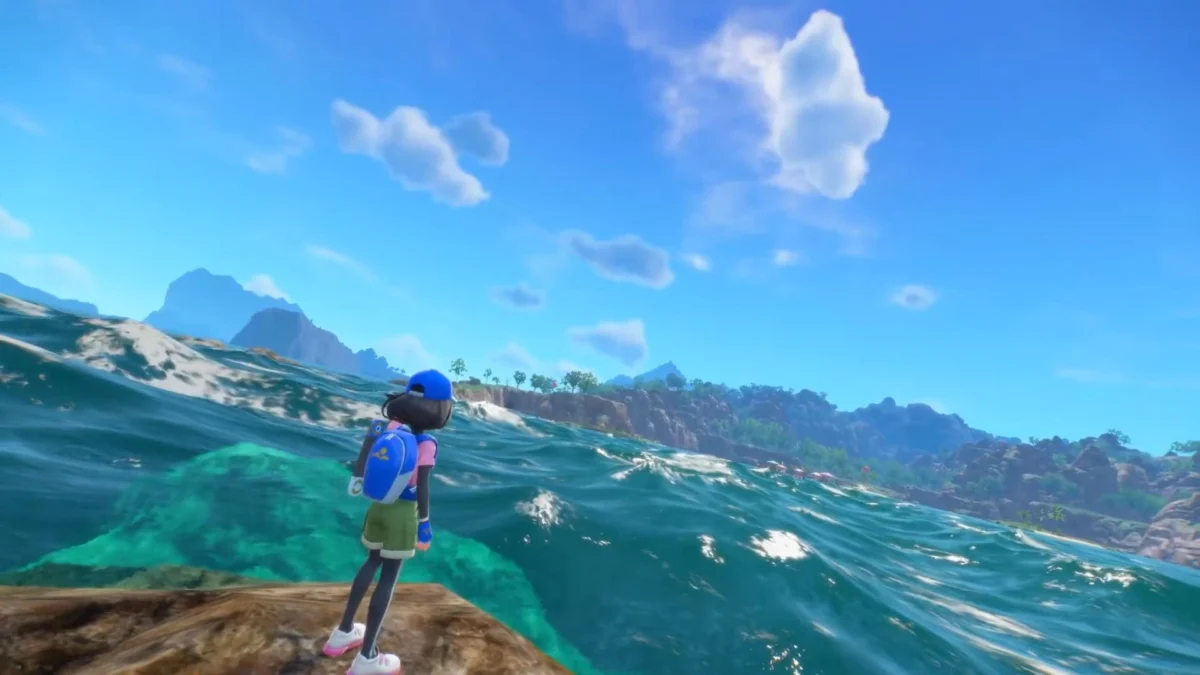
While neither Game Freak nor Nintendo has officially confirmed whether the algorithms and rendering techniques detailed in Narita and Kanai’s research will be integrated directly into the upcoming, highly anticipated Pokémon Winds and Waves, the timing and authorship of the paper have naturally drawn intense interest. Fans and industry analysts alike are looking closely at how this breakthrough in liquid physics could translate to the wide-open oceans, dynamic coastal environments, and rumored underwater biomes showcased in the debut trailer for Pokémon Winds and Waves. Slated for a 2027 release exclusively on Nintendo’s successor to the Switch—widely referred to in the industry as the Switch 2—the game represents the next evolutionary leap for the multi-billion-dollar franchise.
Chronology of Events
To understand the significance of this technical disclosure, it is helpful to trace the timeline of events leading up to the recent academic presentation:
- Late 2025 – Early 2026: Development ramps up on next-generation Nintendo hardware titles, with studios exploring ways to maximize the processing power of the upcoming Switch successor. Game Freak begins laying the groundwork for Pokémon Winds and Waves, a title whose early conceptual trailers emphasize maritime exploration, sprawling coastlines, and aquatic ecosystems.
- Mid-2026: Fumiya Narita of Game Freak and Professor Takashi Kanai of the University of Tokyo finalize their collaborative research initiative, focusing on optimizing fluid simulation algorithms for real-time applications.
- October 2026: The research paper is officially accepted and scheduled for presentation at the international Pacific Graphics 2026 conference in Singapore.
- Late October 2026: Independent Japanese media outlet Automaton spots the published conference proceedings, drawing a direct line between Narita’s academic work and Game Freak’s ongoing software development pipeline. The news quickly spreads across international gaming platforms, sparking widespread discussion within the Pokémon community.
- Present Day: Industry observers await further official announcements from Game Freak and Nintendo regarding the technical specifications of Pokémon Winds and Waves, particularly as the game approaches its planned 2027 launch window.
Supporting Data and Technical Breakdown
Water simulation has historically been one of the most resource-intensive tasks in computer graphics. Simulating real-world fluid dynamics requires tracking thousands—or millions—of individual points of interaction, calculating volume, velocity, viscosity, surface tension, and collision physics simultaneously. In video games, where frame rates must remain stable (typically targeting a steady 30 or 60 frames per second), dedicating too much processing power to water physics can cause severe performance drops, forcing developers to compromise on draw distances, graphical resolution, or overall asset complexity.
According to the details outlined in the Narita-Kanai research paper, the newly proposed technique addresses this limitation by reimagining how computational loads are distributed across the hardware:
- Algorithmic Simplification: Instead of running heavy, full-scale fluid simulations across an entire body of water—much of which may be out of the player’s immediate focus—the new method simplifies background calculations.
- Focus on Visual Impact: The system intelligently concentrates processing power where it matters most to the human eye: dynamic splashes, rolling wave crests, intricate surface ripples, and foam generation.
- Memory Optimization: By streamlining the under-the-hood math required to calculate liquid movement, the technique reduces the overall memory bandwidth demanded by water-heavy scenes.
While the academic paper utilized abstract testing environments rather than a branded, in-game demonstration of a Pokémon title, the mathematical framework provides a clear blueprint for how developers can achieve photorealistic or highly stylized fluid effects on hardware with strict thermal and power envelopes—such as a portable gaming console.
Official Responses and Industry Context
As is customary for both Game Freak and Nintendo during early developmental cycles, official commentary regarding proprietary technical research and unreleased software features remains strictly guarded. Neither Game Freak nor Nintendo of America has issued a formal press release confirming the integration of Narita and Kanai’s research into the codebase of Pokémon Winds and Waves.
However, industry veterans note that it is common practice for major Japanese developers to encourage their engineering talent to engage in academic research and collaborate with institutions like the University of Tokyo. These partnerships allow studios to solve complex engineering hurdles at a foundational level, eventually filtering those innovations down into commercial software products.
The discovery of this paper also arrives amid a broader context of evolution for the Pokémon franchise. Earlier hints from Game Freak developers have suggested that Pokémon Winds and Waves may depart from traditional conventions in other areas as well. Whispers from studio veterans indicate that the combat system itself could undergo significant structural changes—potentially influenced by spinoff titles like Pokémon Champions—moving away strictly from traditional turn-based formulas in favor of more dynamic, modern mechanics. When paired with potential advancements in environmental immersion, such as advanced water physics, the upcoming generation of Pokémon games is shaping up to be a radical departure from past entries.
Implications for Pokémon Winds and Waves and the Switch 2
The implications of this research extend far beyond an academic conference in Singapore. If Game Freak is actively investing research and development time into next-generation fluid simulation, it strongly suggests that water will play a central, interactive role in their upcoming projects.
1. Realizing the Maritime Vision of "Winds and Waves"
The very title Pokémon Winds and Waves evokes themes of open-air exploration, oceanic travel, and maritime adventure. The debut promotional material for the game showcased breathtaking vistas of deep blue oceans, sun-drenched archipelagos, and coastal cliffs. If Narita’s optimization techniques find their way into the final game, players can expect oceans that feel alive, reacting dynamically to the player’s movements, weather systems, and Pokémon interactions.
2. The Return of Underwater Exploration
One of the most exciting talking points stemming from the game’s initial trailer is the presence of distinct underwater biomes. Fans of the franchise fondly remember diving mechanics from past generations, such as Pokémon Ruby and Sapphire. However, rendering underwater environments with modern graphics requires sophisticated volumetric lighting, caustic water effects, and complex physics for swimming characters and aquatic Pokémon. A lightweight, highly efficient water-rendering pipeline would make seamless transitions between surface sailing and underwater diving far more viable on console hardware.
3. Demonstrating Switch 2 Capabilities
Nintendo’s successor to the Switch faces high expectations from both consumers and third-party publishers. To justify a next-generation hardware upgrade, launch and early window titles must visibly and technically outperform what was possible on the aging 2017 hardware. By leveraging advanced, peer-reviewed engineering breakthroughs to handle complex physics seamlessly, Game Freak could position Pokémon Winds and Waves not just as a beloved franchise entry, but as a technical showcase for what the Switch 2 can achieve under the hood.
As we look ahead to the official release of Pokémon Winds and Waves in 2027, the intersection of academic computer graphics research and commercial game development highlights the immense effort going on behind the scenes. Whether or not players consciously notice the finer points of the fluid simulation algorithms while exploring the open seas, the underlying technology promises to deliver a smoother, more visually arresting journey across the waves.

