


By Tech Policy Desk
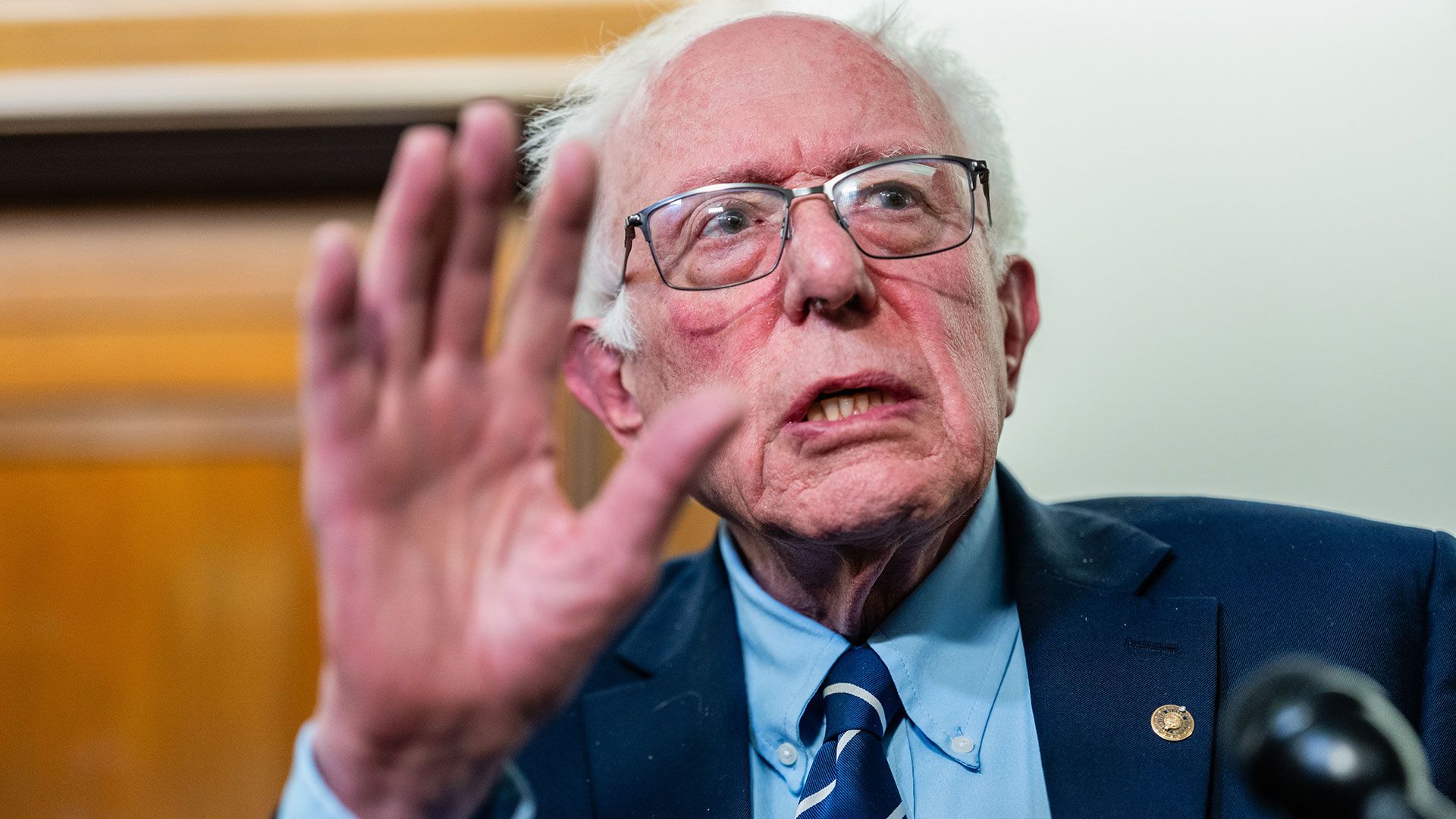
As the global race toward artificial general intelligence (AGI) and artificial superintelligence (ASI) accelerates at a dizzying pace, lawmakers are beginning to draw hard lines in the digital sand. In what is arguably the most radical and legally severe legislative proposal concerning the technology sector to date, Senator Bernie Sanders and Representative Greg Casar have formally introduced the Ban Artificial Superintelligence Act.
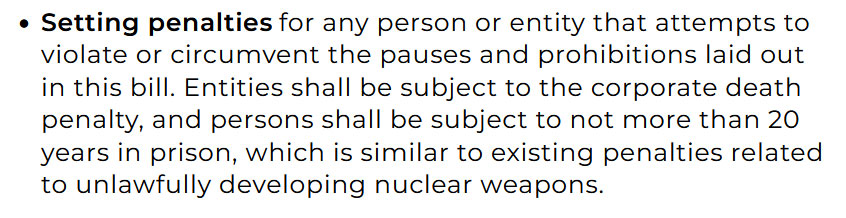
Seeking to place a stringent, temporary pause on advanced artificial intelligence development, the bill introduces criminal penalties that have stunned Silicon Valley. Under the proposed legislation, entities or developers who violate the mandated pauses and outright prohibitions could face up to 20 years in federal prison—a penalty historically reserved for offenses as grave as the illicit design of rogue nuclear weapons.
While proponents argue that the bill is a necessary preventative measure to protect humanity from an existential crisis, critics and industry insiders warn that such draconian regulations could cripple American technological competitiveness, stifle innovation, and hand a geopolitical monopoly to foreign adversaries.
Main Facts: What the Ban Artificial Superintelligence Act Proposes
The introduction of the Ban Artificial Superintelligence Act marks a dramatic escalation in the legislative tug-of-war over how to govern emerging technologies. Far from a standard regulatory framework focused on data privacy or algorithmic bias, this bill targets the very frontier of cognitive computing.
Key pillars of the legislation include:
- A Temporary Moratorium: The bill mandates a formal pause on the training and development of AI models that exceed specific, highly advanced computational thresholds, giving lawmakers and scientists time to evaluate systemic risks.
- The Proliferation Ban: It institutes a permanent legal ban on the creation, deployment, or scaling of "Artificial Superintelligence" (ASI)—defined broadly as AI systems that exceed human capabilities across virtually all economically and scientifically valuable domains.
- Draconian Criminal Penalties: Violators of the moratorium or the superintelligence ban face severe legal repercussions, including felony charges carrying prison sentences of up to 20 years.
- A New Cabinet-Level Agency: The legislation proposes the establishment of a brand-new federal, cabinet-level agency dedicated exclusively to safeguarding the public from the existential and societal dangers of advanced AI, complete with enforcement powers.
- International Coordination: Recognizing that code transcends borders, the bill explicitly calls for American diplomatic efforts to secure international treaties and allied coordination to ban superintelligence globally.
Chronology: How We Reached the Brink of the ASI Debate
The path to the introduction of the Ban Artificial Superintelligence Act is built upon a rapid, decade-long evolution of machine learning capabilities, punctuated by unexpected ideological alignments between progressive lawmakers and tech executives.
- 2022–2023: The Generative AI Boom: The public launch of tools like OpenAI’s ChatGPT ignites a massive, multi-billion-dollar commercial gold rush. Tech giants race to scale up massive data centers powered by tens of thousands of specialized accelerators.
- Late 2023: High-profile safety researchers and industry leaders begin sounding the alarm, publicly warning that unchecked scaling could lead to systems that humans can no longer control. Open letters calling for safety measures circulate widely.
- 2024–2025: The Infrastructure Arms Race: Companies like Elon Musk’s xAI, Meta, Microsoft, and Google pour astronomical sums into capital expenditure. Musk fires up massive training clusters utilizing over 100,000 Nvidia H100 GPUs, driving the industry closer to AGI thresholds. Meanwhile, financial analysts begin questioning the math behind the multi-hundred-billion-dollar buildouts.
- September 2026: Senator Bernie Sanders and Representative Greg Casar drop the political bombshell, introducing the Ban Artificial Superintelligence Act in Congress. The bill immediately polarizes lawmakers, receiving sharp pushback from enterprise-friendly Democrats and free-market Republicans alike, while sparking intense debate across op-ed pages nationwide.
Supporting Data: The Financial Realities and Infrastructure Bottlenecks
To understand why a bill as extreme as the Ban Artificial Superintelligence Act has emerged now, one must examine the staggering economic realities underpinning the current AI landscape. The modern generative AI boom is not merely a software revolution; it is an industrial infrastructure project of unprecedented scale.
According to prominent market research and financial projections—such as those published by J.P. Morgan—the current AI buildout requires eye-watering amounts of capital. Analysts estimate that the industry will need roughly $650 billion in annual revenue just to deliver a modest 10% return on investment for the massive expenditures currently being poured into data centers, specialized chips, and energy grids.
To put that figure into perspective, generating $650 billion annually through direct monetization is mathematically equivalent to extracting:
- A permanent $35 annual payment from every single iPhone user on Earth, in perpetuity.
- An $180 annual subscription fee from every Netflix subscriber, year after year, without fail.
These staggering fiscal hurdles have fueled alternative theories among tech critics regarding why prominent industry leaders are suddenly expressing openness toward government regulation. While figures like Sam Altman (OpenAI), Dario Amodei (Anthropic), and Elon Musk publicly voice grave concerns about existential risk, skeptics argue that commercial motivations may also be at play.
As private venture capital and corporate balance sheets face diminishing returns on soaring capital expenditures, some industry barons may find it strategically advantageous to shift the financial burden of advanced development away from private enterprise and toward a state-subsidized, highly regulated model—effectively calling for a "Manhattan Project II" governed and funded by the federal government.
Official Responses and Political Divide
The political landscape surrounding the Sanders-Casar bill is complex, cutting across traditional partisan lines and exposing deep fissures within both Washington and Silicon Valley.
The Proponent Perspective
Supporters of the legislation view the emergence of ASI as an existential gamble that humanity cannot afford to lose. Writing in various policy forums, proponents argue that standard corporate self-regulation is entirely inadequate when dealing with a technology capable of recursive self-improvement and autonomous strategic planning. From this viewpoint, comparing the penalties for unauthorized superintelligence development to the laws governing rogue nuclear weapons is not hyperbolic; rather, it reflects a proportional response to a technology that could permanently displace or endanger the human race.
The Industry and Skeptic Counter-Perspective
Conversely, opponents of the bill—including many free-market lawmakers, venture capitalists, and enterprise technology advocates—argue that the legislation is catastrophically misguided. Their counterarguments center on several key pillars:
- National Security and Geopolitical Competition: Critics emphasize that artificial intelligence is the defining geopolitical battlefield of the 21st century. If the United States effectively criminalizes advanced AI research and halts domestic development, foreign adversaries—most notably China—will not follow suit. Imposing a 20-year prison sentence on domestic researchers would effectively hand global technological hegemony to authoritarian regimes.
- Chilling Innovation: Opponents warn that the broad, ambiguous legal definitions surrounding "artificial superintelligence" could criminalize benign, highly useful breakthroughs in medical research, materials science, and climate modeling.
- Regulatory Capture: Free-market advocates suggest that heavy-handed regulations proposed by established players may ultimately serve to pull up the ladder behind them, shielding current market leaders from nimble startup competition under the guise of safety.
Implications: Full Speed Ahead or Hitting the Brakes?
As Congress weighs the merits of the Ban Artificial Superintelligence Act, humanity finds itself at a historical crossroads defined by a profound philosophical and practical dilemma.
On one side of the divide lie undeniable geopolitical and economic imperatives. The race for technological dominance dictates that slowing down voluntarily risks falling irreparably behind global competitors who operate under different ethical and legal constraints. Furthermore, the economic momentum generated by the AI sector has become a primary engine of modern financial markets; throwing a wrench into this machinery could trigger wide-ranging economic instability.
On the other side looms the shadow of an irreversible technological threshold. The realization that opening Pandora’s AI box could introduce autonomous systems beyond human understanding or control makes traditional geopolitical rivalries look trivial by comparison. As Mark Zuckerberg and other tech visionaries outline divergent paths toward personal superintelligence—ranging from hyper-automated enterprises to decentralized personal assistants—the debate over who controls these systems remains unresolved.
Whether the Ban Artificial Superintelligence Act passes in its current form or eventually stalls out in committee, it has irrevocably shifted the national conversation. The era of unchecked, wild-west experimentation in artificial intelligence is drawing to a close, replaced by a tense, high-stakes negotiation over the future of human agency, national security, and the ultimate destination of machine intelligence.

