

As the launch of World of Warcraft: Forever draws agonizingly close, the community finds itself locked in a familiar, hyper-optimized frenzy. For the dedicated min-maxers of the MMORPG scene, aesthetic choices take a distant backseat to cold, hard mathematics. To this segment of the player base, picking a character model isn’t about looking cool; it’s about ensuring that hundreds of hours of leveling don’t culminate in a character performing three percent less damage than an alternate race choice.
With World of Warcraft: Forever deliberately casting players back into a bygone era of the genre—one where unique racial abilities and traits carried immense weight, unlike the homogenized modern iteration of the game—these fractional differences matter immensely. Certain abilities directly synergize with specific classes, while others provide critical quality-of-life advantages for the arduous journey ahead. It is precisely this high-stakes environment that has driven Blizzard Entertainment to implement sweeping, eleventh-hour tweaks to racial traits just days before global servers go live.
Main Facts: The Eleventh-Hour Overhaul
Despite historical attempts to maintain a semblance of parity across the board, Blizzard’s latest development cycle reveals a clear pivot: the studio is doubling down on distinct racial advantages tailored for specific classes. According to the official beta development notes released by Blizzard, several key changes redefine how players will approach character creation at launch.
The rationale is clear. In a throwback ecosystem, racial traits are foundational. They dictate raiding viability, PvP utility, and leveling efficiency. Yet, introducing such volatile alterations merely a week before launch is a high-risk strategy.
Key adjustments highlighted in the patch notes include:
- Orcs: Shifting away from broad critical strike enhancements, Orc characters will instead receive targeted buffs to pet damage, cementing their traditional dominance for Warlocks and Hunters.
- The Skyborne: The newly introduced blue-skinned elves saw their overwhelmingly potent "Read Leyline" ability—which historically allowed for absurdly fast health and mana regeneration—slashed in half. While still powerful, the nerf successfully edges the trait away from being mandatory.
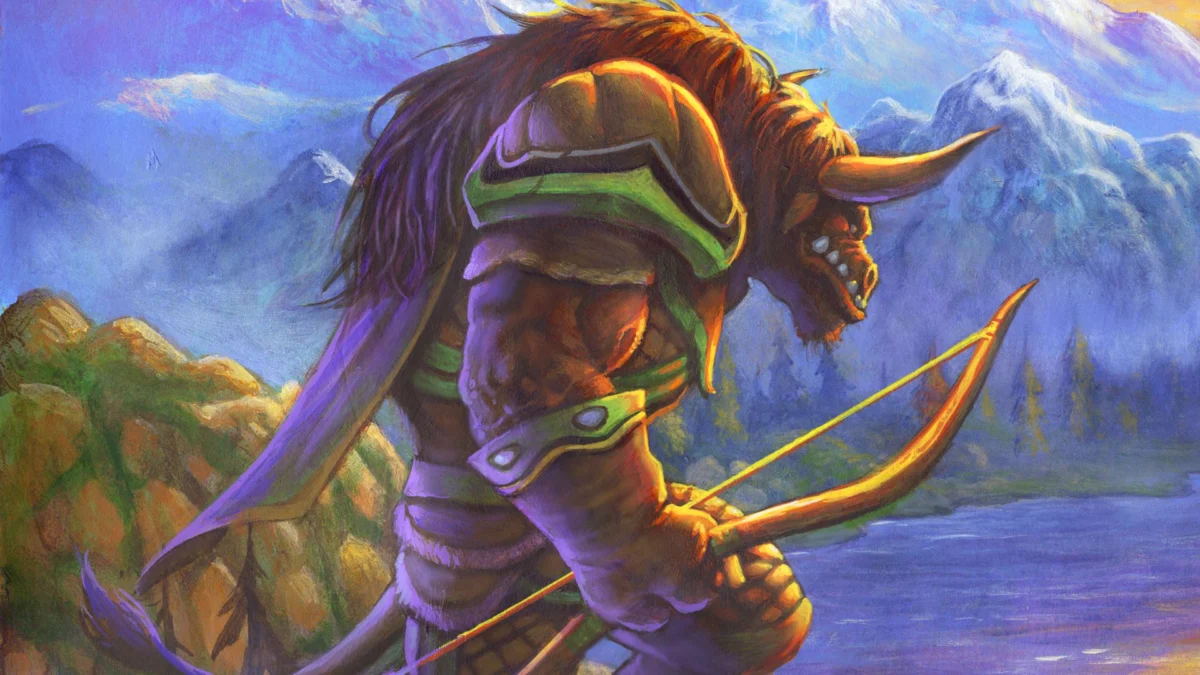
- The Tauren: The iconic bipedal bovines have received arguably the most disruptive buff of the patch, effectively transforming them into high-speed transit vehicles across Azeroth.
While these patch notes have given the theorycrafting community plenty to dissect, players will have to wait until World of Warcraft: Forever officially opens its doors next week to see how these adjustments translate into actual gameplay.
Chronology: From Concept to Chaos
The road to the World of Warcraft: Forever launch has been defined by iterative testing, community pushback, and sudden developer pivots. Understanding how the current racial meta came to be requires looking back at the timeline of the beta cycle:
Phase 1: The Initial Announcement and Theorycrafting (Months Ago)
When Blizzard first announced World of Warcraft: Forever, the community immediately divided into camps. Casual players rejoiced at the return of classic mechanics, while hardcore progression guilds immediately began constructing theoretical tier lists. Early beta builds featured standard, predictable iterations of classic racial traits, with developers aiming for safe, middle-of-the-road balancing.
Phase 2: Beta Feedback and Early Outliers (Early October)
As closed beta testing progressed, specific combinations quickly outshined the rest. Abilities like the Skyborne’s "Read Leyline" and various passive combat bonuses began to distort internal testing metrics. Testers noted that failing to pick specific races for high-end raiding compositions imposed an artificial bottleneck on raid DPS outputs. Concurrently, community memes surrounding Tauren movement animations highlighted persistent quirks in how character models interacted with the game world.
Phase 3: The October 26th Patch Drop (One Week to Launch)
In a move that surprised many industry observers, Blizzard dropped a massive batch of balance changes in their late-October beta development notes. Rather than playing it safe ahead of the impending launch, the development team elected to radically overhaul passive scaling, nerf outlier abilities, and grant unprecedented mobility buffs to underperforming or joke-adjacent races.
Supporting Data: Numbers, Metrics, and the Tauren "Nitrous" Phenomenon
To truly understand the weight of these changes, one must examine the hard data governing race-class synergies in classic-era frameworks. In older iterations of World of Warcraft, racial traits accounted for roughly 3 to 7 percent of a min-maxed character’s overall output variance, depending on the encounter.
The most striking statistical anomaly in the latest patch notes belongs to the Tauren. Historically, the race suffered from a psychological and visual penalty known colloquially as the "Tauren lag." Because of their massive physical stature, their running animation created a persistent optical illusion that they were moving slower than smaller races like Gnomes or Trolls, even when their movement speed stat was identical.
Blizzard’s response to this enduring community joke was nothing short of radical. The new patch introduces a passive stacking mechanic that increases movement speed the longer a Tauren remains in continuous motion.
- Old Baseline: Plainsrunning previously granted a 30% movement speed increase, but it was notoriously finicky, dropping off the moment the character took damage or performed an action.
- New Multiplier: The latest patch doubles this bonus to a staggering 60% maximum movement speed.
With adequate runway to build up momentum, a running Tauren matches the velocity of epic ground mounts—which typically cost hundreds of gold pieces and require hours of grinding to acquire. While this comes at the cost of minor baseline damage buffs, the trade-off fundamentally re-evaluates the utility of the race for open-world gathering, PvP repositioning, and early-game leveling efficiency.
Official Responses and Developer Intentions
Blizzard’s willingness to disrupt the meta so close to launch signals a distinct philosophy regarding World of Warcraft: Forever. Rather than seeking flat, homogenized equality among all playable options, the design team is intentionally leaning into asymmetrical balance.
In developer commentary accompanying the recent patch notes, Blizzard representatives emphasized that foundational RPG elements should feel impactful. If a race is defined by its connection to nature, physical might, or arcane attunement, those traits should manifest meaningfully in gameplay mechanics.
However, this philosophy walks a razor-thin line. Tweaking numbers on a spreadsheet is one thing; fundamentally redefining how a race interacts with the game world a week before millions of players log in is an aggressive gamble. Blizzard has assured the community that World of Warcraft: Forever will receive ongoing, post-launch balance patches. Yet, the studio acknowledges that racial traits occupy a sacred space in the game’s architecture—touching them too frequently post-launch risks alienating players who committed to a specific aesthetic and mechanical identity on day one.
Implications: How the Meta Will Shape Raids and PvP
The long-term repercussions of these final-hour adjustments will inevitably ripple through the high-end spheres of World of Warcraft: Forever. While casual players exploring the world for nostalgia’s sake may remain blissfully unaware of optimal race-class pairings, the competitive scene operates under a different microscope.
1. The High-End Raiding Landscape
Guild masters and raid leaders competing for world-first progression kills live and die by optimization margins. The buffed pet damage for Orc Warlocks and Hunters all but guarantees that the Orc race will dominate the upper echelons of damage-dealing parses for those classes. Conversely, the nerf to the Skyborne’s mana regeneration prevents a single race from monopolizing caster slots, diversifying raid compositions in the process.
2. PvP Dominance and Open-World Mobility
In Player-vs-Player combat, mobility is king. The Tauren’s newly supercharged movement passive introduces a wild card into battlegrounds and world PvP encounters. A melee class that can close gaps at mount-speed without casting a spell or mounting up introduces severe tactical advantages in open-field skirmishes. Expect to see tactical compositions built around capitalizing on these sudden shifts in positional advantage.
3. The Psychology of Player Choice
Ultimately, these changes force players into a perpetual psychological tug-of-war. Do you choose the character model you visually resonate with, or do you bow to the math and select the optimal machine for damage output? By doubling down on distinct, powerful racial identities, Blizzard ensures that character creation remains a consequential first step—one that will dictate the shape of Azeroth’s social and competitive fabric for years to come.

