

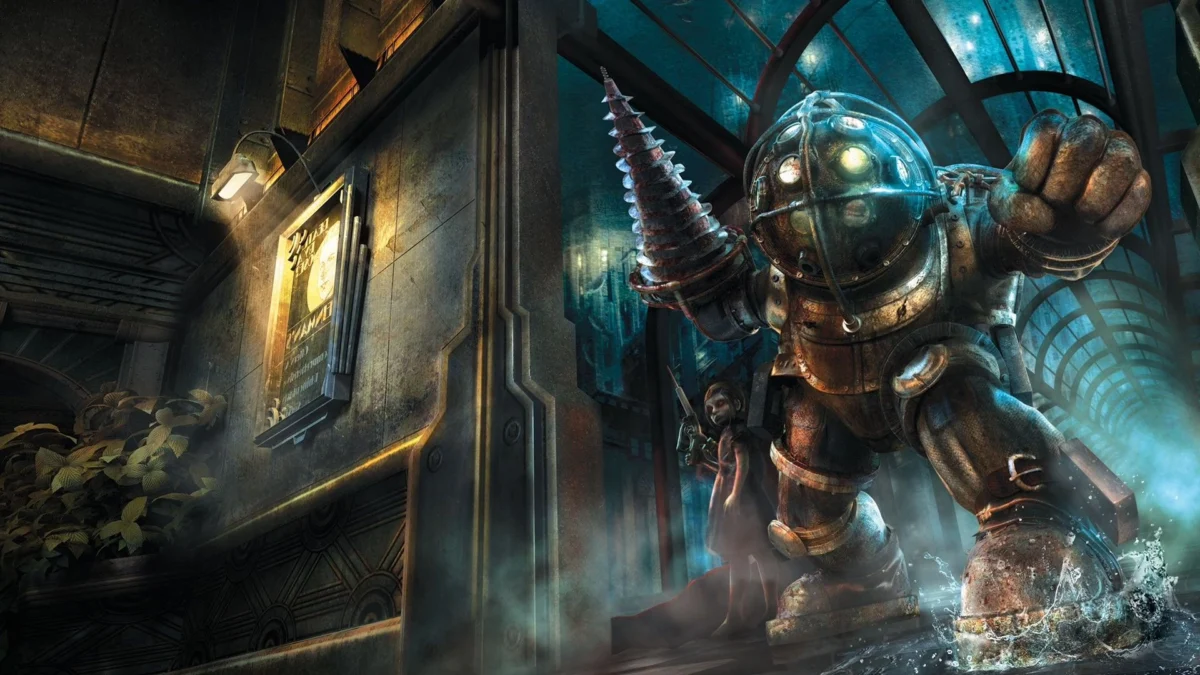
Main Facts: The Current State of the Rapture Adaptation
Nearly three years after Netflix officially announced it was diving into the treacherous, art-deco waters of BioShock, the highly anticipated video game adaptation remains in active development, though it continues to navigate turbulent behind-the-scenes waters. Director Francis Lawrence recently revealed that the creative team is finally "close" to a major breakthrough regarding the film’s script and narrative structure.
Originally announced in 2022, the feature film adaptation is firmly rooted in the universe of the landmark 2007 first-person shooter developed by Irrational Games. The story follows a protagonist who stumbles upon Rapture—a decaying, underwater libertarian utopia founded by visionary industrialist Andrew Ryan that ultimately collapsed under the weight of its own hubris, genetic modification, and civil war.
However, translating a quintessential interactive experience into a linear cinematic medium has proven to be a notoriously "tough nut to crack." Speaking candidly with industry outlets, Lawrence explained that the primary hurdle lies in adapting a story where the player is the character, transforming that interactive perspective into a compelling cinematic narrative without losing the surreal, terrifying, and deeply atmospheric charm of the source material.
Compounding these creative challenges are shifting corporate tides at Netflix. Lawrence openly expressed frustration regarding ongoing executive regime changes at the streaming giant—specifically pointing to the departures of high-level figures such as former head of film Dan Lin and chief content officer Bela Bajaria. Furthermore, to secure a green light in an increasingly cautious economic climate for Hollywood, the project has reportedly undergone significant restructuring, including a reduction in its overall budget.
Chronology: A Timeline of the BioShock Movie’s Journey
The path to bringing Rapture to the silver screen is littered with false starts, cancelled projects, and prolonged development cycles spanning over a decade and a half.
The Gore Verbinski Era (2008–2009)
Shortly after the breakout critical and commercial success of the original BioShock game in 2007, Universal Pictures quickly moved to secure the film rights. Academy Award-winning director Gore Verbinski (Pirates of the Caribbean) was tapped to direct a high-budget, R-rated live-action adaptation, with a script penned by John Logan (Gladiator).
The project progressed significantly; massive sets were being designed, and pre-production was well underway. However, Universal ultimately pulled the plug due to budget constraints and creative disagreements. Studio executives grew anxious over the film’s projected $200 million price tag and Verbinski’s insistence on retaining an uncompromised, hard-R rating, particularly in the wake of the box-office underperformance of Zack Snyder’s Watchmen, which shared a similarly dark tone. Verbinski briefly stayed on as a producer when Juan Carlos Fresnadillo (2 Weeks Later) stepped in to direct, but that iteration also eventually dissolved.
The Netflix Acquisition (2022)
After years of dormancy, during which video game adaptations experienced a massive cultural and financial renaissance (spurred by successes like HBO’s The Last of Us, Amazon’s Fallout, and Netflix’s own Arcane), the IP found a new home. In February 2022, Netflix, in partnership with video game publisher Take-Two Interactive, officially announced a new BioShock feature film.
Initial announcements confirmed that Francis Lawrence (The Hunger Games: Catching Fire, I Am Legend) would direct the adaptation, with Michael Green (Blade Runner 2049, Logan) attached to write the screenplay, and Roy Lee producing through Vertigo Entertainment.
Creative Tweaks and Budget Reductions (2023–Present)
Over the subsequent years, updates trickled out sporadically. Producers and creators confirmed that the film would strictly focus on the lore and events of the first game rather than later sequels like BioShock 2 or BioShock Infinite. By late 2023 and into 2024, reports surfaced indicating that the project was being reevaluated. To fit within Netflix’s shifting financial strategies under new leadership, the production was quietly retooled, scaling back its massive initial budget to a more manageable tier—a move that Lawrence noted has required clever creative problem-solving from the writing team.
Supporting Data: The Video Game Adaptation Renaissance
To understand why Netflix and Take-Two Interactive are so fiercely protective of the BioShock property, one must examine the broader economic landscape of Hollywood entertainment. Video game adaptations are no longer considered cursed properties; instead, they represent some of the most lucrative and reliable intellectual property assets in the global market.

- Box Office and Streaming Dominance: Over the past five years, adaptations of interactive media have shattered expectations. Illumination’s The Super Mario Bros. Movie crossed the coveted $1 billion mark globally, while television series such as The Last of Us and Fallout captured massive mainstream audiences and critical acclaim, pulling in millions of new and returning players to their respective source franchises.
- The Take-Two Connection: Take-Two Interactive, the parent company of publisher 2K Games, has been remarkably deliberate with its multi-media expansions. Reports from earlier this year indicated that Take-Two and Netflix are deeply motivated to align the release of the BioShock movie with future gaming initiatives. Rumors have swirled for years regarding a long-awaited BioShock 4 currently in development at Cloud Chamber, a studio under the 2K umbrella. A simultaneous or closely timed cross-media launch would provide a compounding marketing effect, driving interest across both film and gaming sectors.
- Budgetary Realities: Netflix’s pivot toward budget-conscious blockbusters reflects a broader industry trend. Following years of unchecked spending on streaming originals, major platforms are tightening their belts. By scaling down the BioShock adaptation’s budget, Lawrence and his team are tasked with relying more heavily on atmospheric tension, practical set design, and psychological horror—elements that arguably align more closely with the tone of the original game anyway.
Official Responses and Key Stakeholder Insights
Public commentary surrounding the film’s progress offers a transparent look at the friction inherent in large-scale corporate filmmaking, balanced against the genuine passion of its creative leads.
Director Francis Lawrence has consistently voiced his profound enthusiasm for the project, noting in interviews that he has been "dying" to bring the world of Rapture to life. However, his recent statements to outlets like The Direct and GamesRadar+ have not shied away from the administrative hurdles:
"It is a tough nut to crack that world and that story, especially because you are the character when you play the game, and so creating that character from scratch into that world that quite honestly, is pretty batshit in a most amazing way. It’s tricky. So we’re getting there, and we’re getting close, which is great."
Addressing the corporate instability at his distributor, Lawrence added a note of caution regarding executive turnover:
"And then, you have also just the Netflix of it all because Netflix right now has had regime changes and just all of that kind of nonsense that I don’t like to have to deal with or have to. So we’ll see. Hopefully we’ll figure it out."
Producer Roy Lee has previously echoed similar sentiments, emphasizing the collaborative pressure felt by both Netflix and Take-Two Interactive to ensure the film does justice to a universe beloved by millions. While executive shuffling at the streaming service has introduced temporary roadblocks, the continued public commitment from key personnel indicates that the studio has not abandoned the property, even as it renegotiates parameters to fit its current slate.
Implications: What This Means for Fans and the Future of the Franchise
The prolonged development cycle of the BioShock movie carries several significant implications for both the entertainment industry and the legacy of the video game franchise.
1. The Challenge of Translating Ludonarrative to Film
The core philosophical question facing Francis Lawrence and writer Michael Green is how to handle the player agency that defined the original game. In BioShock, the narrative impact relies heavily on the famous twist involving the phrase "Would you kindly?"—a meta-commentary on the illusion of choice in linear video game design. Adapting this into a passive cinematic format requires finding a cinematic equivalent to audience manipulation. If the creative team successfully cracks this narrative code, it could serve as a masterclass in how to adapt first-person video games without resorting to hollow, action-heavy pastiche.
2. Corporate Volatility vs. Creative Vision
Netflix’s internal structural shifts highlight the precarious nature of high-concept, high-budget streaming projects. As streaming platforms transition from aggressive subscriber-growth models to profitability-focused strategies, risky bets face heightened scrutiny. The downsizing of BioShock‘s budget is a direct symptom of this era. Whether this financial pruning results in a tighter, more focused psychological thriller or a compromised vision remains the central anxiety for fans of the franchise.
3. A Catalyst for the BioShock Universe
Beyond the screen, the movie serves as a vital tentpole for Take-Two Interactive’s broader strategy regarding the intellectual property. With a new installment in the gaming franchise rumored to be in production, a successful Netflix film could introduce the dystopian horrors of Rapture—or potentially a new oceanic or societal setting—to a massive, mainstream demographic that has never touched a controller. Conversely, a prolonged developmental stall or a critical misfire could further delay the revitalization of one of gaming’s most celebrated narrative universes.
As it stands, BioShock fans must continue to practice patience. While the script is nearing completion and the director remains deeply passionate about realizing his vision, Rapture remains just out of reach—resting quietly beneath the waves, waiting for someone to finally find the right key.

